Wifi Network

Overview
Product sourcing insights & recommendations
The WiFi network product market is entering a pivotal "breakout" year in 2026, with Wi-Fi 7 projected to reach a $10.5 billion market value. The industry is shifting its focus from peak speeds to latency consistency and ultra-high reliability, driven by applications like 8K streaming, cloud gaming, and industrial automation.
I have compiled a comprehensive market report detailing growth forecasts, technological shifts such as Multi-Link Operation (MLO), and current B2B product pricing for your review.
Based on these trends, you may want to:
Wifi 6e Mesh Systems Smart Home Gateway
Products · 3 lists

New Network AX3000Mbps Wifi 6 Dual Band Mesh Router Mesh WiFi System for Home Networking
 Winstars Technology Limited🇨🇳CN20 yrs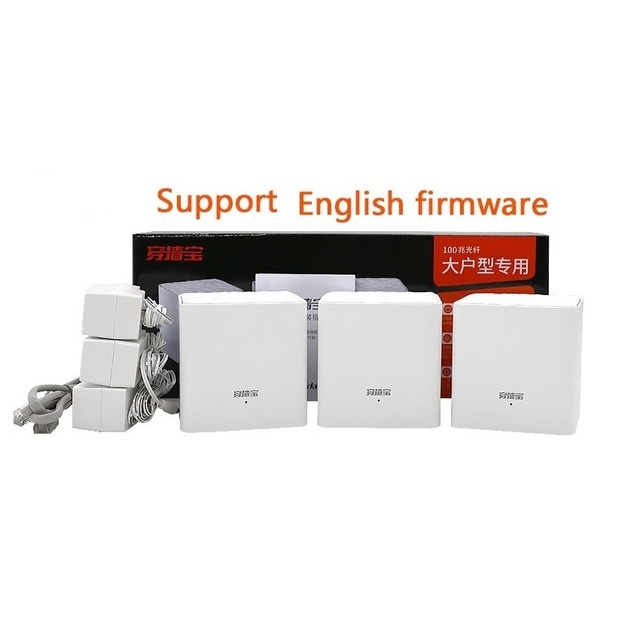
Hot Sell Mesh WiFi System Nova MW3 - Covers up to 3500 Sq.ft -Whole Home WiFi Mesh System-Gigabit Mesh Router for 80 Devices
 Shenzhen Splinktech Co., Ltd.🇨🇳CN10 yrs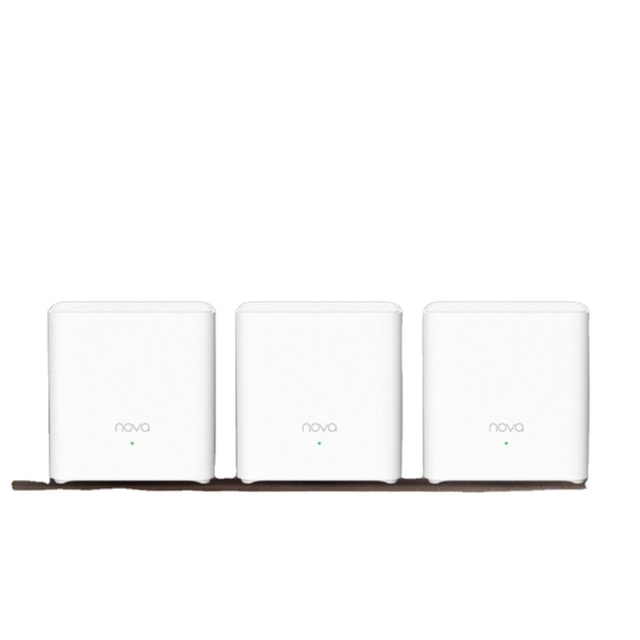
AX1500 Mesh WiFi 6 Router Tenda Mesh MX3 WiFi6 Gigabit WIFI Router 2.4G 5G Dual-Band Whole Home Wifi Mesh Cover 3500sq.ft
 Hebei Jiubai Technology Co., Ltd.🇨🇳CN10 yrs
Deep Dive · Full Report
Full Market Report
1 document · Live-fetched from source
Related Searches
Explore more sourcing topics & related categories
Sources & References
20 sources cited · Verified industry data & reports
Trends of Wi-Fi 7 Router in 2026
www.accio.com
Emerging trends include AI-powered network optimization and the integration of WiFi 7 capabilities in premium models launching late 2024. Price ...Read more ... Wi-Fi 7 Ecosystem Market Is Booming Rapidly with Strong ... The segmental analysis focuses on revenue and forecast by type and by application in terms of revenue and forecasts for the period 2026-2033.Read more · The Wi-Fi 7 router market is experiencing significant growth, driven by increasing demand for high-speed, low-latency connectivity across various sectors. Temporal Patterns: Search interest for "wifi 7 router performance" peaked in September 2025 and December 2025, with another significant rise in March 2026 1. "Wifi 7 router dual band" also saw a peak in September 2025 and April 2026 1. "Wifi 7 router mesh system" showed a more gradual increase, peaking in November 2025 and January 2026 1. Peak & Trough Analysis: The queries generally show low interest in early 2025, with a sharp increase towards the latter half of the year and into 2026 1. This suggests growing consumer awareness and interest as Wi-Fi 7 technology becomes more prevalent. Qualcomm and Broadcom are market leaders, focusing on innovation in mobile, IoT, and networking infrastructure 3. Companies are investing heavily in research and development to create new Wi-Fi 7 chipsets and solutions 6. They are also forming partnerships with smartphone manufacturers and service providers to bring Wi-Fi 7 to market 6. Google search interest for "wifi 7 router performance," "wifi 7 router dual band," and "wifi 7 router mesh system" shows fluctuating but generally increasing trends from late 2025 into early 2026 1. Emerging technologies like AR/VR and IIoT will further accelerate the demand for Wi-Fi 7's low-latency and high-bandwidth capabilities 26. Regional growth in North America and Asia-Pacific will remain strong, with sustained investment in digital infrastructure and smart technologies 35. Given the rising interest in cutting-edge networking, a high-performance WiFi 7 router represents a significant market opportunity, offering superior speed and efficiency.
2026 predictions for major Wi-Fi market shifts - Wi-Fi Vitae
wifivitae.com
2026 predictions for major Wi-Fi market shifts As we approach the final days of 2025 and anticipate the start of 2026, several shifts in Wi-Fi playbooks are expected to impact planning, design, and implementation. Enterprise Wi-Fi 7 becomes the “default refresh.”Most new enterprise AP purchases are tilting toward Wi-Fi 7 (not just a niche high-density Wi-Fi 7 success is judged on latency consistency more than peak speed. Buyers will demand proof of 95th/99th percentile latency, roaming stability, and airtime efficiency, especially for voice/video, robots, and XR: pushing acceptance testing beyond throughput-only. This aligns with where Wi-Fi 8 is heading (reliability targets), and that mindset bleeds into the 2026 Wi-Fi 7 RFPs. Date:December 31, 2025Posted By:troymartCategory:IoT, Wi-FiTag:IIoT, IoT, Speedtest, WiFi, WiFi6E, WiFi7 · As we approach the final days of 2025 and anticipate the start of 2026, several shifts in Wi-Fi playbooks are expected to impact planning, design, and implementation. Enterprise Wi-Fi 7 becomes the “default refresh.” Most new enterprise AP purchases are tilting toward Wi-Fi 7 (not just a niche high-density tier), with faster adoption than prior generations because there isn’t an obvious “Wave 2” detour. With WPA3 required for 6 GHz operation (and commonly treated as part of “modern” Wi-Fi posture), 2026 design guides and audits will increasingly treat WPA2-only as technical debt that must be retired. WPA2-only devices should be relegated to a separate (“legacy”) SSID. Once business-critical devices no longer depend on these legacy SSIDs, they should be decommissioned. This natural evolution is not something new to Wi-Fi. We have seen a similar trend with isolating 2.4GHz-only devices to a legacy SSID, eventually decommissioning those SSIDs once the necessary client devices are 5GHz-capable.
Wi-Fi 7 Adoption: The Ultimate Guide to Faster, Smarter Wireless ...
www.thenetworkdna.com
Whether you are a gamer demanding zero lag, a professional needing dense-environment reliability, or a smart home enthusiast managing dozens of IoT devices — Wi-Fi 7 is your answer. The global Wi-Fi 7 adoption curve is steep — and for very good reason. By 2026, Wi-Fi 7 will be the dominant wireless standard across consumer, enterprise, and industrial markets. 📡 Updated for 2026 | www.thenetworkdna.com | Expert Analysis ... Wi-Fi 7, officially standardized as IEEE 802.11be, is the latest generation of wireless networking technology. Finalized by the IEEE in early 2024, Wi-Fi 7 is the successor to Wi-Fi 6 and Wi-Fi 6E, engineered to deliver extraordinary speeds, ultra-low latency, and rock-solid reliability for an increasingly connected world. Wi-Fi 7 was built with the demands of modern applications in mind — 8K video streaming, cloud gaming, AR/VR headsets, smart home ecosystems, enterprise networks, and AI-powered devices — all running simultaneously without interference or slowdowns. Wi-Fi 7 routers currently start around $200 to $700 for consumer models, with enterprise solutions costing thousands. Cost remains a significant barrier for mass adoption in 2024 and 2026. Wi-Fi 7 Adoption: The Ultimate Guide to Faster, Smarter Wireless
Wi-Fi 7 Market Share Report 2026 - Size and Drivers to 2035
www.thebusinessresearchcompany.com
Retail And Wholesale Services Social Services Transport Transport Services Utilities Veterinary Healthcare Filter Reports by Trends Desk Research Research Reports Senior Executive Interviews Consumer Research Market Sizing And Forecasts
Wi-Fi 7 Market Share, Size & Growth Outlook to 2031
www.mordorintelligence.com
The Wi-Fi 7 market was valued at USD 6.5 billion in 2025 and estimated to grow from USD 8.63 billion in 2026 to reach USD 35.66 billion by 2031, at a CAGR of 32.8% during the forecast period (2026-2031). The acceleration mirrors surging enterprise digital-transformation budgets, consumer demand for multi-gigabit connectivity, and the domino effect of 6 GHz spectrum allocations in multiple economies.[1]Wi-Fi Alliance, “Wi-Fi 7 Momentum Builds With Certification Launch,” wifi.org Chipset and gateway vendors shipped 233 million Wi-Fi 7 devices during 2024, demonstrating that mainstream adoption has already begun. Note: Market size and forecast figures in this report are generated using Mordor Intelligence’s proprietary estimation framework, updated with the latest available data and insights as of January 2026. ... Tri-band CPE bundling by tier-1 ISPs accelerates household upgrade cycles. Service providers such as Charter Communications began shipping Advanced Wi-Fi 7 routers in late 2024, bypassing the usual four-year consumer replacement cadence and ensuring that expensive fiber lines deliver full in-home speeds. Industrial and manufacturing applications are forecast to expand at a 41.6% CAGR between 2026 and 2031, driven by wireless time-sensitive-networking requirements. Industrial and manufacturing plants, however, log the highest growth at 41.6% CAGR via wireless time-sensitive-networking that needs deterministic latency. Enterprises sit in the middle: their budgets fund advanced features first, which then trickle down to consumer hardware once cost curves improve. Healthcare environments offer a specialized sub-segment where real-time telemetry and mixed-reality surgery training depend on consistent gigabit throughputs. These demanding scenarios highlight the upside for Wi-Fi 7 vendors that can optimize power efficiency while meeting regulatory compliance.
Three reasons 2026 is Wi-Fi 7’s breakout year, according to Cisco
www.rcrwireless.com
Cisco CTO Matt MacPherson says 2026 could mark a turning point for Wi-Fi 7 as market conditions, deployment readiness, and customer demand begin to converge. As we continue into 2026, Cisco sees device availability removing the adoption barrier, refresh demand unlocking scale, and new architectural features redefining what Wi-Fi can realistically support. ... U.S. government studies new rules to restrict shipments to Huawei: Report · Catherine Sbeglia Nin is the Managing Editor for RCR Wireless News, where she covers topics such as Wi-Fi, network infrastructure, AI and edge computing. Wi-Fi 7 has been on the roadmap for years, but widespread adoption has lagged behind expectations (most notably in the U.S.). Now, though, Cisco believes the timing has finally aligned. According to Cisco CTO Matt MacPherson, 2026 could mark a turning point for the technology as market conditions, deployment readiness, and customer demand begin to converge.