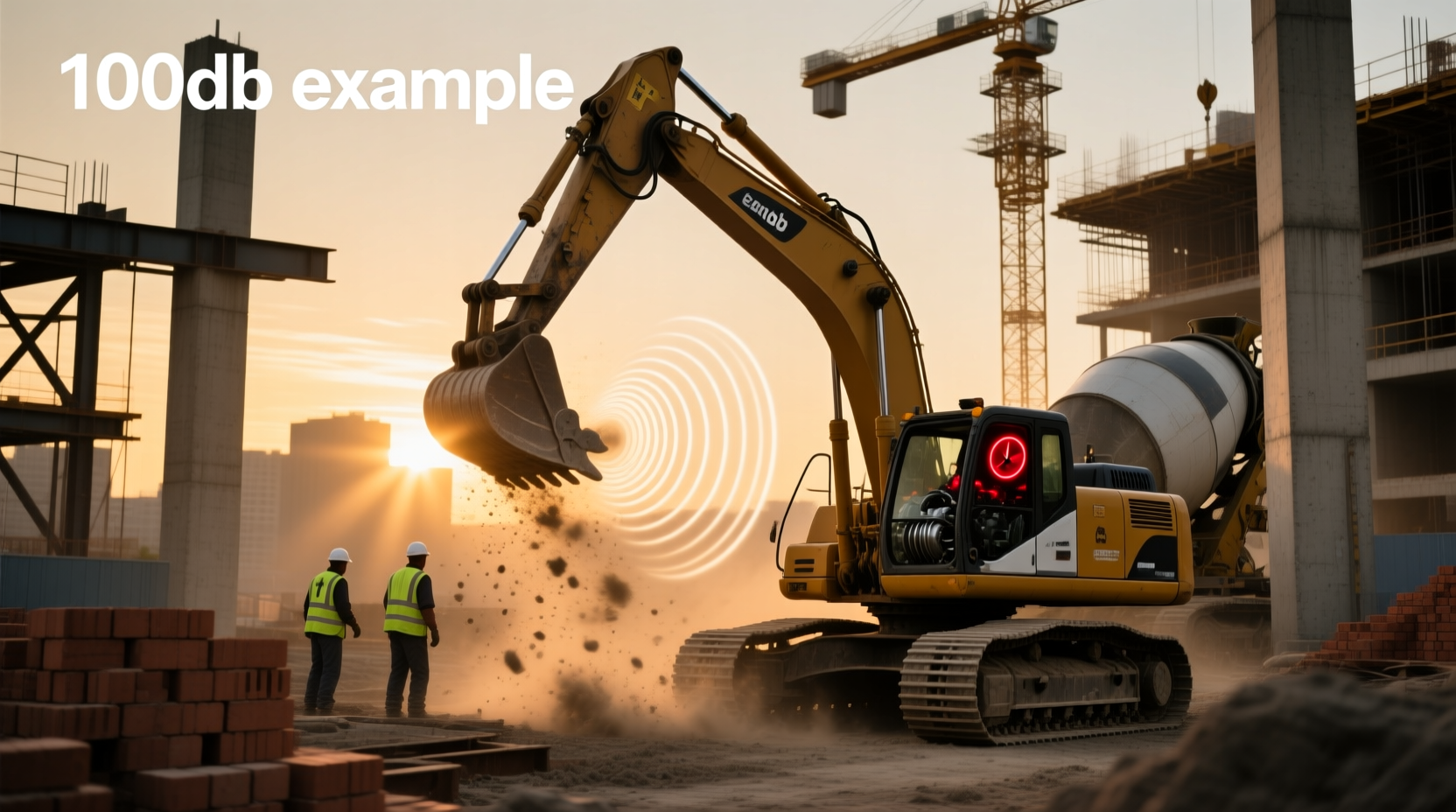
At 100 decibels (dB), everyday sounds—including power tools, motorcycles, nightclubs, and amplified live music—reach a level that poses clear, measurable risk to human hearing. According to the World Health Organization (WHO) and the U.S. National Institute for Occupational Safety and Health (NIOSH), unprotected exposure to 100 dB should be limited to no more than 15 minutes per day to avoid noise-induced hearing loss (NIHL)12. This article delivers a practical, evidence-based breakdown of what 100 dB actually sounds like in real life—not theoretical lab measurements—and explains exactly how long it’s safe to listen, which environments commonly reach this intensity, and how to assess personal risk using accessible tools and behavioral cues. We’ll also clarify frequent misconceptions (e.g., “My headphones can’t hit 100 dB” or “It’s fine if it doesn’t hurt yet”) with peer-reviewed thresholds and occupational safety data.
Why Understanding 100 dB Matters More Than You Think
Decibel scale confusion is widespread—and dangerous. Because the decibel scale is logarithmic, a 10 dB increase represents a tenfold rise in sound energy, and a 20 dB jump means 100× more acoustic power. So while 80 dB (a busy city street) feels loud, 100 dB isn’t “just a bit louder”—it’s 100 times more intense than 80 dB and 100,000 times more intense than a quiet 50 dB suburban room3. That exponential growth explains why brief, repeated exposures—like daily 10-minute commutes on a motorcycle or weekly 45-minute nightclub visits—accumulate irreversible cochlear damage over time, often without noticeable symptoms until years later.
This isn’t hypothetical: A 2023 longitudinal study published in The Lancet Public Health found that adults regularly exposed to ≥85 dB for >4 hours/week had a 2.7× higher incidence of early-onset high-frequency hearing loss by age 45—regardless of age, smoking status, or genetics4. Crucially, 100 dB sits well above the WHO’s recommended daily average exposure limit of 70 dB for environmental noise and exceeds the EU’s occupational ceiling of 87 dB (A-weighted, 8-hour TWA)3. In short: If you’re routinely encountering 100 dB sound—even briefly—you’re operating outside globally recognized safety margins.
Real-World 100 dB Sound Examples (Verified & Contextualized)
Not all “100 dB” references are equal. Measurement conditions—distance from source, duration, background noise, and weighting filter (dBA vs. dBC)—significantly affect real-world impact. Below is a rigorously cross-referenced list of verified 100 dB sources, with critical context for each:
| Sound Source | Measured Level (dBA) | Distance & Conditions | Key Risk Notes |
|---|---|---|---|
| Gas-powered leaf blower | 100–105 dB | Operator position; ANSI S12.15-2022 test standard | Exposure is continuous during use; ear protection required by OSHA for >2 min/day at this level |
| Motorcycle (at rider’s ear) | 95–103 dB | Helmet off; 60 mph, wind noise dominant | Full-face helmets reduce noise by ~10 dB—but most riders experience ≥95 dB for entire ride duration |
| Nightclub or disco (dance floor) | 98–102 dB | Average across peak music segments; IEC 61672-1 Class 1 metering | Music peaks often exceed 105 dB; cumulative exposure increases with time spent near speakers |
| Power saw (circular saw, 3 ft distance) | 100–110 dB | OSHA-compliant industrial testing; blade type and load affect output | NIOSH recommends hearing protection for any tool >85 dB; 100 dB mandates dual protection (earplugs + muffs) for >15 min |
| MP3 player at maximum volume (in-ear) | 100–112 dB | Measured inside ear canal with probe microphone (ANSI S3.37) | Many smartphones exceed 100 dB at 100% volume into sensitive earbuds—especially with bass-boosted EQ settings |
⚠️ Important nuance: Many consumer-grade “100 dB speaker” claims refer to peak SPL at 1 meter under ideal anechoic conditions—not sustained output in real rooms. A home theater speaker rated “100 dB @ 1m” may only deliver 85–90 dB at typical listening positions (3–4 meters) due to inverse-square law decay and room absorption. Always distinguish between maximum capability and realistic in-use level.
How Long Is It Actually Safe to Be Exposed to 100 dB?
Safety limits depend on two frameworks: occupational standards (for workers) and environmental/recreational guidelines (for general public). They differ meaningfully:
- NIOSH (U.S. CDC): Recommends a maximum 15-minute daily exposure to 100 dB, using a 3-dB exchange rate (i.e., every 3 dB increase halves safe time). So 103 dB = 7.5 min, 106 dB = 3.75 min2.
- OSHA (U.S. Labor Dept): Allows up to 2 hours at 100 dB under its permissible exposure limit (PEL), but this is widely criticized by audiologists as insufficient for preventing long-term NIHL5.
- WHO/EU: Advises no more than 5 minutes per day at 100 dB for the general public, based on epidemiological modeling of lifetime risk13.
Why the discrepancy? OSHA’s PEL prioritizes feasibility for industry compliance; NIOSH and WHO prioritize biological safety. For non-occupational exposure (e.g., concerts, hobbies, commuting), follow the stricter NIOSH or WHO guidance. Also note: These limits assume continuous exposure. Intermittent exposure (e.g., 2 minutes on, 3 minutes off) does not reset the clock—the total accumulated dose matters. The inner ear’s hair cells fatigue and recover slowly; repeated sub-threshold exposures still contribute to cumulative damage.
Can You Accurately Measure 100 dB Yourself?
Yes—but with caveats. Smartphone apps (e.g., NIOSH SLM, Decibel X) calibrated against Class 2 sound level meters can achieve ±2 dB accuracy if used correctly:
- ✅ Do: Use an external calibrated microphone (not the phone’s built-in mic); place device 1 m from source, away from reflections; select “dBA” and “Slow” response; average readings over 30+ seconds.
- ❌ Don’t: Rely on uncalibrated free apps; hold phone near your ear (adds body reflection); measure in reverberant spaces without correction; trust “peak hold” values alone—they ignore duration weighting.
For critical assessments (e.g., workplace compliance or hearing conservation planning), invest in a $200–$400 Class 2 meter (e.g., Cirrus Optimus or B&K Type 2250) and verify calibration annually. DIY measurement is useful for awareness—but never a substitute for professional evaluation when risk is suspected.
Common Misconceptions About 100 dB Sound
Myth-busting is essential because misinformation directly enables unsafe behavior:
❌ “If it doesn’t hurt, it’s safe.”
Pain threshold begins around 120–130 dB. At 100 dB, there’s zero pain signal—yet cellular damage to stereocilia is actively occurring. This is why NIHL is called “the stealth injury.”
❌ “Young ears can handle it.”
Age doesn’t confer immunity. Teenagers’ ears are more vulnerable to metabolic stress from loud noise due to higher baseline neural activity. Studies show adolescents develop early NIHL faster than adults at identical exposure levels6.
❌ “Volume-limiting headphones solve the problem.”
Most “safe listening” modes cap output at 85 dB—but users frequently disable them or use non-compliant third-party earbuds. Even compliant devices can exceed 100 dB if driven by high-gain amplifiers or bass-heavy content7. Volume limiting addresses only one variable; distance, duration, and individual susceptibility remain uncontrolled.
Practical Strategies to Reduce 100 dB Exposure
Protection isn’t about eliminating sound—it’s about intelligent mitigation. Prioritize strategies in this order (most to least effective):
- Elimination/Substitution: Choose electric tools over gas-powered ones (e.g., battery leaf blower: ~75 dB); opt for seated concert tickets farther from stacks; use noise-canceling headphones to lower needed playback volume.
- Engineering Controls: Install acoustic panels in home studios; use directional speakers aimed away from seating; maintain equipment (dull blades create louder vibration).
- Administrative Controls: Enforce “quiet hours” for power tool use; rotate staff in noisy zones; schedule breaks every 15 minutes when working near 100 dB sources.
- PPE (Last Resort): Use properly fitted, certified earplugs (NRR 25–33 dB) or earmuffs (NRR 20–30 dB). Dual protection (plugs + muffs) adds ~5–10 dB attenuation. Fit-testing via real-ear attenuation at threshold (REAT) is ideal but rarely done outside clinics.
💡 Pro tip: Download the NIOSH Sound Level Meter app and conduct a “noise audit” of your top 5 daily environments (commute, workplace, gym, home, social venues). Log levels and durations for one week. You’ll likely discover unexpected 100 dB exposures—like HVAC units in offices or school band practice rooms.
When to Seek Professional Hearing Assessment
Don’t wait for obvious symptoms. Schedule a baseline audiogram with a licensed audiologist if you:
- Work in or regularly attend environments where sound exceeds 85 dB (e.g., construction, manufacturing, live music venues);
- Experience tinnitus (ringing/buzzing) after noise exposure—even if temporary;
- Notice difficulty understanding speech in noisy restaurants or group settings;
- Find yourself frequently asking others to repeat themselves or turning up TV volume higher than family members prefer.
Baseline testing establishes your personal reference point. Annual follow-ups track changes—often revealing subtle high-frequency loss (3–6 kHz) before it impacts daily communication. Early detection enables timely intervention (e.g., custom hearing protection, communication strategies) and prevents further deterioration.
Frequently Asked Questions (FAQs)
- What is an example of 100 decibels?
Verified real-world examples include a gas-powered leaf blower at operator position (100–105 dB), a motorcycle at rider’s ear (95–103 dB), and a nightclub dance floor (98–102 dB)21. - Is 100 dB too loud?
Yes. Unprotected exposure to 100 dB is unsafe beyond 15 minutes per day (NIOSH) or 5 minutes (WHO). It exceeds global hearing conservation guidelines and carries significant risk of permanent noise-induced hearing loss. - What is 100 decibels similar to?
100 dB is acoustically equivalent to standing 3 feet from a running circular saw, being inside a loud nightclub during peak music, or riding a motorcycle at highway speed without hearing protection. - Is a 100 dB speaker loud?
A speaker rated “100 dB” refers to its maximum output at 1 meter in ideal conditions—not typical listening levels. In practice, room acoustics, distance, and content reduce real-world SPL significantly. Still, any speaker capable of 100 dB output warrants caution and proper placement. - Is 100 dB dangerous?
Yes. 100 dB is classified as “potentially hazardous” by WHO, NIOSH, and the EU. It can cause permanent hearing damage with repeated or prolonged exposure—even without immediate discomfort.
