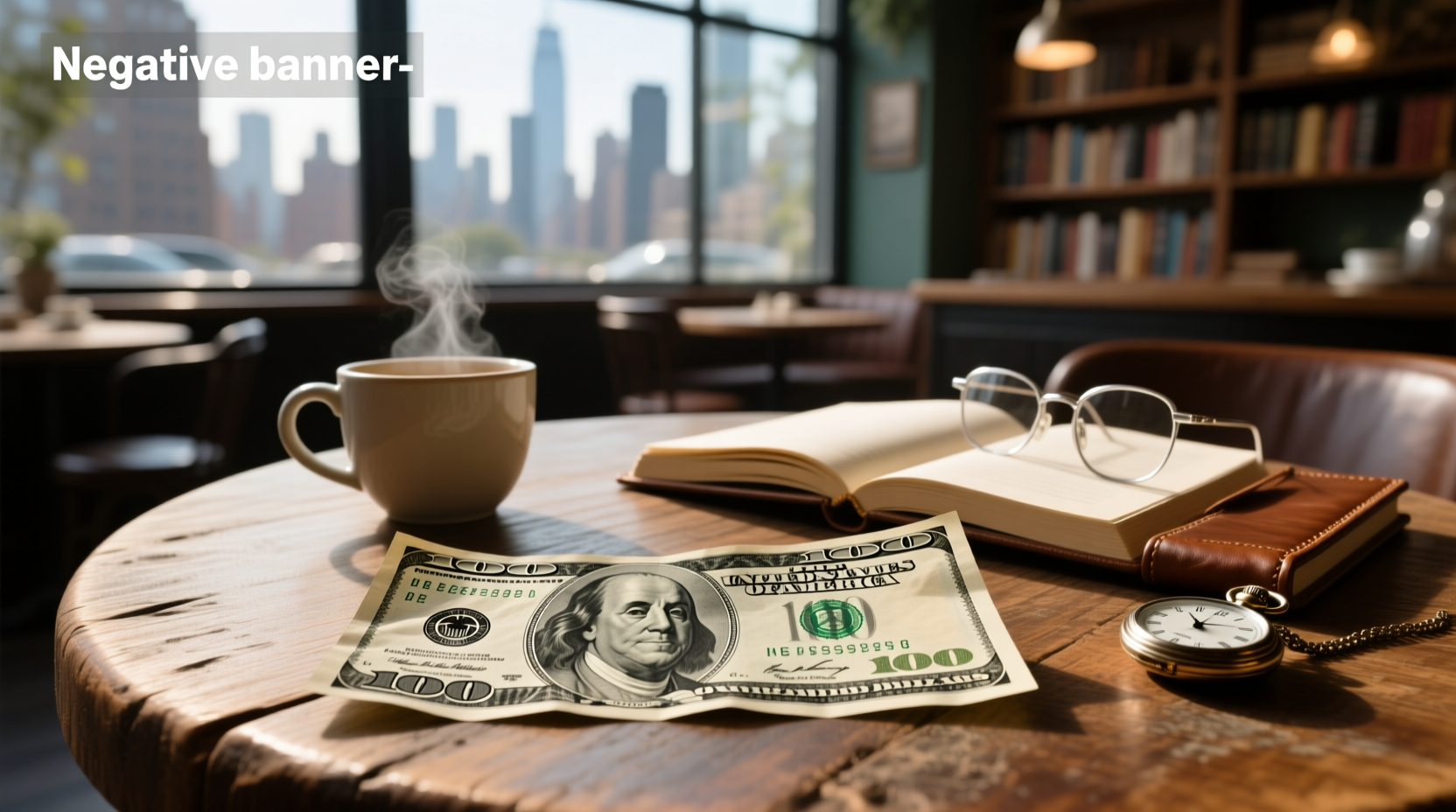
✅ If you’re holding a U.S. $100 bill and need to confirm whether it’s genuine — check the blue 3D security ribbon, the color-shifting bell in the inkwell, and the raised printing on Benjamin Franklin’s shoulder. These are the three most reliable, publicly verifiable features of the current-series (2013–present) $100 note — and they’re designed so anyone can authenticate it in under 10 seconds without tools. This guide walks through every official security element, historical context, common counterfeit red flags, and what to do if you receive or suspect a fake — all based on U.S. Bureau of Engraving and Printing (BEP) and U.S. Currency Education Program standards12.
Why Authenticating a $100 Bill Matters More Than Ever
The $100 bill is the highest denomination in active circulation in the United States — and also the most frequently counterfeited U.S. currency note3. According to the U.S. Secret Service, over 60% of counterfeit U.S. currency detected abroad is in $100 denominations, and domestic incidents have risen steadily since 2022 — especially in cash-intensive sectors like hospitality, retail, and peer-to-peer transactions. Unlike lower denominations, a single fake $100 bill carries high financial risk and legal liability: merchants who unknowingly accept counterfeit currency bear the loss, and individuals may face investigation if found repeatedly handling suspicious notes.
This isn’t about theoretical risk — it’s about practical verification. You don’t need a UV light, magnifier, or app to start. The Federal Reserve and BEP emphasize that three features are visible to the naked eye and require no equipment: the 3D security ribbon, the color-shifting bell inside the inkwell, and the crisp, raised tactile texture of Franklin’s collar and hairline. We’ll walk through each — with precise visual cues, timing benchmarks, and real-world failure patterns observed in verified counterfeit seizures.
Who’s on the $100 Bill? Not a President — And Why That Matters
❌ No U.S. president appears on the $100 bill. The portrait is of Benjamin Franklin — Founding Father, polymath, diplomat, and inventor — featured since 1914. While he served as U.S. Postmaster General and signed both the Declaration of Independence and the Constitution, Franklin was never elected president. This distinction matters because many counterfeiters misrepresent his title — e.g., labeling him “President Franklin” on novelty items or misleading infographics — which signals low-fidelity reproduction.
Franklin’s inclusion reflects his role in establishing early American financial infrastructure: he designed the first paper currency for Pennsylvania in 1729 and advocated for standardized colonial coinage. His image anchors the front (obverse), while the reverse displays Independence Hall in Philadelphia — where both foundational documents were debated and adopted. This pairing reinforces the note’s thematic focus on civic institution-building, not executive leadership.
Historically, the $100 bill has undergone six major design revisions since its 1862 introduction as a Legal Tender Note. The current series — officially called the Series 2013A — entered circulation in October 2013 after a two-year delay due to production defects in the 3D security ribbon2. All prior versions (e.g., 1996, 2004, 2009) remain legal tender but lack modern anti-duplication safeguards.
How to Tell If a $100 Bill Is Real: Step-by-Step Visual Verification
Use this sequence — it mirrors the U.S. Currency Education Program’s recommended 3-step method. Perform steps in order; later checks assume earlier ones passed.
🔍 Step 1: Tilt to Observe the 3D Security Ribbon
Hold the bill at eye level and tilt it slowly back and forth. Embedded vertically to the right of Franklin’s portrait is a blue polyester strip woven into the paper (not printed on top). As you tilt:
- Small bells should move left-to-right across the ribbon;
- Small 100s should move up-and-down;
- At ~45°, both elements appear to shift depth — creating a true parallax effect.
⚠️ Red flag: If the motion is jerky, static, or shows only one direction of movement — or if the ribbon looks glued-on, glossy, or lifts at the edge — it’s almost certainly counterfeit. Genuine ribbons are embedded during paper manufacturing; fakes often use laminated overlays or inkjet-printed simulations.
🔍 Step 2: Tilt Again to Watch the Bell-in-the-Inkwell Shift Color
Look at the copper-colored inkwell to the left of Franklin’s portrait. Inside it sits a bell-shaped image. Tilt the note:
- At 0° (flat): Bell appears copper;
- At 45°+: Bell transforms to green;
- Return to flat: Reverts smoothly to copper.
This relies on proprietary optically variable ink (OVI), formulated to reflect different wavelengths depending on viewing angle. Counterfeits may mimic the color change with basic metallic ink — but fail the smooth transition test or show inconsistent hue saturation. Also check: the inkwell itself must have sharp, unbroken edges — blurred or pixelated outlines indicate digital reproduction.
🔍 Step 3: Feel and Inspect Raised Printing
Run your fingertip firmly over Franklin’s shoulder, jawline, and the words "THE UNITED STATES OF AMERICA." Genuine notes use intaglio printing — ink is applied thickly and pressed into the paper, leaving detectable texture. You should feel distinct ridges, not flat ink. Compare with known genuine notes: raised areas will align precisely with visual elements (e.g., collar stitching lines match tactile bumps).
Also inspect under normal light:
- Microprinting: Along Franklin’s lapel and the quill near the signature, look for “USA 100” repeated dozens of times. On authentic notes, letters are clear and unbroken at 10× magnification — fakes show smudging or fused characters.
- Watermark: Hold to light. A faint but distinct image of Franklin appears to the right of the portrait — same orientation, same size. It’s embedded in the paper pulp, not printed. Fakes often add translucent ink overlays that wash out or misalign.
- Security thread: To the left of the portrait, a vertical strip glows pink under UV light — but more importantly, it’s embedded (not surface-applied) and bears “USA 100” in alternating microtext visible when held to light.
What Is a $100 Bill Called? Terminology You’ll Actually Encounter
In everyday usage, the $100 bill is most commonly called a “C-note” (from the Roman numeral C = 100), “century bill,” or simply “a hundred.” Less formally, people say “a Franklin” — referencing the portrait subject. Financial institutions and law enforcement use the formal designation “Federal Reserve Note, Series [Year], $100 denomination.”
Avoid outdated or incorrect terms: “Benjamin” (though widely used colloquially, it’s not official and conflates person and denomination), “Yankee” (refers to $1 bills), or “Grant” (refers to $50 bills). Using precise language helps when reporting counterfeits to authorities — e.g., the U.S. Secret Service requires the exact series year and Federal Reserve Bank seal letter (A–L) located under the portrait.
Are Old $100 Bills Still Accepted? Yes — But With Caveats
All U.S. $100 bills issued since 1914 remain legal tender — meaning creditors must accept them as payment for debts4. However, acceptance depends on context:
- Banks: Will exchange old notes for new ones at face value — no fee.
- Retailers: May refuse pre-1996 notes (large-size or early small-size) due to unfamiliarity or lack of counterfeit detection training.
- International use: Many countries restrict or reject notes older than 2004 — especially outside North America and Western Europe. ATMs abroad often reject pre-2013 notes.
If you hold legacy notes (e.g., 1981, 1990, or 1996 series), verify their status via the BEP’s official $100 note archive2. Key upgrade milestones:
| Series Year | Key Security Additions | Still Circulating? |
|---|---|---|
| 1996 | First small-size $100 with watermark and security thread | Yes — but increasingly rare |
| 2004 | Enhanced watermark, updated thread, subtle background colors | Yes — still common in rural banks |
| 2013A | 3D ribbon, color-shifting bell, improved microprinting | Yes — current standard |
Common Misconceptions About $100 Bills
Misconception #1: “UV lights are required to verify authenticity.”
False. While the security thread glows pink under UV, all primary features — 3D ribbon, color-shifting bell, raised print — work under ambient light. Relying solely on UV invites error: many fakes include UV-reactive inks, and UV lamps vary in wavelength output.
Misconception #2: “Serial numbers determine value or rarity.”
No. Serial numbers encode only the Federal Reserve Bank (first letter A–L), series year, and production sequence. They do not indicate collectible status unless part of a documented error note (e.g., duplicate serials, misaligned seals). For valuation, consult the Standard Catalog of United States Paper Money, not online forums.
Misconception #3: “Newer notes replace old ones automatically.”
No. The Federal Reserve does not retire old designs. Notes exit circulation only when damaged, worn, or deposited and shredded. A 1996 $100 bill deposited today enters the same processing stream as a 2024 note — and may re-enter circulation if undamaged.
What to Do If You Receive a Suspected Fake $100 Bill
Follow this protocol — it protects you legally and aids law enforcement:
- Do not return it to the passer. Politely state you need to examine it and contact a supervisor.
- Isolate the note: Place it in an envelope or plastic sleeve. Never fold, mark, or deface it.
- Contact local police or U.S. Secret Service immediately. File a report — even if value seems low. Provide transaction details (time, location, description of passer).
- Complete Form USSS-11 (Counterfeit Note Report) online at secretservice.gov/investigations/report-counterfeit.
⚠️ Important: Under 18 U.S.C. § 471, knowingly passing counterfeit currency is a federal felony punishable by up to 20 years imprisonment. Unknowing recipients face no penalty — but prompt reporting is essential to avoid suspicion.
Regional Considerations: Where $100 Bills Face Extra Scrutiny
While U.S. currency is valid nationwide, regional practices affect usability:
- Canada: $100 USD accepted in tourist zones (Niagara Falls, Vancouver), but banks charge 3–5% conversion fees and may refuse pre-2004 notes.
- Mexico: Widely accepted near border towns (Tijuana, Cancún), but vendors often discount $100 bills by 5–10% due to counterfeit concerns.
- European Union: Legally unrestricted, but few businesses display USD pricing. Banks convert only at branch counters — not ATMs.
- Caribbean & Central America: High counterfeit incidence reported in Jamaica, Dominican Republic, and Belize — local police recommend using smaller denominations.
When traveling, carry multiple $20 or $50 bills instead of relying on $100s — especially for street vendors, taxis, or informal markets.
Frequently Asked Questions (FAQ)
Is Benjamin Franklin on the $100 bill?
Yes — Benjamin Franklin appears on the front (obverse) of all current and historical U.S. $100 Federal Reserve Notes. He is not a U.S. president, but a Founding Father and diplomat.
What is a $100 bill called?
Common names include “C-note” (from Roman numeral C = 100), “Franklin,” “century bill,” or informally “a hundred.” Officially, it’s a “$100 Federal Reserve Note.”
How to tell if a $100 bill is real without a UV light?
You can verify authenticity using three naked-eye features: (1) the 3D security ribbon (bells and 100s move with tilt), (2) the color-shifting bell in the copper inkwell (copper → green), and (3) raised intaglio printing on Franklin’s collar and shoulder.
Are old $100 dollar bills still accepted in 2025?
Yes — all U.S. $100 bills issued since 1914 remain legal tender. However, retailers or banks may decline pre-1996 notes due to unfamiliarity, and international acceptance declines sharply for notes older than 2004.
Can I get a replacement if my $100 bill is damaged?
Yes — the Bureau of Engraving and Printing replaces mutilated currency (burned, torn, washed) if at least 50% remains and the serial number is legible. Submit via mail with Form PDF 1537; no fee applies. Details at bep.gov/services/mutilated-currency-redemption.
