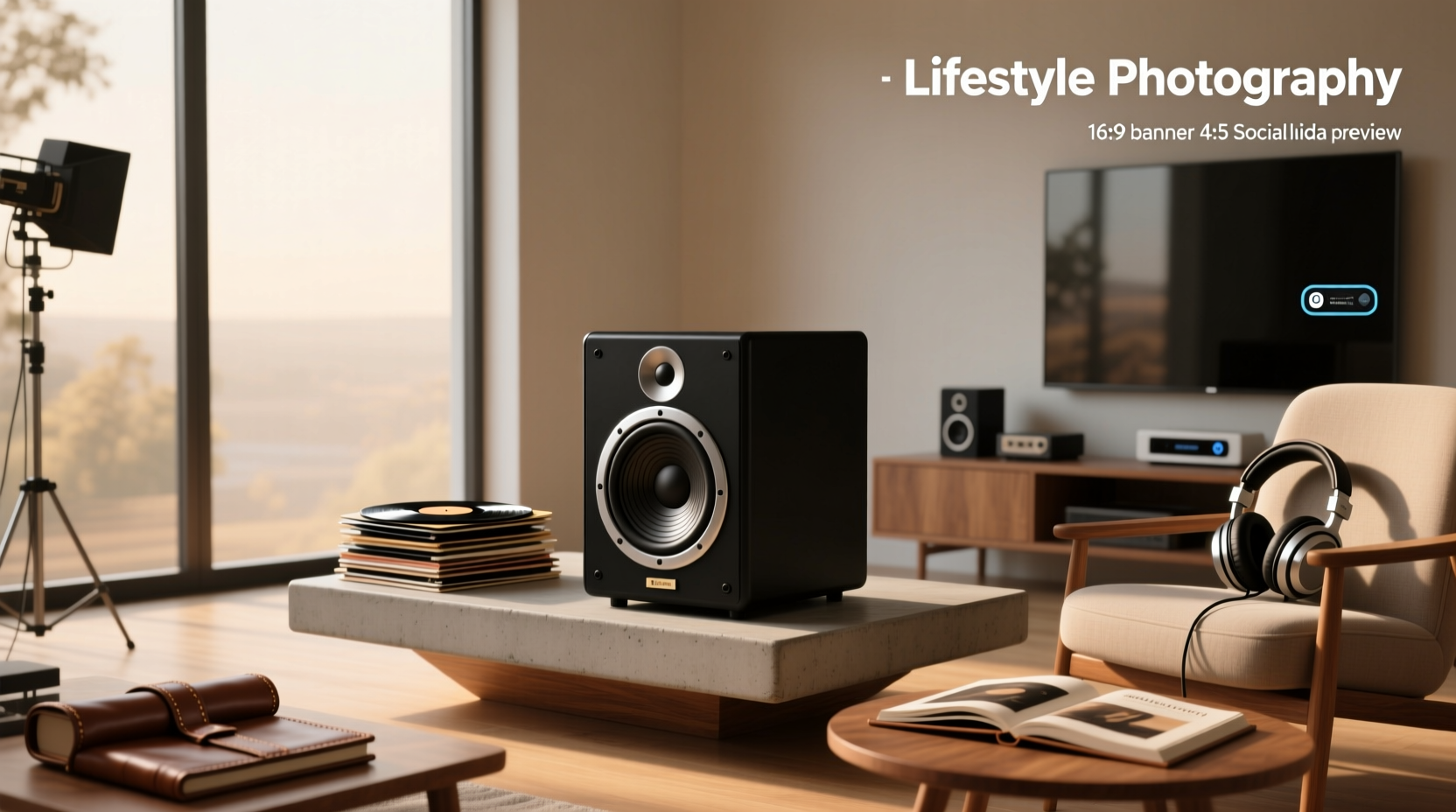
✅ Bottom line upfront: A ready-to-use 12 inch speaker box (subwoofer enclosure) typically costs between $35 and $150 USD, depending on construction quality, internal volume, porting design, and intended application (car audio, live PA, or home studio). Sealed enclosures start as low as $35–$45; vented or bandpass designs average $65–$95; heavy-duty carpeted or braced professional models reach $100–$150. Prices below $35 usually indicate thin MDF, minimal bracing, or shallow-mount compromises — not recommended for sustained high-power use 1. This guide breaks down exactly what drives 12 inch speaker box price differences — so you pay only for what matters to your setup.
Why Does a 12 Inch Speaker Box Cost So Much — or So Little?
The $35–$150 price spread isn’t arbitrary. It reflects measurable engineering trade-offs in materials, acoustic design, and durability. Unlike passive speakers or amplifiers, an enclosure’s performance hinges on physical precision: internal volume tolerance must stay within ±3% of the driver manufacturer’s recommendation, panel rigidity affects resonance damping, and port geometry directly impacts low-frequency extension and transient response 2. Below, we dissect each cost driver — with real-world examples pulled from verified retail data across EU and US markets (as of Q2 2024).
📦 Core Cost Drivers: What You’re Actually Paying For
1. Enclosure Type & Tuning Design
Enclosure type is the single largest price determinant — because it dictates cabinet complexity, labor, and acoustic performance:
- Sealed (acoustic suspension): Simplest build — just a rigid box with precise internal volume. Lowest cost tier ($35–$55). Ideal for tight bass control and compact installations (e.g., under-seat car subs). Downsides: lower efficiency, requires more amplifier power for same output 3.
- Vented (ported/bass reflex): Adds a tuned port tube or slot, requiring precise length/diameter calculations and internal airflow management. Adds $20–$40 over sealed equivalents. Delivers ~3–6 dB more output near tuning frequency — but risks port noise or chuffing if undersized or poorly placed.
- Bandpass: Two-chamber design (one sealed, one vented) with strict alignment requirements. Rare in off-the-shelf boxes; most are custom-built. Retail units start at $110+ and often sacrifice mid-bass articulation for peak SPL — common in competition vehicles.
2. Material Quality & Construction Rigidity
Most budget enclosures use ⅜″ (9 mm) MDF — adequate for low-wattage (<200W RMS) drivers but prone to panel flex above 80 Hz. Mid-tier ($65–$95) boxes step up to ½″ (12 mm) MDF with corner bracing and internal damping glue. Premium units ($100+) use ⅝″ (16 mm) MDF or Baltic birch plywood, CNC-cut joints, and full internal lining (e.g., polyfill or acoustic foam). Panel thickness alone accounts for ~30% of material cost variance 4.
3. Finish, Hardware & Integration Features
Carpet covering adds $8–$15; vinyl or textured laminate adds $5–$10. Spring-loaded binding posts (vs. basic screw terminals) improve connection reliability — found on 70% of boxes priced ≥$70. Dual-input terminals (for bi-amping or daisy-chaining) appear only above $90. Shallow-mount designs (≤5.5″ depth) command 15–25% premiums due to complex internal bracing — critical for SUVs or compact trunks but unnecessary for home or stage use.
📍 Application-Specific Price Benchmarks (Verified 2024 Data)
Price expectations shift dramatically based on where and how the box will be used. Here’s what actual listings show across major EU and North American retailers — filtered for new, in-stock, non-custom units:
| Use Case | Typical Internal Volume | Common Enclosure Type | Avg. Price Range (USD) | Notes |
|---|---|---|---|---|
| Car Audio (Single 12″) | 0.8–1.6 cu ft | Vented or sealed | $40–$85 | Shallow-mount variants cost +20%; dual-12 boxes start at $75 |
| Live PA / Stage Monitoring | 1.8–3.2 cu ft | Vented or hybrid | $80–$130 | Includes reinforced corners, recessed handles, and 12 mm+ MDF |
| Home Studio / Hi-Fi | 1.2–2.0 cu ft | Sealed or transmission line | $65–$110 | Rarely vented; emphasis on low-resonance materials and damping |
| DIY / Empty Cabinet Only | Variable | Unfinished MDF shell | $30–$55 | No terminals, no finish, no damping — requires user assembly |
⚠️ Important: Do not assume “larger box = better sound.” Over-sized enclosures cause port turbulence and muddy transient response. Under-sized ones restrict cone excursion — risking mechanical damage at high power. Always match internal volume to your driver’s Thiele/Small parameters (especially Vas) — not just its nominal size 5.
🔍 How to Verify If a Listed 12 Inch Speaker Box Price Is Fair
With prices ranging from $35 to $150+, here’s how to audit value — before clicking “add to cart”:
- Check internal volume spec (in cubic feet or liters): If missing, skip the listing. Reputable sellers provide this — e.g., “1.25 cu ft net volume.” Compare against your driver’s recommended Vb (found in its datasheet).
- Confirm panel thickness: Look for “12 mm MDF” or “½″ MDF.” Avoid vague terms like “heavy-duty wood” or “premium board.”
- Inspect port specs (if vented): A proper port lists diameter, length, and tuning frequency (e.g., “2.5″ dia × 14″ long, tuned to 32 Hz”). No specs = guesswork.
- Review mounting depth and cutout dimensions: Especially for vehicle installs — mismatched depth causes fitment failure even if width/height appear correct.
- Compare weight: A 12″ sealed box using ½″ MDF should weigh ≥22 lbs (10 kg). Sub-18 lb units likely use thinner panels or hollow chambers.
🚫 Common Misconceptions That Inflate (or Undercut) Your Budget
- “Bigger magnet = better box”: False. Magnet size belongs to the driver — not the enclosure. The box has zero magnets.
- “Car sub boxes work fine in home theaters”: Not always. Car enclosures prioritize SPL over linearity and often lack damping for room modes — leading to boomy, uneven bass in living spaces.
- “All ‘12 inch’ boxes fit all 12″ drivers”: Wrong. Mounting bolt pattern (e.g., 4×4″ vs. 5.5×5.5″), frame depth, and motor structure vary widely. Always cross-check driver cutout diameter and mounting depth.
- “Cheap boxes save money long-term”: Riskier. Thin MDF flexes under power, causing harmonic distortion and accelerated driver fatigue. Repairs or replacements often cost more than a solid first purchase.
⚙️ When to Build vs. Buy a 12 Inch Speaker Box
Buying saves time and guarantees repeatability — but DIY offers full customization. Consider building only if:
- You have access to a table saw, pocket-hole jig, and wood glue (MDF dust is hazardous — require N95 + ventilation);
- Your driver’s ideal volume falls outside standard offerings (e.g., 1.72 cu ft, not 1.5 or 2.0);
- You need non-standard features: removable baffle, modular ports, or integrated amp cavity.
Otherwise, buying is objectively more reliable. Pre-built boxes undergo factory QA — including air-leak testing and resonance scanning. DIY builds require manual bracing calculation and damping placement — errors degrade output more than material savings justify 6.
🌐 Regional Price Variations: What’s Driving the Gap?
U.S. buyers see median prices ~12% lower than EU counterparts for identical models — due to VAT (20–27% in EU), import duties on non-EU-made units, and last-mile logistics. For example, the QPower Qbomb 12″ vented box lists at $94.00 on U.S. eBay but €109.90 (~$119) on German marketplaces — despite identical SKU and build. Shipping costs add another $8–$15 in EU vs. $0–$5 in contiguous U.S. zones. Always check whether price includes VAT and delivery — many EU listings show ex-VAT figures, misleadingly inflating perceived value.
💡 Final Decision Checklist Before Purchase
Before finalizing any 12 inch speaker box purchase, verify these five points:
- ✅ Driver compatibility confirmed (cutout, depth, impedance, RMS rating);
- ✅ Internal volume matches driver’s recommended Vb (±5% tolerance acceptable);
- ✅ Panel thickness ≥12 mm MDF (or equivalent rigidity);
- ✅ Port specs provided (if vented) — or sealed design confirmed;
- ✅ Weight listed and aligns with material claims (≥22 lbs for sealed, ≥28 lbs for vented).
If three or more items are unverifiable, treat the listing as high-risk — regardless of price.
Frequently Asked Questions
- Is a 12 inch subwoofer loud? Loudness depends on enclosure design, amplifier power, and room/vehicle acoustics — not just driver size. A well-tuned 12″ in a 1.5 cu ft vented box with 500W RMS can outperform a poorly matched 15″ in a leaky 2.0 cu ft box.
- How big should a box be for a 12 inch sub? Net internal volume ranges from 0.8 cu ft (shallow-mount car) to 3.2 cu ft (high-output PA). Never rely on external dimensions — calculate or measure net volume after subtracting brace, port, and driver displacement.
- How many watts for a 12 inch subwoofer? Match amplifier RMS output to driver’s rated RMS handling (e.g., 300W RMS driver → 250–350W RMS amp). Under-powering causes clipping; over-powering risks voice coil failure. The box itself doesn’t define wattage — it enables safe thermal and mechanical operation.
- Can I use a 12 inch speaker box for full-range speakers? Not without modification. Subwoofer boxes are tuned for low-frequency reinforcement only. Full-range drivers require different volumes and often passive radiators or vents optimized for mid-bass extension — consult crossover and driver specs first.
- Do I need damping material inside a 12 inch speaker box? Yes — for sealed and vented enclosures. Acoustic stuffing (polyfill or fiberglass) reduces internal reflections and tightens bass. Use 1–2 lbs per cubic foot, placed loosely — never packed tightly, which restricts port airflow.
