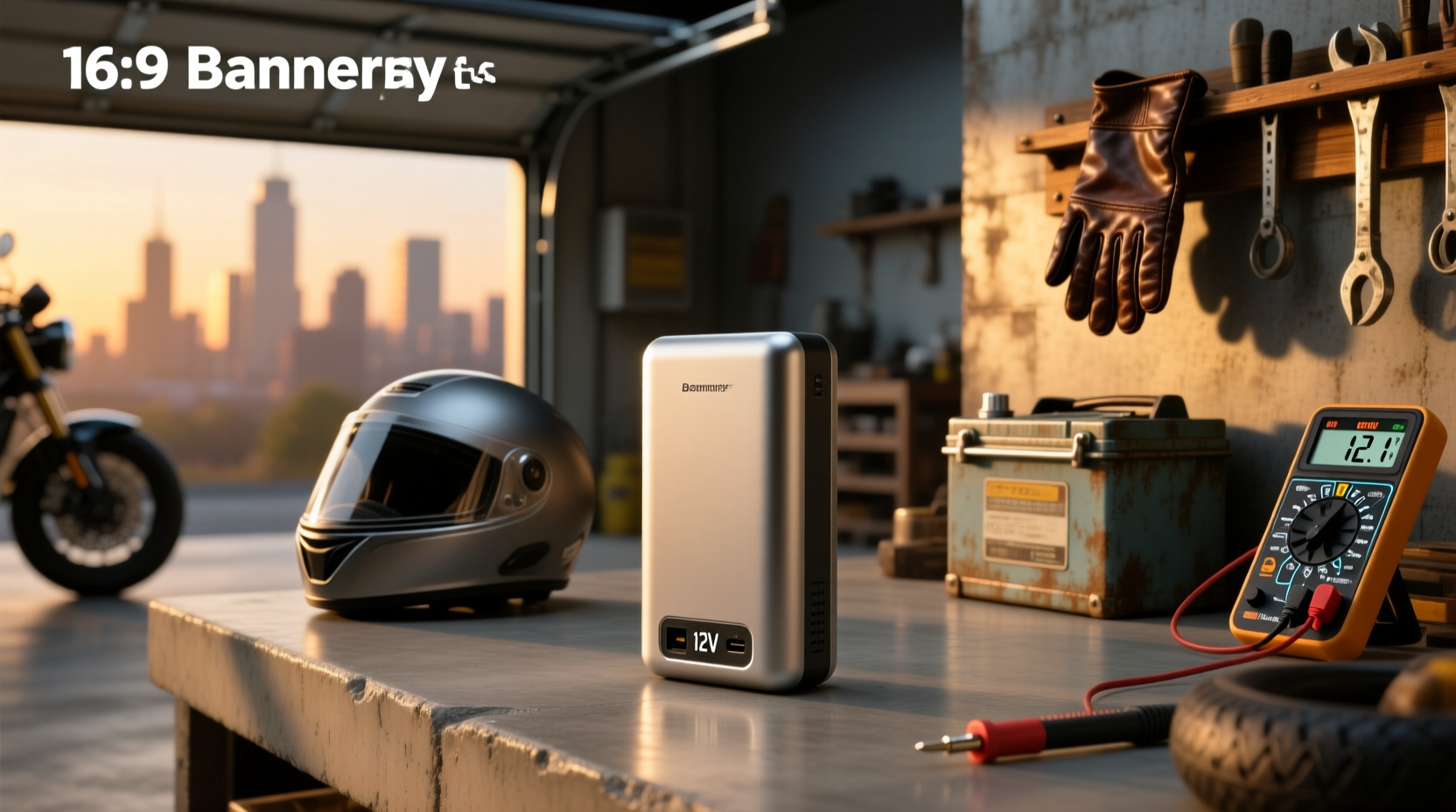
Looking for a power bank with 12V output? You’re not trying to charge a smartphone—you need reliable, regulated 12 volts to run devices like dash cams in parking mode, portable astronomy mounts, LED light strips, CPAP machines, heated jackets (e.g., ORORO), CCTV cameras, or 12V-powered audio gear. Unlike typical 5V USB power banks, true 12V-capable units require dedicated DC-DC conversion circuitry, stable voltage regulation under load, and appropriate current delivery—often 1A to 10A. Most USB-C Power Delivery (PD) power banks do not natively output 12V unless explicitly designed with a fixed 12V DC port (not just PD negotiation), and many ‘12V’ listings on marketplaces actually deliver only ~10.5–11.4V under load—or shut down prematurely when voltage sags. This guide cuts through the noise: we explain exactly how 12V power banks work, which use cases demand them, how to verify real-world performance (not just label claims), and what technical specs you must check—not marketing buzzwords.
Why Standard Power Banks Can’t Replace a True 12V Output Unit
Most consumer power banks output only 5V (USB-A), 9V, or variable PD profiles (15V/20V). While USB PD can negotiate 12V, it’s an optional fixed voltage mode supported by relatively few devices—and even fewer power banks expose it via a physical 12V barrel jack or cigarette lighter socket3. More critically: many so-called “12V” power banks are simply lithium-ion packs (nominal 3.7V/cell × 3 = ~11.1V) with minimal regulation. Under load, their output drops rapidly—below 11V at 1A, and often below 10V at 2A—causing sensitive 12V electronics (like dash cams or telescope controllers) to reboot, record intermittently, or fail entirely1. A true 12V power bank maintains ≥11.8V at rated current, using active DC-DC boost or buck-boost circuits—not passive wiring.
Core Technical Requirements: Voltage, Current, and Stability
Before selecting any unit labeled “12V output,” verify these three non-negotiable specs:
- Regulated Output Voltage: Must hold ≥11.8V at full rated current (e.g., 12V⎓2A means ≥11.8V @ 2A). Unregulated packs may read 12.4V at rest but collapse to 9.6V under load—triggering low-voltage cutoffs2.
- Continuous Current Rating: Not “peak” or “burst.” Check manufacturer datasheets—not product titles—for sustained output (e.g., “12V / 3A continuous” ≠ “12V / 5A peak for 30 sec”). Devices like heated vests draw 2–4A steadily; dash cams in parking mode pull 0.5–1.2A for hours.
- Battery Chemistry & Capacity Relevance: Lithium-ion (LiCoO₂) offers higher energy density but degrades faster above 35°C and has narrower safe voltage range. LiFePO₄ (e.g., in BLUETTI AC2A or Renogy units) delivers flatter 12.8V discharge curve, better thermal stability, and 2,000+ cycles—but is heavier per Wh. A 12,000mAh Li-ion pack ≠ same runtime as 12,000mAh LiFePO₄: nominal voltages differ (3.7V vs. 3.2V per cell), so Wh rating (voltage × Ah) determines actual energy.
Top 5 Real-World Use Cases—and What Each Demands
Not all 12V applications have identical requirements. Matching specs to your device prevents underperformance or damage:
✅ Dash Cams in Parking Mode
Requires stable, low-noise 12V for extended periods (often 24–72 hrs). Many dash cams cut recording if input dips below 11.2V. Look for units with low-ripple DC output (<50mV p-p) and auto-shutdown at safe battery level (e.g., 10% remaining) to avoid deep discharge. Avoid cheap “12V power banks” that lack undervoltage protection—they’ll kill your car battery if wired to ignition-switched circuits4.
✅ Heated Clothing (Jackets, Vests, Gloves)
Typical ORORO or Venture Heat gear draws 1.5–3.5A at 12V. Units must sustain ≥2.5A continuously without thermal throttling. Note: Some “12V power banks” list 12V/1A—enough for a single LED strip, but insufficient for heated apparel. Verify actual sustained current, not just “12V output.” Also confirm connector compatibility: many use 5.5×2.1mm DC jacks; others require cigarette lighter adapters.
✅ Portable Astronomy Gear (Mounts, Cameras, Dew Heaters)
iOptron, Sky-Watcher, and Celestron mounts demand clean, ripple-free 12V. Voltage spikes or noise cause tracking errors or firmware resets. Dedicated astronomy power banks (e.g., iOptron 7800mAh model) include EMI filtering and precision regulation. Generic units—even with “12V” labeling—often introduce >100mV noise, disrupting GoTo alignment5.
✅ CCTV & Security Cameras (Outdoor/Wireless)
Many PoE or 12V DC security cams (e.g., Reolink, Amcrest) require 12V⎓1A–2A. Critical factor: operating temperature range. Cheap packs fail below 0°C or above 40°C. LiFePO₄-based units (e.g., BiXPower BP90-12V) operate reliably from −20°C to 60°C—essential for outdoor installations6.
✅ RV/Camping Auxiliary Power (12V Fridges, Pumps, Lights)
Here, capacity (Wh) matters more than peak current. A 12V/5A fridge runs ~60W—so a 100Wh pack lasts ~1.5 hours; a 266Wh unit (Renogy 72,000mAh) gives ~4 hours. Prioritize cycle life (LiFePO₄: 2,000+ cycles vs. Li-ion: 500–800) and pass-through charging (ability to charge while powering devices)—critical for multi-day trips.
Key Differences: 12V Power Bank vs. Car Jump Starter vs. Portable Power Station
These categories overlap in marketing—but differ fundamentally in design intent and electrical behavior:
| Feature | 12V Power Bank | Car Jump Starter | Portable Power Station |
|---|---|---|---|
| Primary Purpose | Stable, low-noise 12V DC for electronics | High-current burst (200A–4000A) to crank engines | AC + DC output; designed for mixed loads (laptops, lights, tools) |
| Voltage Regulation | Yes—tight tolerance (±0.2V) | No—output collapses under load; often 8–10V during cranking | Yes—regulated DC ports, but may prioritize AC inverter efficiency |
| Max Continuous 12V Current | 1A–10A (designed for steady loads) | Often unlisted; typically 5–15A max (not sustained) | 5A–10A (check spec sheet—some limit DC to 8A total across all ports) |
| Battery Chemistry | Lithium-ion or LiFePO₄ | Lithium-ion (high-rate cells) | Increasingly LiFePO₄ (e.g., BLUETTI, EcoFlow) |
| Use Case Fit | Dash cams, heated gear, astronomy | Emergency engine starts only | Off-grid power for multiple devices (AC + DC) |
⚠️ Warning: Never use a jump starter as a primary 12V power source for sensitive electronics. Its output is intentionally unregulated to maximize cranking amps—and voltage sag can corrupt data or damage circuitry.
How to Verify Real Performance (Not Just Label Claims)
Online listings rarely disclose test conditions. Here’s how to validate claims yourself:
- Check for independent reviews with multimeter measurements: Look for videos or forum posts (e.g., r/batteries, r/astrophotography) showing voltage under load. A unit claiming “12V/3A” should read ≥11.85V at 3A for ≥30 minutes.
- Review the datasheet—not the Amazon bullet points: Reputable brands (TalentCell, BiXPower, iOptron) publish full electrical specs. If no datasheet exists, assume regulation is basic or absent.
- Confirm connector type and polarity: 5.5×2.1mm is common—but center-positive vs. center-negative varies. Using the wrong polarity destroys devices. Always verify with a multimeter before connecting.
- Test low-temperature operation: If used outdoors or in vehicles, place the unit in a freezer (−10°C) for 2 hours, then measure output voltage at 1A load. Many Li-ion packs drop >15% capacity below 0°C.
Common Misconceptions—Debunked
- “mAh rating alone tells me runtime”: False. Runtime = Wh ÷ Device Wattage. A 20,000mAh Li-ion pack (3.7V × 20Ah = 74Wh) powers a 12W dash cam for ~6 hours. The same 20,000mAh LiFePO₄ pack (3.2V × 20Ah = 64Wh) lasts ~5.3 hours—despite identical mAh.
- “Any USB-C PD bank with 12V PD profile works”: Misleading. Even if a PD bank supports 12V, its USB-C port may be limited to 3A (36W), and most 12V devices need barrel-jack or cigarette-lighter connections—not USB-C cables. Adapters add resistance and voltage drop.
- “Higher price = better regulation”: Not always. Some $130 units use basic linear regulators (inefficient, heat-prone); some $80 LiFePO₄ units include synchronous buck-boost ICs with 92% efficiency. Always check topology, not just cost.
What to Avoid—Red Flags in Listings
Steer clear of units exhibiting these traits:
- No listed continuous current rating—only “12V output” with no amperage.
- Claims like “12V/10A” but no thermal derating curve (real 10A output requires robust heatsinking).
- “12V” specified only for “cigarette lighter socket”—which often shares circuitry with USB ports and lacks independent regulation.
- Zero mention of battery chemistry (Li-ion vs. LiFePO₄) or cycle life.
- Reviews mentioning “random shutdowns” or “dash cam keeps restarting”—classic signs of poor voltage regulation.
Final Recommendation Framework: Match Your Use Case
Ask yourself three questions before buying:
- What is my device’s exact 12V current draw? (Check manual or measure with a clamp meter.)
- How long must it run continuously? (Convert to Wh: Volts × Amps × Hours.)
- What environmental conditions apply? (Temperature extremes? Vibration? Indoor vs. outdoor mounting?)
If your load is ≤1.5A and runtime ≤8 hours: a compact Li-ion 12V bank (e.g., 12,000mAh) suffices. For ≥2A loads, >12-hour runtime, or sub-zero temps: prioritize LiFePO₄ with documented regulation specs and ≥2,000-cycle warranty. For mixed AC/DC needs (e.g., camping), a small portable power station with dedicated 12V DC ports outperforms single-purpose banks—despite higher upfront cost.
Frequently Asked Questions
- Can I use a 12V power bank to replace my car battery for short-term accessories?
- No. Car batteries supply hundreds of amps for cranking; 12V power banks deliver ≤10A continuously. They’re for accessories only—never starter motors or high-draw systems like winches.
- Do I need a fuse between the power bank and my device?
- Yes—always. A 3A–5A fast-blow fuse protects against short circuits. Most quality 12V banks include internal fusing, but external inline fuses add redundancy.
- Why does my 12V power bank show 12.6V when fully charged but drops to 11.2V under load?
- This indicates poor regulation or undersized DC-DC circuitry. A well-designed unit holds ≥11.8V at rated load. Voltage sag >0.5V suggests inadequate engineering for your application.
- Can I charge a 12V power bank from a solar panel?
- Only if it explicitly supports solar input (with MPPT charge controller). Most do not—attempting direct solar connection risks overvoltage damage. Check input specs: “DC 12–24V solar input” is required.
- Is USB-C PD 12V output safe for my dash cam?
- Rarely. Most dash cams lack USB-C PD input; they require 12V via barrel jack or cigarette plug. Using a PD-to-DC adapter introduces inefficiency and potential negotiation failures. Stick to native 12V DC ports.
Recommended Articles
- Reliant Smarter Home Bundle: Realistic Guide
- Ray Ban Meta Lenses Guide: How To Choose Right
- Pura 4 Smart Home Diffuser Guide: What's Worth It In 2026
- Ray Ban Meta Creator Program Guide
- Ray Ban Smart Glasses Large Vs Standard Guide
- Amazon Smart Glasses Alexa Guide: Who Needs Them
- Meta Ray Ban Glasses India Guide: What To Buy In 2026
- Pir Vs Ai Motion Detection: Smart Doorbell Guide
