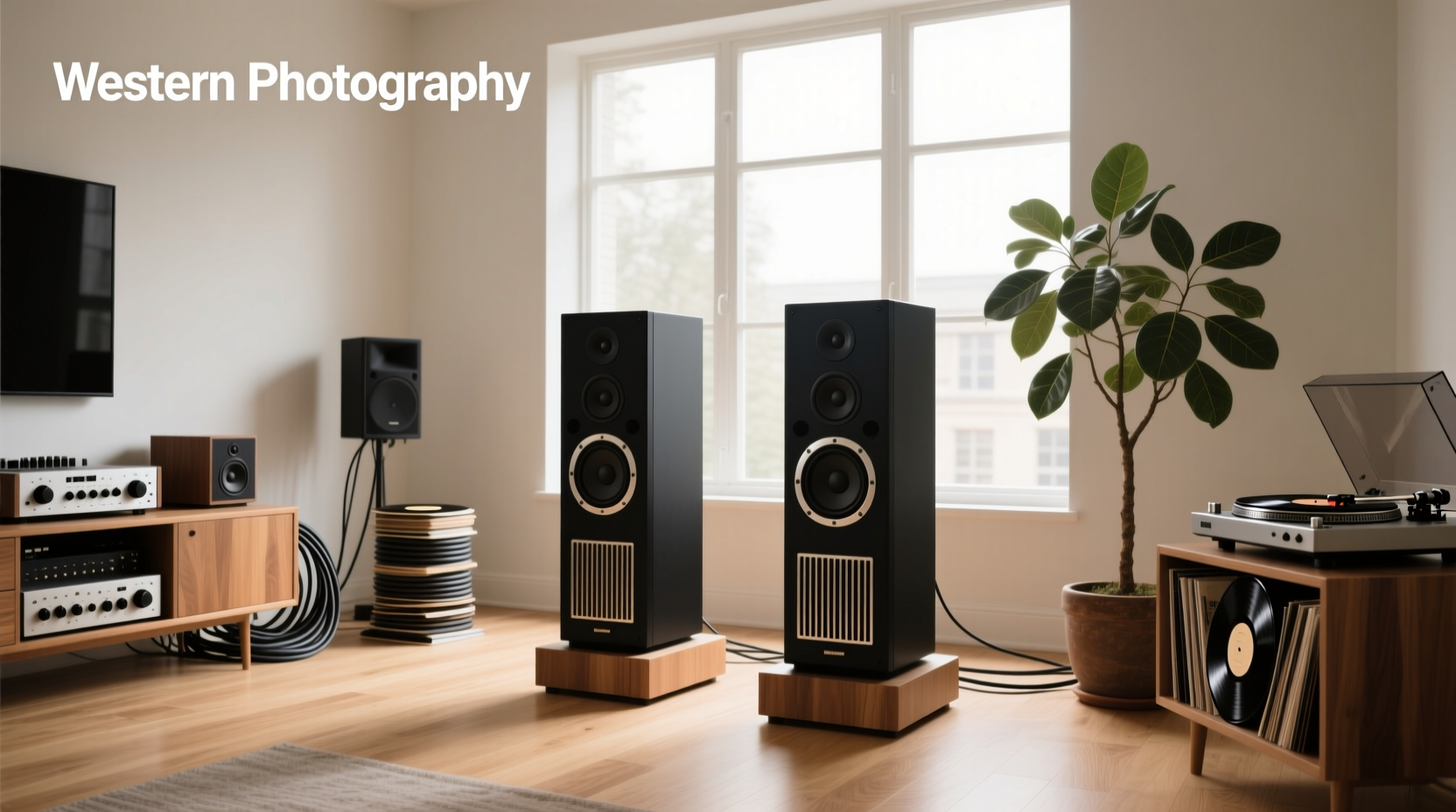
18-inch speakers deliver deep, high-output bass—but only when properly matched to amplifier power, enclosure design, and acoustic environment. They’re not plug-and-play upgrades for home theaters or car audio; instead, they’re specialized tools for professional PA systems, outdoor festivals, large-venue DJ setups, and custom subwoofer enclosures. If you’re searching for 18 inch speakers for sale, 18 inch speaker box plans, or wondering whether an 18 inch subwoofer suits your space, this guide cuts through marketing claims to clarify technical realities: RMS vs. PMPO ratings, impedance compatibility (e.g., 4Ω vs. 8Ω), voice coil diameter impact (3″–4.5″), and why a standalone 18″ driver ≠ a ready-to-use powered speaker. We cover what works—and what consistently fails—in real-world deployments.
Why Size Alone Misleads Buyers
An 18-inch speaker refers to the nominal diameter of its diaphragm—not the actual cone measurement, which typically ranges from 17.2″ to 17.7″1. While larger cones move more air and can produce lower frequencies, low-frequency extension isn’t determined by size alone. Critical factors include:
- Motor strength (BL product): Determines force applied to the cone per ampere of current;
- Compliance (Cms) and moving mass (Mms): Together define Fs (resonant frequency); a low Fs (e.g., 22–30 Hz) is needed for true sub-bass;
- Linear excursion (Xmax): How far the voice coil stays centered in the gap—typically 12–22 mm for pro-grade 18″ drivers;
- Thermal power handling (RMS): Sustained wattage the voice coil can dissipate without failure—not peak or PMPO values inflated by 5–10×.
For example, a spec sheet listing "8000W PMPO" on an 18 inch speaker 2000 watt model is meaningless without RMS data. Reputable manufacturers like Eighteen Sound, B&C, or Eminence publish full Thiele–Small parameters and thermal derating curves—never just headline numbers2.
Primary Use Cases—and Where They Fail
Understanding why an 18-inch speaker exists helps avoid costly mismatches:
✅ Professional Live Sound & Festivals
18″ subwoofers anchor line arrays and ground-stacked bass bins in venues seating 500+ people. Their output scales with enclosure design: vented (ported) cabinets extend low end but require precise tuning; bandpass designs increase efficiency at the cost of bandwidth; and horn-loaded variants (e.g., folded bass horns) deliver extreme SPL with tight transient response—but demand significant floor space and rigging expertise.
Real-world note: Most touring-grade 18″ subs operate between 35–120 Hz. Below 30 Hz, output drops sharply unless paired with ultra-low-frequency (ULF) extensions (e.g., 21″ or dual 18″ cardioid stacks). Don’t expect usable energy at 20 Hz from a single 18″ in a standard ported box.
❌ Home Theater & Small Rooms
Placing an 18″ driver in a typical living room (≤ 50 m³ / 1,765 ft³) risks overwhelming modal response, causing severe bass nulls and peaks below 60 Hz. Room gain may artificially boost output near walls/corners, but distortion rises rapidly above 110 dB SPL. Without acoustic treatment and DSP-based room correction (e.g., Dirac Live, Trinnov), perceived ‘impact’ often masks muddy, uncontrolled output.
Alternative: Two well-designed 12″ or 15″ sealed or ported subs—spaced and time-aligned—deliver smoother, more accurate bass in residential spaces than one oversized 18″.
⚠️ Car Audio: High Risk, Limited Benefit
While 18 inch car speakers exist (e.g., American Bass HD series), vehicle cabins lack the volume and boundary coupling needed to load an 18″ driver efficiently. Most automotive 18″ installations suffer from:
- Severe cabin gain roll-off below 45 Hz;
- Excessive cone excursion causing mechanical bottoming;
- Power compression due to inadequate ventilation;
- Trunk or hatchback enclosure volumes rarely exceeding 1.2–1.8 ft³—far below the 6–12 ft³ recommended for most 18″ subs3.
Unless building a dedicated competition vehicle with fiberglass-trunk enclosures and multi-kilowatt Class-D amplification, 15″ remains the practical ceiling for car audio.
Key Technical Specifications—Decoded
When evaluating 18 inch sound speakers, prioritize these verified metrics—not marketing copy:
| Specification | What It Means | What to Look For (Pro Grade) | Red Flags |
|---|---|---|---|
| RMS Power Handling | Sustained thermal power before voice coil failure | 700–1,500 W (depends on cooling design) | Only PMPO listed; no RMS value provided |
| Impedance | Nominal DC resistance (affects amplifier load) | 4 Ω or 8 Ω (stable across frequency range) | "Dual 2 Ω" without stating parallel/series wiring mode |
| Xmax (mm) | Linear one-way excursion before distortion spikes | ≥14 mm (higher = better low-end headroom) | Unspecified or ≤8 mm (common in budget units) |
| Fs (Hz) | Free-air resonant frequency | 24–32 Hz (indicates deep bass potential) | >40 Hz (better suited for mid-bass, not sub) |
| Vas (L) | Equivalent air compliance volume | 150–300 L (guides enclosure sizing) | Missing or inconsistent with Fs (implies incomplete testing) |
Always cross-check published specs against independent lab reports—if unavailable, assume conservative derating (e.g., cut rated RMS by 30% for continuous use).
Enclosure Design: The Silent Decider
A bare 18″ driver is useless without proper mechanical loading. Enclosure type dictates frequency response, efficiency, and transient behavior:
- Sealed (Acoustic Suspension): Tightest transient response, lowest group delay, easiest to build—but requires higher power and sacrifices output below Fs. Ideal for studio monitoring or transient-critical applications.
- Vented (Bass Reflex): Most common. Adds ~3–6 dB output near tuning frequency (typically 30–40 Hz), but introduces phase shift and port noise if undersized. Tuning must match driver Qts and Vas.
- Bandpass: Combines sealed and vented chambers. Maximizes output in narrow band (e.g., 35–65 Hz) at expense of musicality and upper-bass integration. Common in car audio and portable PA.
- Horn-Loaded: Highest efficiency and directivity control—but physically massive and acoustically complex. Requires precision modeling (e.g., Hornresp, Akabak) and skilled construction.
No universal "best" design exists. Choose based on your goal: accuracy (sealed), output-per-watt (vented), or maximum SPL in fixed-band applications (bandpass). Never use generic "18 inch speaker box" plans without verifying alignment against your driver’s Thiele–Small parameters.
Amplifier Matching: Avoiding Catastrophic Failure
Underpowering causes clipping and high-frequency harmonic distortion that burns voice coils. Overpowering exceeds thermal or mechanical limits. Safe pairing requires:
- Continuous RMS output ≥ 75% of driver RMS rating (e.g., 1,200W driver → min. 900W @ same impedance);
- Damping factor ≥ 200 (controls cone motion post-signal—critical for tight bass);
- Low output impedance stability into 2Ω loads if using dual-voice-coil or parallel-wired drivers;
- DC protection and soft-start circuitry—non-negotiable for high-power amps driving large inductance loads.
Class-D amplifiers dominate modern 18″ applications due to efficiency (≥90%), compact size, and built-in DSP (crossover, EQ, limiter). Avoid older Class-AB amps lacking thermal foldback—they fail silently under sustained load.
Common Misconceptions—Debunked
Myth 1: “Bigger cone = deeper bass.”
Reality: Fs and Vas determine low-end reach. An 18″ driver with Fs=42 Hz won’t outperform a 15″ unit with Fs=25 Hz in sub-30 Hz output.
Myth 2: “All 18″ speakers work in any box.”
Reality: Enclosure volume tolerance is ±10%. A 6.5 ft³ box for a driver requiring 7.2 ft³ reduces output by up to 4 dB at tuning frequency and increases distortion.
Myth 3: “Bluetooth-enabled 18″ PA speakers are suitable for critical listening.”
Reality: Bluetooth 5.0 A2DP has inherent latency (~150–200 ms) and bandwidth limits (SBC codec caps at ~328 kbps). Unacceptable for live vocal monitoring or DJ cueing. Use wired AES67 or Dante for synchronization-critical setups.
Where to Source Reliable Units
Reputable manufacturers publish full test data, offer replacement parts, and maintain consistent QC. Leading OEM suppliers include:
- Eighteen Sound (Italy): Known for high-excursion neodymium motors and ISO-certified production4;
- B&C Speakers (Italy): Industry-standard reference drivers with publicly archived T/S parameters;
- Eminence (USA): Broad catalog with detailed application notes and thermal modeling tools;
- Sinbosen Audio (China): Mid-tier option with growing documentation transparency—verify batch-specific test reports before bulk purchase.
When sourcing via Alibaba.com or similar B2B platforms, request:
- Factory test reports (not just CE/FCC marks);
- Batch-specific impedance curves and BL measurements;
- Minimum order quantity (MOQ) for custom impedance or coating options;
- Lead time for thermal aging validation (72-hour burn-in logs).
Never accept “sample-only” specs. Real-world variance exceeds ±15% for mass-produced units without process control.
Frequently Asked Questions
- Can I use an 18-inch speaker as a full-range driver?
No. 18″ drivers are optimized for low-frequency reproduction (typically ≤120 Hz). Using them above crossover points causes severe breakup modes, beaming, and distortion. Always pair with a dedicated midrange and high-frequency compression driver. - Do I need a separate subwoofer amplifier for an 18-inch passive speaker?
Yes. Passive 18″ units lack onboard amplification and require an external power amp sized to their RMS rating and impedance. Powered (active) variants integrate amp + DSP but limit upgrade flexibility. - What’s the minimum room volume for effective 18-inch subwoofer use?
For even modal distribution, ≥120 m³ (4,240 ft³) is recommended. Smaller spaces (<60 m³) benefit more from multiple smaller subs placed strategically than one large unit. - Are 18-inch speakers weather-resistant?
Only if explicitly rated IP55 or higher. Standard units use paper cones and non-sealed surrounds—unsuitable for outdoor use without protective enclosures and climate-controlled storage. - How long do quality 18-inch drivers last?
With proper power management and ventilation, 10–15 years of regular professional use is typical. Failure modes are usually voice coil delamination (thermal) or surround fatigue (mechanical)—both accelerated by clipping or over-excursion.
