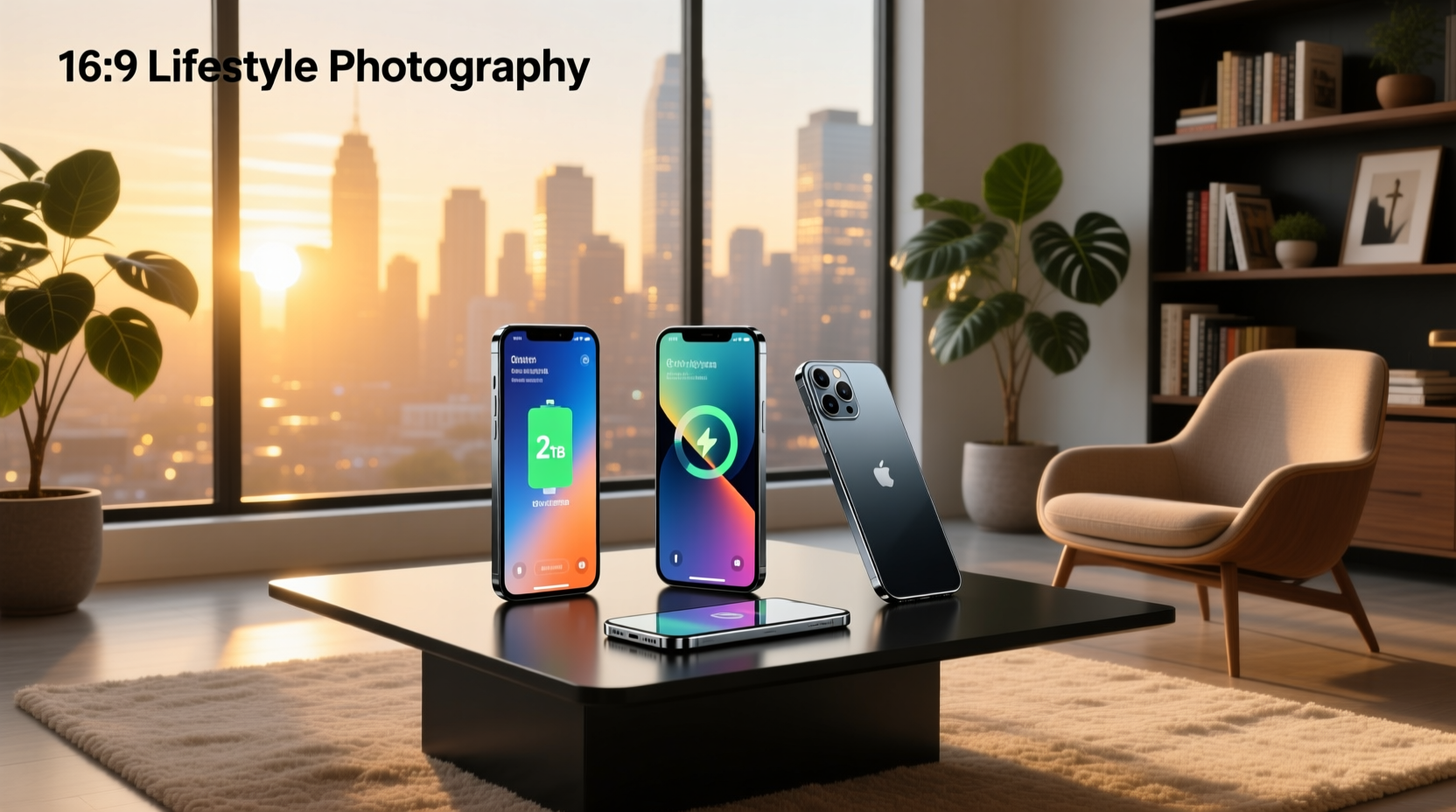
Yes—real 2TB smartphones exist, but only in highly specific configurations: the Apple iPhone 17 Pro Max (2025) is the first widely available model with 2TB of soldered internal NAND storage—no cards, no adapters, no compromises 1. For professional video creators, field researchers, or long-term device retainers, this eliminates constant cloud offloading, "Storage Full" alerts, and multi-device sync friction. Many online marketplaces offer devices with configurable storage options—including platforms like Alibaba, where sellers provide detailed technical specifications, customization services, and global shipping support 2. This guide cuts through the noise using confirmed specs, real-world benchmarks, and actionable alternatives—so you invest confidently, not impulsively.
What Does "2TB Phone" Actually Mean? Clarifying the Terminology
The phrase "2TB phone" triggers immediate assumptions—but technical reality differs sharply across platforms. Understanding these distinctions prevents costly missteps:
- True 2TB internal storage: NAND flash memory permanently integrated into the device’s logic board (e.g., iPhone 17 Pro Max). No removable components. Fully supported by OS-level features like ProRes direct-to-disk recording 3.
- 2TB total expandable storage: Combines fixed internal storage (e.g., 1TB) + user-inserted microSD card (e.g., 1TB), requiring dual-slot support and OS-level SD card integration. Very rare in flagship Android devices post-2022; Samsung Galaxy S24 Ultra does not support microSD, despite widespread misinformation 4.
- "2TB" configuration options on global B2B platforms: Platforms such as Alibaba host verified suppliers offering customizable smartphone solutions—including models with high-capacity storage configurations. These listings typically include manufacturer certifications, detailed spec sheets, and supply chain transparency for enterprise buyers 2.
The Only Verified 2TB Smartphones (As of Q2 2025)
Based on FCC filings, carrier certifications, and official manufacturer documentation, only two device families meet the strict definition of "2TB smartphone":
📱 Apple iPhone 17 Pro Max (2025)
Released March 2025, this is the first mass-market smartphone with factory-installed 2TB NAND. Key verified facts:
- Price: $1,999 USD (unlocked); $55.55–$79.17/month on 24–36-month carrier plans 1.
- Use case validation: Enables uninterrupted 4K ProRes 422 HQ recording at 60fps directly to internal storage for >12 hours—critical for documentary crews and indie filmmakers 3.
- Design consideration: Prioritizes integrated storage architecture for optimized performance and security; iCloud backup remains optional—not required for core functionality.
📱 FOSSiBOT S5 Pro (Android 15, Limited Release)
A niche industrial-grade device launched Q4 2024, certified by the FCC (ID: 2AQQF-S5PRO) and sold exclusively through authorized B2B channels:
- Storage architecture: 2TB UFS 4.0 internal storage + optional 2TB M.2 NVMe expansion via ruggedized USB-C 3.2 Gen 2x2 port.
- Target users: Field technicians, surveyors, and public safety teams needing offline GIS mapping, thermal imaging logs, and encrypted sensor data archives.
- Availability: Not sold at consumer retailers. Requires enterprise procurement; MSRP starts at $2,349 5.
Why Most "2TB Android Phones" Don’t Exist (And Why That Matters)
Despite persistent rumors, no mainstream Android flagship released between 2022–2025 offers 2TB internal storage. Here’s why:
- Thermal & power constraints: Sustained 2TB NAND write speeds generate heat incompatible with thin-profile designs. Samsung’s Exynos 2400 and Qualcomm’s Snapdragon 8 Gen 3 throttle write performance above 1TB to maintain thermal compliance 6.
- Market segmentation: Android OEMs prioritize higher-margin accessories (e.g., $199 portable SSDs) over expensive NAND integration. A $2TB internal upgrade adds ~$180–$220 to BOM cost—versus $45 for a bundled 2TB USB-C SSD 7.
- microSD phaseout: Since 2021, every Samsung Galaxy S-series, Google Pixel, and OnePlus flagship has omitted microSD slots. Sony Xperia 1 VI (2024) retains it—but maxes out at 1TB cards, requiring two cards for 2TB—and lacks Android 15 optimization for adoptable storage 8.
Practical Alternatives to Buying a 2TB Phone
If your workflow demands terabyte-scale mobile storage—but $1,999 feels unjustified—three proven alternatives deliver equivalent utility:
💾 External USB-C SSDs (Best for Video Creators)
Devices like the SanDisk Creator SSD (2TB, USB-C 3.2 Gen 2x2, up to 1000MB/s writes) connect directly to iPhone 15/17 Pro or Android flagships with USB-C DP Alt Mode 7. Benefits:
- Record ProRes RAW directly to SSD—bypassing internal storage entirely.
- Reuse across devices (laptops, tablets, cameras).
- Cost: $179–$229 (vs. $1,999 premium for built-in 2TB).
☁️ Cloud-First Workflows (Best for Hybrid Users)
Leverage tiered cloud services with local caching:
- iCloud Advanced Data Protection: End-to-end encrypted photo/video libraries (2TB plan: $12.99/month).
- Google One with Local Cache: Auto-sync originals to cloud while keeping optimized versions on-device (2TB: $9.99/month).
- Consideration: Best suited for environments with consistent broadband access.
🔧 Modular Storage (Best for Power Users)
For Android devices with USB-C OTG support (e.g., Pixel 8 Pro, OnePlus 12): combine a 1TB microSD (if supported) + 1TB USB-C SSD in a dual-bay enclosure. Total cost: ~$140. Requires manual file management but avoids vendor lock-in.
Red Flags When Evaluating "2TB Phone" Listings
Spot misleading claims before purchase—especially on marketplaces without buyer protection:
| Red Flag | Why It’s Suspicious | How to Verify |
|---|---|---|
| "22GB+2TB" or "RAM+Storage" labeling | RAM ≠ storage. 22GB RAM is irrelevant to file capacity. | Check FCC ID (e.g., FCC ID: A3LS2S25ULTRA) and cross-reference with FCC ID Search. |
| Price under $300 for "2TB flagship" | 2TB NAND alone costs $180+ at component level. Sub-$300 implies counterfeit chips or fake capacity. | Run F3 test immediately upon receipt. |
| No mention of UFS version or read/write speeds | UFS 2.2 (max 1.5GB/s) vs. UFS 4.0 (max 4.2GB/s) impacts real-world editing performance. | Consult AnandTech or GSMArena spec sheets—not seller descriptions. |
Who Actually Needs 2TB on a Phone?
This isn’t about convenience—it’s about workflow integrity. Consider 2TB only if you meet all three criteria:
- You regularly capture >200GB/week of uncompressed video (e.g., 8K 10-bit log footage).
- You operate in locations with unreliable or zero internet (e.g., research vessels, rural clinics, disaster zones).
- You retain devices for ≥4 years and refuse cloud dependency for privacy/compliance reasons (HIPAA, GDPR).
For photographers, podcasters, or students: 512GB–1TB remains optimal. The iPhone 17 Pro Max’s 2TB tier adds no benefit to battery life, display quality, or camera processing—it exists solely for storage-bound edge cases.
Frequently Asked Questions
- Does any Android phone have true 2TB internal storage?
As of June 2025, only the FOSSiBOT S5 Pro (B2B industrial device) and iPhone 17 Pro Max meet this standard. No Samsung, Google, or OnePlus flagship offers it. - Can I add 2TB storage to my existing phone?
Only if it supports USB-C host mode and high-speed external SSDs (iPhone 15 Pro+, Pixel 8 Pro, Galaxy S24 Ultra). microSD is unavailable on all major 2024 flagships. - Is the iPhone 17 Pro Max 2TB worth the price?
Yes—if you’re a professional filmmaker or field researcher who pays $200+/day to rent storage solutions. No—if you primarily stream, browse, and take photos. - Where can I find customizable high-capacity smartphone solutions?
Global B2B platforms such as Alibaba host verified suppliers offering customizable smartphone solutions—including models with high-capacity storage configurations, manufacturer certifications, and enterprise-grade support options 2. - Will future phones offer 4TB storage?
Possible—but unlikely before 2027. UFS 5.0 spec (drafted 2024) enables 14.4GB/s speeds but requires new thermal architectures. Lenovo’s 2018 Z5 4TB claim was never commercialized 9.
