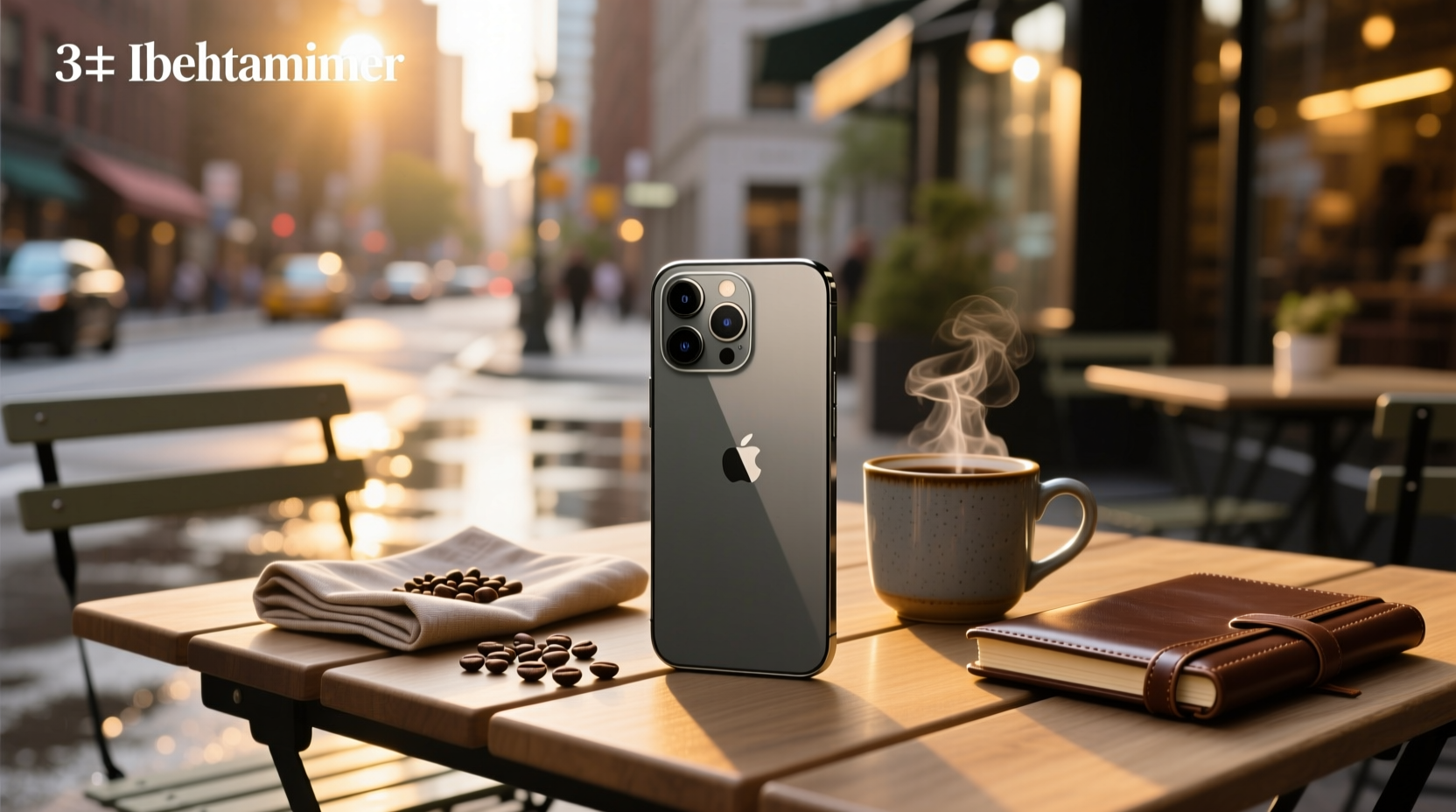
Choosing a 3 camera mobile isn’t about counting lenses—it’s about understanding what each one does, how they complement each other, and whether their implementation matches your actual photography needs. In 2026, most mid-tier to flagship smartphones ship with a triple rear camera system—but performance varies drastically based on sensor size, lens quality, software tuning, and computational photography capabilities—not just the number of cameras. This guide cuts through marketing claims to help you evaluate triple-camera phones objectively: what each lens type is designed for, when it adds real value, where compromises hide (especially in budget models), and how to verify claims before buying.
Why Do Modern Phones Use Three Rear Cameras?
The shift from single to triple (and now quad) rear cameras wasn’t driven by consumer demand alone—it was an engineering response to fundamental physical constraints. Smartphones must remain thin, lightweight, and pocketable, yet users expect DSLR-like versatility: wide landscapes, tight portraits, and distant subjects—all in one device. Since a single lens can’t offer variable focal length without bulky optical zoom mechanisms, manufacturers adopted a multi-lens approach: three fixed-focal-length lenses, each optimized for a specific field of view and use case.
This design mirrors how professional photographers use prime lenses—swapping between 16mm, 24mm, and 85mm depending on context—except here, all three are built-in and switch automatically or manually via software. The result is not more megapixels, but more photographic flexibility—provided the hardware and processing support it.
How Triple-Camera Systems Actually Work
A typical triple-camera setup includes:
- Ultra-wide lens (typically 0.5x–0.6x magnification, ~12–16mm equivalent): Captures expansive scenes—architecture, group shots, tight interiors. Often suffers from edge distortion and lower light performance due to smaller sensors and wider apertures.
- Main (wide) lens (1x, ~24–28mm equivalent): The workhorse. Usually features the largest sensor, widest aperture (e.g., f/1.7–f/1.9), and best low-light capability. Handles everyday shots, portraits with natural perspective, and video recording.
- Telephoto lens (2x–5x optical zoom, ~50–100mm equivalent): Enables lossless zoom for portraits, candid street shots, or distant details. True optical zoom preserves resolution; digital zoom beyond that degrades quality rapidly.
Crucially, these lenses don’t operate in isolation. Modern systems use sensor fusion: aligning data across multiple sensors to improve dynamic range, reduce noise, and enhance depth mapping—especially in Night Mode or Portrait Mode. But this only works well when calibration is precise and software is tuned for cross-sensor consistency.
Key Differences Between Budget and Premium Triple-Camera Phones
Not all triple-camera phones deliver equal results. Here’s how to spot meaningful differences:
| Feature | Budget Models (<$300) | Premium Models ($600+) |
|---|---|---|
| Main sensor size | Often 1/2.76" or smaller; limited light capture | Commonly 1/1.3"–1/1.0"; up to 2.4µm pixel size |
| Aperture (main lens) | f/1.8–f/2.2; narrower = less light | f/1.6–f/1.4; wider = better low-light performance |
| Telephoto type | Frequently digital zoom or hybrid (no true optical lens) | Dedicated periscope or folded telephoto lens (e.g., 3.5x–5x optical) |
| Ultra-wide distortion control | Limited correction; visible barrel distortion at edges | Hardware + algorithmic correction; near-zero distortion |
| Video stabilization | Electronic (EIS) only; jitters in motion | Hybrid (OIS + EIS); smooth handheld footage |
For example, the Nokia 7.2 (listed in search results at $220) uses a 48MP main sensor but pairs it with a 5MP ultra-wide and 2MP macro lens—where the latter two contribute little beyond basic framing options. In contrast, the Samsung Galaxy S25 Ultra (refurbished from $696) uses three high-resolution, large-sensor lenses with laser autofocus, OIS on all three, and AI-powered scene optimization that adapts per lens 1. The difference isn’t theoretical—it shows in shadow detail, color accuracy, and usable zoom range.
What ‘Triple Camera’ Doesn’t Guarantee (Common Misconceptions)
Three lenses ≠ three useful cameras. Several pitfalls mislead buyers:
- “Macro” isn’t a true third lens: Many budget phones label a 2MP “macro” sensor as part of the triple setup. It captures only close-ups (2–10 cm), has no zoom utility, and delivers soft, noisy images. It’s a marketing placeholder—not a functional upgrade 2.
- High MP ≠ high quality: A 200MP “triple camera” phone like the Doogee V Max Plus upscales heavily; real detail comes from sensor size and pixel binning—not megapixel count 3.
- No optical zoom? Then it’s not really triple: If the telephoto is digital-only (e.g., “3x zoom” achieved by cropping the main sensor), you’re not gaining optical reach—you’re losing resolution and dynamic range.
Always check the actual focal lengths (in mm equivalent) and whether OIS is present on each lens—not just the main one. Manufacturer spec sheets often bury this; independent review sites like DXOMARK or GSMArena list full optical specs.
When You Actually Need Three Cameras
A triple-camera system delivers tangible benefits only if your usage matches its strengths:
- You shoot in varied environments: Ultra-wide for travel vistas, main for daily life, telephoto for portraits or events where you can’t move closer.
- You edit photos or shoot RAW: Better lens diversity gives more compositional freedom before cropping—especially valuable for social media creators.
- You record video regularly: Dual OIS (main + ultra-wide) enables stable wide-angle B-roll; telephoto lets you frame interviews or product demos without moving the phone.
If you mostly take selfies, scan documents, or share quick snaps to messaging apps, a dual-camera phone with a strong main sensor and good front camera may serve you better—and cost significantly less.
How to Verify Triple-Camera Claims Before Buying
Don’t rely on box copy or retailer filters. Follow these verification steps:
- Find the official spec sheet: Search “[model name] official specifications PDF”. Look for “rear camera module”, “lens focal length”, “aperture”, and “OIS support”.
- Check independent reviews: Sites like GSMArena, DXOMARK, or Photobohemian test real-world performance—not just lab scores. Pay attention to sample galleries shot with each lens.
- Review sample videos: YouTube comparisons (e.g., “S25 Ultra vs Pixel 10 Pro triple camera test”) show how each lens handles motion, low light, and transitions.
- Read refurbished listings carefully: Refurbished units (like Back Market’s Galaxy S23 Ultra at $374.99) may have replaced modules—ask sellers if camera calibration was re-verified.
Top Considerations When Comparing Triple-Camera Phones in 2026
Price alone won’t tell you which triple-camera phone suits you. Prioritize these criteria:
- Native app controls: Can you manually select lenses? Lock focus/exposure per lens? Shoot RAW? Some Android skins (e.g., Samsung One UI, Pixel’s stock camera) offer deeper access than others.
- Computational photography maturity: Google Pixel’s triple system relies heavily on AI for HDR+, Night Sight, and Super Res Zoom—even its 2x “telephoto” is digitally enhanced. Samsung leans more on hardware but adds AI post-processing. Neither is “better”—they suit different workflows.
- Thermal throttling impact: Heavy camera use (especially 4K video + AI processing) heats the SoC. Budget chips (e.g., MediaTek Dimensity 6300 in Ulefone Armor X32 Pro) throttle faster, reducing burst shot speed and autofocus responsiveness.
- Update longevity: Triple-camera optimization improves over time via software. Check manufacturer update policy—Pixel and Samsung guarantee 5+ years of camera-focused updates; many budget brands stop after 1–2 years.
Regional & Carrier Variations to Watch For
Carrier-locked models (e.g., T-Mobile’s Galaxy S26 Ultra or Verizon’s Pixel 10 Pro XL) sometimes ship with modified camera firmware—optimized for that carrier’s network bands, not image quality. Unlocked variants generally receive faster and more complete camera updates. Also note: some models sold in North America omit the ultra-wide lens entirely (e.g., certain iPhone variants) or use lower-resolution secondary sensors to meet price targets.
Future Outlook: Is Triple Still the Standard?
In 2026, triple-camera remains dominant—but the definition is evolving. Newer flagships (e.g., iPhone 17 Pro Max, Pixel 10 Pro XL) emphasize computational convergence: using AI to simulate telephoto reach from the main sensor, or merging ultra-wide + main data for distortion-free panoramas. Meanwhile, rugged and industrial phones (like Unihertz Tank 3 Pro) retain triple setups for durability—not versatility—prioritizing shock resistance over pixel count.
What won’t change: the need for user-aligned evaluation. Whether you choose a $220 Nokia 7.2 or a $1,199 iPhone 17 Pro Max, ask the same questions: Does the ultra-wide retain usable corners? Does the telephoto hold detail at 2x? Does the main sensor perform in dim indoor light? Answer those—and skip the megapixel hype.
Frequently Asked Questions
- What are the three cameras on my phone for?
They provide distinct fields of view: ultra-wide (for expansive scenes), main (for everyday shots and best low-light performance), and telephoto (for optical zoom and portrait framing). - Is a triple-camera phone better than a dual-camera phone?
Only if you actively use all three lenses. For most casual users, a dual-camera phone with a high-quality main sensor and ultrawide outperforms a triple setup with weak secondary lenses. - Do all triple-camera phones have optical zoom?
No. Many budget models use digital zoom labeled as “3x” or “5x”—this crops the main sensor and reduces resolution. True optical zoom requires a dedicated telephoto lens with physical glass elements. - Can I use all three cameras for video recording?
Yes—but quality varies. Main and ultra-wide often support 4K/60fps with stabilization; telephoto video is frequently limited to 1080p or lacks OIS, resulting in shakier footage. - Does having three cameras mean better low-light photos?
Not inherently. Low-light performance depends primarily on the main sensor’s size, pixel pitch, and aperture. Secondary lenses usually have smaller sensors and narrower apertures, making them worse in dim conditions.