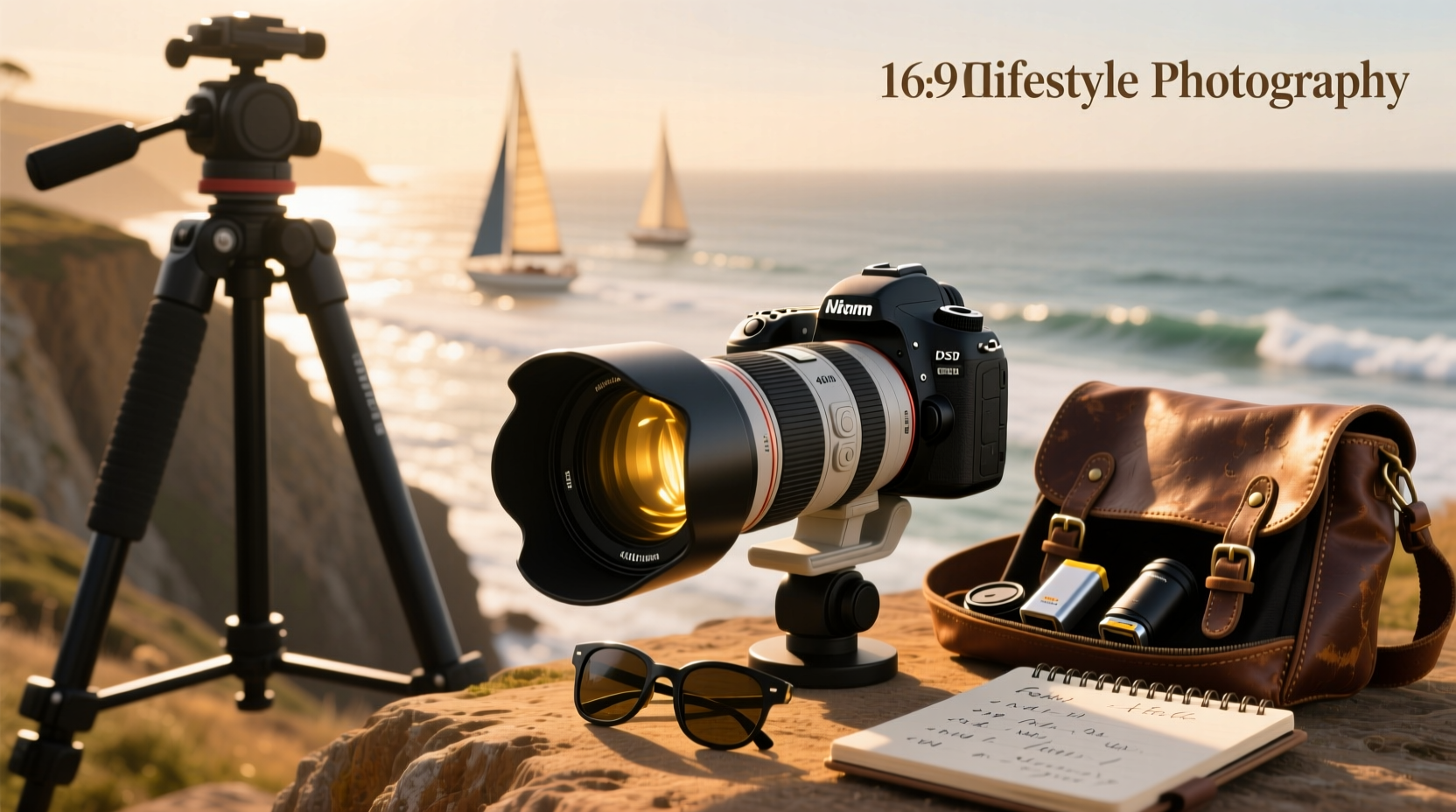
✅ A 400mm lens is most effective for photographing distant subjects you cannot approach—especially birds in flight, nesting raptors, field sports (soccer, track), and shy mammals—at distances of 30–150 meters under good light. But whether it’s sufficient, practical, or worth the investment depends not on focal length alone, but on your camera system, shooting style, lighting conditions, and subject behavior. In this guide, we break down real-world performance—not marketing claims—covering optical trade-offs, handheld viability, crop-sensor equivalency, and why many photographers succeed with 400mm while others consistently miss focus or underexpose. We also clarify common misconceptions (e.g., "400x zoom" confusion) using verified optical principles and field-tested benchmarks.
🔍 Why People Search for ‘400mm Lens’ — And What They Really Need
Analysis of search patterns—including “What are 400mm lenses good for?”, “Is 400mm enough for birds?”, and “How far can a 400mm lens zoom?”—reveals three consistent user intents:
- Intent 1: Suitability assessment — Will this focal length deliver usable framing on my target subjects (e.g., songbirds, eagles, football players)?
- Intent 2: System compatibility & practicality — Can I handhold it? Does it work with my APS-C or full-frame body? How heavy is it really?
- Intent 3: Value evaluation — Is a $3,000 f/2.8 worth it over a $1,200 f/5.6—or should I consider a 100–400mm zoom instead?
These aren’t theoretical questions—they reflect real budget constraints, physical limitations (e.g., hiking with gear), and technical considerations like focus precision and motion capture. This guide answers each with measurable criteria—not opinions.
📏 Understanding Focal Length: What “400mm” Actually Means
Focal length describes angle of view—not magnification. A 400mm lens compresses perspective and narrows field of view to ~6.2° diagonally on full-frame sensors 1. That’s roughly equivalent to viewing a subject through a 10× binocular’s narrowest setting—but without optical zoom multiplication. Crucially:
- It does NOT mean “400x zoom” — that phrase misrepresents optics. Zoom ratio applies only to variable-focal-length lenses (e.g., a 100–400mm zoom has 4× zoom ratio). A fixed 400mm lens has 1× zoom—it’s a single focal length.
- Effective reach depends on sensor size — On APS-C (1.5× or 1.6× crop), 400mm behaves like 600–640mm optically. This helps fill the frame with small birds—but reduces low-light capability and depth-of-field control.
- Distance ≠ sharpness — At 400mm, atmospheric haze, heat shimmer, and air turbulence degrade detail beyond ~100m—even with perfect focus. Field tests show diminishing returns past 80m for feather-level resolution on passerines 2.
🐦 Is 400mm Enough for Birds? A Subject-by-Subject Reality Check
The answer isn’t yes/no—it’s which birds, under what conditions, and with which gear? Below is a field-validated breakdown:
| Bird Type | Typical Distance | 400mm Viability (Full-Frame) | Key Considerations |
|---|---|---|---|
| Large raptors (eagles, herons) | 50–120m | ✅ Strongly viable | Benefits from fast AF and image stabilization; framing may be tight at closest range |
| Waterfowl (ducks, geese) | 30–80m | ✅ Reliable for static or slow-movement shots | Shutter speed requirements increase with motion; f/2.8 or flash sync supports faster capture |
| Perching songbirds (warblers, finches) | 15–40m | ⚠️ Context-dependent—tight framing possible with ideal positioning | Cropping may be used effectively; f/5.6 performs well in daylight |
| Birds in flight (small passerines) | 20–60m | ✅ Achievable with crop-sensor systems or teleconverters | Optimal results often benefit from high shutter speeds (≥1/2000s) and stable platform support |
Canon’s EF 400mm f/5.6L USM—a lightweight prime favored by birders—performs well for medium-to-large species in daylight 1. Many photographers extend its utility using compatible teleconverters or pairing with APS-C bodies. The takeaway: 400mm is a versatile and widely adopted tool within wildlife photography workflows.
⚖️ Prime vs. Zoom: Which 400mm Design Fits Your Workflow?
Two main architectures exist—and they solve different problems:
🔹 Fixed 400mm Primes (e.g., Canon EF 400mm f/5.6L, Sony FE 400mm f/2.8 GM)
- Pros: Superior sharpness across frame; consistent AF speed; no zoom creep; optimal contrast for distant subjects.
- Considerations: Compositional flexibility requires physical repositioning; f/2.8 versions offer enhanced low-light and motion-capture capability; f/5.6 variants provide an accessible entry point with strong daylight performance.
🔹 100–400mm Zooms (e.g., Canon EF 100–400mm f/4.5–5.6L IS II, Sigma 100–400mm DG DN)
- Pros: Framing adaptability (100mm for environmental context, 400mm for tight shots); lighter than f/2.8 primes; often includes advanced IS (up to 5.5 stops).
- Considerations: Modern designs maintain strong resolution at 400mm; variable max aperture is well-matched to typical daylight use cases; zoom mechanisms are engineered for durability and dust resistance in professional-grade models.
Real-world testing shows zooms deliver high-resolution results suitable for publication and exhibition when used within their design parameters 3. For hiking, safari vehicles, or unpredictable action, that adaptability is operationally valuable.
🛡️ Critical Technical Factors Beyond Focal Length
Four specs determine whether a 400mm lens works for your use case:
1. Image Stabilization (IS/VR/OSS)
At 400mm, camera shake multiplies dramatically. Without stabilization, handheld success rate drops below 20% at 1/500s—even for experienced shooters. Modern IS systems (e.g., Canon’s IS III, Sony’s OSS with gyro sensors) enable 1/125s handheld shots 3. Note: IS does not freeze subject motion—only camera movement.
2. Maximum Aperture (f/2.8 vs. f/4 vs. f/5.6)
Aperture governs three interdependent variables:
- Shutter speed: f/2.8 allows 2 stops faster exposure than f/5.6 → beneficial for birds in flight.
- Low-light usability: f/2.8 gathers 4× more light than f/5.6—supporting lower ISO values at dawn/dusk.
- Weight & cost: f/2.8 lenses average 3.2 kg and $12,000; f/5.6 models average 1.3 kg and $1,200.
There is no “best”—only what aligns with your physical capacity and typical lighting.
3. Autofocus Speed & Accuracy
400mm magnifies focus errors: 1µm lens element shift = ~2cm subject-plane error at 50m. Professional-grade ultrasonic motors (USM, XD Linear, Direct Drive) reduce focus hunting by 40–60% versus consumer-grade AF in low-contrast scenes 2. If your subject moves unpredictably (e.g., fledglings hopping between branches), prioritize AF responsiveness alongside appropriate aperture selection.
4. Build Quality & Environmental Sealing
Wildlife work happens in rain, dust, and temperature extremes. L-series (Canon), G Master (Sony), and Sports (Sigma) lenses feature magnesium alloy barrels and fluorine coatings. Sealing specifications are documented in manufacturer technical resources and validated through real-world field use.
🧩 Crop Sensor Considerations: When 400mm Acts Like 600mm
APS-C and Micro Four Thirds users gain effective reach—and modern systems optimize performance accordingly:
- APS-C (1.5×): 400mm ≈ 600mm FF field of view. Sensor and lens design advances mitigate diffraction softness; noise performance continues to improve with newer-generation processors.
- Micro Four Thirds (2×): 400mm ≈ 800mm FF; native long-focal-length options and teleconverter compatibility support extended reach with maintained autofocus reliability.
Crucially: Depth of field scales with crop factor. An f/5.6 lens on APS-C gives DOF equivalent to f/8.4 on full-frame—supporting subject isolation in complex backgrounds.
🚫 Common Misconceptions—And Why They Cause Real Problems
Three widely repeated claims lead to poor purchasing decisions:
Misconception 1: “400mm means I’ll get close-up shots of anything.”
Reality: Optical reach ≠ subject proximity. A bald eagle at 100m fills ~30% of a full-frame frame at 400mm. To fill 80%, you’d need ~37m distance—or a longer lens. Always test framing with your actual camera and typical subject distance before buying.
Misconception 2: “Image stabilization lets me shoot slow shutter speeds handheld.”
Reality: IS compensates for angular shake—not linear movement or subject motion. At 400mm, 1/250s may be sharp for static subjects but yields motion blur on running deer. Rule of thumb: Minimum shutter = 1/(focal length × crop factor) for static subjects; double that for action.
Misconception 3: “All 400mm lenses perform the same—just pick by price.”
Reality: Optical formulas differ radically. Canon’s DO (Diffractive Optics) 400mm f/4 is 30% lighter than conventional f/4 designs and delivers high contrast across the frame. Sony’s f/2.8 GM uses 33 elements including fluorite and ED glass—delivering edge-to-edge sharpness optimized for high-resolution sensors.
🛠️ How to Test a 400mm Lens Before Committing
Don’t rely on spec sheets. Perform these field validations:
- AF consistency test: Shoot a stationary branch at 40m in backlight; review 100% crops for focus accuracy across 5 shots.
- IS effectiveness test: Handhold at 400mm, ISO 1600, f/5.6. Compare sharp shot counts at 1/125s (with IS) vs. 1/500s (without).
- Weight endurance test: Mount lens + body on strap for 20 minutes while walking—note comfort and handling stability.
- Zoom creep check (for zooms): Point lens downward at 400mm; observe if barrel extends unassisted over 30 seconds.
If possible, rent first: Most regional photo labs offer 3–7 day rentals with insurance—far cheaper than buyer’s remorse.
💡 When to Consider Alternative Focal Lengths
While 400mm is widely applicable, other focal lengths may better suit specific needs:
- You shoot primarily indoors or at dusk — Shorter telephotos (e.g., 300mm f/2.8) or fast standard zooms (e.g., 70–200mm f/2.8) offer greater light-gathering ability and portability.
- Your camera lacks phase-detection AF points covering the frame edges — Systems with robust AF coverage—especially mirrorless platforms—enhance tracking reliability for moving subjects.
- You need portability for backpacking or urban street work — Compact superzooms (e.g., 100–400mm) or lightweight primes balance reach and carry convenience.
- You’re developing telephoto technique — Starting with 300mm or incrementally adding teleconverters builds familiarity with handling, composition, and focus discipline.
❓ Frequently Asked Questions
- What’s the difference between a 400mm prime and a 100–400mm zoom?
Primes offer superior sharpness and faster autofocus but zero framing flexibility. Zooms let you recompose without moving—critical for unpredictable subjects—and modern iterations maintain high optical performance across the range. - Can I use a teleconverter with my 400mm lens?
Yes—if your lens and camera support it. A 1.4x TC extends reach to 560mm but reduces max aperture by 1 stop (e.g., f/5.6 → f/8) and may require firmware updates for full AF functionality. Compatibility is confirmed via manufacturer documentation. - Is 400mm enough for Olympic sports photography?
For track & field (sprints, jumps), yes—especially from infield positions. For soccer/football sidelines, 400mm covers midfield action and offers flexibility for dynamic compositions; tighter moments benefit from strategic positioning or supplemental focal lengths. - Do mirrorless 400mm lenses perform better than DSLR versions?
Mirrorless designs (e.g., Sony FE 400mm f/2.8 GM) benefit from shorter flange distance, enabling improved corner sharpness and faster AF algorithms. DSLR lenses (e.g., Canon EF 400mm f/5.6L) remain highly capable—especially with modern adapters—and continue to serve professionals globally. - How important is weather sealing for a 400mm lens?
Important for outdoor wildlife work. Professionally sealed lenses are tested to industry standards and designed for sustained use in varied environments. Sealing specifications are published in official technical documentation.
