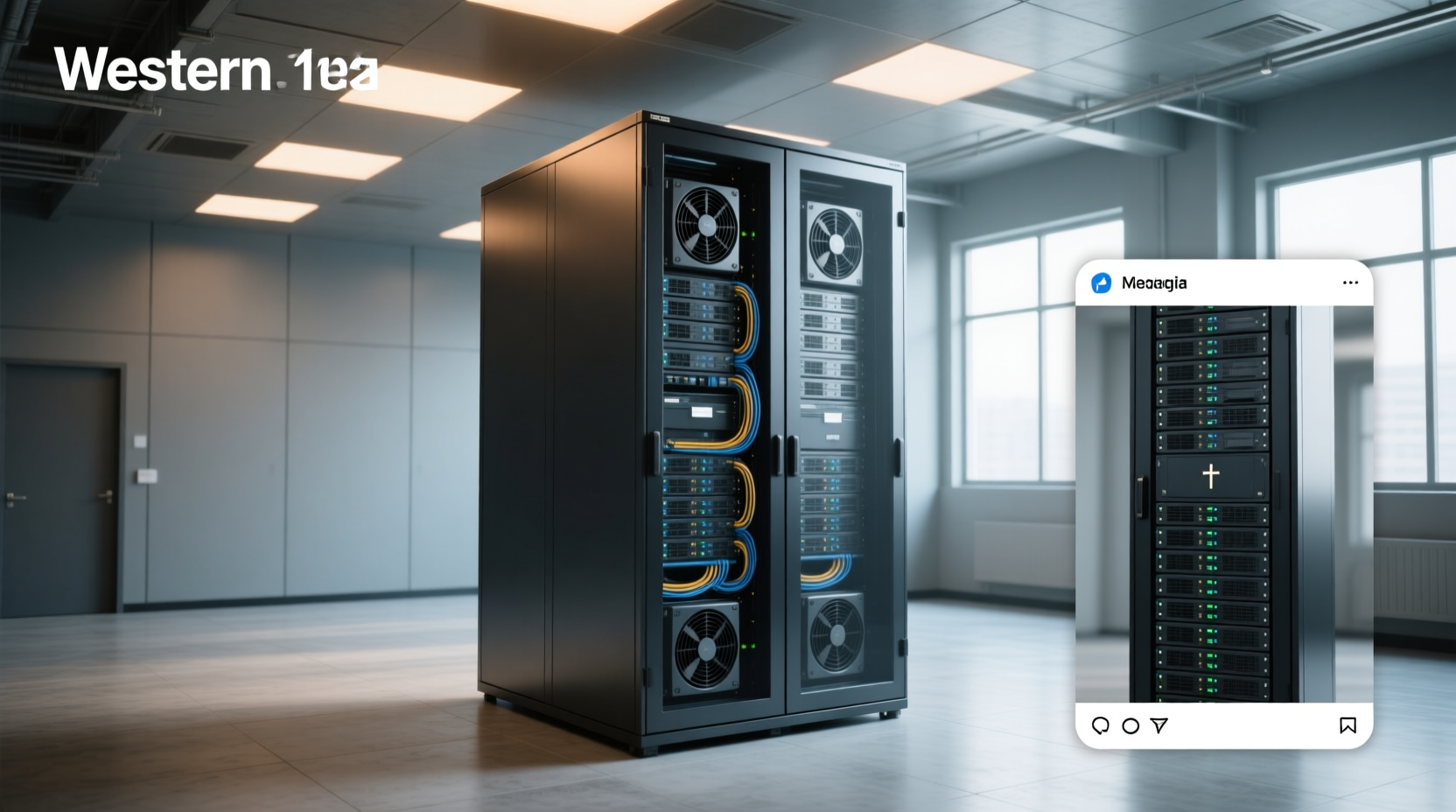
✅ Short answer: A 42U server rack provides 73.5 inches (1866 mm) of internal rackable height — exactly 42 × 1.75 inches per U — but its total external height typically falls between 73.5 and 80 inches (1866–2032 mm), depending on casters, leveling feet, top brackets, and frame overhang. If you’re planning data center layout, ceiling clearance, or door access, never assume — always consult the manufacturer’s spec sheet for the exact model. This guide explains why height varies, how to measure correctly, what to verify before ordering, and how to avoid costly fit issues in real-world deployments.
Why Does 42U Rack Height Vary? Understanding the Core Distinction
The confusion around “42U server rack height” stems from conflating two distinct measurements: internal usable rack units and external physical height. These are not interchangeable — and mixing them up can lead to installation failures, airflow restrictions, or structural interference with raised floors or overhead cable trays.
The industry defines 1U = 1.75 inches (44.45 mm) — a standardized vertical spacing between mounting holes on rack rails. So mathematically, 42U × 1.75″ = 73.5 inches (1866.3 mm) of vertical space where equipment can be mounted. This is the rackable height — the only dimension that matters for device compatibility and density planning.
But the total external height includes everything else: casters or leveling feet (often adding 2–4 inches), top rail extensions, bottom support brackets, and sometimes integrated cable management arms or fan modules. As confirmed by multiple technical sources, this total height commonly lands between 78.74 inches (2000 mm) and 80 inches (2032 mm) for most open-frame or enclosed cabinets11. For example, StarTech.com lists their 4-Post 42U mobile rack at approximately 80 inches tall including casters22.
Breaking Down the Four Key Height Dimensions You Must Verify
Before specifying or purchasing a 42U rack, confirm these four independent height metrics — each serves a different engineering purpose:
| Dimension | Typical Range | Why It Matters | How to Verify |
|---|---|---|---|
| Rackable Height (Internal) | Exactly 73.5″ (1866 mm) | Determines how many 1U–4U devices fit vertically; required for capacity planning & compliance with OEM mounting specs. | Check rail hole count: 42U racks have 42 pairs of mounting holes spaced 1.75″ apart along the vertical rail. |
| Total External Height | 73.5″–80″ (1866–2032 mm) | Affects room ceiling clearance, door header height, fire-rated corridor passage, and rack alignment in multi-unit rows. | Look for "Overall Height" or "Maximum Height" in the dimensional drawing — not the product title or marketing summary. |
| Height with Casters/Leveling Feet | +2″ to +4″ beyond base frame | Impacts stability on uneven floors, accessibility for rolling, and clearance under raised floor tiles (e.g., 24″ subfloor plenum). | Confirm whether casters are included, removable, or optional — and whether height includes brake engagement. |
| Top/Bottom Rail Overhang | 0″–3″ beyond rackable zone | Affects vertical stacking of adjacent racks, cable drop zones, and compatibility with overhead busway systems. | Review CAD drawings or cutaway diagrams — overhang is rarely listed in bullet-point specs. |
Manufacturer Variations: Vertiv, Dell, Rittal, and Generic Cabinets
While the rackable height is universally fixed at 73.5″, external height differs across brands due to structural design philosophy, material thickness, and accessory integration. Here’s what real-world data shows:
- Vertiv 42U racks: Typically ship with heavy-duty casters and reinforced top brackets — total height often reaches 79.5″–80″. Their NetSure and Liebert lines prioritize seismic bracing, which adds ~1.5″ to top rail height3.
- Dell 42U enclosures: Designed for PowerEdge integration, Dell’s standard 42U cabinet measures 78.7″ (2000 mm) externally — matching the ISO/IEC 60297-3-100 standard baseline. However, their high-density “HD” variant adds 1.25″ for enhanced rear cable management, pushing it to 79.95″.
- Rittal TS8 42U: Uses modular aluminum extrusion; external height is 78.3″ (1990 mm) without casters, but jumps to 80.1″ (2035 mm) with optional heavy-duty swivel casters and leveling feet.
- Generic open-frame racks: Often minimize weight and cost — some models list only 73.5″ total height, meaning no casters, no top bracket, no bottom flange. These require field-installed accessories and may not meet UL 2600 or TIA-942-B structural requirements for enterprise use.
This variation isn’t arbitrary — it reflects trade-offs between mobility, rigidity, serviceability, and compliance. A rack built for edge locations (e.g., telecom huts) prioritizes low weight and compact footprint; one destined for Tier III colocation must accommodate redundant PDUs, seismic anchors, and dual-path airflow — all requiring extra vertical margin.
Real-World Installation Pitfalls: Where Height Mismatches Cause Failure
Height assumptions cause more field rework than any other rack specification error. Below are three documented failure modes — and how to prevent them:
❌ Pitfall #1: Ceiling Clearance Shortfall
Many data centers mandate 12–18″ of clearance above rack tops for hot-aisle containment or fire suppression nozzles. A rack advertised as “78.7″ tall” may actually reach 79.8″ once top-mounted fans or cable managers are added. Solution: measure from finished floor to lowest obstruction (e.g., sprinkler head, ductwork, or false ceiling grid), then subtract minimum required clearance — that’s your max allowable rack height.
❌ Pitfall #2: Door Header Interference
Standard commercial door headers sit at 80″ — just 0.2″ above the tallest common 42U rack. But add a 1″ cable ladder mount or 0.5″ vibration-dampening pad, and the rack scrapes the header during roll-in. Always verify installed height — not shipping height — and request dimensional drawings showing all attachable hardware.
❌ Pitfall #3: Raised Floor Conflict
In facilities with 24″ raised floors, the underside of the floor tile sits ~23.5″ above structural slab. If your rack’s leveling feet extend >0.5″ below the base frame, they’ll hit the slab before the rack settles — causing instability or uneven load distribution. Confirm foot extension length separately from total height.
How to Accurately Measure & Validate Height Before Purchase
Don’t rely on product titles or third-party marketplace listings. Follow this five-step verification protocol:
- Download the official spec sheet — not the marketing PDF. Look for “Dimensional Drawing” or “Mechanical Specifications” tabs.
- Locate the “Overall Height” value — it should be explicitly labeled and include units (inches or mm). Ignore “Rack Height” or “Mounting Height”, which usually refer to internal space.
- Identify configuration dependencies: Does the stated height assume casters? Are leveling feet included or optional? Is the measurement taken with or without front/rear doors?
- Cross-check with CAD files: Reputable vendors (e.g., Vertiv, Rittal, APC) provide downloadable STEP or DWG files. Import into free tools like Fusion 360 or Onshape to validate spatial fit.
- Contact technical support with your use case: Ask: “What is the maximum height of this rack when fitted with [X] casters, [Y] top cable manager, and [Z] rear PDU?” — get the answer in writing.
Depth and Width: Why They Interact With Height Planning
Though your query focuses on height, depth and width directly affect perceived height constraints. A deeper rack (e.g., 41″ vs. 36″) requires more horizontal aisle space — limiting how close racks can be placed front-to-back. That, in turn, affects vertical airflow paths and may force taller ceiling heights to maintain thermal separation. Similarly, wider racks (e.g., 24″ vs. 23.6″) impact corridor width calculations for emergency egress — especially when height forces taller doorways.
Per Data Center Knowledge, standard 42U rack width is 23.6″ (600 mm), depth ranges from 39″ to 41″ (1000–1050 mm) for fixed-depth models, and up to 48″ (1220 mm) for adjustable versions44. Always treat height, depth, and width as an interdependent triad — never optimize one in isolation.
Common Misconceptions Debunked
- ❌ “42U means the rack is exactly 42 inches tall.” → No. 42U refers to 42 rack units, each 1.75″, totaling 73.5″ of usable space — not 42 inches.
- ❌ “All 42U racks from different brands are interchangeable in height.” → False. External height differs by up to 6.5″ across manufacturers — enough to block a doorway or violate fire code.
- ❌ “If it fits through the door, it will fit in the room.” → Not guaranteed. Rack height + caster compression + floor slope can reduce effective clearance by 1–2″ during movement.
- ❌ “Rack height includes the space occupied by power strips or blanking panels.” → No. Those occupy rackable U-space — they don’t change the rack’s physical height.
When to Choose a Non-Standard 42U Height — And When to Avoid It
Some vendors offer “low-profile” or “compact-height” 42U variants — typically shaving 2–3″ off total height by eliminating top brackets or using thinner rails. These serve niche needs:
- ✅ Acceptable for: Edge cabinets in retail backrooms, lab test benches, or temporary staging areas where seismic rating or UL listing isn’t required.
- ❌ Avoid for: Any environment subject to TIA-942, Uptime Institute Tier certification, or local fire authority review. Reduced height often correlates with lower load rating (<800 kg vs. standard 1200+ kg) and compromised structural damping.
Similarly, “extended-height” 42U racks (up to 82″) exist for specialized applications — such as integrating vertical battery stacks or dual-layer PDU mounting. But they demand dedicated infrastructure accommodations and rarely deliver ROI outside hyperscale or utility-grade deployments.
Frequently Asked Questions (FAQ)
- How tall is the Vertiv 42U rack?
Vertiv’s standard 42U NetSure cabinet measures 79.5 inches (2020 mm) total height with casters and top mounting bracket — but always verify against the specific model number (e.g., NetSure 42U-2000 vs. Liebert GXT4-42U). - How tall is a Dell 42U rack?
Dell’s PowerEdge 42U Enclosure (model DELL-RACK-42U) has an external height of 78.7 inches (2000 mm) without casters, and 80.1 inches (2035 mm) with optional heavy-duty casters. - What is the industry standard height for a rack in rack units is 42U?
The industry standard rackable height is strictly 73.5 inches (42 × 1.75″). There is no universal standard for external height — it’s defined by each manufacturer’s mechanical design and compliance goals. - How tall is the Rittal 42U rack?
Rittal’s TS8 42U cabinet is 78.3 inches (1990 mm) tall without accessories, and 80.1 inches (2035 mm) with full-height casters and leveling feet — per Rittal’s 2023 Mechanical Specification Sheet v4.2. - Can I install a 42U rack in a room with 80-inch ceilings?
Only if the rack’s total installed height — including casters, top hardware, and any field-installed accessories — stays ≤78.5 inches. Always allow ≥1.5 inches for safety margin and thermal expansion.