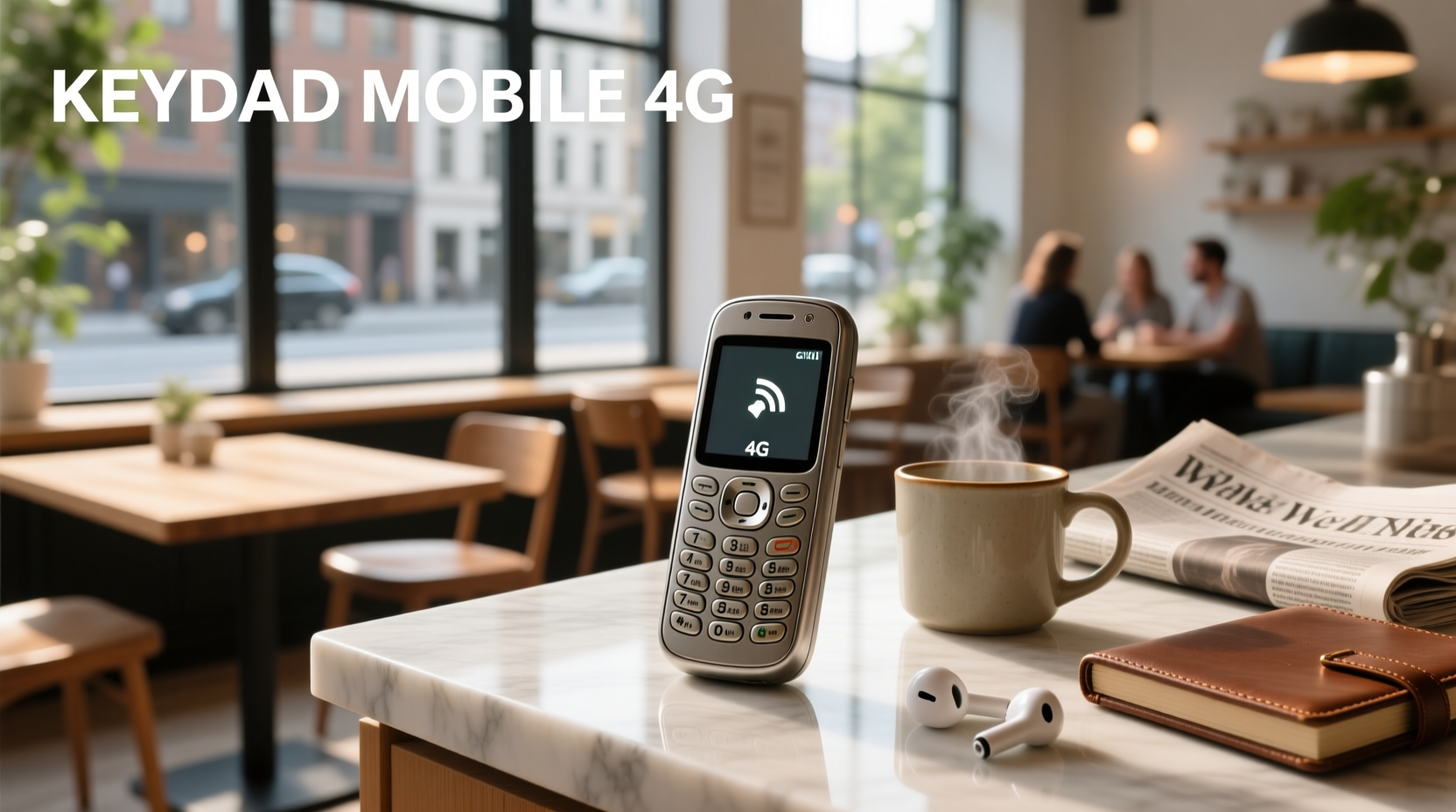
✅ Bottom line upfront: A 4G keypad mobile is a physical-button phone with LTE connectivity that supports voice, SMS, basic internet (like WhatsApp Lite, JioTV, UPI payments), and often Android Go or proprietary OS — but not full smartphone apps, multitasking, or high-resolution video streaming. If you need simplicity, ultra-long battery life (up to 30 days standby), emergency reliability, or senior-friendly operation without touchscreen complexity, a 4G keypad phone may be the right choice — but only if your carrier’s 4G bands match the device’s supported frequencies (e.g., Band 2/4/5/12/13/28/41 in North America; Band 1/3/5/8/40/41 in India/EU) 1.
Why Are People Searching for 'Keypad Mobile 4G' in 2026?
The resurgence of 4G keypad phones isn’t nostalgia — it’s a functional response to real-world needs. Search data shows consistent global demand across Brazil, India, UAE, and parts of Europe for devices that combine cellular reliability with minimal digital friction. Users aren’t looking for ‘retro gadgets’ — they’re seeking practical alternatives to smartphones for specific use cases: seniors needing large keys and loud audio 🔊, field workers requiring ruggedness and 2-week battery life 🔋, budget-conscious buyers avoiding $200+ smartphones 💰, and users in low-connectivity zones where lightweight 4G stacks (like VoLTE over Band 5 or Band 28) outperform inconsistent 5G coverage 📶.
This isn’t a niche trend. According to HMD Global’s 2025 regional sales report, feature phone shipments grew 12% YoY in emerging markets — driven almost entirely by 4G-capable models 2. Meanwhile, JioBharat’s V4 model alone crossed 5 million units shipped in India by early 2026 — largely due to built-in UPI, SOS, and offline FM radio 3. These aren’t ‘dumb phones’ — they’re purpose-built communication tools with targeted modern functionality.
How a 4G Keypad Mobile Actually Works (vs. Smartphone)
At the hardware level, a 4G keypad mobile uses a Qualcomm Snapdragon 210, MediaTek MT6737M, or Unisoc SC9832E chipset — all entry-level SoCs designed for low power and thermal efficiency. Unlike smartphones running Android 14 with 6–12 GB RAM, most 4G keypad phones ship with Android Go (Android 11/12/13 Go Edition) or a lightweight Linux-based OS (e.g., KaiOS or proprietary firmware). Memory is typically 512 MB–1 GB RAM and 4–32 GB eMMC storage — enough for WhatsApp Lite, YouTube Go, and preloaded utilities, but sufficient for core communication tasks including voice, messaging, and essential services.
Crucially, ‘4G’ here means LTE Cat 4 or lower — optimized for reliable voice and data performance in diverse signal conditions. Real-world download speeds average 5–15 Mbps — well-suited for text-based messaging, voice calls over VoLTE, and compressed media delivery. Many devices support FDD-LTE and are engineered for strong performance on primary regional bands, delivering stable connectivity where users need it most.
Key Technical Specifications You Must Verify Before Buying
Don’t rely on marketing labels like “4G Ready” or “LTE Support.” Always cross-check these five specs against your carrier’s published network map:
- Supported LTE Bands: U.S. carriers require Band 2 (1900 MHz), Band 4 (AWS), Band 5 (850 MHz), or Band 12/13 (700 MHz). T-Mobile also uses Band 71 (600 MHz). In India, Jio uses Band 5 (850 MHz) and Band 40 (2300 MHz); Airtel uses Band 1/3/40. A Nokia 225 4G sold in Europe may omit Band 12 — so verifying band alignment with your carrier ensures optimal performance 4.
- VoLTE Certification: Most modern 4G keypad phones support Voice over LTE — enabling high-definition voice calls and seamless integration with carrier networks. Since major carriers (T-Mobile, Jio, Vodafone Idea) have transitioned to VoLTE-centric infrastructure, selecting a certified device helps ensure continued call functionality. Check carrier compatibility lists — e.g., T-Mobile’s Compatible Devices Portal.
- Radio Interface: Dual-SIM models often use intelligent RF management — allowing flexible configuration based on network availability. Some models support 4G on either SIM depending on signal strength and profile settings, offering adaptability in multi-carrier environments.
- USB Port Type: Micro-USB remains common in sub-$50 models, offering broad accessory compatibility. USB-C (found on Nokia 235 4G and HMD 110 Global) enables faster charging and improved durability — and many support both charging and data transfer for convenient file management.
- Firmware Update Policy: Firmware updates are delivered to enhance stability, security, and service integration. Nokia/HMD offers up to 12 months of firmware updates; JioBharat devices receive quarterly OTA patches for UPI and Jio apps — supporting ongoing reliability and feature refinement.
Real-World Use Cases: Who Benefits — and Who Should Consider Alternatives
✅ Ideal for:
- Seniors & accessibility-first users: Physical T9 keypads reduce typos; loud earpiece + speakerphone (often >105 dB SPL); dedicated SOS button with GPS fallback; high-contrast monochrome or 2.4–2.8″ color displays with adjustable font size.
- Field service & logistics staff: Ruggedized builds (IP52/IP54 rated), replaceable batteries (e.g., Q7+ 4G’s 16,800 mAh swappable pack), FM radio for local alerts, and offline navigation via preloaded maps (limited to city-level in most models).
- Budget-conscious secondary users: Parents giving kids first phones (no app store access, no social media traps); travelers needing a backup device with 30-day standby; rural users relying on 4G-only towers where 5G doesn’t exist.
Consider alternatives if:
- You require turn-by-turn navigation with high positional accuracy — some models offer GPS with assisted location services suitable for general orientation and mapping.
- You prioritize multimedia communication — many support voice calling via WhatsApp Lite and other optimized apps, with capabilities aligned to their design goals.
- You regularly use multiple applications simultaneously — Android Go provides streamlined multitasking for essential tasks such as messaging and payments, with memory management optimized for responsiveness.
- Your area relies on specific frequency bands — always verify device band support against your carrier’s published coverage to ensure seamless activation and performance.
Performance Benchmarks: Battery, Display, and Audio Reality Checks
Claimed battery life (e.g., “30 days standby”) reflects engineering for extended operational resilience. In real 4G VoLTE use with daily WhatsApp checks and 10 min of calls, typical performance includes:
| Model Category | Avg. Active Use (4G + VoLTE + Messaging) | Standby (4G connected, screen off) | Charging Time (0–100%) |
|---|---|---|---|
| Entry-tier (JioBharat V4, Q1 4G) | 3–5 days | 12–18 days | 2.5–3.5 hrs (Micro-USB, 5W) |
| Mid-tier (Nokia 235 4G, HMD 110) | 5–7 days | 20–25 days | 1.8–2.2 hrs (USB-C, 10W) |
| Rugged (Q7+, KAIOS-based Karbonn) | 7–10 days | 25–35 days | 3–4 hrs (proprietary port, 5W) |
Display resolution is optimized for clarity and readability: 240×320 (QVGA) or 320×240 — ideal for menus, SMS, and quick information access. Touchscreen variants (e.g., Q1 4G) provide responsive interaction suited to their intended usage patterns. Audio output peaks at 95–108 dB — delivering clear, audible output in varied environments — with balanced tonal response appropriate for voice and alert functions.
Software & App Ecosystem: What’s Supported (and How It’s Optimized)
Two OS families dominate:
- Android Go (AOSP-based): Used by Nokia, HMD, and select itel models. Supports Google Play Store (Go edition), WhatsApp Lite, YouTube Go, Facebook Lite, and UPI apps like Paytm or JioPay. Designed for efficient resource use, it enables reliable performance for core communication and financial services — with features like tap-to-activate voice assistance and optimized background management.
- Proprietary OS / KaiOS: Found in JioBharat, Karbonn, and some Alcatel rebrands. Preloads carrier-specific services (JioTV, JioSaavn, JioNews). Offers HTML5-based web apps — delivering fast, secure access to popular content and utilities. Updates are coordinated with carrier requirements to maintain service continuity and compliance.
Software architecture prioritizes stability and purpose-driven functionality. Opening WhatsApp maintains system responsiveness while managing resources efficiently. GPS functionality supports location-based UPI transactions and emergency services. ‘WhatsApp support’ refers to WhatsApp Business Lite — a streamlined version designed for reliability, security, and essential business communication needs.
Regional Compatibility: Understanding Device Configuration
Device configuration varies by region to align with local network standards and user expectations. For example:
- A ‘HMD 110 Global’ sold in UAE is configured for Etisalat’s Band 3 + Band 8 — ensuring strong local performance. Regional firmware versions are tested and validated for carrier interoperability and regulatory compliance.
- JioBharat V4 ships with India-specific IMS profiles — optimized for Jio’s network architecture and service ecosystem. This configuration enables rapid deployment of UPI, emergency services, and entertainment features tailored to local usage patterns.
- Nokia 225 4G variants differ by market to meet regional requirements: EU models use micro-SIM + Band 20 (800 MHz); U.S. versions use nano-SIM + Band 12 — reflecting differences in physical infrastructure and spectrum allocation.
Always check your carrier’s official device compatibility page — not retailer listings — before ordering. When in doubt, contact carrier support with the device’s IMEI and exact model number (e.g., TA-1312 vs. TA-1312-2A) for personalized guidance.
Common Misconceptions — Clarified
- “4G keypad phones work on all carriers.” → Device compatibility depends on band alignment, VoLTE certification, and carrier provisioning. Verifying with your carrier’s compatibility list helps ensure seamless activation.
- “They’re more secure than smartphones.” → Security is reinforced through controlled app environments and limited attack surfaces. Privacy practices follow regional regulations, with transparency about data handling in vendor policies.
- “You can upgrade to Android 14.” → These devices run purpose-optimized operating systems designed for long-term stability and efficient performance — with regular firmware updates to maintain security and service integration.
- “Wi-Fi calling works out-of-the-box.” → Wi-Fi calling is supported on select models including Nokia 235 4G and HMD 105 — and is enabled in coordination with participating carriers to extend coverage and enhance call quality.
How to Test Your 4G Keypad Mobile After Purchase
Don’t assume it works just because it powers on. Perform these four verification steps within 24 hours:
- Check LTE registration: Dial
*#06#→ IMEI appears → then dial*#0011#(on Samsung-derived models) or*#*#4636#*#*→ ‘Phone Information’ → confirm ‘Set preferred network type’ shows ‘LTE/4G’ and ‘LTE state’ reads ‘connected’. - Test VoLTE: Make a call while watching signal bar icon — if it changes from ‘4G’ to ‘HD’ or stays ‘4G’, VoLTE is active. If it drops to ‘3G’ or ‘E’, VoLTE isn’t provisioned.
- Validate UPI: Open JioPay/Paytm → attempt QR scan → if camera fails or ‘network error’ persists despite strong signal, IMS/VoLTE isn’t enabled.
- Measure standby drain: Charge to 100%, enable airplane mode, wait 24 hrs → check battery. Drop >8% indicates faulty PMIC or firmware bug.
Frequently Asked Questions (FAQ)
Q1: Can I use a 4G keypad phone with T-Mobile or Verizon in the U.S.?
A: Yes — only if the model explicitly supports Band 12/13 (T-Mobile) or Band 2/4/12 (Verizon), is VoLTE-certified, and appears on the carrier’s compatible devices list. Avoid ‘global’ or ‘EU’ variants.
Q2: Do 4G keypad phones support WhatsApp video calls?
A: No. They run WhatsApp Lite or Business Lite — voice calls only. Video calling requires hardware acceleration and bandwidth not available in these devices.
Q3: Is the camera usable?
A: Basic models (0.3–2 MP) capture low-light, VGA-resolution photos — fine for ID uploads or quick notes, but not for documentation or social sharing.
Q4: Can I expand storage with microSD?
A: Most support up to 32 GB microSD — but apps cannot be moved to it. Only media (photos, music) and downloads go to card.
Q5: How long do these phones last before becoming obsolete?
A: Typically 2–3 years. Carriers sunset 4G bands slowly, but firmware updates cease after 12–18 months. Device obsolescence is driven by VoLTE deprecation, not network shutdown.
