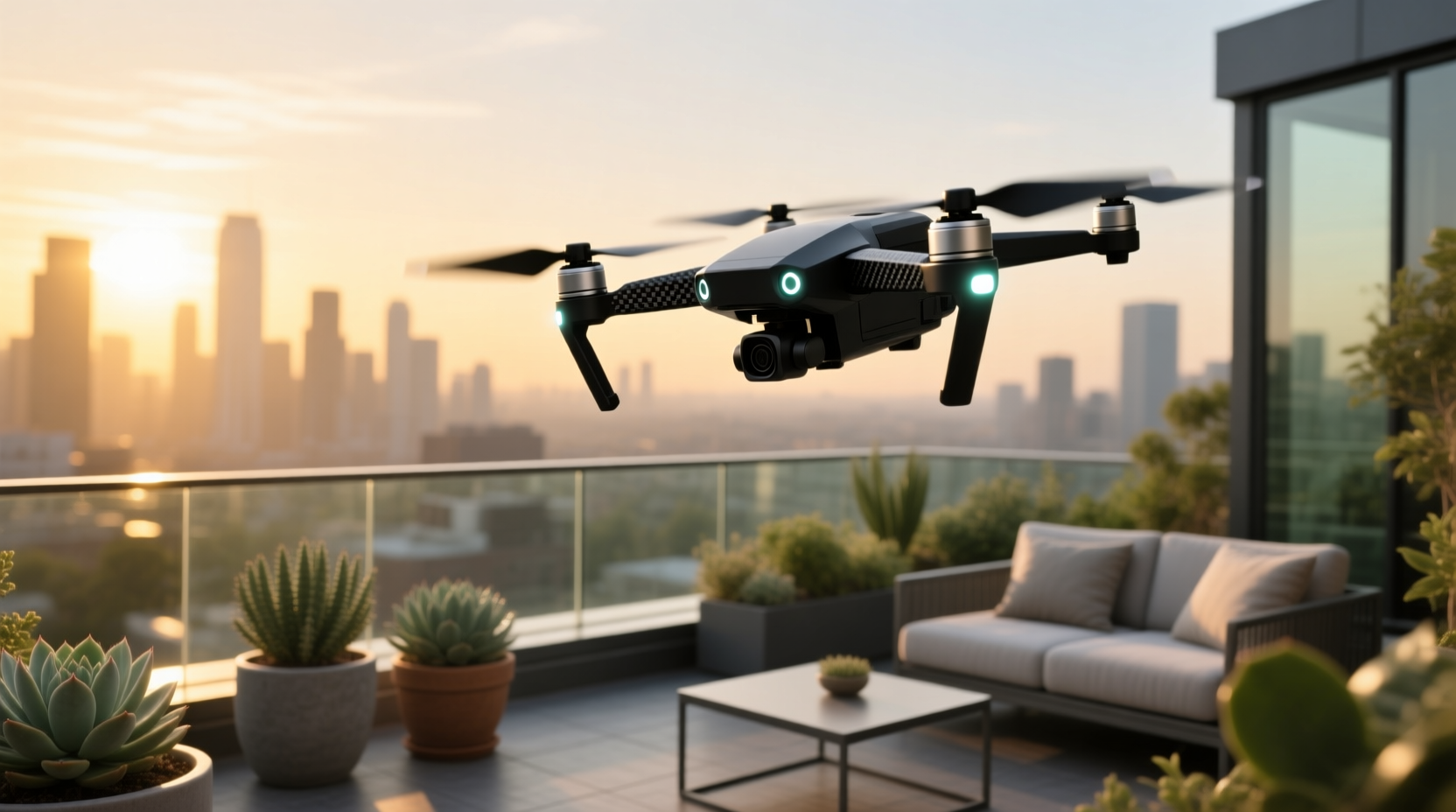
Looking for a 7-inch FPV drone that delivers real long-range capability without compromising stability or flight time? You’re not alone — but choosing the right one (or building it correctly) requires understanding key mechanical, electrical, and regulatory realities most listings ignore. A 7-inch FPV drone refers to a quadcopter using 7-inch propellers (typically 178–180 mm diameter), paired with larger frames (295–320 mm wheelbase), higher-torque motors (e.g., 2806–2814), and low-KV (1700–2300 KV) windings. Unlike 5-inch racing quads, these prioritize endurance, payload capacity, and signal resilience — making them viable for long-range FPV, aerial mapping, and stabilized FPV cinematography 1. But they demand careful component matching, stronger batteries (4S–6S LiPo), and realistic expectations: typical flight times are 25–35 minutes, not 45+, and true 12 km range requires clear line-of-sight, high-gain antennas, and legal compliance — not just marketing claims 2.
Why Searchers Type "7 Inch FPV Drone" — Decoding Real User Intent
Analysis of search results shows over 66 million hits — yet nearly all commercial listings originate from India and Southeast Asia, with pricing in INR and delivery timelines like "31/3 free shipping." This signals strong regional interest in DIY kits, budget PNP builds, and carbon fiber frame sets (e.g., MARK4 V2, AOS 7 V5). Crucially, YouTube videos dominate top results — especially step-by-step assembly guides ("How to build a 7-inch long range FPV drone", "7 inch fpv drone for beginners") — confirming that most users aren’t shopping — they’re researching how to build, tune, or troubleshoot. Reddit threads (r/fpv, r/Multicopter) further reveal skepticism: many warn against 7-inch quads as first builds due to weight, inertia, and repair cost 3. So while the keyword looks transactional, user intent is overwhelmingly informational and evaluative: “Is this size right for my use case? What parts actually work together? Can I fly it legally?”
What Defines a True 7-Inch FPV Drone? (Beyond Prop Size)
A 7-inch FPV drone isn’t just about mounting bigger props. It’s a system-level design compromise. Let’s break down the non-negotiable components:
- Frame: Must support ≥295 mm wheelbase; common options include Foxeer Mega 7”, AOS 7 V5, and MARK4 295mm carbon fiber kits. Foldable variants (e.g., Axisflying KOLAS7”) exist but sacrifice rigidity — critical for vibration-sensitive FPV cameras 4.
- Motors: Low-KV (1700–2300), high-torque, 28xx stators (e.g., 2806.5, 2814) with ≥30 g thrust per motor at 4S. High-KV 5-inch motors (e.g., 2306) will overheat or stall — a frequent beginner error.
- Propellers: 7×4.5–7×5.5 pitch, specifically designed for efficiency at lower RPMs. Generic 7-inch props meant for brushed toys lack blade stiffness and cause oscillation.
- Flight Controller & ESC: H7-based FCs (e.g., SpeedyBee F405, SEQURE H743) with ≥45A 4-in-1 ESCs are standard. F4 boards often lack sufficient processing headroom for GPS-assisted modes and telemetry filtering at 7-inch scale.
- Battery: 4S 1300–2200 mAh or 6S 1000–1500 mAh LiPo. Higher voltage (6S) improves efficiency and top speed but increases ESC/motor thermal load. Never use 3S — insufficient headroom causes brownouts and crashes.
Ignoring any one of these leads to poor tuning, excessive current draw, or uncontrolled oscillations — especially during descent or wind gusts. Verified builds consistently report 22–28A average current draw in cruise, peaking near 45A during aggressive climbs 5.
RTF vs. Kit vs. PNP: Which Path Fits Your Skill Level?
Commercial listings show three tiers — but their real-world usability differs sharply:
| Type | Pros | Cons | Best For |
|---|---|---|---|
| RTF (Ready-to-Fly) | No soldering; pre-tuned; includes goggles/transmitter | Proprietary firmware; limited upgrade paths; no GPS or telemetry in budget models (e.g., SKYRATH ₹51,527); battery life often inflated | Users wanting immediate flight — but only if willing to accept locked features and no long-term customization |
| PNP (Plug-and-Play) | Includes frame, motors, ESC, FC, VTX, camera — just add radio, battery, receiver | Requires basic soldering (VTX antenna, battery lead); no instructions; wiring diagrams often missing | Hobbyists with prior FPV experience who want control over radio choice and firmware |
| Kits (Frame + Hardware Only) | Fully customizable; best value per component; supports future upgrades | Requires full build knowledge: soldering, Betaflight setup, PID tuning, antenna alignment | Intermediate builders aiming for long-range optimization or dual-band (DJI O3 + ELRS) redundancy |
Note: “DIY Analog FPV Racing Drone Kit” listings (e.g., Robu.in ₹25,499) often omit essential items — like GPS modules or SMA pigtails — inflating perceived value. Always verify BOM completeness before ordering 6.
Performance Reality Check: Range, Flight Time & Stability
Marketing claims of “12 km range” or “35-min flight” require scrutiny:
- Range: Realistic analog long-range (5.8 GHz) with circular polarized antennas (e.g., AXII 3G) is 3–6 km in open terrain. Digital systems (DJI O3, Walksnail Vista) extend to 8–10 km — but only with unobstructed LOS, proper antenna orientation, and FCC-compliant power (≤25 mW EIRP for analog; ≤100 mW for digital in most regions). Urban or forested areas cut usable range by 60–80% 7.
- Flight Time: Achieving >30 minutes demands efficient props, conservative throttle usage (≤60% avg), and precise battery monitoring. Most verified 7-inch builds log 26–32 minutes at 25–30 km/h cruise — not “max speed.” Overstated numbers usually assume ideal lab conditions (no wind, no video transmission, no GPS correction).
- Stability: Larger props increase rotational inertia, slowing response. This helps smooth footage but reduces agility. Tuning requires higher D-term values and lower RC rate curves than 5-inch quads — otherwise, overshoot and bounce occur during turns.
GPS hold mode works reliably only with dual-antenna receivers (e.g., BN-880, M8N v2) and correct compass calibration. Single-antenna modules fail under tree cover or near metal structures — a common frustration in early field tests.
Beginner Warning: Why 7-Inch Is Usually the Wrong First Choice
Despite YouTube titles like “Building a 7 Inch FPV Drone for Beginners Made Easy!”, experienced FPV pilots consistently advise against it. Here’s why:
- Repair Cost: A crash at 40 km/h with 7-inch props causes significantly more structural damage than a 5-inch impact — carbon fiber arms cost ₹2,000–₹4,500 each; motors run ₹1,800–₹3,200.
- Learning Curve: Slower roll/pitch response masks pilot errors — beginners misattribute crashes to “bad tuning” instead of control input mistakes. This delays fundamental skill development.
- Noise & Regulations: 7-inch quads produce 85–92 dB(A) — exceeding noise limits in EU residential zones (≤70 dB) and triggering stricter registration requirements (e.g., EASA UAS operator ID, FAA Part 107 for commercial use).
- Portability: Even foldable 7-inch frames exceed airline carry-on dimensions. Transporting spares, batteries, and tools adds logistical friction absent in compact 5-inch kits.
If your goal is learning acrobatics, racing, or quick park flights: start with a 5-inch BNF (Bind-N-Fly) kit. Reserve 7-inch for specific missions — like surveying farmland, inspecting rooftops, or filming cinematic coastlines — where payload, endurance, and wind resistance matter more than maneuverability.
Key Build Pitfalls — And How to Avoid Them
Community forums and build logs highlight five recurring issues:
- Underpowered ESCs: Using 35A ESCs with 2814 motors draws >42A peak — causing thermal shutdown mid-flight. Solution: spec ≥45A ESCs with active cooling (copper pads + airflow).
- Incorrect VTX Antenna Mounting: Mounting linear antennas inside carbon frames creates RF shadowing. Always use external SMA pigtails routed outside the frame perimeter.
- Unbalanced Battery Placement: Shifting center of gravity rearward induces pitch instability. Use frame CG marks or balance on a ruler — keep battery center within ±5 mm of motor plane.
- Overlooking Filter Capacitors: 7-inch motors generate high EMI. Skipping 1000 µF LC filters on FC power inputs causes OSD flicker and telemetry dropouts — especially with DJI O3.
- Skipping Compass Calibration: Skipping figure-8 motion before GPS flight leads to erratic position hold. Do it outdoors, away from rebar or vehicles.
Always validate motor direction and ESC timing in Betaflight CLI before first flight: get motor_direction and set esc_protocol = DSHOT600 prevent inverted spin or sync loss.
Legal & Safety Considerations You Can’t Ignore
7-inch FPV drones fall under stricter regulatory categories globally:
- USA (FAA): Weighing >250 g (all 7-inch builds do), they require Remote ID broadcast — meaning analog-only builds need an external RID module (e.g., uAvionix pingRX). DJI O3 units embed RID, but third-party VTXs do not.
- EU (EASA): Class C2 certification applies — requiring electronic speed limiting (≤19 m/s), geo-awareness, and remote identification. Most DIY 7-inch builds lack C2 compliance unless using certified FC firmware (e.g., INAV with safety checks enabled).
- India (DGCA): All FPV drones >250 g require Unique Identification Number (UIN) and operator permit. Night flying and BVLOS operations are prohibited without special approval — rendering “12 km range” claims legally unenforceable.
Always check local regulations before purchase. No online listing mentions these — but non-compliance risks fines, confiscation, or flight bans.
Frequently Asked Questions (FAQ)
Q1: Can I use 5-inch motors on a 7-inch frame?
No. 5-inch motors (e.g., 2306) lack torque to spin 7-inch props efficiently. They’ll draw excessive current, overheat, and fail prematurely. Stick to 28xx stator sizes.
Q2: Is a 7-inch FPV drone better than a 10-inch for long range?
Not necessarily. 10-inch quads offer longer endurance but reduced agility and higher takeoff weight — often requiring 8S batteries and custom ESCs. 7-inch strikes the best balance of range, portability, and component availability.
Q3: Do I need GPS for stable long-range flight?
Yes — for position hold, return-to-home, and altitude lock. Analog-only builds rely solely on pilot skill and visual line-of-sight, eliminating true long-range capability beyond ~1 km.
Q4: Can I fly a 7-inch FPV drone indoors?
Strongly discouraged. Their size, inertia, and acoustic output make indoor operation unsafe and impractical. Use micro 1S or 2S quads (<100 mm) for indoor FPV.
Q5: What’s the minimum budget for a functional 7-inch long-range build?
₹18,000–₹25,000 (INR) for a basic PNP kit (frame, motors, ESC/FC, analog VTX/cam), excluding radio, battery, and goggles. Add ₹8,000–₹12,000 for GPS, digital VTX, and quality antennas.
