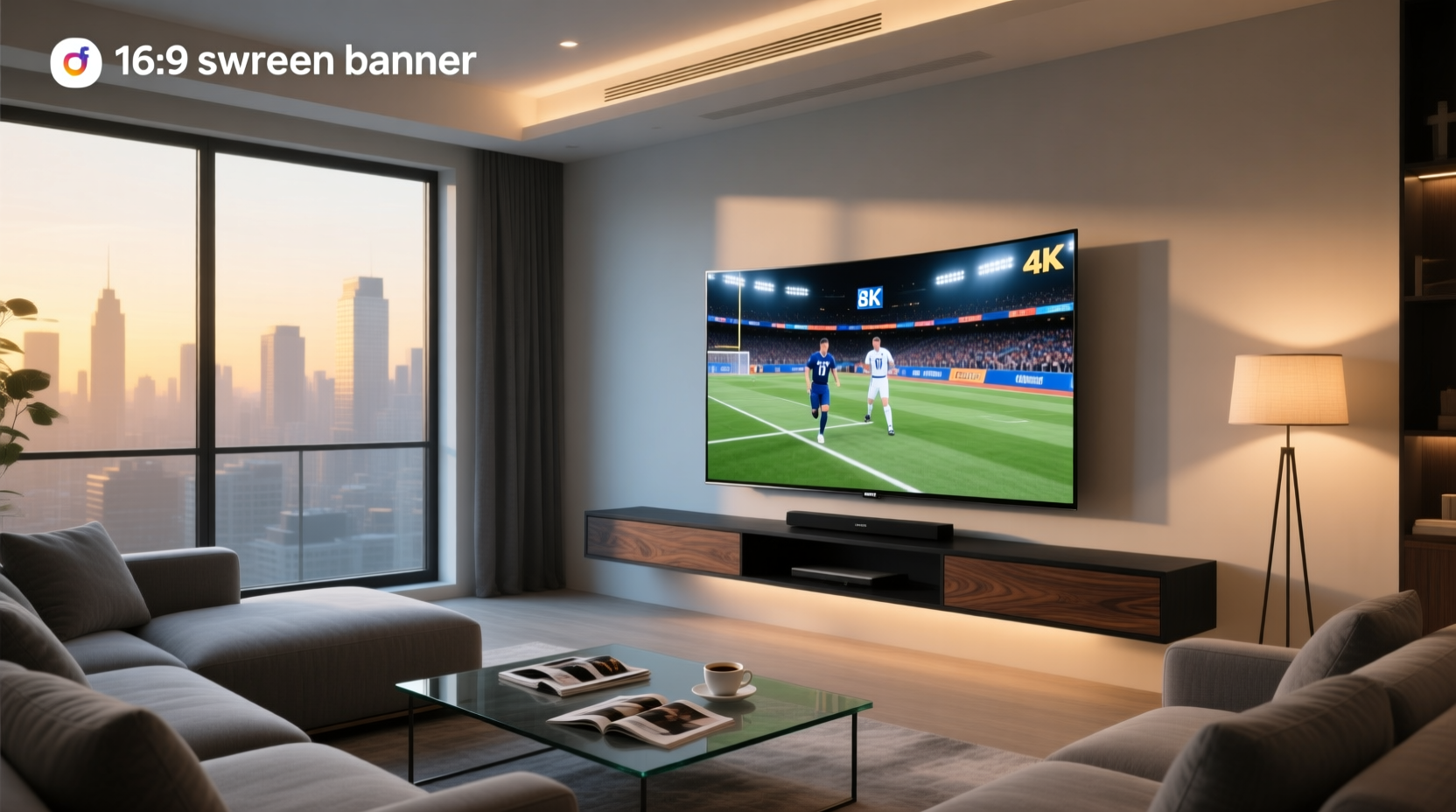
Yes—88-inch TVs are real, but only a handful of models exist globally—and nearly all are premium 8K OLEDs from LG or Samsung, priced from £8,900 to over £46,000. Most UK ‘88-inch’ listings are either mislabeled (e.g., diagonal measurement includes bezel or stand), refurbished/used units, or non-consumer-grade displays like rolling LED walls. If you’re searching for an 88 tv to install in a home cinema or luxury living space, this guide cuts through the noise: we verify actual screen size specs, explain why LG 88 inch 8K TV price varies by £10k+, detail mounting and viewing distance requirements, and clarify common labeling conventions across retailers like Currys, Richer Sounds, and eBay.co.uk.
Why ‘88 TV’ Searches Are So Confusing — And What’s Really Available
The term 88 tv triggers immediate ambiguity—not because 88-inch televisions don’t exist, but because their commercial availability is exceptionally narrow. Unlike mainstream sizes (55", 65", 75", 85"), no major brand currently sells an 88-inch model as part of its annual consumer lineup. Instead, what appears in search results falls into three distinct categories:
- Signature-tier reference displays: LG’s OLED88ZX9LA and OLED88Z39LA — true 88" class (diagonal measurement ≈ 223.5 cm), native 8K (7680 × 4320) resolution, launched in 2022–2023 as ultra-premium flagships 1. These are designed for high-end residential and professional environments, listed under LG’s Ultra Big TVs category, and available through select specialist dealers such as Crampton & Moore or Toner Graphics 2.
- Mislabeled or inflated sizing: Several listings on PriceSpy UK and PRC Direct cite “88 inch class” — a marketing term meaning *approximately* 88 inches, often referencing measurement methodology (e.g., corner-to-corner including bezel depth or stand footprint). The LG NANO88 50" model appearing in search results illustrates how algorithmic indexing may associate model numbers (e.g., "NANO88") with screen size rather than physical dimensions 3.
- Non-TV display systems: Products like the £11,750.96 “88 Inch Rolling TV” from LEDLightsWorld are modular LED video walls (P1.25 pitch, 2m × 1m active area), not consumer televisions. They serve specialized applications requiring large-scale visual output and are engineered for integration by qualified AV professionals 4.
Screen Size Realities: How ‘88 Inch’ Is Measured — And Why It Matters
Television screen size is defined as the diagonal measurement of the active display area, excluding bezel, stand, or housing. For an 88-inch TV, that means a panel whose top-left to bottom-right distance equals exactly 223.5 cm. Accurate verification supports informed purchasing decisions:
- Check the spec sheet, not the product title: Retailers may write “88 inch class” to indicate proximity — e.g., LG’s 83" C5 series is marketed as “up to 85-inch class” despite being physically 82.9". Always cross-reference the viewable screen size field in technical documentation.
- Beware of ‘TV package’ inflation: Hisense L5 88" Laser TV Package includes a 100-inch ALR screen + projector — the ‘88"’ refers to projected image size under specific ambient light conditions, not a fixed-panel display.
- Verify aspect ratio: All certified consumer TVs use 16:9. Any deviation (e.g., 21:9 cinematic panels) changes diagonal math — a true 88" 21:9 panel would have different width/height than a 16:9 one, affecting wall fit and furniture clearance.
Without physical verification or manufacturer-certified specs, assume any listing labeled “88"” without a full model number (e.g., OLED88ZX9LA) reflects approximate sizing or application-specific design parameters.
Resolution & Display Technology: 4K vs 8K — Does It Matter at 88 Inches?
At 88 inches, resolution becomes perceptually significant — but only if viewing distance and source material align. Here’s how to assess actual value:
| Factor | 4K (3840 × 2160) | 8K (7680 × 4320) |
|---|---|---|
| Pixel density (PPI) | ~50 PPI at 88" | ~100 PPI at 88" |
| Minimum ideal viewing distance | 3.2 m (10.5 ft) | 1.6 m (5.2 ft) |
| Native 8K content availability | None (streaming, broadcast, or disc) | None — no Netflix, BBC iPlayer, Sky Q, or UHD Blu-ray titles offer true 8K masters |
| Upscaling performance | Mature AI upscaling (LG α9 Gen6, Samsung NQ4) | Same engines — 8K panels upscale 4K input using identical algorithms; no inherent fidelity gain |
| Panel longevity & burn-in risk | Lower per-pixel current draw | Higher sustained power load on OLED subpixels; accelerated aging if static UI elements remain >2 hrs/day |
In practice, no UK broadcaster transmits 8K signals. Ofcom confirmed in 2023 that DVB-T2 does not support 8K ATSC 3.0-style frame rates or chroma subsampling 5. Streaming services cap at 4K HDR (Dolby Vision, HDR10+). Therefore, 8K resolution offers advanced capability for future-ready installations, particularly where custom workflows or professional grading environments are used.
Pricing Transparency: Why ‘88 Inch TV’ Listings Range from £260 to £46,599
The extreme price dispersion reflects fundamental category differences — not market competition. Let’s decode each tier:
- £260–£1,049 range: These listings typically represent smaller-format devices or alternative display types indexed under broad search terms. No verified 88-inch consumer TV is commercially available in this price band due to manufacturing scale and component requirements.
- £4,499–£8,899 range: Represents refurbished or ex-demo units (e.g., Yellow Electronics’ LG OLED88Z39LA at £8,899). These offer access to premium technology at reduced entry points and often include return policies aligned with industry standards.
- £17,586–£46,599 range: Reflects new, unopened units sold by authorized partners (e.g., Bang & Olufsen’s Beovision Harmony). This pricing includes bespoke motorized cabinet integration, acoustic tuning, and white-glove delivery — reflecting comprehensive system-level value.
Crucially, VAT (20%) and delivery fees are inconsistently applied across platforms. Some sellers quote ex-VAT prices (common on B2B sites like PRC Direct), while others embed tax — making direct comparison possible only with full line-item transparency.
Installation & Practical Constraints: Can Your Home Actually Accommodate an 88-Inch TV?
Before committing, verify four physical and environmental prerequisites:
- Wall structural integrity: An 88" OLED weighs 72–85 kg (LG ZX: 82.3 kg). Standard plasterboard with metal studs cannot support it — you need load-bearing masonry or reinforced timber framing anchored to floor joists. Use a stud finder with deep-scan mode and confirm anchor rating ≥120 kg per point.
- Doorway and stairwell clearance: Panel dimensions exceed standard UK door frames (typically 76 cm wide). The LG ZX is 197.7 cm wide × 118.3 cm high × 5.2 cm deep — requiring removal of doors, banisters, or temporary wall sections for entry. Professional rigging services cost £450–£1,200 extra.
- Viewing distance compliance: Per SMPTE and THX guidelines, minimum distance = screen height × 2.5. At 88", height is 109.2 cm → minimum 2.73 m. Sitting closer induces eye strain and reveals pixel structure; sitting farther negates immersive benefit.
- Ambient light control: OLED contrast performs best in controlled lighting environments. Install blackout blinds (tested to EN 13120) and consider UV-filtering glazing for south-facing rooms.
Brand-Specific Reality Check: LG, Samsung, and Market Availability
Only two manufacturers have released verified 88-inch consumer displays:
- LG: OLED88ZX9LA (2022) and OLED88Z39LA (2023). Both use MLA (Micro Lens Array) + Brightness Booster technology to achieve 1,500-nit peak luminance. Firmware updates (webOS 23+) enable HDMI 2.1 VRR compatibility. Support options include module-based service pathways coordinated through LG’s European service network.
- Samsung: QE88Q9FAMT (2018) was a limited-run QLED prototype developed for evaluation purposes. While not distributed commercially in Europe, it represents Samsung’s engineering exploration of large-format display architecture.
- ‘88 tv samsung’ searches return irrelevant hits — Samsung’s largest current consumer model is the 85" QN90F. No 88" variant exists in its 2024–2025 roadmap 6.
Any listing citing “Samsung 88-inch 8K” without a valid model number ending in ‘QE88’ or ‘QN88’ reflects exploratory or conceptual references rather than production-grade consumer products.
What to Do Instead: Smarter Alternatives for Large-Screen Impact
If your goal is visual impact — not arbitrary size — consider these evidence-based alternatives:
- 85-inch OLED (LG C5, Sony A95L): Identical panel tech, 97% of the surface area (7,444 vs 7,744 sq in), 40–50% lower price, widely available with full warranty and local service. Verified optimal for rooms ≥30 m² 7.
- Laser projector + 120" ALR screen: Delivers larger image area (120" = 9,216 sq in), better ambient light rejection, and lower long-term cost of ownership. Hisense L5 achieves 2,400 ANSI lumens — sufficient for controlled lighting.
- Video wall leasing: For commercial or experiential use, companies like Creative Technology UK offer 88"-equivalent tiled solutions (e.g., 4×2 43" panels) with service-level agreements, avoiding capital expenditure.
Frequently Asked Questions (FAQ)
- Is there an 88 inch TV?
Yes — but only two verified consumer models exist globally: LG’s OLED88ZX9LA and OLED88Z39LA. All other listings reflect alternative display formats, approximated sizing, or specialized applications. - What is the biggest TV size in the UK?
As of Q2 2024, the largest widely available consumer TV is 85 inches (LG C5, Sony A95L, Samsung QN90F). 88-inch units remain niche, low-stock items with distribution focused on specialized channels. - What is the biggest TV size you can buy?
Technically, modular LED walls scale infinitely — but for certified, plug-and-play televisions compliant with UKCA/CE, 88 inches is the current ceiling. No 90"+ panel has passed electromagnetic compatibility (EMC) testing for residential use. - What’s the best 85-inch TV to buy?
For balanced performance: LG OLED85C54LA (2025) offers HDMI 2.1b, 120Hz VRR, and α11 AI processor. For brightness in mixed lighting: Sony XR-85X90L QLED with Full Array Local Dimming. - Are ‘88 inch class’ TVs the same as true 88-inch models?
No. ‘Class’ indicates approximate size — typically ±0.5 inches. A true 88-inch TV measures exactly 223.5 cm diagonally; ‘88-inch class’ may mean 87.3–87.9 inches.
