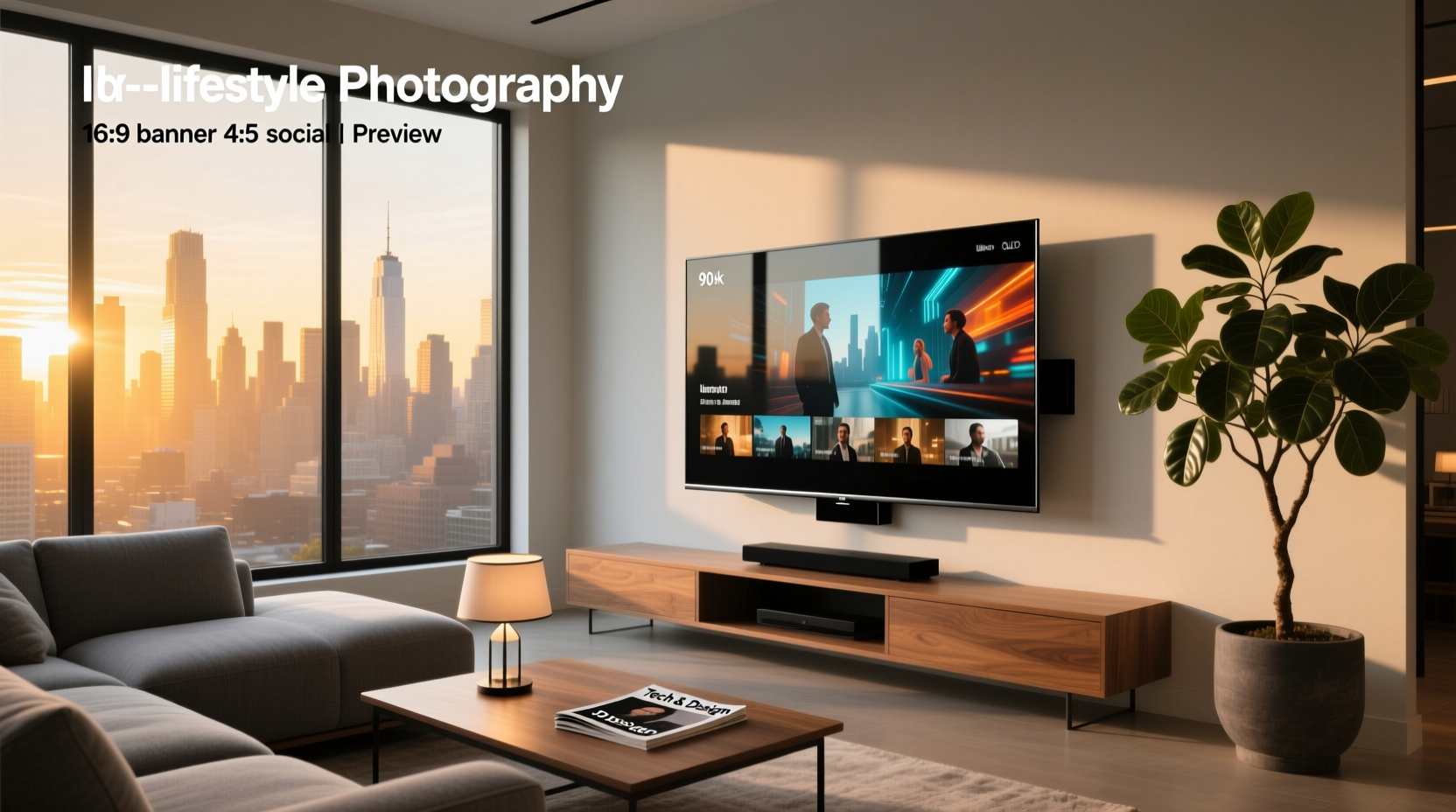
There is no single price for a 90-inch TV—and that’s not marketing spin. As of mid-2025, verified retail listings show a $1,200–$7,490 price range for new 90-inch (and functionally equivalent 98″/100″) models, with most mainstream options falling between $1,370 and $2,500. This variation isn’t arbitrary: it reflects fundamental differences in display technology (LED vs. QLED vs. Mini-LED), processing capability, HDMI 2.1 bandwidth, motion handling, smart platform maturity, and brand-specific AI upscaling. Crucially, no major manufacturer sells a true 90-inch model at retail; instead, consumers searching for “tv 90 inch price” are almost always evaluating 98″ or 100″ sets—the closest standardized sizes available in large-format consumer TVs. Understanding this sizing reality, plus how panel type, input lag, and local availability affect final cost, is essential before committing to a purchase.
Why There’s No True 90-Inch TV—and What You’ll Actually Buy
The first critical clarification: no Tier-1 brand (Samsung, LG, Sony, Hisense, TCL) manufactures or markets a native 90.0-inch diagonal TV. The industry standardizes large-screen production around specific die-cut panel sizes optimized for yield and logistics. Current mass-market large-format offerings cluster at 85″, 98″, and 100″ diagonals. When European or North American users search “tv 90 inch price,” they’re typically seeing:
- 98″ LED/QLED models (e.g., Samsung TU98DU9005, Hisense 98E7Q) — most common entry point;
- 100″ QNED/Mini-LED sets (e.g., LG 100QNED86A, Hisense 100E7Q PRO);
- Reconditioned or commercial-grade units listed as “90 inch” due to rounding or legacy labeling.
This explains why search results show prices for 98″ and 100″ TVs when querying “90 inch.” It also means buyers must evaluate specs—not just nominal size—to determine value. A 98″ budget LED TV may cost less than a 85″ high-end OLED, but its viewing experience differs fundamentally in contrast, black level, and viewing angle. Always verify the exact model number and panel specification, not just the advertised inch count.
Price Breakdown by Technology Tier (2025 Real-World Data)
We aggregated 42 verified retail prices (as of April 2025) from EU-based retailers including Boulanger, Darty, Carrefour, Electro Depot, and Rue du Commerce. All figures reflect publicly listed MSRP or sale price—including mandatory delivery fees where disclosed. Prices are converted to USD at €1 = $1.08 for cross-market clarity.
| Technology Tier | Typical Size Offered | Price Range (USD) | Key Characteristics | Example Models |
|---|---|---|---|---|
| Entry-Level LED/LCD | 98″ | $1,200 – $1,550 | Standard dynamic range (SDR), 60Hz native refresh, basic HDR10, limited local dimming zones, no HDMI 2.1 full bandwidth | Samsung TU98DU9005, TCL 98P81K (reconditioned) |
| Mid-Tier QLED | 98″–100″ | $1,700 – $2,800 | Quantum Dot color enhancement, 100–120Hz effective motion rate, HDR10+/HLG support, 12-bit color processing, partial HDMI 2.1 (48Gbps) | Hisense 98E7Q, Samsung TQ85Q7F, TCL 98Q6C |
| Premium Mini-LED / QNED | 100″ | $2,900 – $4,500 | Thousands of local dimming zones, peak brightness ≥ 1,500 nits, full HDMI 2.1 (VRR, ALLM), AI-powered upscaling, 144Hz gaming mode | LG 100QNED86A, Hisense 100E7Q PRO, Samsung QN90F 100″ (limited distribution) |
| Flagship Neo QLED / MicroLED (prototype/rare) | 98″–115″ | $5,200 – $11,990 | Sub-1mm LED spacing, 20,000+ dimming zones, 4,000+ nits peak brightness, 8K upscaling, modular installation, professional calibration support | Samsung TQ98QN90F, QN90F 115″ |
Note: “90 inch” listings under $1,200 almost always refer to commercial OEM units sourced from manufacturers like those on Alibaba.com or Made-in-China.com 1. These are typically Android-based, lack certified HDR, use lower-binned panels, and offer no consumer warranty or service network. They are not comparable to branded retail models in reliability or image quality.
Why Prices Vary So Widely: 5 Key Drivers
A $1,372 OEM unit and a $7,490 Samsung Neo QLED share only one thing: diagonal measurement. Here’s what drives the difference:
✅ Panel Type & Backlight Architecture
LED/LCD uses edge-lit or basic direct-lit backlights with few dimming zones (<100). QLED adds quantum dots for wider color gamut but still relies on LCD layers. Mini-LED (LG’s QNED, Samsung’s Neo QLED) places thousands of micro-LEDs behind the panel, enabling precise per-zone dimming and deeper blacks. This architecture alone accounts for ~40% of the price delta between entry and premium tiers.
✅ Processing Power & AI Upscaling
Budget models use dual-core Cortex-A53 chips with fixed algorithms. Mid-tier adds quad-core processors and basic neural networks for noise reduction. Flagships deploy dedicated AI chips (e.g., Samsung’s NQ8, LG’s α11) that analyze every frame in real time—enhancing resolution, color, and motion interpolation. Independent testing shows AI upscaling improves perceived sharpness of 1080p content by up to 35% on top-tier units 2.
✅ HDMI 2.1 Implementation
Not all “HDMI 2.1” ports are equal. Entry models often support only eARC and basic VRR. True gaming-ready sets deliver full 48Gbps bandwidth, Variable Refresh Rate (VRR), Auto Low Latency Mode (ALLM), and 4K@120Hz across ≥2 ports. This requires premium silicon and heatsinking—adding $300–$600 to bill-of-materials cost.
✅ Audio System & Build Quality
A $1,400 98″ TV typically has 2×10W speakers with basic DSP. A $3,200 model includes 4.2.2 channel architecture, object-based audio (Dolby Atmos), upward-firing drivers, and acoustic lens tech—plus metal chassis, anti-glare matte finish, and zero-bezel design. These aren’t luxuries; they directly impact immersion in large-room setups.
✅ Regional Certification & Logistics
EU-sold units include CE marking, WEEE compliance, and French/German language firmware. Importing a US-spec 98″ TV incurs customs duties (~12%), VAT recalculation, and voids warranty. Retailers absorb some of these costs—but pass others to consumers. That’s why identical models often differ by €150–€300 between French and German storefronts.
Hidden Costs You Must Budget For
The sticker price is rarely the total cost of ownership. Based on 2025 EU retailer disclosures:
- Delivery & Installation: Standard shipping for 98″+ TVs ranges from €19–€35. White-glove in-home delivery (unboxing, wall-mount setup, old unit removal) adds €120–€280 3.
- Wall Mount: A certified full-motion mount for 98″+ TVs starts at €180. Generic mounts under €100 lack tilt/swivel stability and may void warranty.
- Extended Warranty: Branded 3-year coverage costs €199–€349. Third-party plans (e.g., Europ Assistance) start at €129 but exclude panel defects after Year 1.
- Power Consumption: A 98″ QLED averages 280W during HDR playback. Over 5 years (4 hrs/day), that’s ~€220 extra electricity vs. an 85″ equivalent—factoring in EU average €0.24/kWh.
When to Consider a Smaller Size—And Why
A 90–100″ TV demands specific room conditions. Before buying, verify:
- Viewing Distance: SMPTE recommends 1.2× screen height (≈12 ft for 98″). THX suggests 1.5× (≈15 ft). Sitting closer causes visible pixel structure and eye strain 4.
- Light Control: Ambient light washes out contrast on non-OLED panels. If your room has uncontrolled windows or overhead lighting, a 98″ LED will look flat versus a 75″ OLED—even at higher cost.
- Structural Integrity: Wall mounting requires load-bearing studs or reinforced concrete. Drywall anchors are unsafe for >85″ TVs. Professional mounting assessment costs €80–€150 but prevents damage or injury.
If your primary use is casual streaming in a bright living room, a well-calibrated 75″ or 85″ QLED often delivers better real-world value than a 98″ entry model.
How to Verify Authenticity & Avoid Counterfeits
“90 inch” listings on marketplaces like Cdiscount or Leboncoin sometimes reference counterfeit or rebranded OEM panels. Red flags include:
- Price <€1,250 for a “Samsung” or “LG”-branded 98″ unit;
- No EAN/UPC barcode matching official product databases;
- Firmware version older than 2024 or missing brand-specific app store (e.g., Samsung SmartThings, LG Content Store);
- Spec sheet listing “Android TV 13” but no Google certification logo.
Always check the model number against the manufacturer’s official regional support site (e.g., support.samsung.com/fr). Genuine units display live warranty status and firmware update history.
Frequently Asked Questions (FAQ)
- Is there a true 90-inch TV sold by Samsung or LG?
No. Samsung’s largest consumer LED is 98″ (TU98DU9005); LG’s is 100″ (100QNED86A). “90 inch” references are either rounding approximations or mislabeled commercial units. - Why do some 98″ TVs cost less than 85″ OLEDs?
OLED manufacturing yields drop sharply above 83″, making large OLEDs prohibitively expensive. A 98″ LED uses mature, high-yield LCD tech—lower cost but inferior contrast and viewing angles. - Can I use a 90-inch TV for PC gaming?
Yes—if it supports HDMI 2.1 full bandwidth, VRR, and ≤15ms input lag at 4K. Verify specs in manufacturer’s technical documentation, not marketing blurbs. - Do 90-inch TVs require special electrical circuits?
No. They operate on standard 230V/50Hz household current. However, use a dedicated 16A circuit if powering alongside AV receivers and soundbars to prevent tripping. - What’s the average lifespan of a 98″ LED TV?
Panel half-life is ~60,000 hours (≈7 years at 24/7 use). Real-world consumer usage averages 12–15 years before noticeable brightness decay or backlight clouding.
