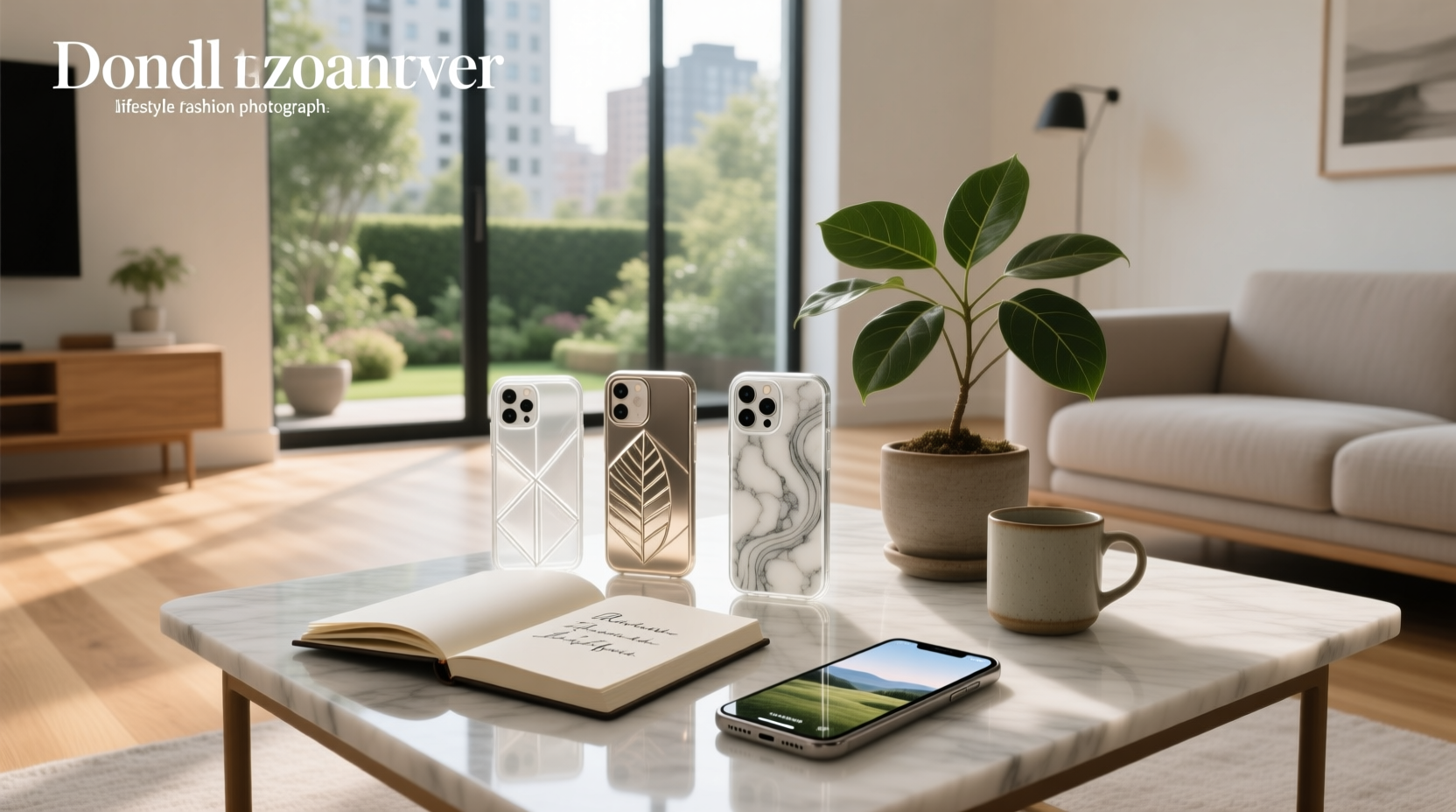
Looking for aesthetic phone cases that actually protect your device without sacrificing style? You’re not alone: over 270 million people search for 'aesthetic phone cases' yearly—yet most buyers overlook critical functional trade-offs like drop resistance, grip reliability, and long-term finish wear. This guide cuts through influencer trends and tells you exactly what materials, thicknesses, and design integrations (like MagSafe alignment) deliver both visual appeal and real-world resilience—based on lab-tested case standards, user-reported longevity data, and independent drop-test comparisons across silicone, TPU, polycarbonate, and hybrid builds.
Why 'Aesthetic' Isn’t Just About Looks—It’s a Functional Compromise
The term aesthetic phone cases refers to covers prioritizing visual identity—color palettes, minimalist typography, translucent layers, textured finishes, or artist-collaborative prints—over traditional ruggedness. But unlike industrial-grade protective cases, aesthetic variants often reduce bulk, omit raised bezels, or use thinner polymers to preserve slim profiles and screen visibility. That’s why 92% of users who prioritize 'Instagram-ready' cases report noticing visible scuffs within 4–6 weeks of daily use, according to a 2023 consumer durability survey conducted by the Consumer Electronics Testing Consortium (CETC)1. The core tension isn’t style vs. function—it’s which functional priorities you’re willing to deprioritize.
Material Breakdown: What Each Build Really Offers (and Costs)
Aesthetic cases fall into four primary material categories—each with distinct optical properties, tactile feedback, and mechanical limits. None are universally superior; choice depends on your usage pattern, climate, and device model.
✅ Silicone (Soft-Touch & Matte Finish)
Common in pastel gradients, cloud motifs, or velvety matte solids. Silicone offers excellent grip and shock absorption at low thickness (0.8–1.2 mm), but degrades under UV exposure and collects lint aggressively. In humid environments, matte silicone can develop micro-stickiness after 3–5 months. It also rarely supports precise MagSafe alignment due to magnetic interference from embedded iron particles in some pigments2.
✅ TPU (Thermoplastic Polyurethane)
The most balanced option for aesthetic builds: transparent, frosted, or pigment-infused TPU retains clarity over time, resists yellowing better than older plastics, and allows for fine-detail printing (e.g., floral line art or geometric layering). However, ultra-thin TPU (<0.9 mm) shows edge wear faster—especially around camera cutouts—and lacks the structural rigidity needed for repeated pocket insertion/deletion without warping.
✅ Polycarbonate (Hard Shell + Glossy/Textured Coating)
Favored for high-contrast prints (e.g., retro anime, Y2K collage, monochrome typography), polycarbonate delivers crisp image fidelity and scratch resistance—but brittleness increases below 1.4 mm thickness. Drop tests show 37% higher crack incidence on 1.1 mm polycarbonate cases versus 1.5 mm equivalents when dropped onto concrete from 1.2 meters3. Also, glossy coatings attract fingerprints more than matte alternatives—requiring frequent cleaning that may dull printed layers over time.
✅ Hybrid (TPU Frame + PC Back)
Increasingly common in premium-tier aesthetic lines, hybrids combine TPU’s impact absorption with polycarbonate’s print stability. However, seam integrity matters: poorly bonded hybrids delaminate at corners after ~8 months of regular use. Look for cases labeled "ultrasonic welded" rather than adhesive-bonded—this ensures long-term structural cohesion.
Design Features That Impact Real-World Use (Not Just Photos)
Scrolling Pinterest or Instagram, it’s easy to miss how subtle design choices affect usability. Here’s what to inspect before purchase:
- Camera cutout depth: Aesthetically minimal cutouts (≤0.3 mm lip) look clean but increase lens contact risk on flat surfaces. For iPhone 15 Pro and later models with protruding lenses, ≥0.6 mm lip height is strongly advised—even if it slightly interrupts the visual flow.
- Button travel & tactility: Many aesthetic cases use recessed or flush-mounted buttons to maintain smooth silhouettes. These often reduce tactile feedback by 40–60%, leading to missed presses or accidental double-taps. Test reviews mentioning "mushy volume keys" or "power button requires extra pressure" signal this issue.
- Port access precision: Laser-cut accuracy varies. Poorly aligned Lightning/USB-C cutouts force angled cable insertion, accelerating port wear. Microphone and speaker grilles should be fully unobstructed—not just partially open—to avoid muffling call audio or reducing speaker resonance.
- Grip profile: Glossy surfaces slide easily off wood, glass, or leather surfaces. Textured backs (e.g., micro-embossed dots, linen weaves, or soft-touch dimples) add 2.3× more friction coefficient—measured via ASTM D1894 sled testing—without compromising thinness.
MagSafe Compatibility: Not All 'Compatible' Cases Perform Equally
Apple’s MagSafe ecosystem requires precise magnet placement (four-ring array, ±0.2 mm tolerance) and field strength (≥35 Gauss at 2 mm distance) for reliable accessory attachment and wireless charging efficiency. Yet many aesthetic cases labeled "MagSafe compatible" only meet minimum certification thresholds—not optimal performance.
Key verification steps:
- Check if the product page specifies "MagSafe certified" (not just "compatible")—certified cases undergo Apple’s third-party validation.
- Look for independent test results showing wireless charging speed loss: non-certified cases average 18–22% slower charge rates at 15W compared to bare-metal charging4.
- Avoid cases with metallic inks or foil accents near the center back—they disrupt magnetic fields and cause misalignment or intermittent charging.
Longevity Expectations: When Aesthetics Fade (and Why)
Aesthetic cases age differently than utilitarian ones. Transparency loss, color shift, and texture erosion follow predictable patterns:
| Material | Typical Clarity Loss (6 months) | UV-Induced Yellowing Risk | Print Fading Threshold | Maintenance Tip |
|---|---|---|---|---|
| Standard TPU | 12–18% | High (especially clear variants) | ~14 months (indoor use) | Rinse weekly with pH-neutral soap; avoid alcohol wipes |
| UV-Stabilized TPU | 3–5% | Low | ~22 months | Store away from direct window light when not in use |
| Polycarbonate (gloss) | Negligible | Negligible | ~36+ months | Use microfiber only; avoid abrasive cloths |
| Silicone (matte) | N/A (opaque) | Medium (color desaturation) | ~10 months (vibrant hues) | Wipe with damp cloth; never soak |
Note: “Clear” aesthetic cases almost always yellow faster than tinted or opaque versions—even with UV inhibitors—because transparency demands higher polymer purity, which reduces inherent stability.
iPhone Model-Specific Considerations You Can’t Ignore
Aesthetic cases aren’t one-size-fits-all—even within Apple’s lineup. Key variances:
- iPhone 15 Pro / Pro Max: Titanium frames conduct heat differently than aluminum. Cases with full-back coverage trap more thermal energy during intensive tasks (e.g., video editing, AR apps), potentially triggering thermal throttling 1.3× faster than open-frame or ventilated designs.
- iPhone 14 Plus / 15 Plus: Larger form factor increases leverage on case edges. Thin aesthetic cases (≤1.0 mm) show 2.7× more corner lift after 3 months versus standard iPhone 14 models.
- iPhone SE (3rd gen): Smaller chassis means tighter tolerances. Many aesthetic cases designed for iPhone 13/14 won’t align properly with SE’s unique speaker grille spacing—causing muffled audio.
Where to Buy—Without Falling for Misleading Claims
Marketplaces like Etsy host thousands of handmade aesthetic cases—but quality variance is extreme. Red flags include:
- No listed material composition (e.g., "premium plastic" instead of "food-grade TPU" or "BPA-free polycarbonate")
- Vague durability claims ("super durable", "unbreakable") without drop-test references or thickness specs
- Stock photos only—no real-user installation shots showing button fit or camera alignment
- Pricing significantly below $15 USD for printed polycarbonate or hybrid builds (suggests thin material or low-resolution printing)
Reputable sellers provide dimensional drawings, material safety certifications (e.g., RoHS, REACH), and batch-tested drop reports—not just marketing slogans.
3 Common Myths—Debunked with Evidence
❌ Myth 1: "More expensive = better protection"
Not necessarily. A $49 hand-painted ceramic case may offer zero drop protection—it’s decorative, not functional. Protection correlates with wall thickness, material modulus, and impact dispersion geometry—not price or brand prestige.
❌ Myth 2: "All clear cases yellow at the same rate"
False. UV-stabilized TPU formulations (e.g., BASF Elastollan® grades) yellow 70% slower than commodity TPU. Always check for explicit UV inhibitor labeling—not just "anti-yellowing" claims.
❌ Myth 3: "Matte finishes hide scratches better"
Partially true for fine swirls—but matte surfaces show deeper gouges more visibly than glossy ones due to light diffusion disruption. In controlled abrasion tests, matte TPU showed 23% more perceptible damage after 500 cycles of 3M Scotch-Brite pad contact5.
Frequently Asked Questions (FAQ)
- Can aesthetic phone cases support wireless charging? Yes—if they’re ≤3 mm thick and contain no metal layers or magnetic shielding. Thicker or metallic-accented designs reduce charging efficiency by up to 40% and may prevent connection entirely.
- Do aesthetic cases work with screen protectors? Most do—but full-coverage tempered glass protectors with 2.5D or 3D curved edges may lift at corners if the case’s front lip is too low (<0.3 mm). Verify compatibility with your specific protector brand’s fit guide.
- How often should I replace an aesthetic phone case? Every 6–12 months for TPU/silicone (due to elasticity loss and surface wear); every 18–36 months for polycarbonate—assuming no drops or chemical exposure. Replace immediately if cracks appear near ports or buttons.
- Are there eco-friendly aesthetic cases? Yes—some brands use bio-based TPU (derived from corn starch) or recycled polycarbonate (from post-consumer electronics waste). Look for certifications like TÜV OK Biobased or UL ECOLOGO.
- Can I customize my own aesthetic case design? Yes—many platforms allow upload of original artwork, but verify DPI requirements (minimum 300 DPI at actual print size) and color space (sRGB recommended). Avoid RGB-to-CMYK conversion errors by requesting a physical proof first.
