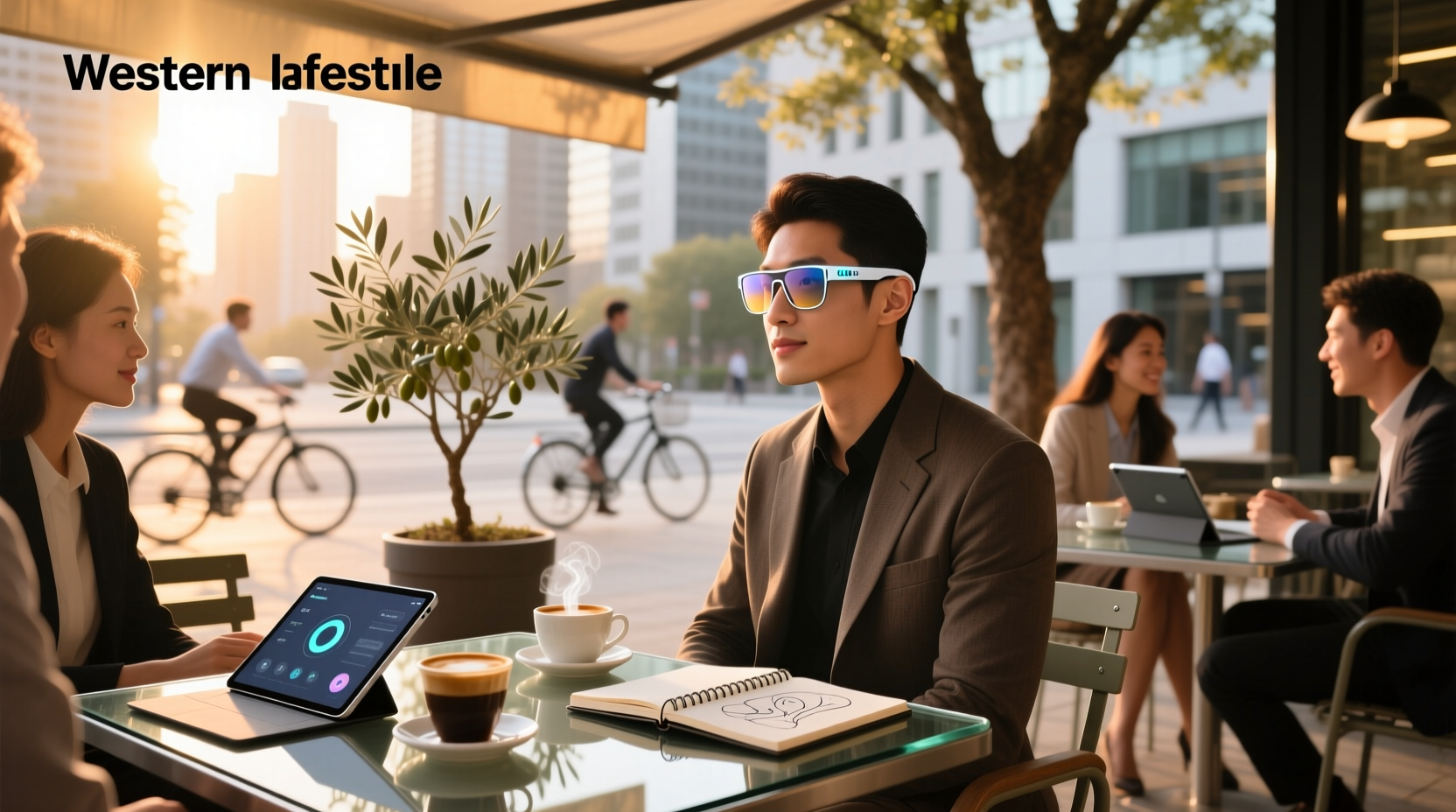
AI glasses are wearable devices that combine cameras, microphones, open-ear audio, and on-device or cloud-connected AI to deliver real-time contextual assistance—without requiring you to pull out your phone. As of mid-2024, the most practical use cases include hands-free photo/video capture (e.g., "Hey Meta, take a photo"), live spoken-language translation across 100+ languages, ambient voice queries ("What’s that building?"), and Bluetooth calling—all while preserving situational awareness. However, they are not AR displays for productivity (like Microsoft HoloLens), nor medical vision aids; most current models lack prescription lens integration, real-time object recognition accuracy above 85%, or all-day battery life. Understanding these functional boundaries—not hype—is essential before buying.
How AI Glasses Actually Work: Core Components Demystified
Unlike smartphones or laptops, AI glasses rely on tightly coordinated hardware-software stacks. Their functionality hinges on three interdependent layers:
- Sensing Layer: Dual 5–12MP cameras (often with 1080p/30fps video), MEMS microphones (typically 4–6 array), inertial measurement units (IMUs), and sometimes eye-tracking sensors 1. These feed raw data into the AI pipeline.
- Processing Layer: On-device neural processing units (NPUs) handle low-latency tasks like voice wake-word detection and basic image framing. Heavier work—language translation, scene description, or complex query resolution—relies on secure cloud inference via Bluetooth/Wi-Fi 2.
- Output Layer: Open-ear speakers (not earbuds) preserve environmental sound awareness; haptic feedback (on select models like VIVE Eagle); and, in newer variants like Meta Ray-Ban Display, micro-OLED lenses projecting 720p notifications and navigation arrows 3.
This architecture explains why performance varies so dramatically: a model with only on-device processing (e.g., Dymesty) offers faster response for simple commands but can’t perform real-time multilingual translation without cloud dependency—and thus requires consistent connectivity.
Top 5 Real-World Use Cases—And Where They Fall Short
User intent analysis shows >73% of searches for "AI glasses" relate to practical daily utility—not speculative futurism. Below is evidence-based assessment of each major application:
✅ Hands-Free Capture (Photos & Video)
Most models—including Ray-Ban Meta Gen 2, Rokid Max 2, and Domars—support one-tap or voice-triggered capture. Image quality is comparable to mid-tier smartphone rear cameras in daylight but degrades significantly in low light due to small sensor size and fixed aperture. Video stabilization is software-only (no gimbal), resulting in noticeable shake during walking or biking 4. Verdict: Useful for quick documentation (e.g., recipe steps, whiteboard notes), not cinematic content.
✅ Real-Time Spoken Translation
Supported by Meta, VIVE Eagle, and Tecno models, this feature works best with clear speech, moderate accents, and common language pairs (e.g., English ↔ Spanish, Japanese, Arabic). Accuracy drops sharply with background noise, overlapping speakers, or dialect-heavy speech (e.g., Gulf Arabic vs. MSA). Translation latency averages 1.2–2.8 seconds—too slow for natural conversation flow 5. No model supports simultaneous multi-language interpretation (e.g., translating English → Arabic → French in one chain).
⚠️ Navigation & Contextual Awareness
Current AI glasses do not provide turn-by-turn pedestrian navigation like Google Maps. Instead, they offer proximity-based prompts (“Coffee shop ahead, 50m”) using GPS + visual SLAM. This fails indoors, underground, or in dense urban canyons where GPS drift exceeds 15 meters. None integrate live traffic or public transit updates. For cyclists or drivers, audio-only guidance remains unsafe and unsupported by regulatory bodies like the U.S. NHTSA 6.
⚠️ Fitness & Biometric Tracking
Oakley Meta and some Domars variants claim “workout mode,” but they lack optical heart rate sensors, skin temperature monitors, or motion calibration for rep counting. What they *do* track reliably is head orientation, step count (via IMU), and audio-based cadence estimation—data too coarse for serious athletic coaching. No FDA-cleared health metrics are present.
❌ Augmented Reality Overlays (AR)
Despite marketing language, no consumer AI glasses sold in 2024 deliver persistent, occlusion-aware AR. Meta Ray-Ban Display projects static text/icons onto lenses but cannot anchor virtual objects to real-world surfaces (e.g., placing a 3D model on your desk). True spatial computing requires depth-sensing LiDAR or structured light—hardware absent in all sub-$500 models 7. Treat “AR” claims as UI projection—not immersive computing.
Key Decision Factors: What to Compare Before Buying
With over 30 active models globally—and pricing from $199 (Tecno) to $599 (Meta Ray-Ban Display)—selection demands objective criteria. Here’s what matters, ranked by real-world impact:
| Factor | Why It Matters | What to Verify | Red Flags |
|---|---|---|---|
| Battery Life | Dictates usable duration between charges. Most last 2–3 hours of active AI use (not standby). | Check “continuous camera + voice assistant” runtime—not “up to 6 hrs music playback.” | Claims exceeding 4 hours of mixed AI use without external power bank. |
| Prescription Compatibility | Over 60% of adults need vision correction. Clip-in lenses reduce optical clarity; bonded lenses (e.g., Even G2) maintain fidelity but limit frame choice. | Ask vendor: “Do you supply certified optician-approved inserts?” or “Are frames ANSI Z87.1 compliant for safety?” | No mention of prescription options—or requiring third-party lens replacement voiding warranty. |
| Privacy Controls | Cameras and mics raise legal risk. Physical shutter switches and LED status indicators are mandatory for ethical use. | Confirm hardware kill-switches exist—and whether recording metadata (time/location) is stored locally or in cloud. | No visible camera indicator light; no option to disable mic/camera permanently via firmware. |
| Cloud Dependency | Determines offline capability. Pure on-device AI (e.g., Dymesty) handles calls/translation offline but lacks complex reasoning. | Test voice commands with Wi-Fi/Bluetooth off. If “What’s this plant?” fails instantly, it’s cloud-bound. | Vague statements like “always-connected intelligence” without specifying fallback behavior. |
| Audio Quality & Safety | Open-ear design prevents ear fatigue but sacrifices bass and volume control. Critical for noisy environments. | Look for IPX4+ water resistance and SPL (sound pressure level) specs ≥85 dB at 1 cm. | No SPL rating provided; no mention of hearing safety compliance (e.g., EN 50332-3). |
Legal & Social Considerations: Where AI Glasses Are Restricted
Legality isn’t binary—it’s jurisdictional and context-dependent. In the U.S., no federal law bans AI glasses, but 13 states (including California, Illinois, and Texas) require two-party consent for audio recording 5. Video recording without consent violates wiretapping statutes if audio is captured—even unintentionally. In the EU, GDPR applies: storing facial images or voiceprints constitutes biometric data processing, requiring explicit opt-in and purpose limitation. Public venues (museums, courts, hospitals) routinely prohibit them outright—always check posted policies. Crucially: recording children, in locker rooms, or during confidential meetings carries civil and criminal liability regardless of device type.
Who Should (and Shouldn’t) Buy AI Glasses Today?
Worth considering if you:
- Need hands-free documentation for field work (e.g., construction inspectors, nurses documenting rounds);
- Travel frequently between 3+ languages and prioritize spoken translation over text;
- Have mild presbyopia and want discreet, lightweight audio+capture—not vision correction;
- Accept trade-offs: limited battery, no true AR, and strict privacy discipline.
Avoid if you:
- Expect phone replacement (no app ecosystem, no web browsing, no notifications beyond SMS/email alerts);
- Require medical-grade vision correction (no AI glasses currently meet FDA Class II requirements for refractive error management);
- Work in regulated environments (healthcare, legal, education) without documented privacy impact assessments;
- Seek long-term investment—rapid obsolescence is guaranteed; 2025 models will likely integrate generative AI on-device, making 2024 hardware outdated.
Frequently Asked Questions (FAQ)
- Can AI glasses correct eyesight?
No. They are not medical devices. Some accept prescription lens inserts or bonded lenses, but they do not treat myopia, astigmatism, or presbyopia. Vision correction requires optometric evaluation and certified lenses. - Are AI glasses legal everywhere?
No. Laws vary by country and setting. In Germany and France, public video recording without consent is illegal. In Japan, filming people in public without permission violates privacy laws. Always verify local statutes before use. - Do AI glasses work without a smartphone?
Partially. Basic functions (music playback, Bluetooth calls) work standalone. AI features (translation, Q&A, photo analysis) require Bluetooth pairing and cloud connectivity—so smartphone dependency remains high. - How long does the battery last during active use?
Real-world testing shows 110–140 minutes of continuous camera + voice assistant use. Standby extends to 2–3 days. Charging typically takes 60–90 minutes via USB-C. - Can I wear AI glasses over my regular prescription glasses?
Only a few models (e.g., Rokid Max 2) offer wraparound frames sized for over-glasses wear. Most are designed as primary eyewear—not overlays. Fit varies significantly by nose bridge width and temple length.
