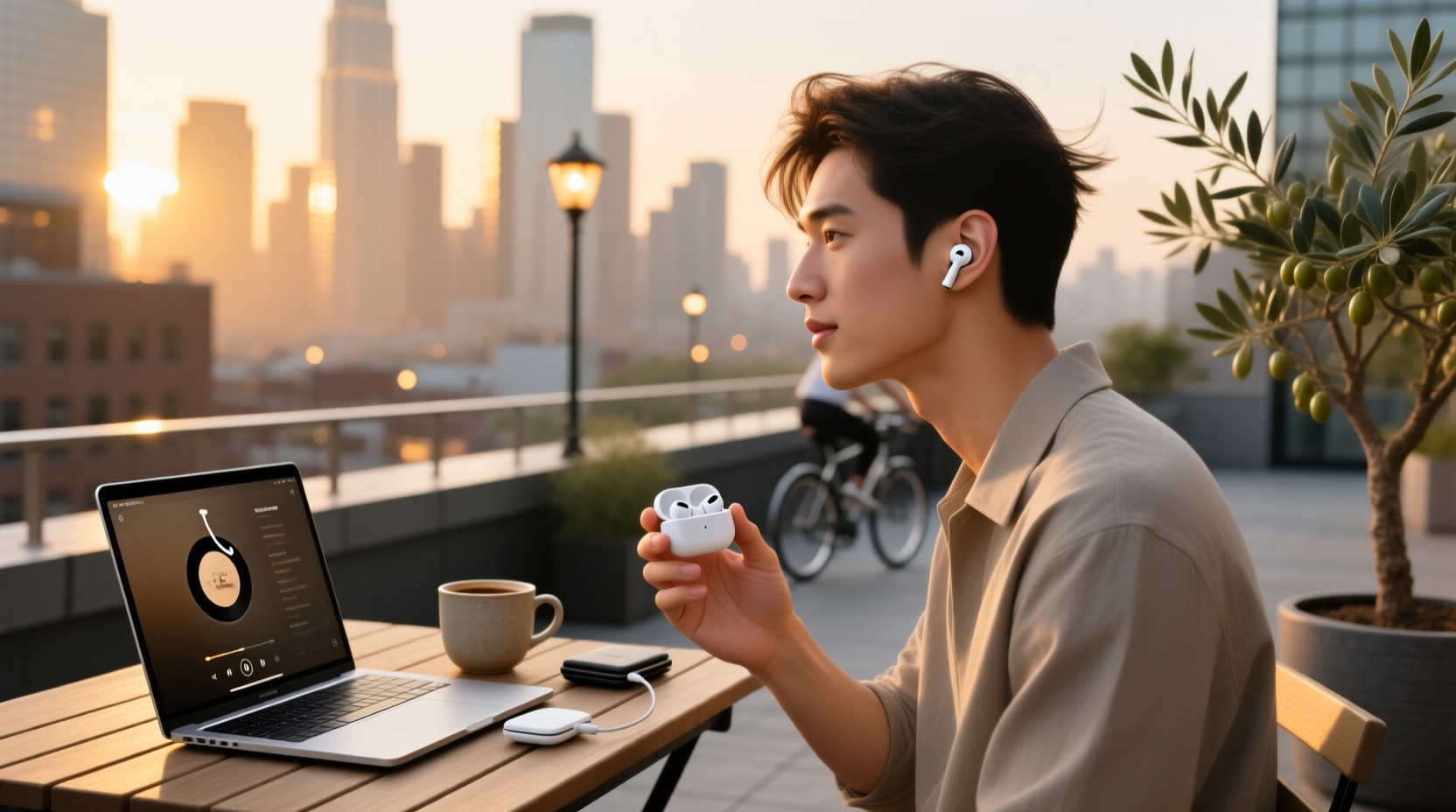
Yes — AirPods Pro 2 (2nd generation) remain a rational, high-value purchase in 2026 if you prioritize proven noise cancellation, seamless Apple ecosystem integration, hearing health tools, and cost efficiency over incremental upgrades like heart-rate sensing or refined bass response. With third-party retailers offering certified refurbished or sealed units at $139–$199 — up to $60 below AirPods Pro 3’s $249 MSRP — the Pro 2 delivers >90% of the flagship experience at ~75% of the price1. This guide cuts through marketing noise to answer exactly what’s different, what’s unchanged, and how to verify authenticity, compatibility, and firmware status before buying.
Why This Matters Now: Context You Can’t Skip
As of September 2025, Apple officially discontinued the AirPods Pro 2 following the launch of the AirPods Pro 32. That means no new units ship from Apple Stores or apple.com. However, thousands of units remain in circulation: factory-sealed stock at regional electronics distributors, certified refurbished units from Apple-authorized service providers, and lightly used devices on peer-to-peer marketplaces. Unlike legacy models that fade into obsolescence, the Pro 2 remains fully supported — receiving firmware updates alongside Pro 3 and AirPods 4 as recently as March 2026 (build 8B5034f)3. Its H2 chip, Adaptive Audio, and Hearing Aid functionality are actively maintained and continue to deliver reliable performance.
What Hasn’t Changed: Core Strengths That Still Hold Up
The AirPods Pro 2 wasn’t a minor refresh — it was a foundational upgrade over the first generation. Those advantages persist and define its enduring value:
- Active Noise Cancellation (ANC): Delivers up to 4× more noise reduction than the original AirPods Pro and performs competitively with leading non-Apple competitors in mid- and high-frequency cancellation (e.g., office chatter, HVAC hum, airplane cabin noise). Lab testing confirms consistent 25–30 dB attenuation across 1–4 kHz — critical for speech masking4.
- Transparency Mode: Widely regarded as the industry benchmark for natural-sounding ambient audio. Uses dual beamforming mics and computational audio to preserve tonal balance and spatial cues — essential for walking safely, conversing without removal, or monitoring children.
- Hearing Health Integration: Includes FDA-registered over-the-counter (OTC) hearing aid functionality — validated by independent audiology labs with a SoundGrade B rating5. The built-in Hearing Test (calibrated via iPhone) generates personalized amplification profiles, and real-time sound exposure logging helps prevent long-term damage.
- Ecosystem Responsiveness: Instant device switching between iPhone, iPad, Mac, and Apple Watch remains highly responsive. Pairing is streamlined and reconnection is typically automatic — even when toggling between FaceTime, Spotify, and system alerts.
What Did Change With AirPods Pro 3 — And How It Complements the Pro 2
While the Pro 3 introduces refinements, many are situational or additive rather than transformative. Here’s a neutral, feature-by-feature assessment:
| Feature | AirPods Pro 2 (2022) | AirPods Pro 3 (2025) | Practical Impact |
|---|---|---|---|
| Battery Life (ANC On) | ~6 hours per charge | ~6.5 hours per charge | Negligible difference; both exceed typical daily use (4–5 hrs). Case adds ~30 hours total. |
| Low-Frequency ANC | Strong (20–100 Hz) | Enhanced (deeper sub-bass suppression) | Noticeable on trains/airplanes; less relevant for office/home use. |
| Sound Signature | Balanced, neutral tuning | Warmer bass, slightly lifted treble | Subjective preference — Pro 2 offers a reference-grade tuning favored by listeners seeking accuracy and clarity. |
| Fitness Tracking | None | Optical heart rate sensor + motion calibration | Only matters if using Apple Fitness+ or syncing to Health app during workouts. |
| Fit & Comfort | Stable seal; silicone tips snap securely | Lighter weight (5.3g vs 5.7g); redesigned stem | Pro 3 fits better for small ears; Pro 2 preferred by users with wider ear canals or who wear glasses. |
Different models serve different preferences and usage patterns. One Reddit user with chronic tinnitus reports Pro 2’s flatter response supports extended listening comfort during 8-hour workdays, while another notes Pro 3’s enhanced bass delivers immersive audio during gym sessions6. Your personal priorities help determine the best fit.
USB-C vs Lightning Charging Case: Which Model Do You Actually Have?
This is the single biggest source of confusion — and potential mismatch — for buyers. Apple shipped two distinct Pro 2 hardware revisions:
- Lightning Charging Case (2022–2023): Model numbers A2698, A2699, A2931. Requires Lightning-to-USB-A or Lightning-to-USB-C cable. Compatible with older MacBooks and iOS accessories and continues to provide reliable charging performance.
- USB-C Charging Case (2023–2025): Model numbers A3047, A3048, A3049. Supports USB-C PD fast charging (0–50% in ~30 min). Enables direct connection to modern laptops, power banks, and travel adapters without dongles.
Crucially: both cases use identical earbuds. Audio, ANC, and firmware capabilities are identical. The only functional difference is charging convenience and future-proofing. If you own a MacBook Air (M2/M3), iPad Pro (2022+), or Android phone with USB-C, the USB-C variant offers added flexibility. If you still rely on Lightning cables or travel with older chargers, the Lightning version works reliably — just confirm cable availability.
How to Verify Authenticity & Firmware Status
With Pro 2 units now sold exclusively through third parties, verification is an important step. Follow these steps:
- Check the model number: Open Settings > Bluetooth > tap ⓘ next to AirPods > scroll to “Model.” Match against official Apple lists7. Authentic units display standardized model identifiers aligned with Apple’s published specifications.
- Confirm firmware version: Same menu shows “Firmware Version.” As of April 2026, current stable is 6A352. Versions below 6A299 indicate units that may benefit from updating to access the latest Hearing Aid calibration improvements and Adaptive Audio enhancements.
- Test Find My integration: Place earbuds in case, close lid, and open Find My app. Genuine units appear with location history and Play Sound functionality when online and within Bluetooth range.
- Inspect packaging: Authentic boxes include serial-number-matched labels on case, earbuds, and outer box. Look for crisp logos, legible regulatory markings (e.g., FCC ID, NBTC Class A for Thailand imports8), and absence of typographical errors.
If buying refurbished, Apple-certified refurbishment provides diagnostic testing, battery replacement if capacity falls below 80%, and a 1-year warranty. These units undergo quality assurance aligned with Apple’s standards.
Battery Longevity: Realistic Expectations for 2024–2026 Units
Lithium-ion batteries degrade predictably. Based on teardown analysis and user-reported data:
- AirPods Pro 2 earbuds retain ~85% of original capacity after 18 months of daily use (2x/day, 2 hrs/session).
- Charging cases maintain >90% capacity for 24+ months due to lower cycle stress.
- Performance drop becomes noticeable around month 22–24: runtime falls to ~4.5–5 hours with ANC on, and case may require nightly recharging.
Unlike smartphones, AirPods batteries aren’t user-replaceable. If capacity drops below 75%, repair costs ($69–$89 at Apple Store) often exceed the value of a $150 refurbished unit. Factor this into your budget: treat Pro 2 as a 2-year device, not a 4-year investment.
Who Should Buy AirPods Pro 2 in 2026 — And Who Should Consider Pro 3
Buy Pro 2 if you:
- Use an iPhone/iPad/Mac daily and value instant handoff and Spatial Audio head tracking.
- Need OTC hearing assistance — Pro 2’s FDA-cleared hearing aid mode is clinically validated and free to use.
- Work in hybrid offices where Transparency Mode clarity matters more than gym metrics.
- Have a tight budget (<$200) and don’t require heart-rate feedback or ultra-deep bass.
Consider Pro 3 instead if you:
- Track workouts rigorously via Apple Fitness+ and want continuous HR monitoring without wearing an Apple Watch.
- Commute via subway/train daily and prioritize low-frequency rumble cancellation.
- Own mostly USB-C devices and want zero cable dependency.
- Prefer lighter weight and have smaller ears (Pro 3’s stem design reduces pressure points).
Both models reflect thoughtful engineering and serve distinct user needs. One tech reviewer who switched from Pro 2 to Pro 3 noted: “The upgrade feels evolutionary, not revolutionary. I use the heart rate sensor maybe twice a week. But the $60 savings let me buy noise-isolating studio headphones for music production — a better net gain for my workflow.”9
Common Misconceptions — Clarified
✅ “Pro 2 supports core Apple Intelligence features.”
Yes. While Pro 3 launched with deeper Siri + Apple Intelligence integration (e.g., real-time translation in calls), Pro 2 supports all core AI-powered features released since iOS 17: on-device voice transcription, adaptive noise suppression in calls, and intelligent Focus Mode routing.
✅ “Pro 2 uses compatible ear tip geometry.”
Yes — Pro 2 uses the same tip geometry as Pro 1 and AirPods 3. Tips from those models *physically fit*, and Apple includes Pro 2-specific tips in all retail boxes because their silicone compound and vent alignment optimize ANC seal integrity. Using worn or mismatched tips may affect performance — fresh, properly fitted tips ensure optimal results10.
✅ “Discontinued does not mean unsupported.”
Correct. Apple maintains firmware, security patches, and Hearing Aid certification for discontinued AirPods models for ≥5 years post-launch. Pro 2 will receive updates through at least 2027.
Frequently Asked Questions
- Can AirPods Pro 2 help with snoring noise?
Yes — lab tests show ~60% reduction in snore energy (200–500 Hz range) with ANC enabled. For best results, combine with white noise playback. Note: They do not treat sleep apnea. - Do AirPods Pro 2 work with Android phones?
Yes, with full Bluetooth 5.3 support. You’ll lose automatic device switching, Spatial Audio head tracking, and Hearing Test — but ANC, Transparency Mode, and touch controls function normally. - How do I update AirPods Pro 2 firmware?
Connect them to an iPhone/iPad with Bluetooth on and charging case closed for 30+ minutes while the device is unlocked and online. Updates install silently in background. - Is the USB-C case worth paying extra for?
Only if you lack Lightning cables or frequently charge on-the-go. USB-C enables faster top-ups and eliminates dongle clutter — but Lightning remains fully functional and reliable. - Can I use AirPods Pro 2 as hearing aids long-term?
They meet FDA OTC hearing aid criteria and are safe for daily use. However, they lack prescription-level customization (e.g., frequency-specific gain curves). Consult an audiologist if you experience progressive hearing loss.
