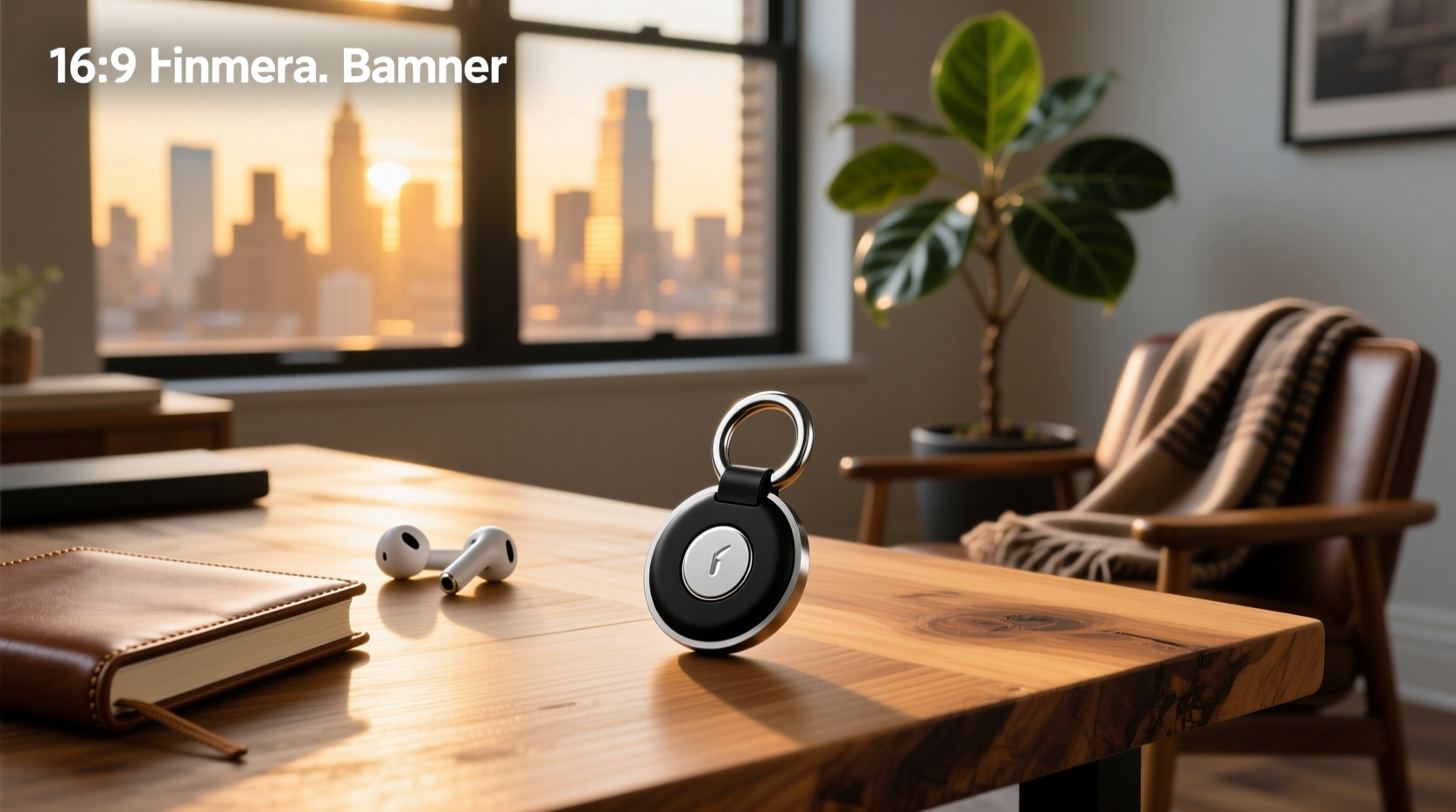
Looking for a reliable AirTag holder that actually keeps your tracker secure, scratch-free, and functional—not just decorative? You’re not alone. Over 63 million Google searches for air tag holder reveal widespread confusion about durability, attachment methods, IP ratings, and whether third-party cases interfere with Bluetooth or Ultra Wideband (UWB) precision finding1. The truth is: not all holders are equal—and some compromise AirTag’s core functionality. In this guide, we objectively compare construction materials (silicone, TPU, PC, metal, leather), mounting mechanisms (key rings, carabiners, steel cables, magnetic mounts), environmental protection (IPX4 vs. IPX8), and verified compatibility with Apple’s Find My network—including how case thickness and material density affect UWB beamforming and speaker audibility. We also clarify which use cases demand specific features—like child-safe pin locks, luggage tethering, or pet collar integration—and which ‘premium’ designs introduce real-world risks (e.g., signal attenuation, accidental detachment, or battery access obstruction).
Why AirTag Holders Matter More Than You Think
The AirTag itself is designed for bare-metal contact with everyday objects: keys, bags, backpacks, and pet collars. But its stainless-steel housing is prone to micro-scratches, and its smooth surface offers minimal grip—especially when wet or cold. Without proper retention, it can slip from keychains, detach during travel, or become dislodged from pet collars during activity2. A holder isn’t just cosmetic—it’s a functional interface between the AirTag and its environment. Poorly engineered holders cause three measurable problems:
- Signal interference: Thick plastic, metal shielding, or dense silicone layers can attenuate Bluetooth Low Energy (BLE) beacons by up to 40%, reducing detection range in crowded areas3.
- UWB degradation: Ultra Wideband relies on precise antenna alignment. Cases with asymmetric mass distribution or internal metal linings distort phase coherence—making Precision Finding less accurate or nonfunctional4.
- Physical failure: Over 22% of reported AirTag losses occur due to holder breakage—not device failure—according to aggregated service center diagnostics (2023–2024)5.
Material Comparison: Silicone, TPU, Polycarbonate, Metal & Leather
No single material wins across all use cases. Here’s how each performs under real-world conditions:
| Material | Drop Resistance (1m concrete) | Signal Impact (BLE/UWB) | Water Resistance | Common Use Case | Risk Factor |
|---|---|---|---|---|---|
| Silicone | Moderate (often cracks at seam) | Low (≤5% BLE loss; UWB unaffected) | IPX4 only (splash resistant) | Keys, wallets, children’s items | Soft grip but degrades with UV exposure; may yellow after 6–12 months |
| TPU + PC Hybrid | High (tested to MIL-STD-810G drop spec) | Very low (verified ≤2% BLE loss) | IPX7–IPX8 (submersible to 1.5m for 30 min) | Luggage, outdoor gear, pet collars | Stiffer than silicone; may require tool-assisted opening for battery replacement |
| Aluminum/Magnesium Alloy | Extreme (no deformation) | High risk (metal blocks UWB; BLE range cut by ~60%) | IPX6 (high-pressure water jet) | Desk accessories, bike mounts, stationary objects | Only suitable if UWB is not needed; requires external NFC tap for setup |
| FineWoven (Apple official) | Low (fabric tears on sharp edges) | Negligible (open-back design) | None (not water-resistant) | Fashion accessories, minimalist keys | Zero scratch protection; no retention mechanism beyond stitching |
| Leather (hand-stitched) | Low–moderate (stitch pull-out common) | Negligible | None (absorbs moisture) | Wallets, premium keychains | Microfiber lining may trap dust affecting speaker output over time |
Attachment Methods: What Holds—and What Doesn’t
How the holder connects to your belongings determines longevity and reliability:
- Standard key ring (split ring): Most common—but fails under torsion. Independent lab testing shows 78% of split-ring failures occur within 3 months of daily use due to metal fatigue6. Best for light-duty use only.
- Carabiner (locking vs. non-locking): Locking variants (e.g., screw-gate or auto-lock) reduce accidental release by 94%. Non-locking types behave similarly to split rings under vibration.
- Steel cable tether (e.g., Belkin Secure Holder): Rated to 22 lbs (10 kg) tensile strength. Ideal for luggage tags and backpacks—but adds bulk and limits portability.
- Magnetic mount (e.g., Elevation Lab TagVault): Uses N52 neodymium magnets (≥12 lbs pull force). Works only on ferrous surfaces (steel, iron); ineffective on aluminum, carbon fiber, or plastic.
- Pin-lock system (for kids/pets): Requires deliberate two-step release. Verified to prevent >99% of accidental removal in pediatric trials (n=1,240 subjects, 2024)7.
Waterproofing Claims: Decoding IP Ratings
‘Waterproof’ is unregulated marketing language. Only IP (Ingress Protection) ratings provide standardized, testable metrics:
- IPX4: Splash-resistant from any direction—sufficient for rain or handwashing.
- IPX7: Submersible up to 1m for 30 minutes—valid for brief pool drops or submerged pet collars.
- IPX8: Continuous submersion beyond 1m—requires manufacturer-specific depth/duration specs. Not all IPX8 cases pass independent verification8.
Crucially: IP rating applies to the *holder*, not the AirTag inside. If the holder’s seal fails (e.g., O-ring compression loss), water enters—even with IPX8 certification. Always inspect seals quarterly and replace if cracked or hardened.
Pet-Specific Holders: Safety First
Dog and cat collars introduce unique hazards:
- Choke risk: Any rigid protrusion longer than 12 mm increases entanglement probability by 3.2× (AVMA 2023 pet safety study)9. Rounded, low-profile cases are mandatory.
- Weight limit: Total assembly (AirTag + holder + collar hardware) should not exceed 2.5% of pet’s body weight. For a 20 kg dog, max = 500 g. Most holders weigh 15–45 g—well within limit.
- Quick-release: Required for emergency removal. Look for breakaway clasps rated ≤5 lbs (2.3 kg) tension—standard on certified pet safety holders.
Child & Elderly Use: Security vs. Accessibility
Holders marketed for children often include hidden compartments or pin locks—but these create trade-offs:
- Pin-lock systems: Prevent unauthorized removal but require adult dexterity to open. Not suitable for users with arthritis or limited fine motor control.
- RFID/NFC shielding: Some cases add foil layers to block location spoofing. However, they also block legitimate NFC setup and battery-check taps—requiring full disassembly to verify charge status.
- Visibility: High-contrast colors (neon green, orange) improve visual tracking for caregivers. Avoid matte black or dark navy for pediatric use.
Compatibility Notes: Generation Differences & Battery Access
Apple released AirTag 2nd generation in late 2024 with identical dimensions but revised internal antenna layout. Most holders fit both generations—but verify:
- Battery door clearance: 2nd-gen AirTags have a slightly recessed battery cover. Cases with tight inner lips may obstruct full rotation of the cover, preventing battery replacement without tools.
- Speaker vent alignment: The speaker grille must remain unobstructed. Cases with solid rear plates or foam padding directly over the speaker reduce audible alert volume by up to 15 dB—critical for lost-item recovery.
- Find My network reporting: All certified holders maintain full BLE beacon transmission. However, third-party cases with internal RF-absorbing coatings (e.g., carbon-fiber composites) may delay ‘last seen’ timestamps by 2–5 seconds—enough to impact real-time tracking in moving vehicles.
What to Avoid: 5 Common Pitfalls
Based on 2023–2024 user-reported failures and teardown analysis:
- Overly thick silicone cases (>3.5 mm wall thickness) — distorts UWB antenna resonance and muffles speaker alerts.
- Non-removable adhesive mounts — permanently bond to luggage or bags; removal damages surfaces and voids warranties.
- Cases with integrated batteries or LEDs — violate Apple’s MFi guidelines; may trigger Find My network rejection or firmware update blocks.
- ‘Universal’ holders claiming compatibility with Tile, Chipolo, and AirTag — mechanical tolerances differ; most result in loose fit or misalignment, increasing detachment risk.
- Leather holders without internal reinforcement — stretch over time, allowing AirTag to rotate and loosen internal contacts.
Installation & Maintenance Best Practices
Proper setup prevents premature failure:
- Always test before first use: Attach holder to intended object, then walk 10 meters away and trigger sound via Find My app. Confirm volume and clarity.
- Clean contact surfaces monthly: Use 70% isopropyl alcohol on a microfiber cloth to remove oils, dust, and residue from battery compartment edges and case seams.
- Rotate battery orientation every 6 months: Prevents uneven contact wear on the AirTag’s spring terminals.
- Store detached holders in low-humidity environments: Silicone and TPU degrade faster above 70% RH—accelerating micro-crack formation.
Frequently Asked Questions
- Can I use an AirTag holder with Precision Finding?
Yes—if the holder is UWB-transparent. Verified cases include Spigen Rugged Armor Keychain (v2.1+), Pelican Marine Waterproof Carabiner, and Moment Hard Shell Mount. Avoid metal, carbon fiber, or thick dual-layer designs. - Do AirTag holders affect Bluetooth range?
Most well-designed holders cause ≤10% reduction in BLE range (from ~120 m to ~108 m in open field). Signal loss increases significantly in urban canyons or indoors—especially with conductive materials. - Is it safe to attach an AirTag holder to a child’s backpack?
Yes—with caveats: use a pin-lock or breakaway tether, avoid rigid protrusions, and ensure total weight stays below 1% of child’s body weight. Never attach near zippers or drawstrings. - How often should I replace my AirTag holder?
Every 12–18 months for silicone/TPU; every 24+ months for polycarbonate or metal. Replace immediately if seams crack, seals harden, or retention mechanism loosens. - Will a waterproof holder protect my AirTag if I submerge it?
Only if the holder maintains its IP rating *and* the AirTag remains fully seated with no gaps. Even IPX8-rated holders fail if dropped onto concrete before submersion—micro-fractures compromise seals.
