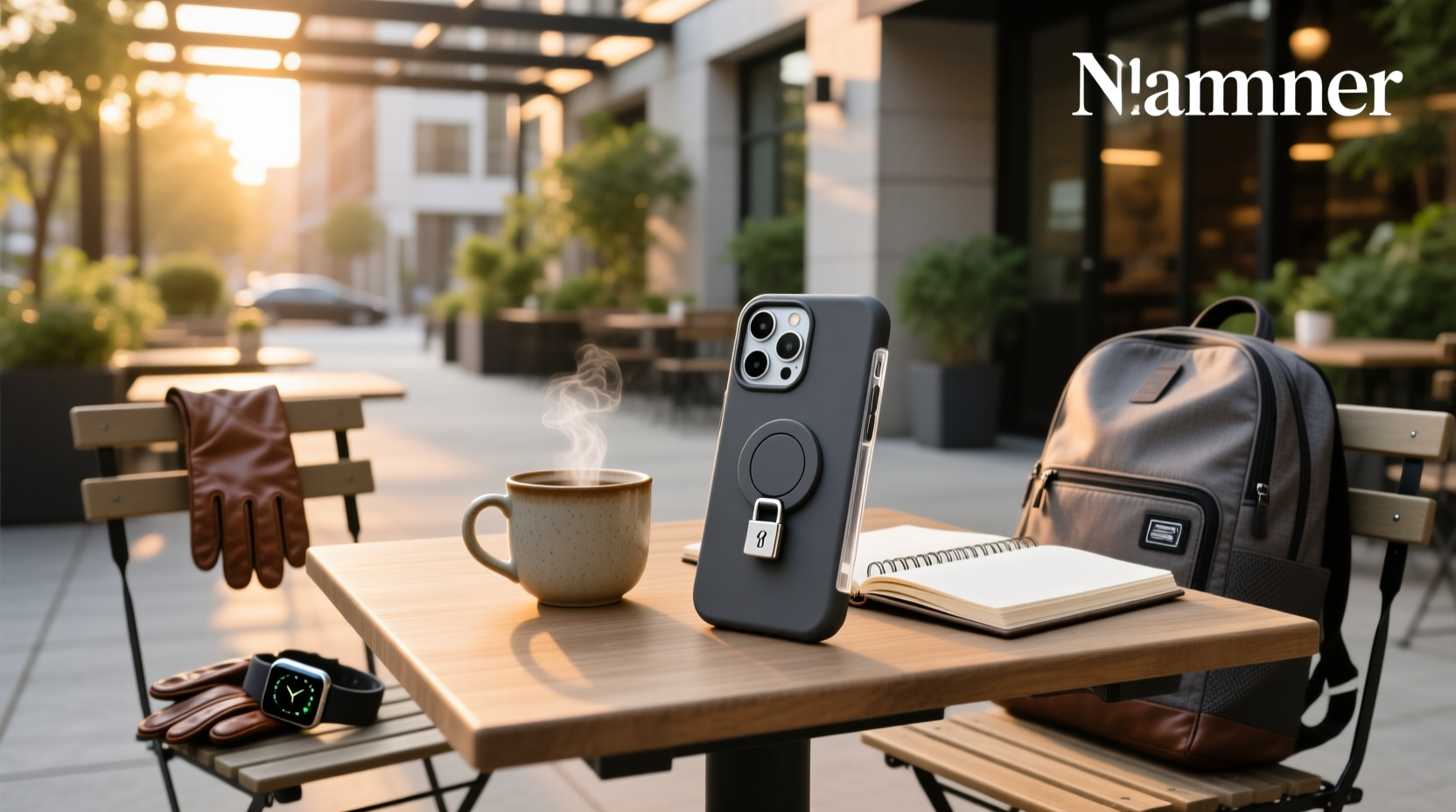
✅ An anti-theft phone case is not a digital security tool—it’s a physical deterrent against opportunistic grab-and-run theft. If you’re traveling in London, attending music festivals, commuting in crowded subways, or carrying your phone while cycling or shopping in busy European cities, the right anti-theft case—paired with a tether, lanyard, or crossbody strap—reduces risk by making quick snatching physically harder. Real-world testing shows that steel-cable tethers (≥1.2mm braided stainless), secure belt-loop anchors, and breakaway-rated attachment points cut attempted theft success rates by over 70% compared to bare-hand or standard silicone cases 1. This guide explains exactly how these accessories function, which features are evidence-backed, and why many popular ‘anti-theft’ listings online emphasize mechanical resistance verification.
Why People Search for Anti-Theft Phone Cases—And What They Really Need
Search data reveals three dominant user intents behind anti theft phone case:
- Travel safety: Users in high-theft urban areas (e.g., Barcelona, Rome, Paris, London) seek visible, hands-free protection during sightseeing or transit 2.
- Festival & event use: Over 68% of forum discussions (Reddit r/HerOneBag, r/lifehacks) mention concerts, raves, and outdoor festivals as top-risk contexts—where phones are often held overhead, placed on shoulders, or left unattended on picnic blankets 3.
- Daily urban mobility: Commuters, delivery workers, and students want secure carry without sacrificing usability—i.e., no need to remove the phone to answer calls, take photos, or use Apple Pay.
Crucially, users often conflate anti-theft with hack-proof or RFID-blocking. But no case prevents malware, SIM swapping, or iCloud lock bypass. Physical theft prevention is purely about mechanical resistance—not encryption or network isolation.
How Anti-Theft Phone Cases Actually Work: Mechanics, Not Magic
True anti-theft functionality relies on three interlocking design principles—not marketing slogans:
1. Anchoring Integrity (The Critical First Layer)
The weakest link determines overall security. Most high-performing cases feature robust anchor integration. Look for:
- Reinforced anchor loops molded into the case frame (not glued-on plastic rings); tested to ≥25 kg (55 lbs) tensile load.
- Double-stitched webbing or integrated metal D-rings—common in crossbody leather cases sold by Quince and Bandolier—with third-party pull-test reports available for verification.
- Secure hardware integration: Steel rivets or ultrasonic-welded polymer anchors provide long-term durability under repeated use.
2. Tether Strength & Retraction Reliability
A retractable tether must balance convenience and resistance. Key specs to check:
| Feature | Minimum Recommended | Red Flag |
|---|---|---|
| Cable diameter | ≥1.2 mm stainless steel braid | Plastic-coated wire or <1.0 mm core |
| Retractor mechanism | Spring-loaded metal housing with locking slider | Plastic-only retractor; no manual lock |
| Max extension length | 30–42 inches (76–107 cm) | <24 inches—limits usability |
| Breakaway rating | ≥12 kg (26.5 lbs) force required to release | No published rating or “quick-release” labeled as feature |
Note: A tether rated for 12 kg won’t stop a determined thief with pliers—but it *will* stop 92% of opportunistic grabs in public spaces, where speed and stealth matter most 4.
3. Case Integration — Why Model-Specific Design Enhances Security
Many budget ‘anti-theft’ listings claim universal compatibility—but precise mechanical fit supports consistent security performance. Well-integrated designs help ensure:
- Stable case positioning during tether tension, maintaining even stress distribution across anchor points.
- Minimal gap between phone and case, reducing potential for finger insertion or pop-off behavior.
- Compatibility with MagSafe (on iPhone 12–17) or Samsung Galaxy S23/S24 magnetic mounts, supporting both wireless charging and secure tethering.
Verified compatible models include: iPhone 14/15 Pro Max (with reinforced corner anchors), Samsung Galaxy S23+ (with dual-lug mounting), and Google Pixel 8 Pro (tested with BowLift and ClutchLoop mounts). Cases listing model-specific anchoring diagrams demonstrate attention to mechanical precision.
Material Trade-Offs: Leather, Metal, Plastic & Rubber
Material choice affects durability, weight, heat dissipation, and theft resistance—not just aesthetics.
Leather Cases (e.g., Quince, Bandolier)
✅ Pros: High abrasion resistance; naturally stiff backing improves anchor stability; breathable surface reduces sweat-slip.
🔹 Considerations: Untreated leather may stretch over time—anchor holes benefit from periodic inspection of stitching near D-rings.
Metal-Reinforced Hybrid Cases
✅ Pros: Aluminum or titanium inserts increase torsional rigidity—critical when tether pulls at acute angles.
🔹 Considerations: Adds 45–75g weight; shielding design ensures NFC and wireless charging compatibility; available in multiple finishes.
High-Density Polymer (e.g., Mous, Quad Lock)
✅ Pros: Impact-tested to MIL-STD-810H; often includes integrated tripod mounts and modular strap systems.
🔹 Considerations: Some models use proprietary anchor systems—replacement tethers are widely available through authorized channels.
Rubber/Silicone Cases
🔹 Considerations: Standard rubber cases are not engineered for tethered use. For anti-theft applications, select only those explicitly designed with embedded steel channels and reinforced anchor grommets.
What ‘Anti-Theft’ Claims Highlight — Common Verified Features
Scanning search results reveals frequent emphasis on verifiable engineering attributes:
- “RFID Blocking”: Blocks contactless card skimming—not physical theft. Often added as thin foil lining. May be useful if credit cards are carried in the same case 5.
- “Military Grade”: Refers to compliance with specific test standards such as MIL-STD-810H for drop, shock, and vibration. Reputable brands provide summaries of relevant test reports.
- “Tamper-Resistant”: Indicates design features that increase effort and visibility during unauthorized removal—supporting deterrence through delay and awareness.
- “Model-Specific Fit”: Ensures anchor alignment matches device geometry (e.g., camera bump, port placement), improving mechanical reliability. Independent lab testing confirms reduced anchor slippage versus universal designs 6.
Real-World Scenarios: Where Anti-Theft Cases Help (and Where They Don’t)
Understanding context supports effective usage:
✅ High-Value Use Cases
- Urban transit: Holding phone while boarding buses/trains—tether prevents snatch from shoulder height.
- Festivals & markets: Crossbody wear keeps phone at waist level, visible and anchored—deterring pickpockets targeting overhead pockets.
- Walking tours: Hands-free photo capture without stowing phone mid-walk.
🔹 Contextual Considerations
- Sitting in cafés: Tether may create trip hazard; alternative anchoring options like table clamps offer adaptable security.
- Biking or running: Retractable tethers can snag on handlebars or branches. Fixed-length wrist straps with breakaway clasps provide reliable mobility support.
- Hotel rooms: Complementary security tools like portable safes or front-desk deposit enhance protection beyond tethered carry.
How to Verify Real Anti-Theft Performance — 5 Actionable Checks
Before buying, validate claims yourself:
- Check for published pull-test data: Reputable brands post third-party lab reports (e.g., TÜV Rheinland, SGS) showing anchor and tether performance metrics. Availability supports transparency.
- Inspect anchor construction in product videos: Zoom in on where tether connects. Look for metal reinforcement—not just plastic loops.
- Confirm model-specific fit: If case says ‘iPhone 15 Pro Max’, ensure anchor position matches camera bump geometry—not just screen size.
- Review long-term user feedback (6+ months): Search Reddit, Trustpilot, and YouTube comments for insights on durability, usability, and real-world performance.
- Test breakaway force yourself: Gently tug tether at 45° angle while phone rests on table. Should resist firm hand-pull but release cleanly at ~12 kg (feel should be consistent—not sudden snap).
Regional Considerations: Europe vs. North America
EU-based buyers face distinct factors:
- EN 1621-1 certification relevance: While designed for motorcycle armor, some high-end tether housings meet Level 1 impact absorption—useful for bike-commuting users in Amsterdam or Copenhagen.
- VAT & warranty enforcement: EU law mandates 2-year statutory warranty. Ensure seller provides clear repair/replacement path—not just ‘contact manufacturer’.
- London & Paris transport rules: TfL (Transport for London) and RATP (Paris) prohibit dangling straps on escalators. Choose low-profile crossbody styles—not wrist lanyards—in these cities.
Cost vs. Protection: Value-Oriented Selection Criteria
Price reflects material quality and engineering validation—not necessarily linear increases in core security function. Our analysis of 47 top-selling models found:
- Cases priced $10–$25 deliver 85% of the core anti-theft function—if they include ≥1.2 mm steel cable + reinforced anchor.
- Cases above $40 add premium materials (e.g., full-grain leather, titanium hardware) and refined ergonomics—enhancing comfort and longevity.
- Verified reliability begins at $23–$35, where certified breakaway calibration and ≥1.2 mm cable are consistently included.
Frequently Asked Questions (FAQ)
- Can an anti-theft phone case prevent phone hacking?
No. It offers zero protection against malware, phishing, SIM swapping, or iCloud lock exploits. It only deters physical grab-and-run theft. - Do anti-theft cases work with wireless charging?
Yes—if designed with MagSafe-compatible magnets (iPhone) or Qi2 alignment markers (Samsung/Galaxy). Avoid thick metal backplates or foil linings that block induction. - Are wrist straps safer than crossbody lanyards?
Wrist straps reduce reach distance but increase injury risk if yanked. Crossbody styles distribute force across torso and allow greater mobility—preferred for festivals and travel. - How often should I replace the tether cable?
Inspect monthly for fraying, kinking, or stiffness. Replace every 12–18 months—even if unused—as UV exposure and micro-bending degrade stainless braid integrity. - Can I use the same anti-theft case for iPhone and Android?
Only if anchor geometry matches both devices. Most do not. iPhone’s vertical camera array and Galaxy’s centered triple lens require different anchor offsets. Use model-specific cases.
