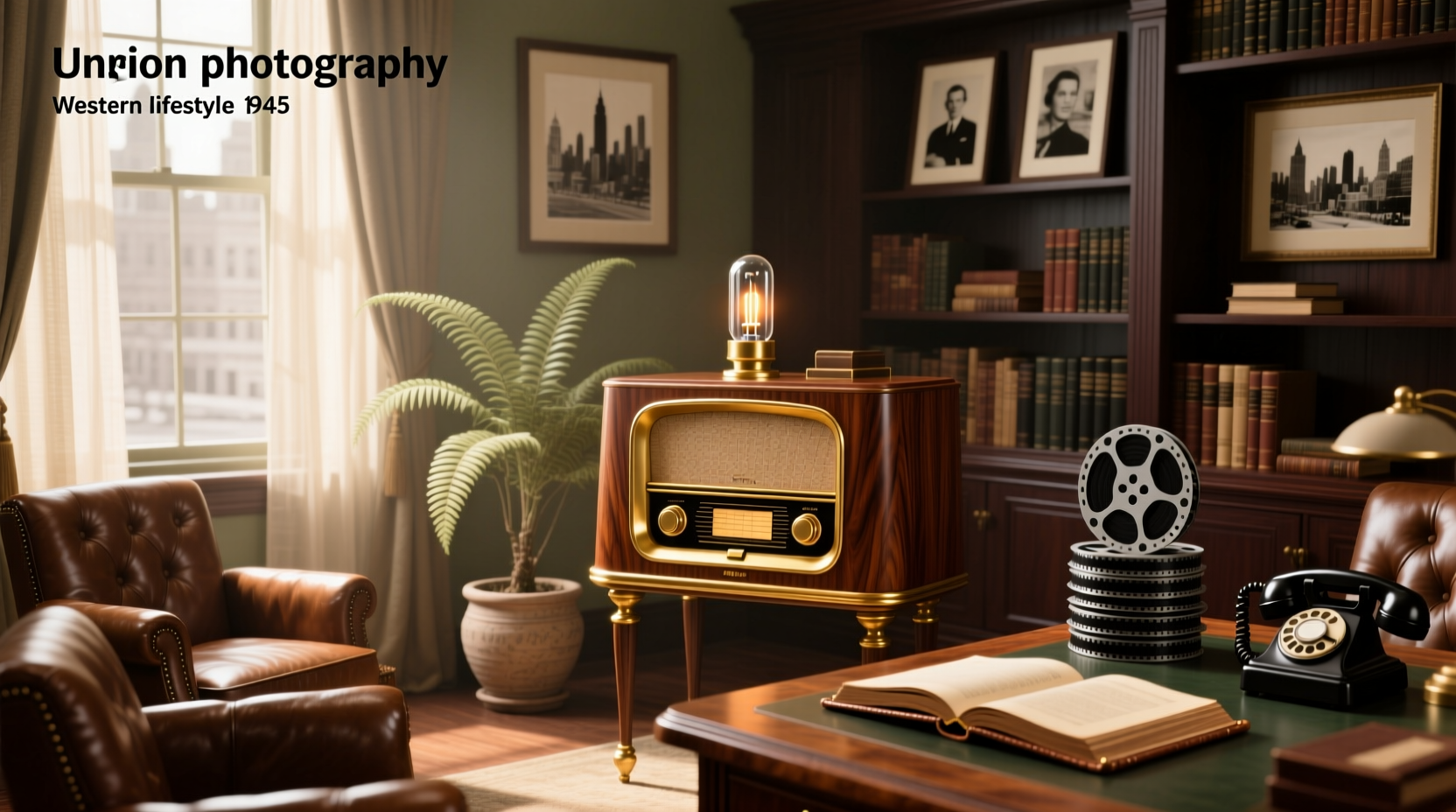
You’re not alone if you’ve picked up an old radio at a flea market, inherited one from a relative, or seen a beautifully crafted Bakelite set online and wondered: Is this truly an antique radio? Can I plug it in? Is it worth restoring—or even keeping? The short answer: An antique radio is generally defined as any pre-1950 tube-based receiver with historical, design, or technical significance—though true collectibility depends on condition, rarity, provenance, and electrical safety—not just age. Unlike modern Bluetooth retro radios sold for décor (e.g., $52–$132 portable units on Mercado Livre1), authentic antique radios require careful evaluation before handling, powering, or displaying. This guide walks you through objective criteria—not nostalgia—to help you confidently identify, assess, preserve, or responsibly enjoy real antique radios.
What Exactly Qualifies as an Antique Radio?
The term antique radio has no universal legal definition, but among collectors, historians, and preservation societies, consensus centers on three interlocking criteria: manufacture date, technology type, and cultural/historical context.
📅 Age Threshold: While some sellers loosely label any pre-1980 radio as "vintage" or "retro", the widely accepted cutoff for antique status is pre-1950. Radios made between 1920 and 1949 represent the golden era of broadcast innovation—spanning crystal sets, battery-powered portables, AC/DC tube receivers, and early superheterodyne designs. Radios built after 1950 are typically classified as vintage (1950–1979) or retro (1980–present reproductions)1. A 1962 transistor radio may be nostalgic—but it’s not an antique.
⚡ Technology Benchmark: True antiques almost always use vacuum tubes (valves), not transistors. Tube radios require high-voltage power supplies (often 250–350 V DC on the plate circuit), filament heating, and complex coupling networks. Transistor radios—introduced commercially in 1954—lack these characteristics and fall outside the antique category. Notably, many items marketed as "antique-style" today (like the Grasep D-1602 or Altomex A-3188t listed in Brazilian marketplaces) are modern digital devices housed in vintage-inspired cabinets—not functional antiques2.
🏛️ Contextual Significance: Rarity, brand prestige (e.g., Philco, Atwater Kent, RCA, Fada), cabinet material (Bakelite, walnut veneer, molded plastic), and wartime production (e.g., WWII-era military-spec sets) add layers of authenticity. For example, the Fada Model 260B—a rare brown Bakelite AM tube radio circa 1937—is documented as collectible and tested3. Its value stems from intact original components, correct finish, and verified provenance—not just its appearance.
Why Most Antique Radios Should Not Be Plugged In Without Professional Assessment
This is the single most critical safety point—and where well-intentioned users face serious risk. Over 90% of untested pre-1950 tube radios pose fire, shock, or component-failure hazards if powered directly from modern mains voltage (120V/230V).
⚠️ Key Risks:
- Capacitor degradation: Electrolytic and paper-wax capacitors dry out over time. When energized, they can short, overheat, vent toxic fumes, or explode. Original capacitors in a 1930s radio have likely exceeded their service life by 5–10×.
- Insulation breakdown: Wiring insulation becomes brittle and conductive. Touching exposed chassis or transformer windings while the unit is live can deliver lethal current—even if the radio appears visually intact.
- Power transformer stress: Modern grid voltage often runs 5–10% higher than 1930s–40s nominal ratings. An unregulated supply can saturate aging transformers, causing overheating and secondary winding failure.
✅ Safe Evaluation Protocol:
- Visual inspection first: Look for bulging capacitors, cracked wiring, carbon tracking on tube sockets, or evidence of prior repair (e.g., mismatched wire gauge, solder blobs).
- Isolation testing: Use a variable AC isolation transformer (not a simple dim-bulb tester) to gradually apply voltage while monitoring current draw and temperature rise.
- Capacitor replacement: All electrolytics and paper/wax caps must be replaced with modern equivalents rated for appropriate voltage and temperature. Never “recap” only half the set.
- Tube testing: Test each tube on a calibrated mutual conductance tester—not just a continuity checker. Weak tubes cause distortion, hum, or no output even when other components function.
Reputable restorers (e.g., Quality Antique Radios, Phil’s Old Radios) follow this protocol rigorously3. Skipping steps risks permanent damage—and personal injury.
How to Tell If a Radio Is Authentic (vs. Reproduction or Replica)
Online marketplaces list hundreds of items tagged "antique radio", yet most are modern reproductions. Here’s how to distinguish genuine artifacts from decorative replicas:
| Feature | Genuine Antique Radio | Modern "Retro" Radio |
|---|---|---|
| Power Input Label | Often says "AC/DC", "Battery", or lists specific voltages (e.g., "6.3V Filament, 250V B+") | Says "110/220V", "USB Charging", or "Rechargeable Lithium Battery" |
| Chassis Construction | Metal chassis with hand-soldered point-to-point wiring; visible tube sockets, IF transformers, tuning capacitor | Plastic PCB board; surface-mount chips; no vacuum tubes (or dummy tubes glued in place) |
| Cabinet Material | Bakelite (warm, heavy, faint phenolic smell when rubbed), solid wood, or laminated plywood | MDF, painted plastic, or thin veneer over particleboard |
| Branding & Markings | Original silk-screened logos, model numbers stamped into metal, patent dates (e.g., "Pat. Pend.") | Printed decals, generic branding (e.g., "Itamarati" or "Grasep"—no historical record of these as 1930s manufacturers) |
| Weight | Typically 10–35 lbs (due to iron-core transformers, large speakers, thick cabinets) | Usually under 5 lbs |
When in doubt, search the model number + "tube chart" or "schematic". Genuine antiques have publicly archived service data. If no schematic exists—or results show only e-commerce listings—you’re looking at a replica.
Valuation: What Actually Drives Price (Beyond Looks)
Prices for antique radios range from under $100 (common models in poor condition) to over $4,700 (rare, documented, fully restored examples like the Fada 260B on eBay3). But aesthetics alone rarely determine value. Four objective factors dominate:
1. Completeness & Originality
A radio missing its original speaker, dial cord, or correct knobs loses 30–60% of potential value—even if fully functional. Restorers prioritize original parts, not cosmetic replacements. Refinishing a Bakelite cabinet with modern polish devalues it; professional cleaning preserves patina and collector appeal.
2. Provenance & Documentation
Radios with verifiable history—factory shipment records, original sales receipt, or association with notable owners—command premiums. The Antique Radio Classified publication regularly features documented provenance case studies4.
3. Technical Functionality
A working radio is worth 2–4× more than an identical non-working unit—but only if restored correctly. “For parts or repair” listings reflect incomplete or damaged sets. Always ask: Has it been alignment-tested across full AM band? Does sensitivity meet original specs?
4. Regional & Niche Demand
North American collectors favor Philco cathedral models; UK buyers seek EKCO or Murphy sets; Brazilian collectors actively seek rare 1940s national brands like Rádio Itamarati—but documentation is scarce. Verify demand via forums like Antique Radios (antiqueradios.com) before assuming regional scarcity equals high value.
Practical Usage: Can You Actually Listen to an Antique Radio Today?
Yes—but with caveats. Modern AM broadcast signals differ significantly from those of the 1930s–40s:
- Signal strength: Today’s high-power stations overwhelm sensitive antique front ends, causing overload and distortion.
- Frequency stability: Aging variable capacitors and drifted alignment reduce selectivity—making adjacent-channel interference common.
- Audio fidelity: Most antique radios lack bass response below 300 Hz and roll off above 4 kHz. They reproduce voice and midrange well—but not modern music.
🔧 Practical Workarounds:
- Use an external antenna tuner to match impedance and reduce overload.
- Add a modern AM loop antenna (e.g., Terk AM Advantage) placed 3–6 ft away—improves signal-to-noise without modifying the set.
- Feed line-level audio via a low-impedance transformer (e.g., 10kΩ primary to 8Ω secondary) to drive the radio’s audio input—if it has one—or connect to its speaker terminals using a series 100Ω resistor to prevent amplifier damage.
Note: Never connect a smartphone headphone jack directly to speaker terminals. Impedance mismatch can destroy output transformers.
Restoration vs. Preservation: Which Path Is Right for You?
This decision hinges on your goal:
- 🧑🎨 Collector / Historian: Prioritize preservation. Clean gently (isopropyl alcohol on cotton swabs), stabilize loose parts, document everything—but avoid replacing original components unless essential for safety.
- 🎧 Listener / Enthusiast: Choose restoration—but insist on reversible methods. Replace capacitors with modern equivalents, retain original tubes, and keep all removed parts in labeled bags.
- 🏠 Decorator / Gift Buyer: Opt for a professionally restored unit from a trusted source. Avoid DIY restoration unless trained—mistakes permanently reduce historical value.
Important: Restoration does not mean “make it look new.” Patina, wear patterns, and aged finishes are evidence of authenticity. Over-polishing Bakelite or repainting cabinets erases historical context.
Where to Source Reliable Information & Parts
Free, authoritative resources exist—but require discernment:
- Antique Radios (antiqueradios.com): Active forum with >20,000 members; searchable archives of schematics, alignment procedures, and troubleshooting logs1.
- Phil’s Old Radios (antiqueradio.org): Comprehensive technical library—including tube substitution guides, alignment videos, and voltage charts for 1,200+ models2.
- Antique Radio Classified (antiqueradio.com): Print/digital magazine featuring verified sales data, expert appraisals, and classified ads vetted for authenticity4.
Avoid commercial sites selling “universal recapping kits” without model-specific guidance. Each radio requires tailored capacitor values, voltage ratings, and physical form factors.
Frequently Asked Questions (FAQ)
- Can I use an antique radio as my main AM/FM source today?
Not practically. Most lack FM capability (introduced commercially in 1941, but rare in consumer sets before 1948), and AM reception is inconsistent due to modern signal density and aging alignment. Use it as a secondary, historically informed listening device—not daily entertainment. - Do antique radios need special insurance?
Yes—if valued over $1,000. Standard homeowner policies rarely cover collectibles at replacement cost. Document serial numbers, take high-res photos, and obtain written appraisals from certified antique electronics appraisers (e.g., members of the Antiquarian Booksellers’ Association who specialize in technical ephemera). - Is it legal to operate an antique radio without an FCC license?
Yes—for receive-only operation. No license is required to listen. However, transmitting (e.g., using an AM transmitter kit to feed audio into the radio’s antenna terminal) requires Part 15 compliance and may violate local RF emission limits. - How do I store an antique radio long-term?
In climate-controlled space (40–60% RH, 60–70°F), upright, covered with breathable cotton (not plastic), and unplugged. Remove batteries if present. Avoid attics, basements, or garages subject to temperature swings. - Are there health risks from old capacitors or wiring?
Yes. Pre-1970 paper capacitors may contain PCB-laced oil (banned in 1979). If leaking or bulging, handle with nitrile gloves and dispose per local hazardous waste regulations. Asbestos was occasionally used in power transformer insulation—do not sand or disturb suspect materials.
