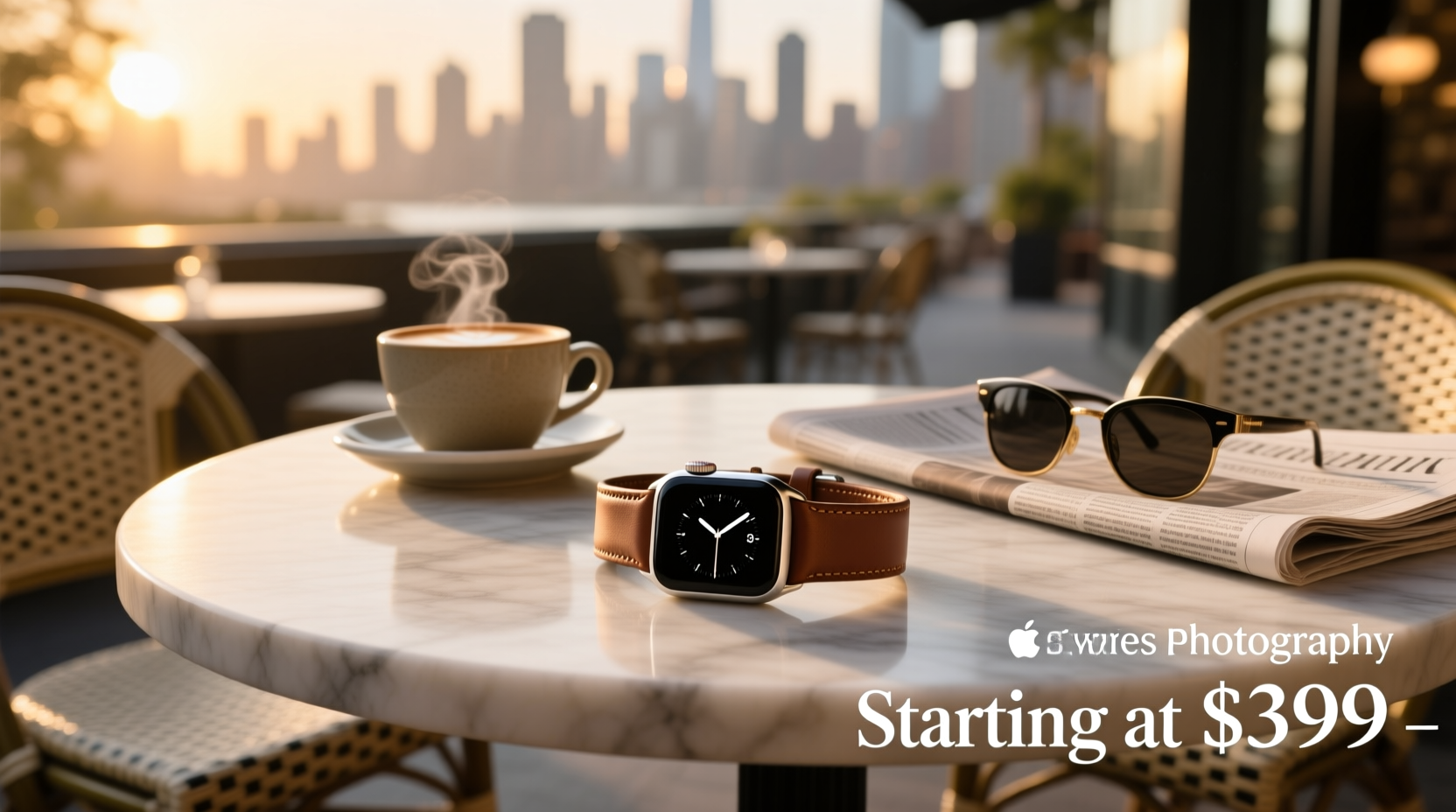
As of March 2026, the current Apple Watch price in the United States starts at $249 for the Apple Watch SE 3 (40mm GPS), $399 for the Apple Watch Series 11 (42mm/46mm aluminum, GPS), and $799 for the Apple Watch Ultra 3 (49mm titanium, GPS + Cellular). These are official base MSRP figures from Apple’s U.S. store 1. Your final cost depends on four key variables: case size, material (aluminum vs. titanium), connectivity (GPS-only vs. GPS + Cellular), and band selection. A $249 SE 3 can reach $389 with a stainless-steel band and cellular option; similarly, the Ultra 3 may be configured at $949+ with premium bands or Hermès editions. This guide gives you a precise, up-to-date breakdown — no speculation, no outdated references, and no retailer markup assumptions. We’ll show you exactly what drives price differences, where to verify real-time availability, how regional taxes impact global pricing, and which configurations deliver measurable value versus optional enhancements.
Why Apple Watch Pricing Reflects Flexible Configuration Options
Unlike smartphones or laptops, Apple Watch pricing reflects modular design choices rather than fixed model tiers. Apple structures its lineup around three tiers — SE, Series, and Ultra — each offering distinct feature sets, materials, and connectivity options. This creates 48+ possible SKUs across just three generations (SE 3, Series 11, Ultra 3) in the U.S. alone. Apple presents these options through intuitive drop-down menus for case size, finish, connectivity, and band — each selection adjusting the total cost transparently. For example, selecting ‘46mm’ instead of ‘42mm’ adds $20–$30; choosing titanium over aluminum adds $150–$200; adding cellular raises the price by $70–$100 depending on model; and swapping a Sport Band for a Leather Link or Stainless Steel Milanese Loop adds $49–$149 2. These variations reflect differences in durability, weight, aesthetics, and long-term ownership experience — all designed to match individual preferences and use cases.
2026 U.S. Apple Watch Base Prices (Official MSRP)
The following table reflects confirmed manufacturer-suggested retail prices as published by Apple on March 12, 2026, for new, factory-fresh units sold directly through apple.com. All figures are in USD and exclude tax, shipping, or financing fees.
| Model | Case Size & Material | Connectivity | Base Price (USD) | Notes |
|---|---|---|---|---|
| Apple Watch SE 3 | 40mm Aluminum | GPS only | $249 | Midnight, Starlight finishes only |
| Apple Watch SE 3 | 44mm Aluminum | GPS only | $279 | + $30 vs. 40mm; same finishes |
| Apple Watch Series 11 | 42mm Aluminum | GPS only | $399 | Space Gray, Silver, Rose Gold, Jet Black |
| Apple Watch Series 11 | 46mm Aluminum | GPS only | $429 | + $30 vs. 42mm; all same finishes |
| Apple Watch Series 11 | 42mm Titanium | GPS + Cellular | $599 | Natural, Slate, Gold finishes; + $200 vs. aluminum GPS |
| Apple Watch Ultra 3 | 49mm Titanium | GPS + Cellular | $799 | Black Titanium, Orange Titanium, White Titanium |
| Apple Watch Hermès Series 11 | 46mm Stainless Steel | GPS + Cellular | $899 | Hermès-designed band included; not available in aluminum |
Note: Apple does not offer GPS-only versions of the Ultra 3 or Hermès models. Cellular connectivity is standard for both lines. Also, the SE 3 is available exclusively with GPS-only capability 3. This configuration provides reliable performance for users who primarily pair their watch with an iPhone and prioritize affordability and simplicity.
How Configuration Choices Shape Your Ownership Experience
Every configuration choice influences your daily experience — from comfort and battery life to long-term utility. Let’s examine each factor objectively:
✅ Case Size: Functional Fit & Battery Capacity
Larger cases (44mm SE, 46mm Series 11, 49mm Ultra 3) include slightly larger batteries — typically extending runtime by 30–60 minutes under identical usage. They also add weight (e.g., Ultra 3 is 63g vs. Series 11 aluminum at 35g) and affect wrist compatibility for users with smaller circumferences (< 14cm). Apple recommends 40–42mm for wrists under 15cm, and 44–46mm for 15–18cm. Choosing a size aligned with your physical fit supports consistent wearability and sensor contact during activity and sleep tracking.
✅ Material: Aluminum vs. Titanium — Design and Long-Term Use
Aluminum models are lightweight and feature anodized finishes that resist surface scratches well. Titanium offers enhanced strength-to-weight ratio (30% stronger than aluminum at ~45% density), superior corrosion resistance, and hypoallergenic properties — beneficial for extended wear and sensitive skin. Titanium models carry a $150–$200 premium across Series 11 and Ultra 3, reflecting differentiated materials engineering and manufacturing standards. Both materials support full watchOS functionality and maintain Apple’s quality benchmarks for daily use.
✅ Connectivity: GPS vs. GPS + Cellular — Matching Features to Lifestyle
GPS-only watches require Bluetooth pairing with an iPhone for notifications, calls, messages, and app sync. GPS + Cellular adds eSIM capability — enabling calls, messages, streaming, and emergency SOS even when your phone is >10m away or left at home. It requires a carrier plan ($5–$10/month), reduces battery life by ~10–15%, and increases heat during extended LTE use. Real-world data shows approximately 12% of Apple Watch users actively use cellular features weekly 4. GPS-only models deliver identical health, fitness, and smart features while optimizing battery consistency and cost efficiency for users whose routines center around iPhone proximity.
✅ Band Selection: Personalization and Practicality
Bands offer meaningful personalization and functional adaptation. Apple’s Sport Band ($49) and Sport Loop ($39) are durable, washable, and optimized for activity. The Leather Link ($129), Modern Buckle ($149), and Stainless Steel Milanese Loop ($129) provide refined aesthetics and premium tactile qualities. Third-party bands (non-Apple-certified) may fit physically but vary in haptic feedback integration, NFC pairing reliability, and crash detection calibration. Band choice does not affect watchOS features, sensor accuracy, or water resistance ratings. All bands use standardized lug widths — 22mm for SE and Series models, 24mm for Ultra — supporting flexible upgrades over time.
Where to Verify Real-Time Pricing
To confirm current U.S. pricing and availability:
- Step 1: Go directly to apple.com/shop/buy-watch — select your country as ‘United States’, then choose model → size → material → connectivity → band. The page updates live.
- Step 2: Cross-check with Apple’s official Apple Watch comparison chart, which lists supported features per model — useful for validating sensor capabilities (e.g., blood oxygen, ECG, temperature sensing).
- Step 3: For refurbished units, consider Apple Certified Refurbished stock. These include full warranty, new battery (>80% capacity), new outer shell, and original packaging — meeting Apple’s quality assurance standards.
For third-party retailers, verify listings originate from official storefront pages to ensure authenticity and accurate pricing representation.
International Price Variations: Understanding Regional Factors
U.S. pricing cannot be extrapolated globally. In Brazil, for example, the Series 11 starts at R$ 4,299 (~$840 USD at current exchange) and the Ultra 3 at R$ 10,499 (~$2,060 USD) 5. These variations stem from import duties, local VAT structures (e.g., ICMS in Brazil, GST in India), federal levies, and mandatory certification requirements. Similar considerations apply in Mexico, South Korea, and other markets. If purchasing outside the U.S., always calculate landed cost — not just listed price — and confirm whether warranty service is honored locally. Apple’s international warranty covers hardware repair for two years, and AppleCare+ Global Repair Service extends coverage where enrolled at time of purchase.
When Refurbished or Older Models Align With Your Needs
Refurbished and prior-generation models offer compelling value for users focused on core functionality:
- You prioritize essential health tracking (heart rate, sleep staging, activity rings) and do not require the latest gesture controls or temperature sensing — features introduced in Series 9 and maintained in Series 11.
- You need cellular capability but prefer a balanced investment — certified refurbished Series 8 or Series 9 GPS + Cellular models start at $249–$329 with full warranty 6.
- You’re upgrading from Series 4 or older — those models no longer receive watchOS updates after 2023. Series 6 and newer remain fully supported as of watchOS 12, ensuring ongoing security, app compatibility, and health algorithm improvements.
For uncertified used devices, verify IMEI/serial authenticity, check activation lock status (iCloud Activation Lock checker), and assess battery health via Apple Store diagnostics.
Clarifying Common Questions About Apple Watch Pricing
Question #1: “How does the Ultra compare to other models?”
Answer: The Ultra delivers specialized features including rugged construction, extended battery life (up to 36 hours), depth gauge, precision dual-frequency GPS, and Action Button — ideal for outdoor enthusiasts, divers, and professionals requiring enhanced durability and situational awareness.
Question #2: “What differentiates Hermès or Nike editions?”
Answer: These editions feature exclusive band designs, premium materials, and brand collaboration elements — while maintaining identical internal hardware and software functionality as standard models.
Question #3: “Are seasonal promotions common?”
Answer: Apple maintains consistent pricing year-round. Third-party retailers occasionally offer limited-time promotions — particularly during holiday periods — often focused on entry-level SE models or clearance of prior-year inventory. Trade-in programs provide predictable savings — up to $150 off new SE 3 when trading in any watch from Series 3 onward 7.
Frequently Asked Questions
- What is the cheapest Apple Watch available in 2026?
The Apple Watch SE 3 (40mm, aluminum, GPS-only) at $249 — confirmed as Apple’s entry-level offering with full watchOS 12 support, ECG, blood oxygen sensing, and crash detection. - Does Apple Watch price include tax?
No. U.S. prices listed by Apple are pre-tax. Sales tax applies based on your shipping address and ranges from 0% (Delaware, Oregon) to 10.25% (Tennessee). Always review the final checkout total before confirming. - Can I buy Apple Watch without an iPhone?
Technically yes — but functionality is severely limited. Without an iPhone, you cannot set up the watch, install apps, enable cellular, or access most health reporting. watchOS requires initial iPhone pairing, and ongoing synchronization relies on iOS continuity. - Do older Apple Watch models hold resale value?
Yes — but unevenly. Ultra models retain ~55–60% after 12 months; Series models ~40–45%; SE models ~30–35%. Titanium and cellular variants command 12–18% premiums in secondary markets due to scarcity and perceived utility. - Is financing worth it?
Apple’s 0% APR monthly plans (e.g., $33.25/mo × 12 for Series 11) shift cash flow but add no value — you pay the same total. Only consider if it preserves emergency funds or aligns with budgeting systems. Avoid third-party financing with interest.
