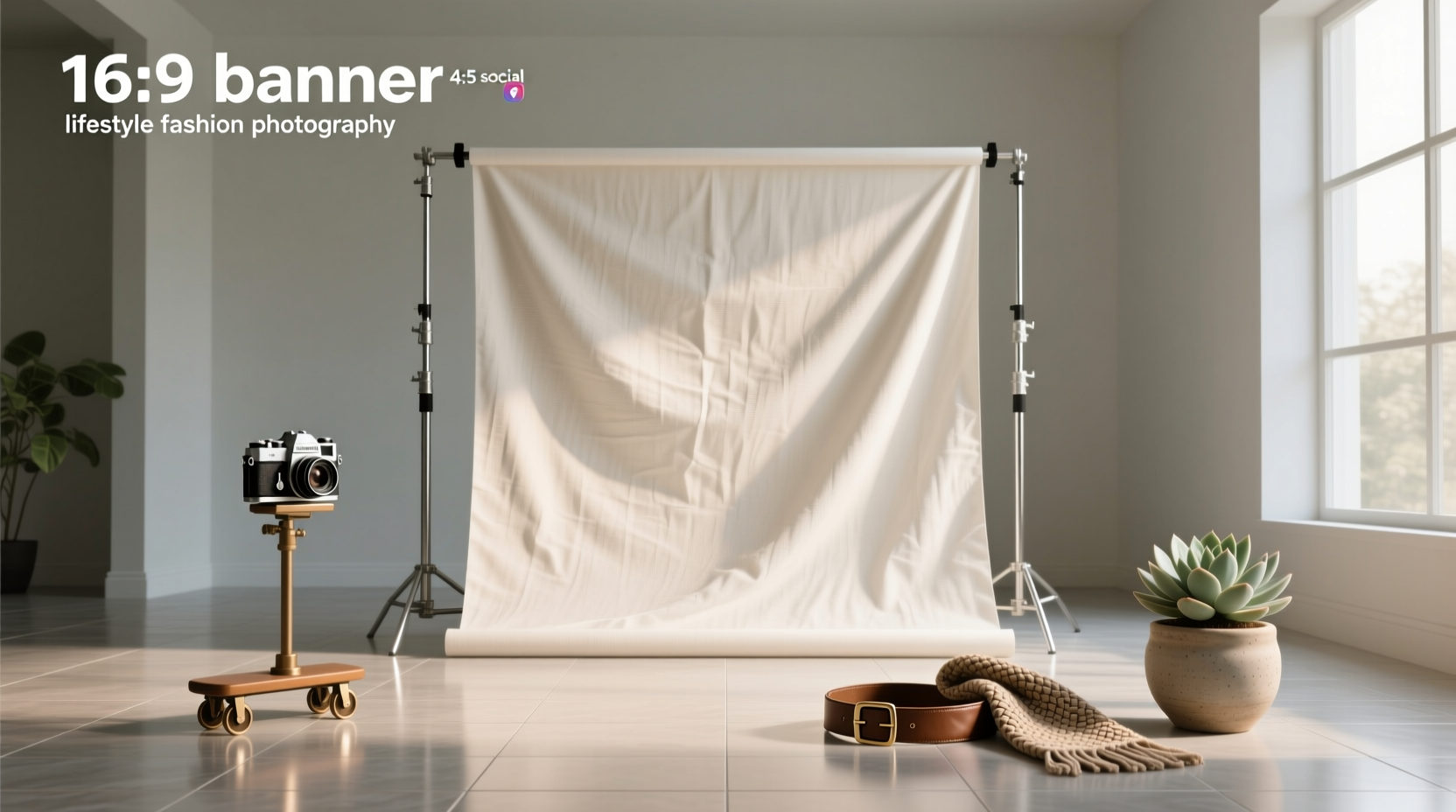
Looking for a backdrop board for photography, party decor, or product staging? You’re not alone — over 122 million Google searches yearly show this is a high-intent, decision-heavy purchase. A backdrop board is a rigid, portable surface used as a controlled background for photos, videos, signage, or displays. Unlike fabric or paper backdrops, it offers dimensional stability, consistent texture, and reusability — making it ideal for flat-lay food shots, wedding welcome signs, studio product photography, and classroom visual aids. This guide cuts through the noise: we compare materials (foam core vs. wood vs. PVC), sizes (24×24″ to 50.8 ft wide), mounting options (stand-compatible vs. wall-mountable), and real-world trade-offs — so you choose the right board before ordering, not after returning.
Why Backdrop Boards Matter More Than You Think
A backdrop board isn’t just ‘a flat thing behind your subject.’ Its rigidity affects lighting bounce, shadow control, and edge sharpness. Soft materials like muslin stretch or wrinkle; thin vinyl sags under studio lights; flimsy cardboard buckles during transport. A well-chosen board eliminates retouching time, reduces glare hotspots, and ensures color consistency across sessions — especially critical for e-commerce product photography where white balance and texture fidelity impact conversion rates 1. For event planners, durability matters: a single 30×40″ duo board can serve as both a bridal shower photo wall and a branded trade-show panel — if its substrate and finish support repeated handling and cleaning.
Core Types of Backdrop Boards: Material Breakdown
Not all boards are built for the same job. Below is a functional comparison — based on structural integrity, surface quality, weight, and longevity — not marketing claims.
| Material | Typical Thickness | Weight (per 24×36″) | Surface Options | Key Strengths | Limits to Consider |
|---|---|---|---|---|---|
| Foam Core (Foamboard) | 3–5 mm | ~0.5–0.7 lbs | Smooth white/black, printable, vinyl-laminated | Lightweight, affordable, easy to cut; ideal for DIY arches or temporary signage | Not moisture-resistant; dents easily; unsuitable for heavy clamping or outdoor use |
| Coroplast (Corrugated Plastic) | 4–6 mm | ~1.2 lbs | White, black, custom-printed; waterproof | Weather-resistant, recyclable, rigid yet flexible; common for yard signs and pop-up booths | Visible fluting lines may reflect light unevenly; limited texture depth for food/product photography |
| PVC Foam Board | 3–10 mm | ~2.5–5.0 lbs | Gloss/matte, textured (wood grain, concrete), UV-coated | Dimensionally stable, non-porous, cleanable, excellent for chroma-key prep | Higher cost; heavier than foam core; requires saw or router for precise cutting |
| Hardwood Plywood / MDF | 6–12 mm | ~8–15 lbs (24×36″) | Natural grain, painted, laminated, or stained | Maximum rigidity; supports heavy hardware (clamps, grommets); long-term reuse without warping | Bulky; needs finishing (sealing) to prevent dust absorption; not portable without frame system |
💡 Pro tip: If you need reversible textures (e.g., gray chalkboard on one side, oak wood on the other), prioritize duo boards — these are two-layer laminates with different finishes bonded to a rigid core. They’re engineered for studio efficiency, not cost-cutting 2. Avoid ‘double-sided’ claims on generic foam core — those are often just printed front-and-back on the same surface, not true dual-texture substrates.
Size & Format: Matching Dimensions to Your Use Case
Search data shows users filter heavily by width and height — but dimensions alone don’t tell the full story. Here’s how to match size to function:
- Under 1.29 ft wide (≤15.5″): Best for flat-lay smartphone photography (e.g., jewelry, cosmetics). Often sold in multi-packs (20 pcs for $14.72 3). Verify thickness — many budget packs use 1.5 mm foam, which curls at edges.
- 1.29–5 ft wide (15.5″–60″): Standard for product photography setups and small-event backdrops. The 24×24″ and 30×40″ formats dominate because they fit most light tents and portable stands. Note: 30×40″ is the minimum recommended size for full-frame DSLR product shots without cropping.
- 5–50.8 ft wide (60″–610″): Used for wall-mounted event signage, school hallway displays, or modular studio walls. Requires framing or grommet reinforcement — raw panels this wide will sag without support every 24 inches.
- Over 50.8 ft wide: Almost exclusively custom-order industrial applications (e.g., retail store wall graphics). Not practical for home or small studio use due to shipping, handling, and storage constraints.
⚠️ Critical note: ‘Height’ filters on retail sites often mislead. A ‘6–8 ft high’ listing may refer to rolled vinyl, not rigid board. Always confirm whether the listing specifies rigid panel — otherwise you’ll receive flexible material that requires tensioning or framing to stay flat.
Texture, Finish & Chroma-Key Readiness
Surface finish directly impacts usability. Glossy white reflects harsh highlights; matte black absorbs stray light; textured surfaces (concrete, linen, wood) add realism but complicate color correction. For professional work, consider three objective criteria:
- Diffuse Reflectance Value (DRV): Measured on a 0–100 scale (0 = pure black, 100 = pure white). Studio-grade white boards test between 88–92 DRV. Budget boards often fall below 82 — causing grayish whites in JPEG exports unless manually corrected.
- Surface Uniformity: Run your hand across the board. Any ripple, wave, or soft spot indicates inconsistent lamination — problematic for macro shots or text-heavy signage.
- Chroma-Key Suitability: Not all ‘green’ or ‘blue’ boards work for video keying. True chroma-key substrates have pigment density >95% and zero gloss variance. Consumer-grade green foam core often has 60–70% saturation and visible grain — resulting in fringed edges in post-production 4.
Mounting & Portability: Stand Compatibility vs. Wall Solutions
‘Backdrop board stand’ is among the top related searches — revealing a key pain point: how to secure it safely. Rigid boards require mechanical anchoring, unlike fabric drapes. Here’s what works — and what doesn’t:
- Clamp-based stands (e.g., crossbar + C-clamps): Reliable for boards ≤36″ tall. Ensure clamps grip ≥1.5″ of board edge — shallow clamps slip under studio light weight.
- Grommet + rope systems: Only viable on boards with reinforced perimeter (PVC or hardwood). Never drill grommets into standard foam core — it crumbles.
- Adhesive hooks or tension rods: Acceptable for lightweight foam core (<2 mm thick) in low-traffic indoor settings. Not rated for repeated use or humidity exposure.
- Wall mounting: Requires pilot holes and anchors for anything >24×36″. MDF and plywood accept screws cleanly; PVC needs plastic anchors; foam core requires toggle bolts or French cleats.
🔍 Verification step: Before buying, check product specs for ‘stand-ready’ indicators — such as pre-drilled holes, integrated channel slots, or weight ratings (e.g., ‘supports up to 12 lbs’). Absence of these means you’ll need to modify the board yourself — adding cost and risk.
Durability & Maintenance: What Actually Lasts
Many users assume ‘rigid = durable.’ Not always. Foam core degrades with UV exposure (yellowing within 3 months outdoors). Uncoated MDF swells if wiped with damp cloth. PVC foam resists scratches but shows scuff marks from metal stands. Real-world longevity depends on three factors:
- Cleaning method: Use microfiber + isopropyl alcohol (70%) for PVC and hardwood. Never use ammonia-based cleaners on vinyl-laminated foam — they cloud the surface.
- Storage: Store vertically (not stacked horizontally) to prevent bowing. Foam core must be climate-controlled — >60% RH causes edge curl.
- Transport: Boards >24″ need rigid cases or foam-lined crates. Tossing into a car trunk risks corner chipping — especially on textured finishes.
DIY vs. Pre-Made: When to Build Your Own
‘Backdrop board diy’ returns 2.4M results — proving demand for customization. But DIY isn’t always cheaper or faster. Evaluate using this checklist:
- ✅ Do it yourself if: You need non-standard shapes (arches, circles), want exact color matching (Pantone), or plan to mount hardware (LED strips, hinges).
- ❌ Avoid DIY if: You lack a table saw or wire cutter; need consistent texture across multiple panels; or require fast turnaround (<72 hours).
For simple arches: Use 5 mm insulation foam + 200-grit sandpaper for smooth edges 5. For printed graphics: Direct-printed foamboard is faster and more color-accurate than vinyl wrap — despite similar price points.
Common Misconceptions Debunked
- “All white boards are color-accurate.” False. Untreated white foam core has blue undertones; cheap PVC may shift yellow under LED lights. Always request a physical sample if color fidelity is critical.
- “Thicker = better.” Not necessarily. A 10 mm PVC board adds weight without improving flatness — if the core isn’t extruded evenly, it warps more than a precision-cut 5 mm version.
- “Reversible means both sides are equally usable.” Often untrue. One side may be matte, the other glossy — making one side unsuitable for glare-sensitive product shots.
Where to Buy — and What to Verify
While major retailers carry backdrop boards, verify these before checkout:
- Substrate certification: Look for ISO 9001 or FSC labels on wood/MDF — confirms consistent density and formaldehyde compliance.
- Print resolution (if custom): Minimum 300 DPI at final size. Anything lower appears pixelated in close-ups.
- Shipping method: Boards >36″ require freight — not standard parcel. Confirm carrier and insurance coverage; damage in transit is common without edge protection.
Frequently Asked Questions
- What’s the best backdrop board for food photography?
A 24×24″ or 30×40″ PVC foam board with matte white or soft gray finish — non-porous, easy to wipe, and dimensionally stable under continuous lighting. - Can I use a foam board as a dry erase board?
Only if factory-laminated with dry-erase film. Standard foam core absorbs marker ink and stains permanently. - How do I hang a backdrop board without a stand?
Use heavy-duty adhesive hooks rated for 15+ lbs per hook (e.g., Command™ Outdoor Strips), spaced no more than 12″ apart along the top edge — but only on smooth, painted drywall. - Are duo boards worth the extra cost?
Yes, if you shoot multiple product categories daily. Switching textures takes <5 seconds versus swapping and leveling two separate boards — saving ~12 minutes per session. - What size backdrop board fits in a standard suitcase?
None above 24×24″ will fit a carry-on (22×14×9″). For travel, choose foldable corrugated plastic boards — they compress to 1″ thickness and weigh under 2 lbs.
