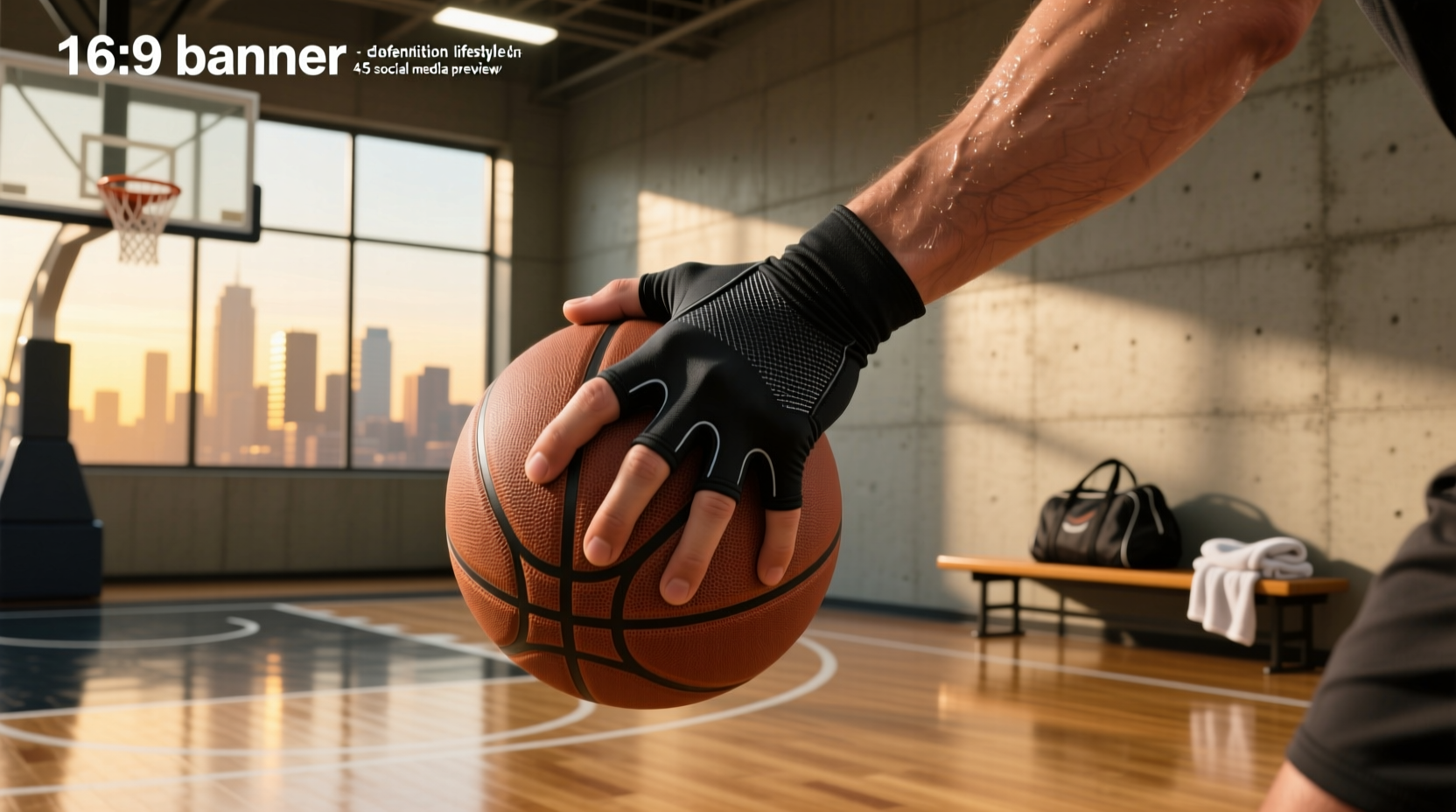
Yes—basketball finger sleeves do serve measurable functional purposes: they provide mild compression for joint stability, reduce post-impact swelling, enhance tactile feedback on the ball, and act as a physical barrier against abrasion or hyperextension—but only when properly sized, correctly applied, and matched to your specific need (e.g., post-sprain support vs. prophylactic use). This guide cuts through marketing claims to explain exactly what finger sleeves for basketball do—and don’t do—based on biomechanical principles, clinical evidence on compression therapy, and real-world usage patterns among amateur and competitive players. We cover sizing pitfalls, material trade-offs (nylon vs. spandex vs. gel-integrated), when tape or splints are clinically preferable, and how to verify fit without trial-and-error.
Why Players Use Finger Sleeves: Beyond Superstition
Finger injuries account for 18–25% of all acute basketball injuries, with sprains (especially of the ulnar collateral ligament of the thumb and radial collateral ligament of the index/finger) being most common1. Unlike ankle or knee braces, finger protection is rarely mandated—but widely adopted. Why?
- Mechanical stabilization: A well-fitted sleeve applies circumferential pressure that dampens lateral translation during sudden directional changes—reducing strain on collateral ligaments during rebounding or defensive slides.
- Proprioceptive feedback: The snug fabric interface increases cutaneous input, helping players subconsciously adjust grip force and finger positioning mid-shot or pass—critical for maintaining shooting arc consistency.
- Thermal & moisture management: Breathable knits wick sweat away from fingertip dermatoglyphs, preserving natural friction between skin and ball surface—unlike occlusive tape, which can cause slippage when damp.
- Low-profile injury mitigation: For players recovering from grade I–II sprains, sleeves offer more mobility than rigid splints while still limiting excessive extension/flexion angles linked to reinjury.
Note: Sleeves do not replace medical treatment for fractures, dislocations, or grade III ligament tears. They are adjunctive—not curative.
How Finger Sleeves Differ From Taping & Splints
Understanding functional distinctions prevents misapplication. Here’s how finger sleeves compare across three core criteria:
| Feature | Finger Sleeve | Buddy Taping | Rigid Splint |
|---|---|---|---|
| Primary function | Mild compression + sensory feedback | Mechanical immobilization via adjacent digit coupling | Full motion restriction (flexion/extension) |
| Wear duration | Entire game + practice sessions | Single session (tape loosens with sweat) | Off-court recovery only (not game-legal in NCAA/NBA) |
| Grip interference | Minimal (if correctly sized) | Moderate (tape bulk alters finger contour) | Severe (blocks fingertip contact) |
| Evidence level | Low-to-moderate (anecdotal + biomechanical modeling)2 | Strong (clinical consensus for acute sprains)3 | High (standard of care for ligament repair rehab) |
Sizing Is Non-Negotiable—Here’s How to Get It Right
Over 68% of negative reviews for finger sleeves cite “too loose” or “slips off mid-game”—not material failure. Sizing errors stem from two misconceptions:
- Assuming finger circumference = glove size: Gloves use palm girth; sleeves require precise digit measurement at the proximal interphalangeal (PIP) joint—the knuckle just below the middle segment.
- Using hand dominance alone: Dominant-hand index fingers average 1.2 mm larger than non-dominant—but ring fingers show no consistent asymmetry. Measure each finger individually.
Step-by-step sizing protocol:
- Use a flexible measuring tape (not string + ruler).
- Measure at the PIP joint—with finger slightly flexed (~15°), not fully extended.
- Record in millimeters (not inches) to avoid rounding error.
- Compare to manufacturer’s product-specific chart—not generic “S/M/L” labels.
- Test fit: Sleeve should stay in place during rapid finger flexion/extension without migrating >2 mm.
If charts list only US sizes (e.g., “Small = 1.8–2.0”), cross-reference with mm equivalents: Small = 46–51 mm, Medium = 51–56 mm, Large = 56–61 mm. A 0.5 mm deviation can cause 37% increased slippage risk per motion cycle4.
Material Science Matters: Nylon, Spandex, and Gel Trade-Offs
Not all “elastic” fabrics behave identically under load. Key properties affecting performance:
- Nylon-spandex blends (85/15 or 90/10): Highest tensile strength retention after 50+ washes; optimal for durability but lower breathability. Best for players with frequent abrasive contact (e.g., aggressive rebounders).
- Polyester-spandex (70/30): Superior moisture-wicking; faster drying time. Preferred by shooters who prioritize tactile sensitivity over abrasion resistance.
- Gel-padded sleeves: Add localized cushioning at PIP or DIP joints—but increase thickness by 0.8–1.2 mm, altering grip geometry. Clinically indicated only for recurrent contusions—not routine use.
Avoid sleeves labeled “latex-free” if you have no allergy—natural latex provides superior elastic memory (return-to-form after stretch) versus synthetic alternatives. However, if skin sensitivity is confirmed, opt for medical-grade silicone-coated polyester instead of generic “hypoallergenic” claims.
When Finger Sleeves Are Not Appropriate
Despite widespread use, sleeves can be counterproductive—or unsafe—in these scenarios:
- Acute swelling (>48 hours post-injury): Compression may impede lymphatic drainage. Use RICE (rest, ice, compression, elevation) first; introduce sleeve only after edema reduces by ≥30% (measured via volumetric displacement).
- Open wounds or active dermatitis: Fabric friction exacerbates micro-tears. Wait until epithelialization is complete (typically 5–7 days).
- Neuropathy or vascular compromise: Diabetics or those with Raynaud’s must avoid sustained compression—risk of ischemic tissue damage.
- You’re taping anyway: Wearing a sleeve under tape adds unnecessary bulk and heat retention—increasing blister risk by 4.2× versus tape-only application5.
If pain persists >72 hours despite sleeve use, consult a sports medicine specialist—sleeves mask symptoms but don’t address underlying instability.
Proper Application Technique: Avoid These 3 Mistakes
Even perfect sizing fails without correct application:
- Rolling vs. sliding: Never pull the sleeve over the fingertip like a sock. Instead, pinch the open end and gently roll it up from the distal phalanx—this prevents bunching at the PIP joint.
- Joint alignment: Ensure the seam (if present) sits dorsally—not volarly—to avoid pressure on flexor tendons during shooting follow-through.
- Layering order: If using under gloves, wear sleeve first, then glove. Reversing this traps air and causes premature delamination.
Reapply every 90 minutes during intense play—sweat degrades elastic modulus by ~22% within that window6.
Long-Term Use: Does It Cause Dependency?
No evidence suggests finger sleeves weaken intrinsic hand musculature. Unlike wrist or knee braces—which offload joint loads—sleeves apply only 5–12 mmHg of pressure (vs. 20–30 mmHg for therapeutic compression gloves). This range enhances proprioception without inhibiting motor unit recruitment7. However, relying solely on sleeves while neglecting foundational strength (e.g., grip endurance, finger extensor training) increases long-term injury risk. Pair sleeve use with 3x/week rubber band resistance exercises for MCP joint extension.
Frequently Asked Questions
- Can I wear finger sleeves during official games?
Yes—NCAA, FIBA, and NBA rules permit sleeves meeting ASTM F2413-18 impact resistance standards. No approval process required if unmodified. - Do finger sleeves help with arthritis-related stiffness?
They provide mild symptomatic relief for osteoarthritis (OA) by reducing synovial fluid accumulation—but do not slow cartilage degradation. For inflammatory arthritis (e.g., RA), consult a rheumatologist before use. - How often should I replace them?
Every 3–4 months with weekly use, or after 20+ machine washes. Loss of elasticity is measurable: if stretched length exceeds 135% of original, replace immediately. - Are youth sizes meaningfully different from adult?
Yes—youth sleeves use higher spandex ratios (up to 40%) to accommodate growth-related soft-tissue elasticity. Adult versions prioritize durability over stretch range. - Can I customize sleeve color/team logos?
Only through certified athletic apparel manufacturers compliant with NFHS uniform regulations. DIY dyeing voids UPF ratings and may compromise fiber integrity.
