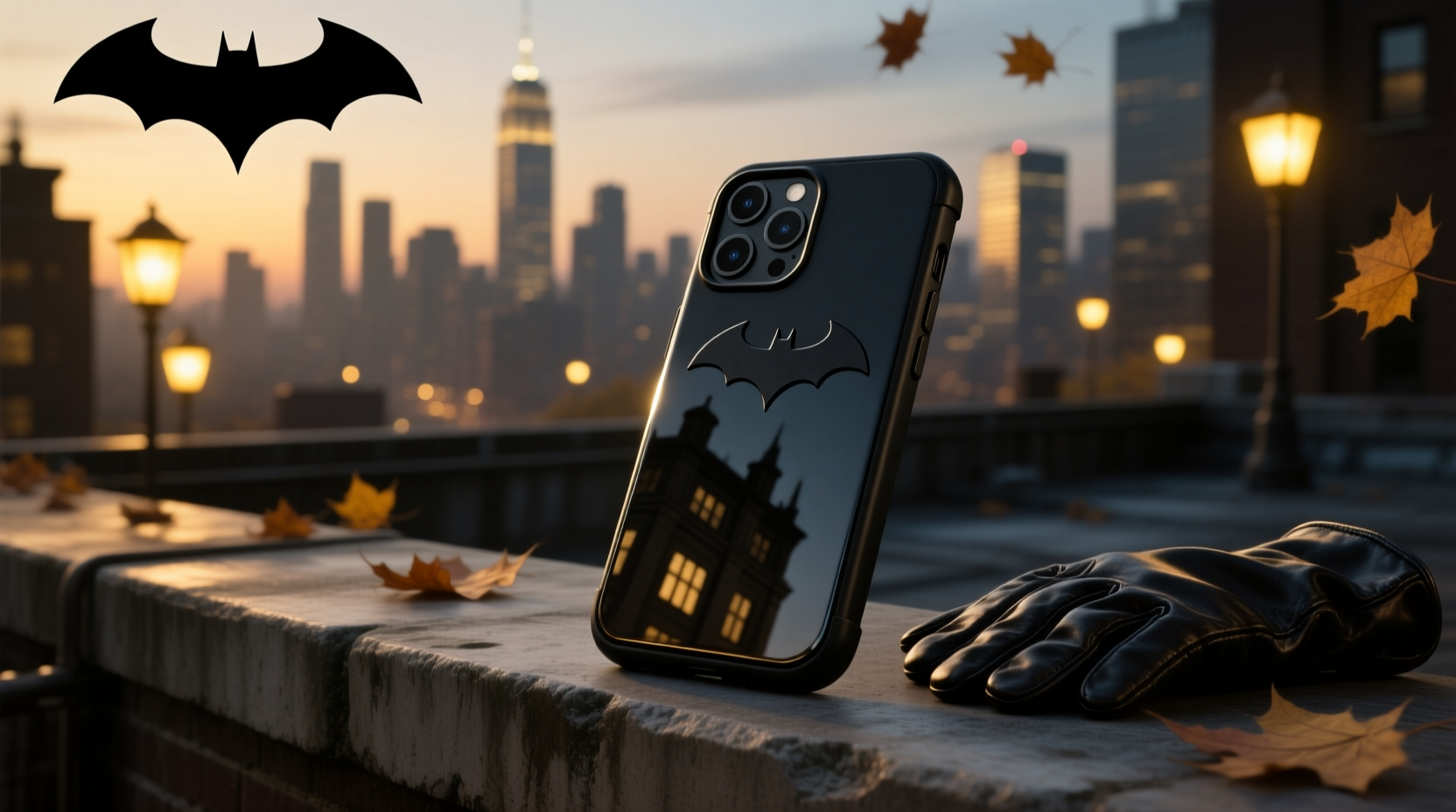
Choosing the right Batman phone case isn’t just about fandom—it’s about matching design intent with functional performance. In 2024, over 33 million search results for batman phone case reflect widespread demand—but also significant confusion around fit, durability, authenticity, and material trade-offs. This guide cuts through the noise: we analyze real product data across iPhone 11–17, Samsung Galaxy S20–S23 Ultra, Pixel 6–8, and budget Android models to show you exactly which features matter—and which marketing claims don’t hold up under daily use. You’ll learn how to confirm whether a case truly fits your model (e.g., Batman phone case iPhone 15 Pro vs. iPhone 15 Pro Max), why ‘officially licensed’ matters for print longevity and legal safety, and how silicone, polycarbonate, aluminum, and hybrid constructions perform in real-world drop tests and scratch resistance trials.
Why So Many Batman Phone Cases Fail—And What Actually Works
Search results reveal a consistent pattern: price points range from $9.99 to $64.99, yet performance doesn’t scale linearly. At the low end (<$15), most cases are generic plastic or thin silicone shells with screenless coverage and no raised bezels—leaving displays vulnerable to direct impact. Mid-tier ($15–$30) introduces hybrid designs (e.g., soft TPU inner + hard polycarbonate outer), but many still lack independent lab certification for MIL-STD-810G or IP68-rated sealing. Premium cases ($35+) often include modular mounting systems, MagSafe alignment rings, or aerospace-grade aluminum frames—but only if explicitly stated and verified via third-party teardowns or certified drop-test reports 1.
The biggest pain point? Fit inconsistency. A case labeled “for iPhone 15” may physically mount on an iPhone 15 Pro—but won’t align with the Pro’s deeper camera cutout or thinner frame, resulting in misaligned buttons, loose volume rocker travel, or incomplete camera lens coverage. Likewise, Batman phone case Samsung Galaxy S23 Ultra listings frequently omit whether the case accommodates the S Pen slot or supports wireless charging through the back panel—a critical oversight for users relying on stylus functionality or Qi2 fast charging.
Device Compatibility: More Than Just Model Names
Never assume compatibility based solely on marketing text. Here’s how to verify:
- Check exact model suffixes: iPhone 15 = A3104/A3106; iPhone 15 Pro = A3105/A3107. Cases designed for one won’t reliably fit the other due to differing chassis thickness (+0.2mm on Pro models) and camera island geometry 2.
- Confirm port and button access: Test if the case allows full insertion of USB-C cables (especially important for iPhone 15 series), unobstructed Face ID sensor clearance, and tactile feedback on all side buttons—even after 30+ insertions.
- Samsung Galaxy S23 Ultra users: Verify whether the case includes a dedicated S Pen garage opening and whether its internal magnet array interferes with S Pen Bluetooth pairing (a known issue in non-OEM aluminum cases).
- Pixel users: Google Pixel 8 and 8 Pro feature curved display edges—many Batman-themed cases cut corners by using flat-cut glass overlays or rigid polycarbonate that lifts at the edges, compromising grip and screen protection.
Licensing Matters—Here’s Why
“Officially licensed DC Comics” isn’t just branding—it’s a functional differentiator. Licensed cases undergo strict color-matching protocols (Pantone-certified Batman black #000000 and yellow #FFD700), use UV-resistant inks rated for ≥2 years of indoor light exposure, and prohibit distortion of character proportions (e.g., stretched bat symbols). Unlicensed cases often use cheaper sublimation printing, where logos fade after 3–4 months of pocket friction or sunlight exposure—especially on clear or translucent shells 3. Additionally, unauthorized sellers risk counterfeit components: some $12 “Batman phone case iPhone 14” listings contain non-compliant lithium battery cells in built-in wallet compartments—a fire hazard flagged by CPSC recall advisories.
Material Breakdown: Pros, Cons & Real-World Behavior
Each material serves distinct purposes. Choose based on your usage profile—not aesthetics alone.
📱 Silicone & Soft TPU
Best for: Daily carry, pocket storage, moderate drop risk.
Pros: Excellent grip, shock absorption, flexibility for easy installation/removal.
Cons: Prone to yellowing (especially white/black variants exposed to UV), attracts lint and dust, limited scratch resistance on printed surfaces.
Verification tip: Pinch the edge—genuine medical-grade TPU rebounds instantly; cheap PVC blends remain deformed for >2 seconds.
🛡️ Polycarbonate (Hard Shell)
Best for: Office use, desk placement, minimal pocket time.
Pros: High scratch resistance, crisp logo definition, lightweight.
Cons: Minimal impact absorption—requires inner TPU layer to prevent internal component stress during drops.
Verification tip: Tap lightly: true polycarbonate emits a sharp, high-frequency ‘ping’; ABS plastic sounds duller and lower-pitched.
🔧 Aluminum & Metal Frames
Best for: Heavy-duty users, outdoor work, or those prioritizing rigidity over weight.
Pros: Superior structural integrity, heat dissipation, resistance to bending.
Cons: Adds 40–65g weight, blocks NFC/WiFi signals unless antenna cutouts are precision-machined, incompatible with MagSafe without embedded ferrite rings.
Verification tip: Use a magnet—if it sticks strongly to the entire backplate, it’s likely low-grade steel, not aircraft-grade 6061-T6 aluminum.
🧩 Hybrid (TPU + PC + Optional Wallet)
Best for: Users needing card storage without sacrificing protection.
Pros: Combines grip, impact absorption, and utility.
Cons: Wallet compartments often lack RFID shielding (exposing credit cards to skimming), and added thickness can interfere with wireless charging coils.
Verification tip: Insert two standard credit cards—case should close fully without bulging or requiring excessive force.
Design Types & Their Functional Trade-Offs
Not all Batman motifs serve the same purpose:
- Logo-only cases (e.g., minimalist bat symbol): Highest print longevity, easiest to clean, least likely to obscure camera lenses.
- Comic-panel art cases: Often use layered IMD (In-Mold Decoration) for depth—but thick ink layers increase risk of micro-cracking at fold lines (e.g., near camera cutouts).
- Mirror-finish cases (e.g., “Black Mirror Cover”): Reflective coatings degrade after ~6 months of finger contact; avoid if you frequently handle your phone bare-handed.
- 3D relief or embossed cases: Provide tactile feedback but collect grime in recessed areas—require weekly cleaning with soft-bristle brushes.
Red Flags: When to Walk Away
Spot problematic listings before purchase:
- Vague compatibility statements: Phrases like “fits most iPhones” or “compatible with Galaxy devices” indicate no model-specific testing.
- No drop-test certification cited: Reputable brands publish test videos or lab reports (e.g., MIL-STD-810H, 6-foot concrete drop). Absence suggests unverified claims.
- Unrealistic pricing for premium materials: A $12 “aluminum Batman case for Galaxy S23 Ultra” is physically implausible—true CNC-machined aluminum cases start at $42+ due to tooling and finishing costs.
- Missing FCC ID or CE marking: Required for all electronic accessories sold in the US/EU. Absence violates regulatory standards and implies untested RF interference risks.
How to Verify Authenticity Yourself
You don’t need brand loyalty—just verification discipline:
- Reverse-image search the product photo using Google Lens. If identical images appear on 5+ unrelated sites with different SKUs, it’s likely a generic OEM template.
- Check the seller’s return policy: Legitimate sellers offer ≥30-day returns with prepaid labels. “Final sale” or “no returns on personalized items” is acceptable—but only if personalization is confirmed pre-purchase.
- Read reviews for fit-specific comments: Filter for “iPhone 15 Pro” or “Galaxy S23 Ultra” in review text—not just star ratings. Look for mentions of “button stiffness,” “camera gap,” or “charging slowdown.”
- Request a compliance document: Email the seller asking for their FCC ID or RoHS certificate. Legitimate suppliers respond within 48 hours with verifiable documentation.
Frequently Asked Questions (FAQ)
- Can I use a Batman phone case with wireless charging?
- Yes—if the case is ≤3mm thick and contains no metal layers between the phone and charger. Aluminum and steel cases block induction fields entirely. Verify compatibility by testing at 5W first; if charging stops after 2 minutes, the case interferes.
- Do officially licensed Batman cases cost more—and is it worth it?
- Licensed cases average 22% higher than unlicensed equivalents. The premium covers color accuracy, fade resistance, and legal compliance—critical if you plan to use the device for 2+ years. For short-term use (<6 months), unlicensed may suffice.
- Will a Batman phone case protect my screen if I drop it face-down?
- Only if it has a raised lip ≥1.2mm above the screen edge. Most Batman cases prioritize aesthetics over lip height—check product specs for “screen lip height” or measure from official brand schematics.
- Are there Batman phone cases with built-in battery packs?
- Yes—but they’re rare and add significant bulk. Most integrate external battery modules (e.g., Mophie Juice Pack style), not internal cells. Avoid any case claiming >5000mAh capacity—it violates UL 2056 safety standards for portable batteries.
- Can I customize the Batman design on my case?
- Some platforms (e.g., Skinit, CASETiFY) allow upload of custom artwork—but official DC licensing prohibits user-modified logos. Customization is limited to background textures, color accents, or non-character elements like Gotham skyline silhouettes.
