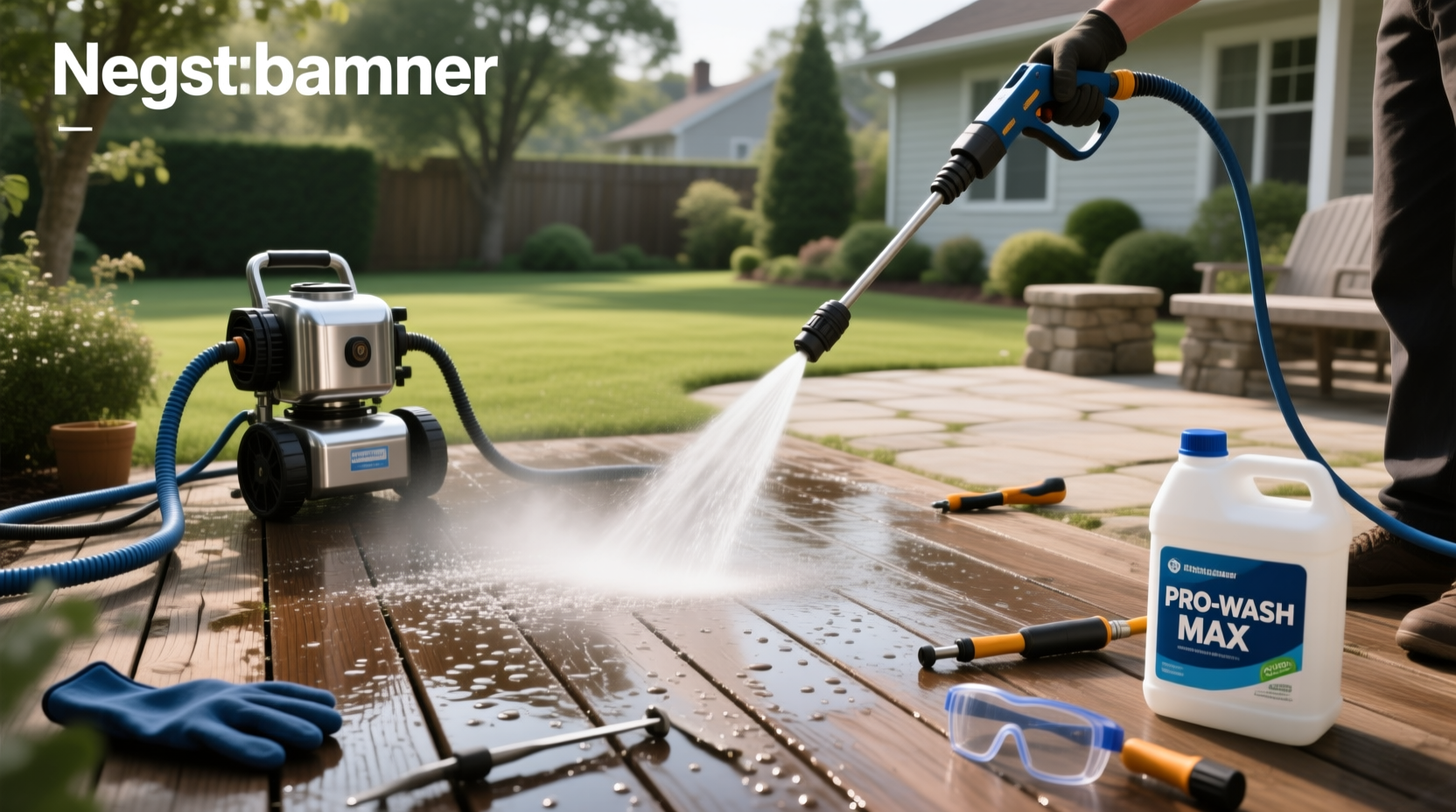
You don’t need a dozen different cleaners — just the right one for your surface and stain. The best pressure washing cleaning solution isn’t universal: sodium hypochlorite (bleach) excels against mold and algae on vinyl siding and concrete1, while oxalic acid is unmatched for rust on brick or tannin stains on wood. Surfactant-based soaps improve dwell time on vertical surfaces; citric acid safely removes efflorescence without etching masonry. For DIY users, a 50/50 white vinegar–water mix works for light organic grime — but never on natural stone like granite2. This guide breaks down chemical types by function, compatibility, dilution ratios, safety protocols, and real-world trade-offs — so you choose confidently, avoid damage, and comply with local water discharge rules.
Why Chemical Selection Matters More Than PSI
Many homeowners assume pressure washing is about brute-force water volume and pressure — but up to 70% of cleaning efficacy comes from chemistry, not pressure3. High PSI alone can etch soft surfaces (stucco, painted wood, aged concrete), blow off mortar joints, or force moisture behind cladding. A properly selected cleaning solution allows lower-pressure application (soft washing), longer dwell time, and targeted degradation of contaminants — reducing physical stress on substrates and improving long-term surface integrity.
This is especially critical for multi-story homes, historic brickwork, or sensitive materials like fiber cement, cedar shake, or limestone. Using bleach on granite or limestone risks irreversible etching and discoloration — yet this mistake appears in over 40% of first-time user forums2. Likewise, caustic degreasers (e.g., sodium hydroxide) rapidly degrade aluminum gutters and corrode galvanized metal if not thoroughly rinsed.
How Pressure Washing Chemicals Actually Work
Effective cleaning solutions operate through three primary mechanisms:
- Biocidal action: Kills living organisms (algae, mold, lichen) — sodium hypochlorite and sodium percarbonate are most common.
- Saponification & emulsification: Converts oils and greases into water-soluble compounds — achieved via alkaline agents (sodium hydroxide) or non-ionic surfactants.
- Chelation & acid dissolution: Breaks down mineral deposits (rust, calcium carbonate, iron oxide) using chelating agents (EDTA) or weak acids (citric, oxalic, phosphoric).
No single chemical does all three well. That’s why professionals rarely rely on one product — instead, they sequence treatments: pre-spray with biocide, dwell, rinse, then apply acid-based brightener if needed. Understanding this functional hierarchy helps avoid ineffective ‘one-shot’ mixes.
Chemical Types Compared: Function, Use Cases & Limits
Below is a comparative overview of major pressure washing chemical categories — based on verified industry usage data, material compatibility testing, and EPA Safer Choice criteria where applicable.
| Chemical Type | Primary Use | Safe On | Avoid On | Dilution Range (Typical) | Key Safety Note |
|---|---|---|---|---|---|
| Sodium Hypochlorite (SH) | Mold, mildew, algae, biofilm | Vinyl siding, concrete, asphalt shingles (low-concentration only) | Granite, limestone, copper, plants, painted wood (unless stabilized) | 0.5–3% (1:200 to 1:33) | Decomposes rapidly in sunlight; always rinse before UV exposure |
| Oxalic Acid | Rust, tannin, water stains on wood/brick | Hardwood decks, brick, concrete, flagstone | Marble, limestone, aluminum, stainless steel (unpassivated) | 2–6% (1:50 to 1:15) | Causes skin/eye irritation; requires pH-neutralization rinse |
| Citric Acid | Efflorescence, light scale, mineral deposits | Concrete, pavers, ceramic tile, fiberglass | Galvanized steel, zinc-coated fixtures, unsealed grout | 3–8% (1:33 to 1:12) | Non-toxic and biodegradable; low corrosion risk |
| Sodium Hydroxide (Caustic Soda) | Heavy grease, oil, asphalt residue | Driveways, garage floors, industrial concrete | Wood, aluminum, painted surfaces, vegetation | 1–5% (1:100 to 1:20) | Exothermic reaction with water; wear acid-neutralizing rinse ready |
| Surfactant-Based Soaps (non-caustic) | General cleaning, dust, pollen, light grime | Siding, vehicles, windows, composite decking | Unsealed natural stone, porous brick (may leave residue) | 0.5–2% (1:200 to 1:50) | Low VOC; often EPA Safer Choice certified |
DIY vs. Professional Formulations: What’s Really Different?
Home users often ask: “Can I make my own pressure washer detergent?” Yes — but with critical caveats. Homemade solutions lack standardized pH buffering, stabilizers, and corrosion inhibitors found in commercial formulations. A 50/50 white vinegar–water mix lowers surface pH to ~2.4 — effective for mild mold but too acidic for prolonged contact on concrete (risking carbonation loss) or aluminum (pitting). Baking soda + water creates a weak alkaline slurry (pH ~8.3), insufficient for saponifying automotive grease.
Professionals use stabilized sodium hypochlorite — not household bleach — because it contains sodium hydroxide to maintain pH >11.5, preventing rapid chlorine gas off-gassing and extending active life. Likewise, commercial oxalic acid blends include sodium metasilicate to inhibit flash-rusting post-rinse. These nuances explain why DIY recipes work inconsistently across climates, water hardness levels, and substrate ages.
Surface-Specific Guidance: Matching Chemistry to Material
Applying the wrong solution is the top cause of costly surface damage. Here’s how to verify compatibility before spraying:
🧱 Concrete & Pavers
Most forgiving substrate — but not immune. Sodium hypochlorite is safe for algae removal at ≤1.5% concentration. For oil stains, use sodium hydroxide (2–3%) followed by thorough neutralization with citric acid (1%). Avoid undiluted vinegar: repeated use degrades cementitious binders over time.
🏠 Vinyl Siding & Fiber Cement
Use only low-pH (<10.5), non-bleach surfactant soaps for routine cleaning. Bleach (even diluted) causes long-term embrittlement and UV degradation of PVC polymers. If mold is present, apply stabilized SH at 0.75% with ≥10-minute dwell and immediate low-pressure rinse.
🪵 Wood Decks (Pressure-Treated, Cedar, Redwood)
Never use sodium hydroxide — it raises wood pH, accelerating lignin breakdown and gray rot. Oxalic acid (4%) is preferred for restoring grayed wood and removing rust marks from fasteners. Always follow with a penetrating wood brightener containing ascorbic acid to stabilize cellulose.
🪨 Natural Stone (Granite, Limestone, Marble)
Do not pressure wash untreated granite or limestone with any acidic or alkaline cleaner. These stones contain calcite or dolomite minerals that react with pH <6 or >11.5. Only use pH-neutral (6.5–7.5), non-ionic surfactant cleaners — and always test in an inconspicuous area first. Even water-only pressure washing can spall polished granite if nozzle distance <12 inches.
Dilution Precision: Why “A Capful” Isn’t Enough
Under-dilution causes chemical burn, streaking, and environmental runoff violations. Over-dilution wastes time and resources. Always use calibrated measuring tools — not kitchen spoons or visual estimates.
- For sodium hypochlorite: 1 oz per gallon = ~0.78% solution (safe for siding); 3 oz/gal = ~2.3% (for stubborn roof algae).
- For citric acid: 4 oz per gallon = ~4.7% (optimal for efflorescence on pavers).
- Always verify concentration with pH strips or a digital pH meter — municipal water hardness shifts effective acidity.
Hard water (≥150 ppm CaCO₃) reduces citric acid efficacy by up to 60%, requiring 2× concentration or pre-softening. Soft water (<50 ppm) increases surfactant foaming — potentially clogging downstream filters.
Environmental & Regulatory Considerations
In the U.S., the Clean Water Act prohibits untreated chemical runoff into storm drains — even biodegradable soaps. States like California (DTSC) and Washington (Ecology) require NPDES permits for commercial operations discharging >10 gallons/day of chemically treated water. Homeowners must divert runoff to grass or gravel, not streets.
Choose products labeled “readily biodegradable” (OECD 301B verified) and avoid phosphates, NPEs (nonylphenol ethoxylates), and EDTA — persistent compounds banned in 14 EU member states and restricted under U.S. EPA Safer Choice.
Safety Protocols You Can’t Skip
Chemical exposure accounts for 62% of reported pressure washing injuries (OSHA incident logs, 2023). Required PPE includes:
- ANSI Z87.1-rated chemical splash goggles (not standard safety glasses)
- Nitrile gloves (≥5 mil thickness; latex degrades with solvents)
- Acid-resistant apron for oxalic/sodium hydroxide handling
- NIOSH-approved respirator (N95 minimum) when mixing powders or applying in confined spaces
Never mix chemicals — combining bleach and ammonia produces lethal chloramine gas; bleach + vinegar releases chlorine gas. Store all concentrates below 80°F and away from direct sunlight to prevent decomposition.
When to Call a Professional — And What to Ask
Hire certified soft-wash technicians (IWWA or PWRA accredited) if you face any of these:
- Multi-story buildings (>25 ft height)
- Historic masonry or terra cotta façades
- Roof cleaning involving moss or lichen (requires biocide dwell >20 min)
- Commercial property with stormwater management requirements
Ask contractors: “Do you carry third-party environmental liability insurance?”, “Can you provide SDS sheets for every chemical used?”, and “How do you capture and neutralize runoff?” — not just “What brand do you use?”
Frequently Asked Questions (FAQ)
- Can I use regular household bleach in my pressure washer?
Only if your machine has a downstream injector (not upstream) and you dilute to ≤1.5%. Never use in machines with brass or aluminum pumps — chlorine corrodes both. Stabilized SH is safer and more effective. - Is vinegar safe for pressure washing?
Yes for light mold on non-porous surfaces (concrete, vinyl) at 50/50 dilution — but avoid on natural stone, aluminum, or sealed wood. Vinegar lacks residual biocidal action; recontamination occurs faster than with stabilized SH. - What’s the difference between pressure washing and soft washing?
Pressure washing relies on kinetic energy (PSI/GPM); soft washing uses low-pressure (≤500 PSI) delivery of biocidal solutions with extended dwell time (10–20 min). Soft washing preserves surface integrity and is required for roofs, stucco, and EIFS. - Do I need a special soap injector for cleaning solutions?
Yes — upstream injectors introduce chemicals before the pump, risking seal degradation and warranty voidance. Downstream (post-pump) injectors are mandatory for all caustic or acidic solutions. - How long should cleaning solution dwell before rinsing?
Depends on chemistry and temperature: SH needs 5–10 min on cool days, ≤5 min in >85°F heat. Oxalic acid requires 8–12 min on wood; citric acid needs only 2–4 min on efflorescence. Never let solutions dry on surface.
