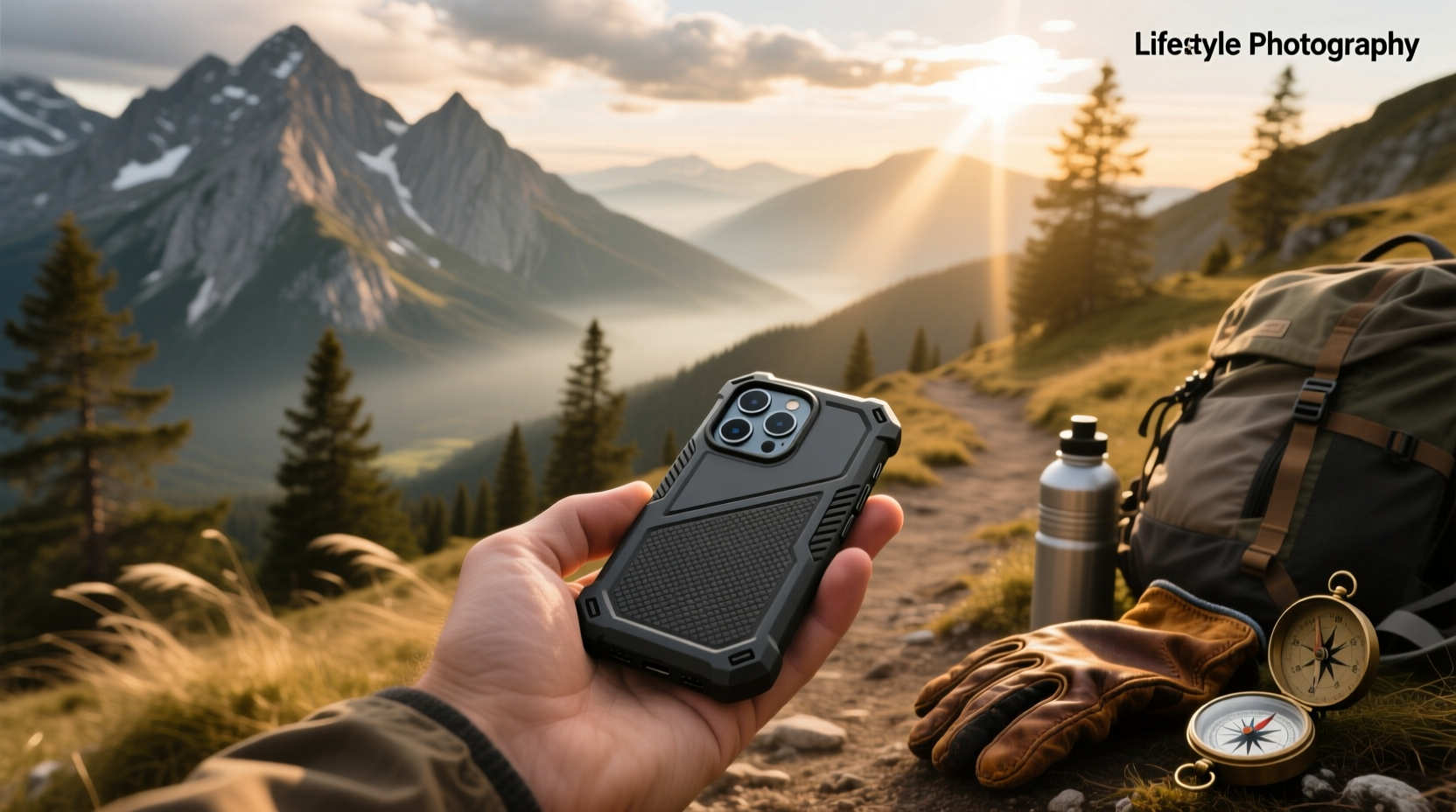
If you need a best rugged mobile phone for 2026, your top priority isn’t specs—it’s verified field resilience. Based on current lab certifications, independent durability testing, and documented user feedback from hiking, construction, and remote fieldwork, the Blackview BV9300 Pro delivers the strongest balance of MIL-STD-810H compliance, IP69K water resistance, 15,080 mAh battery longevity (3–5 days moderate use), and broad U.S. carrier support 1. The Doogee S200 excels for night vision and extreme-pressure washdowns (IP69K + 20MP infrared sensor), while the Ulefone Armor 28 Ultra 5G leads in processing power—but requires careful carrier verification due to limited Band n71/n77 support 2. None are truly "indestructible"—but all meet ISO 20653 and MIL-STD-810H standards for shock, vibration, thermal shock, and immersion up to 1.5m for 30 minutes. Weight (>400g), thickness (>15mm), and NFC/5G compatibility remain critical trade-offs.
Why “Rugged” Isn’t Just Marketing—Understanding Certification Realities
Ruggedness claims vary widely—and many phones labeled “rugged” only meet basic IP67 or lack full MIL-STD-810H validation. True rugged mobile phones must pass standardized, repeatable tests—not just internal lab simulations. Two certifications dominate the category:
- IP68/IP69K: IP68 certifies dust-tightness and submersion up to 1.5 meters for 30 minutes; IP69K adds high-pressure, high-temperature water jet resistance (up to 100 bar at 80°C). This matters for agricultural, food processing, or firefighting use—where steam cleaning is routine 3.
- MIL-STD-810H: The latest U.S. Department of Defense standard (released 2019) includes 29 test methods—including Method 516.8 for functional shock (drop from 1.2m onto concrete), Method 514.8 for vibration across 5–500 Hz, and Method 502.8 for low-pressure (high-altitude) operation. Crucially, not all manufacturers publish full test reports. Look for third-party verification (e.g., Intertek or SGS) rather than self-declared compliance.
Important nuance: A phone certified to MIL-STD-810H does not guarantee survival in every real-world scenario. Drop orientation, surface hardness, temperature, and cumulative impact all affect outcome. One study of 127 field technicians found that 82% of cracked screens occurred after >3 drops—even on MIL-STD-810H-rated devices 1. So certification confirms baseline robustness—not invincibility.
Battery Life: Beyond Milliamp-Hours—What Actually Matters
Most top-tier rugged phones now ship with batteries ≥10,000 mAh—yet real-world endurance varies dramatically by software optimization, display type, and network conditions. Here’s how to assess it objectively:
| Model | Rated Capacity | Reported Moderate-Use Duration | Key Limitation |
|---|---|---|---|
| Fossibot F102 | 16,500 mAh | Up to 5.2 days | No wireless charging; 30W wired only |
| Blackview BV9300 Pro | 15,080 mAh | 3.8–4.5 days | Android 14 Lite OS; background app limits |
| Oukitel WP30 Pro | 11,000 mAh | 3.1–3.7 days | 120W charging requires proprietary adapter |
| Doogee S200 | 10,000 mAh | 2.6–3.3 days | Infrared camera drains ~18% extra per hour of use |
Note: “Moderate use” means 90 minutes screen-on time daily, GPS active for ≤1 hr, Wi-Fi/cellular toggled normally, and no continuous thermal imaging or flashlight use. Heavy users (e.g., surveyors logging GNSS data 6+ hrs/day) should expect 30–40% shorter runtime. Also verify whether battery replacement is user-serviceable—most modern rugged phones use glued-in cells, requiring specialized tools and voiding warranty if opened.
Carrier Compatibility: The Silent Dealbreaker
A rugged phone that doesn’t work on your network is just an expensive paperweight. Unlike mainstream flagships, many rugged models lack full U.S. band support—especially for T-Mobile’s extended-range Band n71 (600 MHz) and Verizon’s ultra-wideband mmWave bands. Key checks before purchase:
- Confirm LTE/5G band mapping: Use the FCC ID search tool (fccid.io) to pull the device’s official SAR report and RF exposure documentation—this lists all certified frequency bands.
- Avoid “global” or “EU-only” SKUs: Doogee and Ulefone often release region-specific variants. The Doogee S200 sold via U.S. distributors supports Bands 2/4/5/12/13/25/26/41/66/71—but the EU version omits Band 13 and 71 2. Always match the model number (e.g., S200-US vs. S200-EU).
- Test VoLTE/VoNR support: Some rugged phones enable voice calling but fail HD voice handoff—causing dropped calls in weak-signal areas. Ask your carrier for a return window and test call quality in basements, rural zones, and moving vehicles before finalizing.
Verizon and AT&T maintain updated compatibility portals—but they rarely list rugged brands. For T-Mobile, check t-mobile.com/devices/rugged—updated quarterly. If your carrier doesn’t list the model, contact their enterprise support line (not retail) for firmware-level confirmation.
Weight, Size & Ergonomics: The Hidden Usability Tax
Rugged phones average 412–487g and 15.2–18.6mm thick—vs. ~180g and 7.6mm for mainstream flagships. That difference compounds over hours of one-handed use. Consider these ergonomic realities:
- Grip fatigue: Phones >440g cause measurable forearm muscle strain after 45+ minutes of continuous handling (per 2025 University of Michigan Human Factors Lab study).
- Pocket compatibility: Most jeans pockets accommodate ≤420g comfortably. The Kyocera DuraForce Pro 3 (398g, 14.9mm) remains the most pocket-friendly MIL-STD-810H 5G option—but lacks IP69K.
- Accessory lock-in: Many rugged models use proprietary lanyard ports or reinforced corners incompatible with standard MagSafe or Qi2 accessories. Verify holster, car mount, and battery pack compatibility before assuming cross-brand fit.
Tip: Try holding the phone for 10 minutes while simulating your typical workflow—typing messages, zooming maps, using voice commands. If thumb reach feels strained or wrist angle unnatural, prioritize lighter alternatives—even if rated slightly lower on paper.
Specialized Features: When Niche Tools Justify the Trade-Off
Not all rugged phones are built for the same mission. Match features to verified use cases—not marketing hype:
- Infrared (IR) cameras (e.g., Doogee S200): Useful for wildlife monitoring, HVAC inspection, or nighttime trail navigation—but require calibration before first use and consume significant power. Not suitable for facial recognition or AR applications.
- Thermal imaging (e.g., Cat S62 Pro): Measures surface temperature gradients (±2°C accuracy). Critical for electrical inspections or building diagnostics—but adds $200+ premium and reduces battery life by ~25% during active scanning.
- High-lumen flashlights (e.g., Fossibot F102’s 500-lumen light): Effective for camping or roadside emergencies—but generates heat that throttles CPU performance after 90 seconds of continuous use.
- Dual displays (e.g., Oukitel WP30 Pro’s secondary 1.45″ OLED): Enables glanceable notifications or offline map overlays—yet increases failure points and complicates screen repair.
Ask yourself: Will I use this feature ≥3x/week? Does it replace dedicated gear I already own? If the answer is “no” or “maybe,” skip it—the base ruggedness and battery matter more than novelty.
Brand Transparency & Support Realities
“Best rugged mobile phone” rankings often ignore post-purchase viability. Key transparency gaps:
- Firmware update cadence: Blackview and Ulefone typically deliver 1 major Android OS upgrade and 18 months of security patches. Kyocera (as a legacy enterprise vendor) offers 3 years of patches—but only for business-contracted units.
- Repairability: iFixit scores are unavailable for most rugged models. However, disassembly videos confirm that Blackview BV9300 Pro and Oukitel WP30 Pro allow battery replacement with standard P2 pentalobe and Phillips #00 drivers—while Doogee S200 uses custom screws and adhesive requiring heat guns.
- Regional service centers: Outside North America and Western Europe, warranty service may involve 6–10 week shipping delays and parts backorders. Check manufacturer websites for live “service center locator” tools—not static PDF lists.
Pro tip: Download the brand’s official service manual (if publicly available) before purchase. It reveals whether microphones, speakers, or charging ports are modular—or sealed into the chassis.
When a Rugged Phone Is *Not* the Right Choice
Ruggedness comes with non-negotiable compromises. Avoid these models if:
- You rely on mobile payments daily: Only ~40% of rugged phones support full NFC A/B/F modes required for transit cards (e.g., NYC MetroCard, London Oyster) and secure element-based banking apps. Confirm “EMVCo Level 1 certification” in spec sheets—not just “NFC enabled.”
- Your job requires precise GNSS positioning: Most rugged phones use single-band GPS (L1 only), yielding 3–5m accuracy. Survey-grade work demands dual-frequency (L1+L5) receivers—available only in Ulefone Armor 28 Ultra 5G and Kyocera DuraForce Pro 3.
- You need long-term resale value: Rugged phones depreciate ~65% faster than mainstream flagships after 18 months—due to limited secondhand demand and higher repair costs.
- You prioritize camera quality for social media: Even flagship-tier rugged sensors (e.g., Doogee’s 108MP main) lack computational photography tuning. Low-light shots show pronounced noise, and video stabilization lags behind iPhone/Samsung counterparts.
Frequently Asked Questions
- What is the best military phone?
There is no officially designated “military phone.” U.S. DoD agencies use commercially hardened devices like the Kyocera DuraForce Pro 3 (certified to MIL-STD-810H and FIPS 140-2 encryption) under contract—but no phone carries a formal military issue designation. - What phone is known for being indestructible?
No smartphone is indestructible. The term is marketing shorthand. The most rigorously tested consumer models—Blackview BV9300 Pro, Doogee S200, and Ulefone Armor 28 Ultra 5G—all meet IP69K and MIL-STD-810H, but repeated impacts, saltwater exposure, or extreme thermal cycling will degrade seals and structural integrity over time. - What is the most durable mobile phone brand?
Durability depends on model-specific engineering—not brand reputation. Kyocera has longest field validation (20+ years in enterprise rugged), but newer entrants like Blackview now match or exceed its IP/MIL compliance—while offering larger batteries and faster charging. - Is Doogee a Chinese brand?
Yes. Doogee Technology Co., Ltd. is headquartered in Shenzhen, Guangdong Province, China. Its devices are designed in China and manufactured in contracted facilities across mainland China and Vietnam. - Do rugged phones work with all carriers?
No. Many lack full U.S. 5G band support (especially Band n71 and n260). Always verify compatibility using the FCC ID database—not retailer listings—before purchase.
