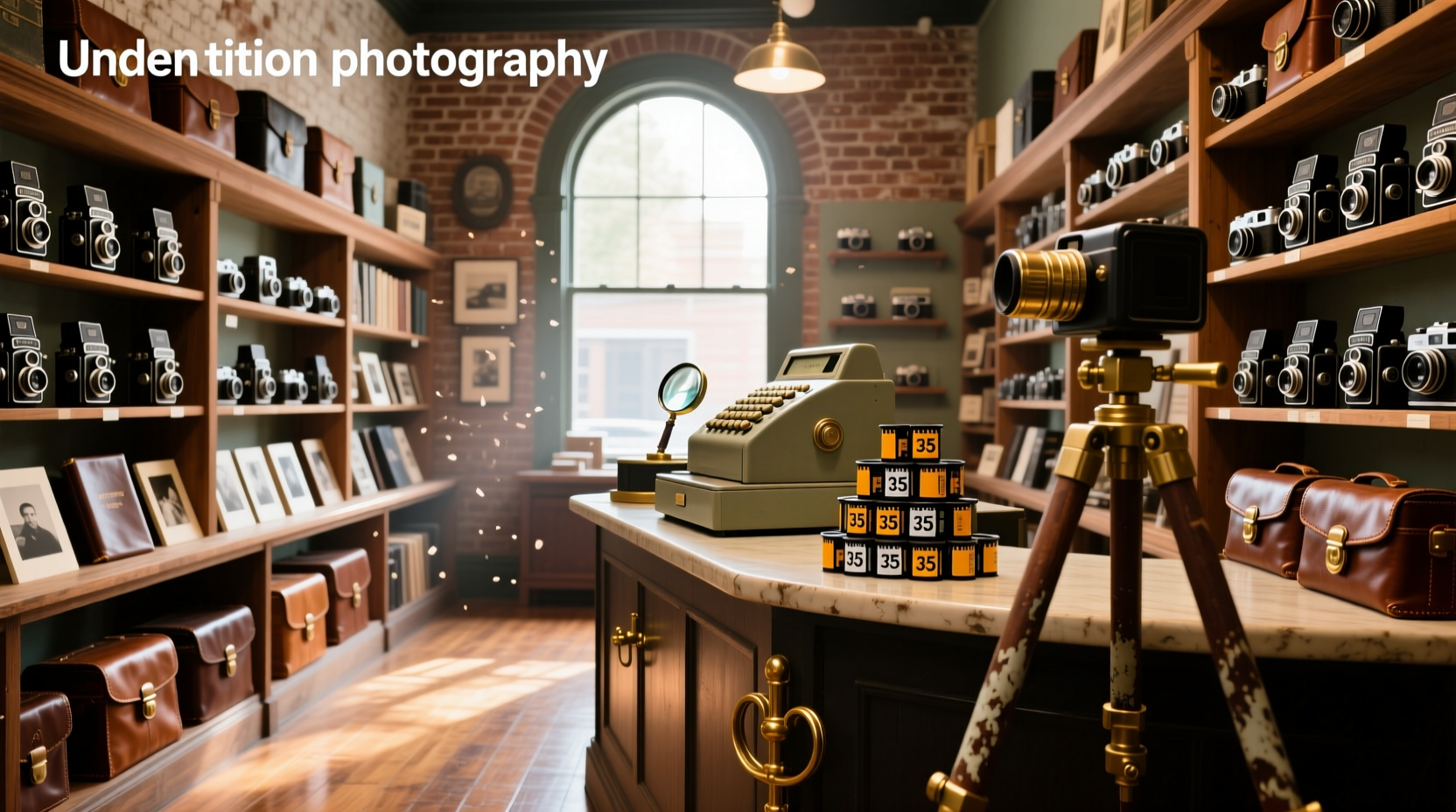
When searching for a trusted second hand camera store, your top priority isn’t price—it’s verifiable reliability. Top-tier used camera retailers like KEH Camera, MPB, Adorama Used, B&H Photo Video, and Wex Photo Video stand out not because they offer discounts (though many do), but because they enforce standardized inspection protocols, transparent condition grading (e.g., 'Excellent', 'Good', 'Fair'), and enforceable warranties—typically 90 to 180 days 123. Unlike generic marketplaces or unverified local sellers, these platforms provide serial-number-verified gear, shutter count reports (where available), full functionality testing—including autofocus, image stabilization, sensor dust inspection, and battery health—and itemized condition notes with real photos of the exact unit you’ll receive. This eliminates guesswork and significantly reduces the risk of receiving misrepresented or non-functional equipment.
Why ‘Second Hand Camera Store’ Searches Reflect Real Buyer Anxiety
The phrase second hand camera store signals a high-intent, high-stakes search—not casual browsing. Users are typically photographers upgrading on a budget, students entering visual media programs, or hobbyists seeking entry-level mirrorless or film systems without committing to new retail prices. But unlike buying used books or furniture, used camera purchases carry unique technical risks: shutter actuation limits (DSLRs often rated for 100,000–300,000 cycles), sensor degradation from prolonged UV exposure, degraded rubber grips or seals affecting weather resistance, and firmware incompatibility with modern SD cards or accessories. Worse, many sellers omit critical diagnostics—like whether a lens has fungus, focus calibration drift, or IR filter delamination—because they lack the tools or training to detect them. That’s why choosing a certified second hand camera store matters more than finding the lowest price.
What Defines a Legitimate Second Hand Camera Store?
A legitimate second hand camera store is defined by three operational pillars: inspection rigor, transparency in condition reporting, and consumer safeguards. Let’s break each down:
✅ Inspection Rigor: Beyond Surface-Level Checks
Reputable stores don’t just power-on test gear. They perform multi-point evaluations:
- Sensor & Mirror Inspection: Using calibrated LED panels and magnification tools to detect dead pixels, hot pixels, dust, scratches, or etching (especially critical for full-frame sensors).
- Shutter Count Verification: Extracting EXIF or service menu data where possible (Nikon, Canon, Sony, Fujifilm models support this natively or via third-party tools). Note: Not all cameras report accurate counts; some mirrorless bodies don’t log them at all.
- Lens Optical Assessment: Testing for fungus (via UV light), separation (delamination between elements), haze, coating wear, aperture blade oiling/sticking, and AF motor responsiveness—not just sharpness at f/4.
- Body Integrity Audit: Checking for impact damage, stripped threads on tripod mounts, worn mode dials, sticky buttons, and battery compartment corrosion.
Stores that skip these steps—or rely solely on seller-submitted descriptions—are functionally resellers, not curators.
✅ Transparency: Condition Grading Isn’t Marketing—It’s a Standard
Look for stores using a consistent, publicly documented grading scale. For example:
| Grade | Physical Condition | Functional Status | Includes |
|---|---|---|---|
| Like New | No visible marks; original packaging & accessories present | 100% factory spec; shutter count ≤10% of rated life | Full manufacturer warranty transfer eligibility (if applicable) |
| Excellent | Faint cosmetic wear only (e.g., minor grip scuff) | All functions verified; shutter count ≤30% of rated life | Original battery, charger, manual |
| Good | Visible wear (scratches, paint loss), but no structural damage | Minor issues noted (e.g., slight AF hunting in low light) | May include generic replacement battery |
| Fair | Significant wear; rubber grips cracked or missing | One non-critical function impaired (e.g., pop-up flash fails) | Accessories not guaranteed |
Crucially, avoid stores that use vague terms like “pre-owned” or “gently used” without defining what those mean. If grading criteria aren’t published on their site, assume inconsistency.
✅ Consumer Safeguards: Warranties & Returns Are Non-Negotiable
A robust return window (minimum 14 days) and a minimum 90-day limited warranty are baseline expectations—not perks. Here’s what to verify before checkout:
- Warranty scope: Does it cover electronics (sensor, processor, AF module) and mechanical parts (shutter, mirror box, lens aperture)? Or only ‘defects present at time of sale’? The latter excludes failures arising from normal use.
- Return logistics: Is return shipping prepaid? Are restocking fees applied? Some stores charge 10–15% if the item is returned in non-resellable condition—even if it’s within policy.
- Refund method: Store credit vs. original payment method. Cash refunds protect buyer liquidity; store credit may pressure future purchases.
KEH offers 180-day warranties on most items 1; MPB provides 12-month coverage on certified pre-owned gear 2; Wex Photo Video guarantees next-day UK delivery and 30-day returns 4. These aren’t marketing claims—they’re contractual commitments backed by operational infrastructure.
Regional Variations: Where You Are Changes Your Options
Availability, pricing, and regulatory protections vary significantly by region:
- United States: KEH (Georgia), MPB (HQ in NYC, fulfillment in NJ), Adorama (NYC), and B&H (NYC) dominate. All comply with FTC guidelines on used goods disclosure and offer federal-state enforceable warranties.
- United Kingdom: Wex Photo Video and Wex-owned Park Cameras lead. Both adhere to UK Consumer Rights Act 2015, granting automatic 6-month short-term right to reject faulty goods.
- Canada: Vistek and Henry’s operate certified used departments, but inventory depth lags behind US/UK peers. Import duties may apply on cross-border purchases.
- Australia: Diamonds Camera (Melbourne-based) is notable for rigorous in-house testing and 12-month warranty—but limited stock of newer mirrorless models due to import delays.
- EU: Casanova Foto (Italy) and RCE Foto (Germany/France/Lithuania chain) emphasize VAT-inclusive pricing and EU-wide warranty portability—but language barriers persist on product pages.
If you’re outside these regions, verify whether the store ships to your country *and* whether their warranty applies internationally. Many exclude coverage for units shipped outside their home market.
Red Flags: 5 Signs a ‘Second Hand Camera Store’ Isn’t Trustworthy
Even sites appearing professional can be risky. Watch for:
- No serial number listed per item. Reputable stores list the actual serial number (with partial redaction for privacy) so you can verify production date and service history via manufacturer lookup tools.
- Stock photos instead of unit-specific images. If every Nikon Z5 listing shows the same pristine white body photo, it’s likely a drop-shipped or aggregated listing—not inspected inventory.
- Vague or missing shutter count data. Especially for DSLRs and older mirrorless models, absence of shutter count is a strong indicator the unit wasn’t professionally evaluated.
- ‘As-is, no returns’ policy with no exception for DOA (Dead On Arrival) units. Legitimate stores accept DOA claims even outside standard return windows.
- Unverifiable physical address or contact info. A PO Box, generic email (e.g., info@domain.com), or missing business registration number (e.g., UK Companies House ID) should trigger caution.
Film vs. Digital: How Store Standards Differ
Film camera buyers face distinct verification challenges:
- Mechanical timing accuracy: Requires specialized test equipment (e.g., shutter speed analyzer). Few generalist used stores perform this; specialist film retailers like Kamerastore (Finland) or Analog Film Lab (US) do 5.
- Light meter calibration: Often drifted over decades. Stores should disclose whether meters were bench-tested and adjusted (and to what tolerance, e.g., ±½ stop).
- Film transport reliability: Tested via dummy film pull-through under tension. Not all stores document this.
Digital stores rarely test film-era gear to this standard—so prioritize film-dedicated vendors when buying Leica M3s, Pentax LXs, or Contax RTS models.
How to Verify a Store Yourself (Before You Buy)
Don’t rely on homepage claims. Do these three checks:
- Search site: [storename.com] + "condition guide" or "grading policy" — If no dedicated page exists, assume ad-hoc standards.
- Check recent customer reviews on Trustpilot or Sitejabber — Filter for keywords like “shutter count”, “sensor spot”, “warranty claim”, and “return experience”. Look for patterns—not outliers.
- Contact support with a technical question — Ask: “Can you confirm whether this Canon EOS R6 II body includes shutter count data, and how it was extracted?” A qualified response (e.g., “Yes—we use Canon Service Tool v5.1 via USB connection”) signals competence. A vague reply (“We test all units thoroughly”) does not.
When to Avoid a Second Hand Camera Store Entirely
There are scenarios where even top-tier used stores aren’t the right choice:
- You need a specific rare lens (e.g., Zeiss Otus 55mm f/1.4) with zero optical flaws. Used markets rarely stock flawless copies—and grading systems can’t guarantee micro-level coating uniformity. Consider new with extended warranty.
- You’re buying for mission-critical work (weddings, commercial shoots). Even 90-day warranties won’t cover schedule disruption from gear failure mid-event. Rental (e.g., Lensrentals, BorrowLenses) offers insurance and instant swaps.
- The model is discontinued and parts support is extinct. Example: Sony SLT-A77 II (2012) has no active repair network. If its phase-detect AF module fails, replacement is impossible—not just expensive.
Frequently Asked Questions
- Can I get shutter count data for any used camera?
Not universally. Canon DSLRs (post-2008), Nikon DSLRs (post-D300), and most Sony Alpha mirrorless models report it via EXIF or service menus. Fujifilm X-series and Panasonic Lumix bodies rarely expose it. Always ask the store how they obtained the count—and whether it’s verifiable. - Do used camera warranties cover accidental damage?
No. Standard warranties cover manufacturing defects and component failures—not drops, liquid exposure, or impact. For accident coverage, consider third-party insurance (e.g., Worth Ave Group) separately. - Is buying from a local camera shop safer than online?
Not inherently. Local shops may lack diagnostic tools or trained technicians. Ask if they provide written condition reports, shutter counts, and a minimum 30-day return window—then compare objectively to online peers. - Why do prices vary so much between used camera stores for the same model?
Differences reflect grading consistency, warranty length, return flexibility, and included accessories. A $50 higher price from KEH vs. an unknown seller often reflects $200+ in avoided troubleshooting time and risk mitigation. - Should I buy a used camera with an expired manufacturer warranty?
Yes—if the store provides its own warranty and full inspection documentation. Manufacturer warranty expiry doesn’t correlate with remaining functional life; many DSLRs operate reliably beyond 500,000 shutter actuations.
