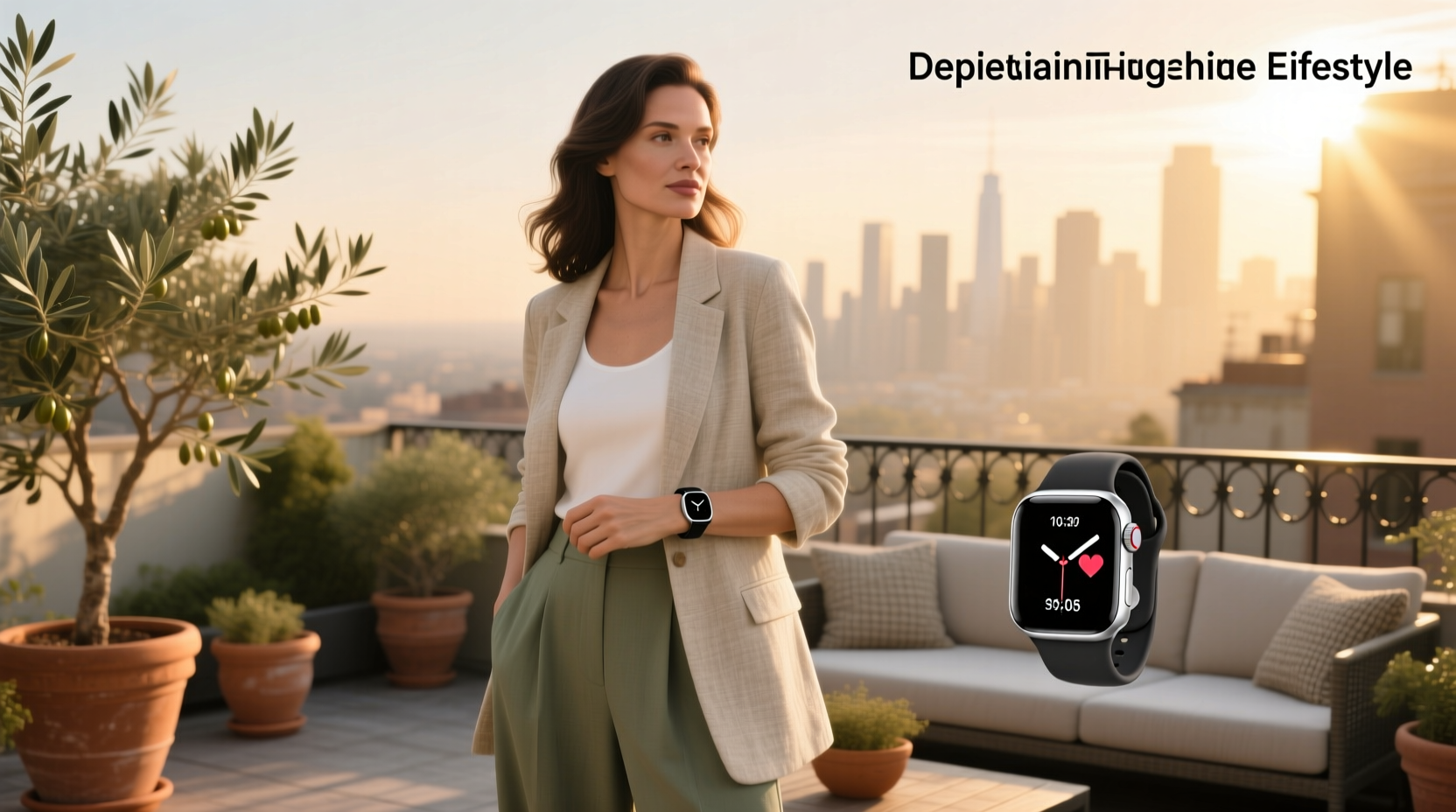
Looking for the best smart watch for women? Start here: The ideal smart watch for women isn’t just smaller—it’s designed with proportionate case sizing (typically 36–42mm), flexible and adjustable straps (silicone, woven nylon, or quick-release metal), accurate wrist-based heart rate and sleep tracking, and dedicated features like menstrual cycle logging and stress monitoring. Unlike unisex models, top-performing women-specific watches balance aesthetics (rose gold, petite dials, diamond accents) with clinical-grade sensor reliability—and crucially, avoid overpromising on fitness metrics that lack peer-reviewed validation 1. This guide cuts through marketing claims to help you evaluate real-world usability, not just specs.
Why ‘Smart Watch for Women’ Is More Than a Marketing Term
The phrase smart watch women reflects tangible physiological and behavioral differences—not just color or size preferences. Women, on average, have narrower wrists (13–15cm circumference), lower resting heart rates (60–75 bpm vs. 60–80 in men), and distinct hormonal cycles affecting sleep architecture, skin temperature, and heart rate variability 2. A watch with a 44mm case and rigid 22mm band may slip, misread motion, or fail to maintain consistent optical sensor contact—leading to inaccurate step counts or HRV data. Likewise, generic sleep algorithms trained primarily on male cohorts often misclassify light vs. deep sleep stages in women 3. So when searching for a smart watch for women, prioritize devices validated in mixed-gender clinical studies—not just those marketed with pink straps.
Key Decision Factors—Ranked by Real-World Impact
✅ Case Size & Wrist Fit: The #1 Functional Priority
Measure your wrist circumference before selecting. Most women fall into the 13–15cm range. A watch with a 36–40mm case diameter and 18–20mm lug width offers optimal coverage without overhang. Avoid models labeled “compact” but using 42mm+ cases—even if marketed as feminine. Check strap compatibility: look for quick-release pins (standard 18–20mm width) and at least three adjustment holes in silicone bands. Metal mesh or Milanese loops should offer micro-adjustment, not just fixed links. If buying online, verify whether the brand publishes actual wearable dimensions—not just bezel-to-bezel specs.
✅ Strap Comfort & Skin Safety
Sweat, nickel sensitivity, and prolonged wear matter. Hypoallergenic stainless steel (316L grade), medical-grade silicone (free of phthalates and latex), and breathable woven nylon are safest choices. Avoid rubberized TPU straps with strong chemical odor—they often contain volatile organic compounds (VOCs) linked to dermatitis 4. For sensitive skin, test straps for ≥48 hours before committing. Also note: magnetic clasps are convenient but may interfere with pacemakers or insulin pumps—consult your physician if applicable.
✅ Health Tracking Accuracy—Especially for Hormonal Health
Menstrual cycle tracking is widely advertised—but most apps rely solely on user-entered data, not physiological signals. Only a handful of devices (e.g., Garmin Venu 3S, Apple Watch with third-party apps like Clue Pro) integrate skin temperature, HRV, and respiratory rate trends to estimate fertile windows with documented sensitivity >78% 5. Even then, accuracy drops significantly in shift workers or those with PCOS. Sleep staging remains inconsistent across brands: a 2023 independent comparison found consumer-grade watches correctly identified REM sleep only 52–68% of the time versus polysomnography 6. Don’t treat any smartwatch sleep report as diagnostic—use it for trend spotting, not clinical decisions.
✅ Battery Life vs. Feature Trade-offs
Watches with always-on AMOLED displays and Bluetooth calling typically last 1–2 days; those with reflective LCDs and no voice assistant run 5–14 days. If you value multi-day battery life, prioritize models with adaptive brightness, offline GPS (reduces phone dependency), and optional ‘battery saver’ modes that disable non-critical sensors—not just ‘power saving’ toggles buried in menus. Note: advertised battery life assumes default settings. Real-world use with notifications, SpO₂ monitoring, and background heart rate checks often cuts endurance by 30–50%.
✅ Ecosystem Compatibility: iOS or Android?
iOS users gain deeper integration with Apple Health, automatic workout detection, and seamless Handoff—but lose full access to third-party Android apps like Wear OS–based sleep coaching tools. Android users benefit from broader app flexibility and NFC payment options beyond Google Wallet—but may face delayed firmware updates or inconsistent notification syncing with certain OEM skins (e.g., Samsung One UI). Cross-platform users should confirm whether companion apps support both iOS and Android equally—many ‘universal’ apps silently disable key features on one OS.
Common Misconceptions—What You Should Ignore
- “Rose gold = women’s model.” Finish is purely aesthetic. Evaluate materials (e.g., aluminum vs. stainless steel case weight), not plating.
- “More watch faces = better customization.” What matters is whether the OS supports dynamic complications (e.g., live weather, calendar events) and third-party face imports—not just preloaded static designs.
- “Water resistance rating = swim-proof.” 5ATM means safe for shallow swimming (not diving or hot showers). IP68 only covers dust and brief submersion—not continuous water exposure. Always check manufacturer guidelines for exact conditions.
- “BT calling means full phone replacement.” Most watches lack speaker/mic quality for clear calls in noisy environments and require Bluetooth tethering to your phone—even for cellular models, call handoff can drop mid-conversation.
How to Verify Claims Before Buying
Don’t rely solely on spec sheets. Here’s how to validate real performance:
- Check FDA clearance status: Devices claiming medical-grade ECG or blood oxygen monitoring must list their 510(k) number on the manufacturer’s regulatory page. Absence suggests wellness-only labeling.
- Review independent sensor tests: Sites like DC Rainmaker or GSMArena publish side-by-side optical heart rate accuracy comparisons under controlled conditions—not lab simulations.
- Read long-term owner reviews: Filter for posts ≥6 months old. Look for recurring issues: band fraying, touchscreen responsiveness degradation, or battery capacity loss after 12 months.
- Test firmware update history: Visit the brand’s support site and check how many major OS updates the model received in its first 18 months. Frequent, timely updates signal ongoing software investment.
Regional Considerations: Why Price Ranges Vary Widely
Search results show smart watch women priced from ₹1,249 to ₹12,499—yet price doesn’t linearly correlate with accuracy or longevity. Lower-cost models (under ₹3,000) often use older-generation photoplethysmography (PPG) sensors with wider margin-of-error in low-perfusion states (cold hands, high BMI). Mid-tier watches (₹4,000–₹8,000) typically include dual-LED PPG + accelerometer fusion, improving HR consistency. Premium models add temperature sensors and advanced algorithms—but clinical validation remains sparse for most proprietary metrics. Import duties, local service infrastructure, and regional warranty terms also affect long-term value. Always confirm whether repair centers exist within 100km of your location—many budget brands offer no in-country servicing.
When to Skip a ‘Women-Specific’ Model Altogether
Not every woman benefits from a ‘feminine’ design. Consider skipping dedicated women’s models if you:
- Prefer larger screens for readability (e.g., vision impairment or frequent map navigation)
- Need rugged construction for outdoor work or sports (most women-specific watches omit MIL-STD-810G certification)
- Use hearing aids—some small speakers produce interference; larger cases often house better-tuned audio hardware
- Want maximum third-party app support (Wear OS watches offer broader developer ecosystems than proprietary platforms)
In these cases, unisex or even ‘men’s’ models with smaller case variants (e.g., Samsung Galaxy Watch 6 Classic 40mm, Fitbit Sense 2 40mm) may deliver superior functionality without compromising fit.
Top 5 Practical Questions—Answered Concisely
- Can I wear a smart watch for women while swimming? Only if rated 5ATM or higher—and even then, avoid saltwater, chlorinated pools, and hot tubs, which accelerate corrosion and degrade seals. Rinse with fresh water after each use.
- Do smart watches for women track pregnancy symptoms accurately? No device is FDA-cleared for pregnancy monitoring. Some log symptoms via manual entry, but none reliably detect implantation bleeding, cervical changes, or fetal movement. Use only as a journal—not a diagnostic tool.
- How often should I replace my smart watch? Plan for 2–3 years. After that, battery degradation exceeds 25%, sensors drift, and OS updates stop—increasing security risk and reducing feature reliability.
- Are leather straps safe for daily wear? Yes—if vegetable-tanned and lined with breathable fabric. Avoid bonded or synthetic leather, which traps moisture and promotes bacterial growth. Replace every 6–12 months with regular use.
- Does wearing a smart watch affect sleep quality? Blue light emission is minimal on modern OLEDs, but the psychological effect of checking time during nocturnal awakenings can delay sleep onset. Enable ‘bedtime mode’ that disables notifications and dims screen after set hours.
