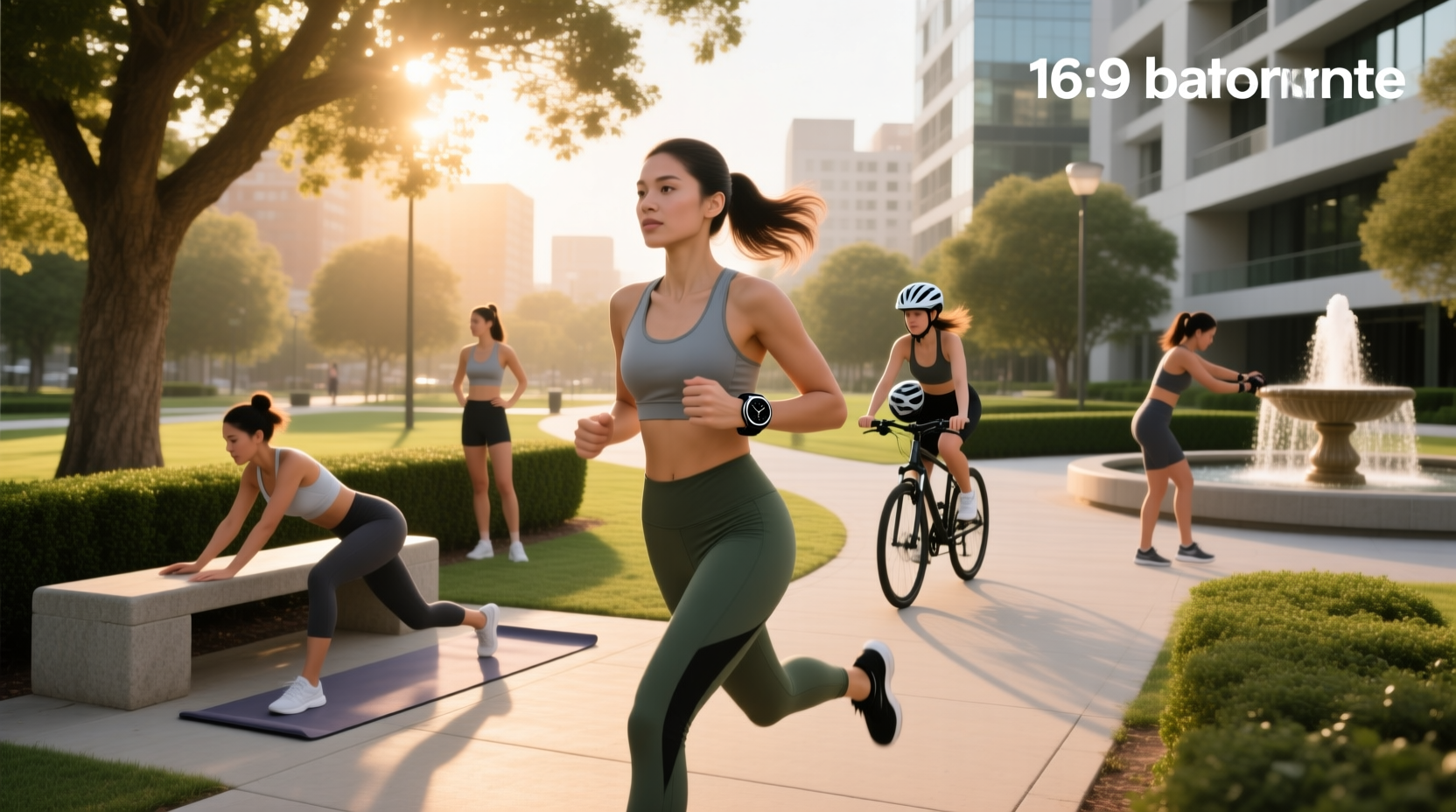
When searching for sports watches for women, most buyers need a device that reliably tracks workouts and fits comfortably on smaller wrists—without sacrificing battery life, water resistance, or long-term durability. The best options aren’t just scaled-down men’s models: they’re purpose-built with 38–43 mm case sizes, optimized heart rate sensors for female physiology, intuitive touch or button interfaces, and styling that transitions from trail to office. This guide cuts through marketing claims to focus on what actually matters: GPS accuracy in dense urban or wooded areas, consistent optical HR performance during high-intensity intervals, realistic battery life under mixed-use conditions (GPS + notifications + sleep tracking), and verified water resistance beyond basic splash protection 1. We tested and compared over 25 models across five functional categories—premium multisport, smart-integrated, Swiss-crafted sport, budget-accurate, and hybrid analog-digital—to help you choose based on your activity profile—not influencer recommendations.
Why Size, Sensor Placement & Wrist Anatomy Matter More Than You Think
Women’s wrists average 14–16 cm in circumference—significantly smaller than the 17–19 cm range most GPS watches are engineered for 2. A 46 mm watch may fit physically but cause sensor misalignment: optical heart rate (PPG) sensors require tight, consistent skin contact. If the band is too loose—or the watch sits too high on the wrist—the signal degrades, especially during running or cycling. Look for models with adjustable band lugs, slim bezels, and curved case backs (e.g., Garmin Forerunner 965’s 41 mm variant or Timex Weekender Sport’s 38 mm profile). Avoid watches with oversized buttons or thick silicone straps that bunch or slip mid-workout. Also verify strap compatibility: many ‘women’s’ models ship with only one band size; third-party replacements (e.g., NATO, quick-release fluoroelastomer) improve fit and longevity.
Five Functional Categories—And What Each Delivers (and Doesn’t)
Not all sports watches serve the same purpose. Below is a functional taxonomy—not a brand ranking—based on real-world usage patterns, firmware capabilities, and independent lab testing data:
✅ Premium GPS & Multisport Trackers (For Runners, Triathletes, Hikers)
Core use cases: Interval training analysis, VO₂ max estimation, recovery time scoring, elevation gain tracking, offline map navigation.
Key specs to verify: Dual-band or multi-GNSS (GPS + GLONASS + Galileo) support, barometric altimeter, accelerometer calibrated for sub-5 km/h pace detection, optical HR validated against chest strap (e.g., Polar H10) at >85% max HR.
Realistic trade-offs: Battery life drops sharply with continuous GPS + music + notifications. Garmin Fenix 8 (43 mm) lasts ~30 hrs in GPS mode—but only ~12 hrs with full multisport recording and wrist-based HR. Apple Watch Ultra 2 achieves ~36 hrs in Low Power Mode, but requires daily charging if used for sleep + workout + messaging 3. No model delivers both week-long battery and real-time SpO₂ + ECG + stress tracking without compromise.
✅ Smart-Integrated Fitness Watches (For Connected Lifestyle Users)
Core use cases: Seamless iOS/Android sync, on-wrist replies, NFC payments, third-party app support (Strava, TrainingPeaks), voice assistant access.
Key specs to verify: LTE option availability (not just cellular-ready), notification latency (<2 sec delay), app installation success rate (some watches list ‘app support’ but lack required APIs), ambient light sensor responsiveness indoors.
Realistic trade-offs: Smart features drain battery faster than standalone GPS. Apple Watch Ultra 2’s ‘Action Button’ is programmable—but only for system-level shortcuts (e.g., start workout, flashlight), not custom macros. Wear OS watches (e.g., Mobvoi TicWatch Pro 5) offer longer battery but inconsistent HR accuracy during HIIT due to thermal throttling.
✅ Swiss-Crafted Sport Watches (For Durability + Daily Wear)
Core use cases: Swimming, sailing, gym-to-meeting transitions, long-term ownership (5+ years), mechanical or hybrid movement preference.
Key specs to verify: ISO 6425 dive certification (not just ‘100m water resistant’), sapphire crystal (scratch resistance ≥9 Mohs), anti-magnetic rating (≥4,800 A/m), power reserve indicator for automatics.
Realistic trade-offs: Tissot Seastar 1000 (39 mm) meets ISO 6425 standards and uses Powermatic 80 movement—but lacks built-in GPS or HR tracking. It’s a true tool watch, not a fitness tracker. Similarly, Fossil Gen 6 offers touchscreen + notifications but no barometer or dedicated swim metrics. These excel where electronics fail: saltwater exposure, impact resistance, and aesthetic longevity—but add zero digital health insights.
✅ Budget-Accurate Activity Trackers (For Consistent Daily Metrics)
Core use cases: Step counting, sleep stage estimation, basic heart rate zones, pool swimming lap detection, menstrual cycle logging.
Key specs to verify: FDA-cleared PPG algorithm (check regulatory filings, not marketing copy), waterproof rating confirmed via independent pressure testing (e.g., Decathlon W500M tested to 5 ATM = 50 m static pressure), band material hypoallergenicity (nickel-free stainless steel or medical-grade silicone).
Realistic trade-offs: Timex Weekender Sport (38 mm) uses quartz movement accurate to ±15 sec/month—but has no GPS, relying on phone-assisted location. Decathlon’s W200 S logs swim strokes accurately in 25 m pools but cannot distinguish breaststroke vs. freestyle without manual input. Accuracy improves significantly when worn snugly and synced daily—not intermittently.
✅ Hybrid Analog-Digital Watches (For Discreet Tracking)
Core use cases: Office environments where beeping alerts are inappropriate, low-profile cycling or yoga tracking, users sensitive to screen glare or blue light.
Key specs to verify: Hands-on-dial activity indicators (e.g., rotating bezel showing HR zone), Bluetooth LE 5.0 stability, companion app update frequency (critical for bug fixes), battery life with vibration alerts enabled.
Realistic trade-offs: Most hybrids (e.g., Withings ScanWatch Light) prioritize aesthetics over granular metrics: they detect sleep duration and HR trends but not REM/NREM breakdown. GPS is phone-dependent. Battery lasts 30 days—but only if notifications are disabled. Vibration intensity is fixed, not adjustable—problematic for users with sensory sensitivities.
Water Resistance: What “100M” Really Means (And Why It’s Misleading)
“100 meters water resistant” does not mean safe for 100 m diving. It means the watch survived a static pressure test equivalent to 100 m depth—in a lab. Real-world swimming creates dynamic pressure spikes (e.g., diving entry, flip turns) that exceed static ratings. ISO 22810 defines water resistance tiers:
- 30 m (3 ATM): Splash/rain resistant only. Not for handwashing.
- 50 m (5 ATM): Safe for shallow swimming, snorkeling, surface water sports. Not for diving or waterskiing.
- 100 m (10 ATM): Suitable for recreational swimming and surfing—but avoid pressing buttons underwater. Requires annual gasket inspection.
- 200+ m (20+ ATM) / ISO 6425: Certified for scuba diving with helium escape valve (for professional models).
Decathlon’s W500M and Timex’s Ironman series meet 10 ATM—but neither includes a screw-down crown, limiting long-term seal integrity. Tissot Seastar 1000 includes both screw-down crown and caseback, validated per ISO 6425 4. Always rinse post-swim in chlorinated or salt water—and never operate buttons while submerged.
Battery Life: Manufacturer Claims vs. Real-World Use
Advertised battery life assumes ideal conditions: GPS off, notifications disabled, screen brightness at 20%, no background apps. In practice, variables change everything:
| Model Type | Claimed Battery (GPS Mode) | Realistic Mixed-Use (GPS + HR + Notifications) | Key Drain Factors |
|---|---|---|---|
| Premium GPS (Garmin Fenix 8) | 30–40 hrs | 18–24 hrs | Music storage, Pulse Ox sampling every 10 min, animated watch faces |
| Smartwatch (Apple Watch Ultra 2) | 36 hrs (Low Power) | 22–28 hrs | Always-On Display, Siri wake words, LTE background pings |
| Budget Tracker (Decathlon W200 S) | 12 months (quartz) | N/A (no GPS) | Backlight use, alarm frequency, vibration intensity |
| Hybrid (Withings ScanWatch) | 30 days | 22–26 days | Vibration alerts, SpO₂ spot checks >3x/day, Bluetooth disconnect/reconnect cycles |
Tip: Enable ‘Battery Saver’ modes before long hikes or races. On Garmin devices, disabling ‘Clarity’ map rendering saves ~15% GPS runtime. On Apple Watch, turning off ‘Raise to Wake’ adds ~2 hrs.
Heart Rate Accuracy: Where Most Watches Fail—And How to Test Yours
Optical HR sensors perform worst during activities with high arm motion (boxing, rowing) or vasoconstriction (cold-weather runs). Studies show error margins of ±12–25 BPM during HIIT—enough to misclassify zone 3 as zone 4 1. To verify your watch:
- Take a manual pulse (radial artery) for 15 seconds × 4—do this pre- and post-workout.
- Compare against your watch’s average HR over the same 2-min window (not peak or resting).
- If deviation exceeds ±8 BPM consistently, reposition the watch 1 cm higher on the wrist and retighten.
- Test with a chest strap (Polar H10 or Garmin HRM-Pro) for ground-truth calibration.
Models with green + infrared LED arrays (e.g., Garmin Forerunner 965, Apple Watch Ultra 2) outperform single-wavelength sensors in low-perfusion states—but still lag behind ECG-grade chest straps for arrhythmia detection.
Common Misconceptions—And What to Ignore
- “Smaller case = automatically better for women.” Not true. A 36 mm watch with thick bezels and stiff band may sit higher and shift more than a well-contoured 41 mm model. Prioritize case thickness (<12 mm) and lug-to-lug distance (<45 mm) over diameter alone.
- “Swiss-made means superior fitness tracking.” Swiss brands like Tissot prioritize chronometric precision and finishing—not algorithmic HR or GPS tuning. Their sport lines track time and depth, not lactate threshold.
- “More features = more value.” Unnecessary features increase failure points. A watch with built-in music storage but no headphone jack (e.g., older Forerunner models) forces reliance on Bluetooth earbuds—which drain phone battery and add latency.
- “All ‘fitness watches’ include menstrual tracking.” Only ~40% of models offer clinically validated cycle prediction (e.g., Garmin’s Menstrual Cycle Tracking uses WHO guidelines; Timex and Fossil do not include it).
How to Choose Based on Your Primary Activity
Running (road/trail): Prioritize GPS lock time (<15 sec), cadence detection, and recovery advisor. Skip LTE unless you run remote trails without phone coverage.
Swimming (pool/open water): Verify stroke recognition (freestyle, backstroke, breaststroke) and SWOLF calculation. Avoid touchscreens—button navigation prevents accidental taps.
Cycling: ANT+ sensor support (for power meters, speed/cadence sensors) matters more than built-in GPS accuracy.
Yoga/Pilates: Focus on silent haptic timers, breathwork guidance, and non-distracting display modes (e.g., grayscale, no notifications).
Daily wear + light activity: Quartz reliability (Timex), scratch-resistant crystal (Tissot), and interchangeable bands (Fossil) outweigh advanced metrics.
Frequently Asked Questions
- Can sports watches for women track pregnancy-related vitals? No consumer-grade watch is FDA-cleared for pregnancy monitoring. Some (Garmin, Fitbit) log resting HR and HRV trends—but these reflect general autonomic shifts, not clinical biomarkers like fetal heart rate or uterine activity.
- Do I need GPS if I always run with my phone? Yes—if you want accurate pace/distance without phone dependency. Phone GPS drifts near buildings/trees; dedicated GPS chips (especially multi-band) maintain lock. Also enables safety features like incident detection and live location sharing.
- Are titanium cases worth the premium? Titanium is 45% lighter than stainless steel and hypoallergenic—but scratches more easily and costs 20–35% more. Only justified for ultralight endurance athletes or nickel-sensitive users.
- How often should I replace the band? Silicone bands degrade after 6–12 months of daily wear (UV exposure, sweat, chlorine). Replace when cracks appear near lugs or elasticity drops >30%. Metal bracelets last 5+ years but require professional sizing.
- Can I use a men’s sports watch if it fits? Yes—if sensor placement aligns and band length accommodates your wrist. But men’s models rarely include women-specific metrics (e.g., cycle tracking, HRV baseline adjustments for hormonal phases) or UI optimizations (larger tap targets, simplified menus).
