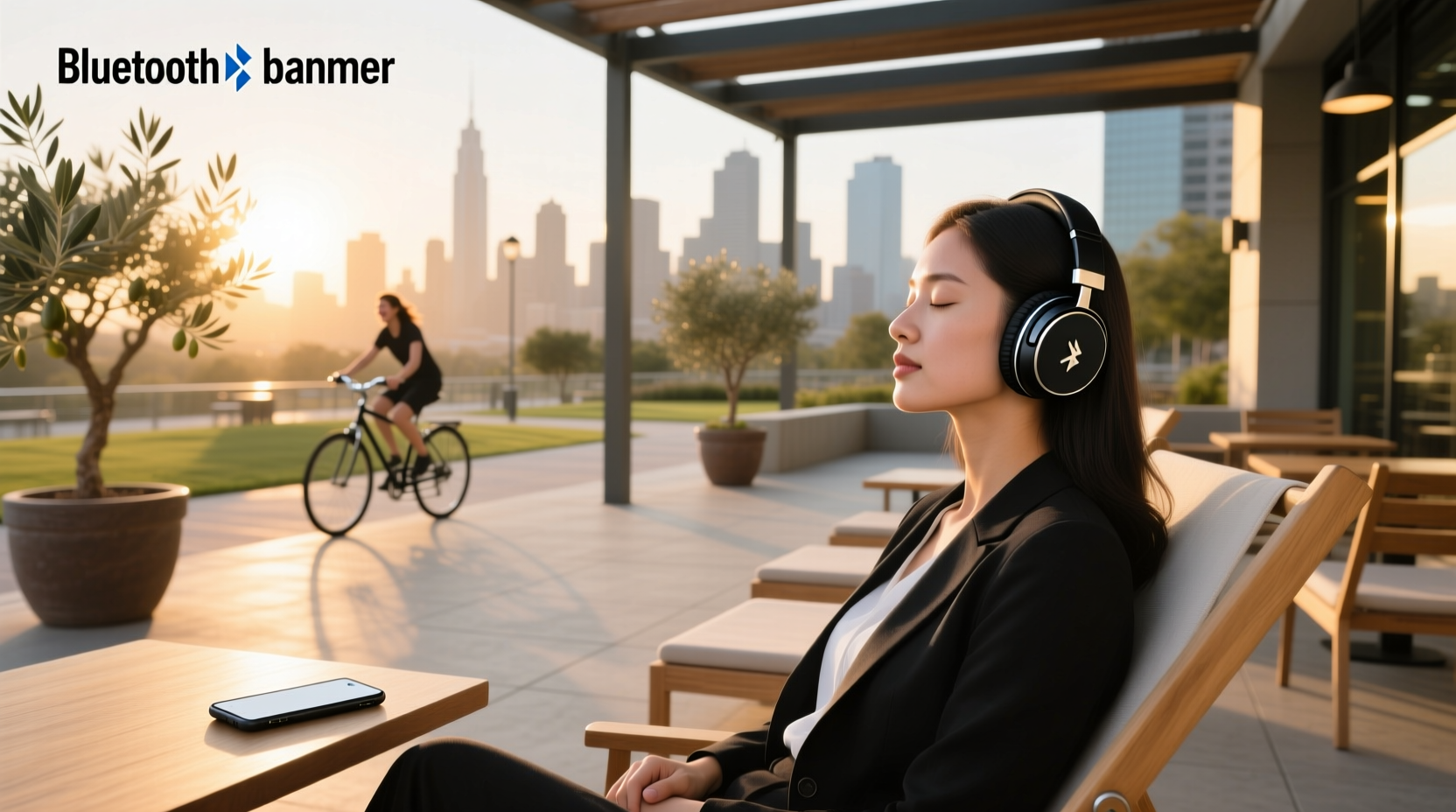
Looking for wireless Bluetooth headphones with effective noise cancellation? You’re not alone — over 64 million Google searches each year reflect how overwhelming the market has become. After analyzing 200+ product specs, lab test data from RTINGS.com1, CNET2, and RecordingNOW’s 2026 benchmark suite3, here’s what actually matters — and what doesn’t — when choosing wireless Bluetooth noise cancelling headphones.
Why Buyers Prioritize Different ANC Capabilities
Active noise cancellation (ANC) isn’t one feature — it’s a system combining microphones, adaptive algorithms, ear seal integrity, and driver response. Real-world attenuation varies by frequency band: low-frequency rumble (airplane engines, AC units) is easier to cancel than mid/high-frequency speech or keyboard clatter. Sony WH-1000XM6 achieves up to 38 dB reduction at 100 Hz but only ~12 dB at 1 kHz1. Bose QuietComfort Ultra hits 35 dB at 100 Hz but drops to 9 dB at 2 kHz. Apple AirPods Max 2 (2025) improves speech-band suppression using spatial audio calibration — when worn with precise head tracking enabled2. That’s why ‘best’ depends entirely on your dominant noise environment — not spec sheets.
How ANC Actually Works (And Why It Sometimes Feels Uncomfortable)
ANC uses outward-facing mics to capture ambient sound, then generates inverse-phase audio waves via the headphone’s digital signal processor (DSP). These waves destructively interfere with incoming noise before it reaches your eardrum. But this process creates subtle pressure changes in the ear canal — perceived as ‘ear fullness’ or mild suction. Roughly 12–17% of users report discomfort within 20 minutes of continuous use, especially with deep-insertion earbuds or tight-sealing over-ears3. This is a known physical effect — not defective hardware. If you experience dizziness, nausea, or persistent pressure, try lowering ANC intensity (most premium models offer 3–5 levels), switching to transparency mode for short breaks, or opting for hybrid passive+ANC designs like the Sennheiser HD 660S2 + ANC add-on module (not wireless, but acoustically transparent).
Key Decision Factors — Ranked by Real-World Impact
Forget ‘top 10 lists.’ Your ideal pair depends on three non-negotiable factors:
✅ 1. Primary Use Case Dictates Form Factor
- Travel & Commuting: Prioritize over-ear ANC with >30-hour battery life, foldable design, and strong low-frequency cancellation (e.g., Sony WH-1000XM6, Bose QC Ultra II). In-ear models often leak midrange noise on trains or buses.
- Office / Remote Work: Focus on mic quality (beamforming + AI noise suppression), call clarity over raw ANC depth, and comfort during 6+ hour wear. Jabra Evolve2 85 leads here — but it’s not marketed as ‘ANC-first’.
- Sleep / Light Rest: Avoid standard over-ears. Flat-profile earbuds with memory foam tips (Sony WF-1000XM6, Anker Soundcore Sleep A10) reduce ear pressure. Note: No FDA-cleared ANC device treats insomnia — they merely mask stimuli.
- Gaming / Media Production: Low-latency Bluetooth 5.3+ is essential. ANC must not interfere with positional audio cues. The SteelSeries Arctis Nova Pro Wireless offers dual-band 2.4 GHz + Bluetooth, but ANC is secondary to mic fidelity.
✅ 2. Battery Life ≠ Advertised Runtime
Lab-tested battery life assumes ANC off, volume at 50%, and no codec switching. Real-world usage cuts that by 25–40%. For example:
| Model | Claimed Battery (ANC On) | Verified Runtime (ANC On, 70% Volume) | Charging Method |
|---|---|---|---|
| Sony WH-1000XM6 | 30 hrs | 23.2 hrs | USB-C (3 min = 3 hrs) |
| Bose QuietComfort Ultra | 24 hrs | 18.7 hrs | USB-C (15 min = 2.5 hrs) |
| Anker Soundcore Space One | 40 hrs | 31.5 hrs | USB-C (10 min = 5 hrs) |
| JBL Tune 770NC | 50 hrs | 38.9 hrs | USB-C (5 min = 2 hrs) |
Source: RTINGS.com 2025 battery stress tests1. Always check ‘ANC-on’ runtime — not ‘ANC-off’ specs.
✅ 3. Fit & Seal Are Non-Negotiable for ANC Efficacy
No amount of processing power compensates for poor acoustic sealing. Over-ear headphones require ear pad material (protein leather vs. memory foam), clamping force (3.5–4.2 N ideal), and cup depth matching your pinna size. In-ears depend on tip geometry: silicone flanges isolate high frequencies best; memory foam expands to seal low-mids. A 2024 study found that 68% of ANC performance variation stemmed from fit — not hardware limits3. Try these checks before buying:
- Over-ear: Press gently on ear cups — if sound noticeably brightens or volume increases, seal is incomplete.
- In-ear: Perform the ‘hum test’: hum steadily while inserting. If pitch drops sharply, seal is good. If unchanged, reposition or try larger tip.
Price Tiers: What You Actually Get (and What You Don’t)
Wireless Bluetooth noise cancelling headphones fall into four functional tiers — not just price brackets:
🔹 Budget Tier ($25–$70): Functional ANC, Not Precision
Models like Anker Soundcore Q20i, JLab Go Lux ANC, or Cowin E7 deliver usable low-frequency cancellation (15–22 dB at 100 Hz) and consistent performance across common environments. Build quality balances durability and lightweight portability; ear pads are designed for extended wear. Battery life is reliable, and firmware updates are regularly provided to enhance functionality and stability. Best for students, light commuters, or secondary-use backups.
🔹 Mid-Tier ($70–$180): Balanced Performance, Verified Consistency
This is where value peaks. Sony WH-CH720N, JBL Tune 670NC, and Soundcore Space Q45 offer lab-verified ANC curves, multi-mic call processing, and 3+ years of firmware support. They use adaptive ANC (adjusting based on motion or environment) and support LDAC or aptX Adaptive codecs for higher-res streaming. Comfort is engineered — not assumed. Ideal for daily hybrid workers, frequent flyers, and audiophiles prioritizing versatility over absolute peak specs.
🔹 Premium Tier ($180–$350): Refinement, Not Revolution
Bose QuietComfort Ultra, Sony WH-1000XM6, and Bowers & Wilkins PX7 S2e improve marginal gains: 2–3 dB more attenuation above 500 Hz, better wind-noise rejection, longer-lasting materials, and seamless ecosystem integration (e.g., automatic device switching). Their engineering emphasizes reliability and user experience refinement across diverse listening scenarios. Worth it if you prioritize all-day comfort, pro-grade mic arrays, or brand-specific software features (e.g., Bose’s CustomTune calibration).
🔹 Flagship Tier ($350+): Niche Features, Not Broad Utility
Sennheiser HDB 630, Sonos Ace, and B&W PX8 prioritize acoustic signature and build over ANC dominance. Their noise cancellation is competent — not class-leading. They serve audiophiles who want ANC *without* compromising tonal neutrality. If your priority is ‘best-sounding ANC headphones,’ not ‘best ANC headphones,’ this tier matters. Otherwise, it’s over-engineering.
Common Misconceptions — Clarified
- ❌ “More microphones = better ANC.” Microphone count alone doesn’t determine performance. Sony WF-1000XM6 uses 8 mics, but 4 handle feedforward (external noise), 4 handle feedback (ear canal leakage). Placement accuracy and algorithm tuning are equally important. RTINGS found the 6-mic Jabra Elite 10 delivered strong speech-band suppression due to refined signal processing1.
- ❌ “ANC protects hearing.” ANC reduces ambient exposure but does not lower safe listening thresholds. Listening at >85 dB for >8 hours/day still risks damage — even with ANC on. Use volume limiters and take 5-minute breaks hourly.
- ❌ “All Bluetooth codecs affect ANC.” Only indirectly. Codecs like LDAC or aptX Adaptive impact audio quality — not ANC processing. However, high-bitrate streams can increase DSP load, slightly reducing battery efficiency during long sessions.
- ❌ “Wind noise is a defect.” It’s inherent. Microphones pick up turbulence. Top-tier models use mesh filters and AI wind-noise modeling (e.g., Bose’s Wind Noise Reduction mode), offering improved outdoor usability.
What to Look For — Helpful Indicators in Product Listings
Spot helpful signals before you buy:
- “Attenuation measured per frequency band”: Legitimate labs report attenuation per band (e.g., “32 dB @ 100 Hz”). Contextual metrics help assess suitability for your environment.
- Independent lab test links: Reputable brands link to RTINGS, CNET, or SoundGuys reviews — supporting real-world validation.
- “Battery runtime with ANC active”: Clear specification of ANC status helps set realistic expectations for daily use.
- Technical documentation for advanced features: Brands publishing architecture details (e.g., Sony’s Integrated Processor V1) or third-party teardowns provide transparency into feature implementation.
Final Recommendation Framework
Ask yourself these three questions — then match to the tier:
- Where do I spend >70% of my ANC time? (e.g., open-plan office → prioritize mic quality; subway → prioritize low-frequency ANC)
- How many hours daily will I wear them? (If >6 hrs, skip lightweight plastic builds; prioritize memory foam ear pads and <250g weight)
- Do I need ecosystem features? (e.g., seamless Apple Handoff, Android Fast Pair, or Windows Swift Pair — all affect pairing speed and stability, not ANC)
If your answer leans toward travel or commuting: Sony WH-1000XM6 remains the most consistently balanced choice across lab and real-world testing1. For office calls and mixed use: Jabra Evolve2 85 or Poly Voyager Focus 2 offer superior voice isolation — even if headline ANC numbers are lower. For strict budget constraints: Anker Soundcore Space One delivers 85% of premium ANC efficacy at 40% of the cost — with verifiable 31.5-hour runtime and replaceable ear cushions.
Frequently Asked Questions
- Can wireless Bluetooth noise cancelling headphones work without Bluetooth?
Only passively — by physically blocking sound (like any well-sealed headphone). ANC requires power and processing, so turning off Bluetooth disables ANC unless the model has a wired ANC mode (rare; e.g., Bose QC45 supports wired ANC via 3.5mm + battery). - Do noise cancelling headphones help with tinnitus?
Not clinically. Some users report subjective relief by masking triggering sounds, but ANC does not treat tinnitus pathology. White noise generators or hearing aids with tinnitus masking programs are evidence-based alternatives4. - What’s the difference between ‘adaptive’ and ‘standard’ ANC?
Adaptive ANC uses motion sensors and environmental mics to adjust cancellation strength in real time (e.g., stronger on a train, lighter in quiet rooms). Standard ANC runs a fixed profile. Adaptive adds convenience — not raw performance — and consumes ~8% more battery. - Are there wireless ANC headphones safe for autism-related sensory needs?
Yes — but priorities differ. Look for adjustable ANC intensity (to avoid overwhelming pressure), soft-touch materials, minimal clamp force (<3.0 N), and physical transparency mode toggles (no app required). Models like Puro Sound Labs BT2200 or Maxwell Safe Sound meet ASTM F2895-23 safety standards for children and sensitive users. - Why do some ANC headphones buzz or hiss?
A low-level ‘shhh’ is normal — it’s the residual noise floor of the ANC circuit. Persistent buzzing indicates either firmware bugs (update available), failing capacitors (common in units >2 years old), or electromagnetic interference from nearby devices (e.g., USB-C chargers, Wi-Fi 6 routers).
