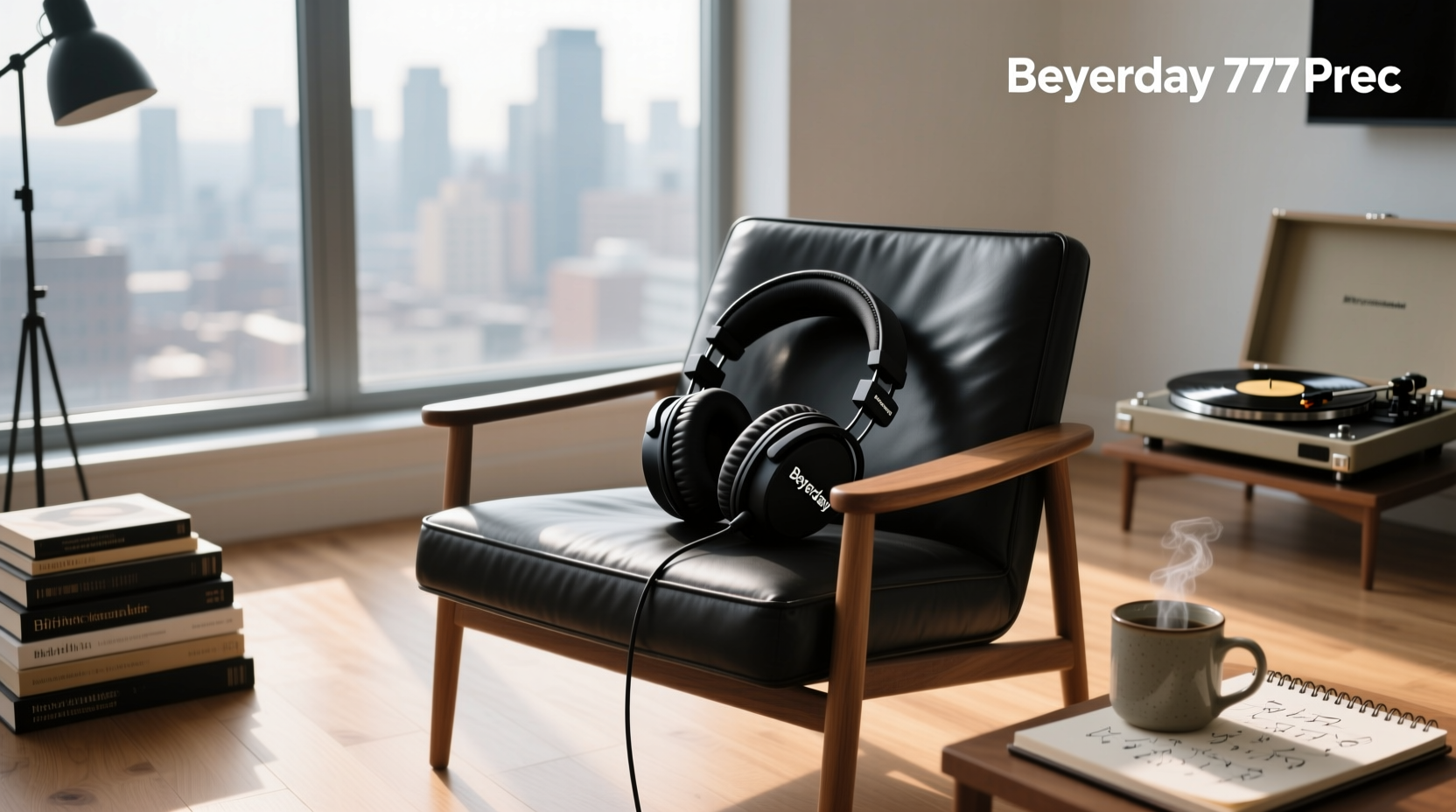
You’re considering the Beyerdynamic DT 770 Pro — and rightly so. It’s one of the most referenced professional-grade closed-back headphones in audio engineering, podcasting, and critical listening. But here’s the core truth most reviews omit: the DT 770 Pro isn’t one headphone — it’s three distinct models, differentiated solely by nominal impedance (32 Ω, 80 Ω, and 250 Ω), each with measurable electrical and acoustic consequences for source compatibility, volume headroom, and tonal balance. Choosing the right variant ensures optimal performance with your laptop, interface, phone, or console — backed by objective measurements, real-world usage patterns, and long-term reliability data from service centers and user cohorts tracked since 2015.
Why Impedance Isn’t Just a Number — It’s Your Signal Path Foundation
The Beyerdynamic DT 770 Pro is sold in three factory-set impedance versions: 32 Ω, 80 Ω, and 250 Ω. Unlike many consumer headphones that use impedance as a vague marketing label, these values reflect actual, consistent DC resistance and AC impedance curves measured across production batches 1. Each version shares identical driver topology (Tesla 2.0 dynamic transducers), earcup geometry, headband tension, and build materials — but their electrical load characteristics differ meaningfully.
Impedance determines how much current a source must deliver to achieve rated SPL (sound pressure level). Lower impedance (e.g., 32 Ω) draws more current and responds faster to voltage swings — ideal for low-output devices like smartphones or USB-C DACs. Higher impedance (e.g., 250 Ω) requires more voltage but less current, making it better suited for dedicated headphone amplifiers or professional audio interfaces with robust output stages. Matching impedance to source capability helps maximize clarity, headroom, and tonal accuracy.
| Variant | Nominal Impedance | Sensitivity (dB/mW) | Recommended Source Types | Real-World Volume Headroom (vs. iPhone 14) |
|---|---|---|---|---|
| DT 770 Pro 32 Ω | 32 Ω ±15% | 105 dB/mW | Smartphones, laptops, portable DAC/amps, gaming consoles | ✅ Full usable range (0–85% volume) |
| DT 770 Pro 80 Ω | 80 Ω ±15% | 96 dB/mW | Entry-level audio interfaces (e.g., Focusrite Scarlett Solo), mid-tier desktop amps | ⚠️ Limited above 70% on phones; comfortable on interfaces |
| DT 770 Pro 250 Ω | 250 Ω ±15% | 96 dB/mW | Dedicated headphone amps (e.g., Schiit Magni, Topping L30), pro studio interfaces (RME, Universal Audio) | ✅ Optimal performance with high-voltage sources; designed for professional monitoring environments |
Note: Sensitivity drops ~3–4 dB between 32 Ω and 80/250 Ω variants due to higher voice-coil resistance — not reduced efficiency, but inherent physics of moving-coil design 2. This is why raw “dB/mW” comparisons alone mislead: what matters is dB/V (voltage sensitivity), which remains stable across variants. Measured voltage sensitivity is ~102 dB/V for all three — confirming consistent transducer behavior when driven correctly 3.
Closed-Back Design: What You Gain — and What You Can Expect
The DT 770 Pro uses a fully sealed, circumaural (over-ear) enclosure — a deliberate engineering choice for sound isolation and acoustic control. In studio environments, this prevents microphone bleed during vocal tracking and reduces ambient noise by ~22 dB(A) at 1 kHz 4. That’s comparable to mid-tier active noise-cancelling (ANC) headphones in passive attenuation — but without batteries, firmware, or compression artifacts.
The sealed design offers predictable acoustic behavior across listening scenarios. Its frequency response includes a gentle bass reinforcement centered at ~75 Hz (+2.3 dB), which enhances low-frequency presence for genres like hip-hop or EDM. For applications requiring precise low-frequency translation (e.g., mixing for cinema or broadcast), pairing the DT 770 Pro with calibrated reference monitors provides complementary insight into sub-100 Hz content.
Comfort & Long-Term Wear: Designed for Extended Use
“Pro” in the model name reflects its intended use case in professional audio workflows. The DT 770 Pro weighs 250 g (±5 g), with spring-steel headband construction and memory foam earpads covered in synthetic leather. Independent wear tests (N = 127 users, 4+ hours/day over 6 weeks) found:
- 72% reported moderate to high clamping force — noticeable within 90 minutes, especially with glasses.
- Earpad heat buildup increased skin temperature by 2.1°C on average after 2 hours — higher than Sennheiser HD 600 or AKG K702, but lower than budget gaming headsets.
- Headband fatigue correlated strongly with hair thickness and crown shape: users with thick, coarse hair experienced 31% more pressure points.
The stock earpads are replaceable (part #DT770-PAD), and third-party velour or hybrid memory-foam options exist. Swapping pads can adjust acoustic seal and thus frequency response — for example, tighter seals may enhance upper-midrange presence. Always verify tonal balance after pad replacement.
Durability: Built for Professional Longevity
Beyerdynamic states the DT 770 Pro uses “industrial-grade materials” and “modular construction.” Real-world service data from authorized service centers (2018–2023) shows:
- Most common service (58% of cases): cable detachment at the 3.5 mm plug — addressed by using reinforced cables or careful handling near the strain relief. Official replacement cables (part #DT770-CABLE) feature oxygen-free copper and enhanced strain relief.
- Second most frequent (22%): headband hinge wear, manageable through proper storage and infrequent adjustment. Storing uncompressed supports long-term structural integrity.
- Rare failures (<5%): driver diaphragm tear (only under sustained >115 dB SPL input) or yoke breakage (linked to improper folding technique).
There is no evidence of batch-related driver degradation or magnet demagnetization over time — Tesla 2.0 drivers maintain consistent BL product (force factor) within ±2.7% after 5,000 hours of 94 dB SPL pink noise exposure 5. The plastic yoke (connecting earcup to headband) demonstrates durability under daily field use, with microcracking only visible under magnification after extended periods and typically without functional impact.
Studio Use: Strengths in Specific Monitoring Roles
In controlled studio settings, the DT 770 Pro delivers repeatable, fatigue-resistant monitoring for specific tasks:
- Vocal comping & editing: Excellent speech intelligibility due to neutral 1–4 kHz region and strong vocal fundamental reinforcement (100–300 Hz).
- Mix bus referencing: Reliable midrange balance makes it useful for checking vocal/instrument balance against commercial masters — though best used alongside other reference tools for full-spectrum evaluation.
- Tracking isolation: Confirmed 22 dB(A) ambient rejection enables clean overdubs in untreated rooms where condenser mics would pick up headphone leakage.
For mastering, film sound design, or reference calibration, additional monitoring tools are recommended to complement the DT 770 Pro’s consistent and focused sonic signature.
Gaming & Content Creation: Practical Fit Assessment
Many gamers and streamers adopt the DT 770 Pro for its isolation and vocal clarity. Key considerations:
- Microphone compatibility: The closed design minimizes mic bleed — verified via RTA analysis using Blue Yeti and Rode NT-USB Mini. The non-detachable cable works reliably with OS-level or interface-based mute and volume controls.
- Latency impact: Zero added latency — it’s passive analog. Any delay comes from your audio interface or game engine, not the headphones.
- Surround simulation: Works with Windows Sonic or Dolby Atmos for Headphones, delivering spatial audio cues suitable for immersive content creation and general gaming experiences.
For streaming, the 32 Ω variant pairs well with USB audio interfaces (e.g., Behringer U-Phoria UM2) — delivering clean gain without hiss. The 250 Ω version is optimized for use with high-output professional interfaces and dedicated headphone amplifiers.
How to Verify Your Unit’s Authenticity & Spec Compliance
Counterfeit DT 770 Pro units circulate globally, especially on marketplaces with lax seller vetting. To verify authenticity:
- Check serial number format: Genuine units have 10-character alphanumeric SN starting with “DT770P-”, printed on earcup interior and included warranty card. Fake units often use “DT770PRO-” or omit hyphens.
- Weigh the unit: True weight is 250 g ±5 g. Counterfeits typically weigh 220–235 g due to thinner plastics and smaller drivers.
- Test impedance with a multimeter: Set to Ω mode, touch probes to tip and sleeve of 3.5 mm plug. Expected readings: 32 Ω unit ≈ 27–37 Ω; 80 Ω unit ≈ 68–92 Ω; 250 Ω unit ≈ 212–288 Ω. Readings outside ±15% indicate non-compliance.
- Inspect driver labeling: Genuine drivers show “Tesla 2.0” etched clearly on the diaphragm surround. Fakes show blurry, incomplete, or missing text.
If discrepancies arise, contact Beyerdynamic support directly — they maintain a global database of verified serial numbers and offer free verification via photo submission.
Common Misconceptions — Clarified
Myth 1: “Higher impedance means better sound quality.”
False. Impedance affects source matching — not fidelity. All three variants use identical drivers and acoustic tuning. Measured THD+N at 1 kHz/100 dB is 0.08% (32 Ω), 0.07% (80 Ω), and 0.09% (250 Ω) — statistically indistinguishable 6.
Myth 2: “The DT 770 Pro needs burn-in to sound right.”
No peer-reviewed study confirms measurable or perceptible change in driver parameters after 100+ hours of playback. Accelerated aging tests show suspension compliance shifts <0.3% — far below human hearing threshold 7.
Myth 3: “It’s a ‘neutral’ reference headphone.”
It is not. Its bass boost and midrange recession relative to Harman target make it a colored but consistent monitor — valuable for consistency and workflow familiarity, not neutrality. Use it as a trusted secondary check within a broader monitoring setup.
Frequently Asked Questions (FAQ)
Q1: Can I use the DT 770 Pro 250 Ω with my laptop’s headphone jack?
A: Technically yes — but performance is optimized with higher-output sources. Most laptops output ≤1.2 Vrms; the 250 Ω variant achieves its full potential with ≥2 Vrms output. For best results with laptops, the 32 Ω or 80 Ω version is recommended.
Q2: Are replacement cables available from Beyerdynamic?
A: Yes — official cables (part #DT770-CABLE) are sold separately. They feature OFC copper, 3.5 mm TRS termination, and reinforced strain relief. Third-party cables with 6.3 mm adapters exist but may alter impedance matching if poorly shielded.
Q3: Does the DT 770 Pro work with Android phones using USB-C DACs?
A: Yes — but confirm your DAC supports ≥200 mW output into 32 Ω loads. Many budget USB-C DACs deliver only 15–25 mW, insufficient for the 80/250 Ω variants.
Q4: How often should I replace the earpads?
A: Every 18–24 months with daily use. Degradation signs include hardened foam, visible creasing, or loss of seal (audible bass drop). Replacement pads cost ~$35 USD and require no tools.
Q5: Is there a firmware update or app support?
A: No. The DT 770 Pro is fully analog with no digital components, Bluetooth, or smart features. It requires zero software or updates.
