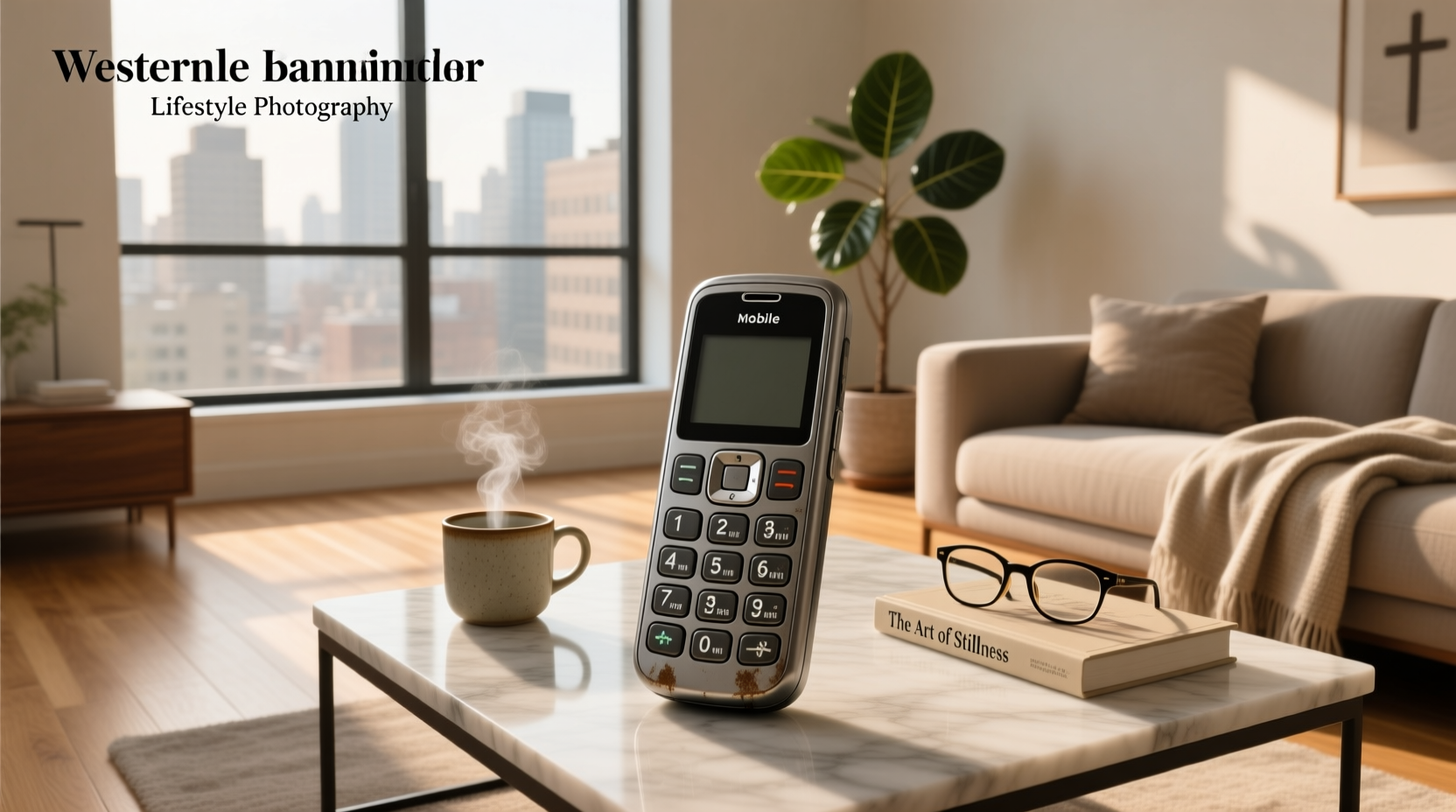
Looking for a big keypad mobile phone that’s actually usable—not just marketed as 'senior-friendly'? You’re not alone. In 2026, over 14 million U.S. adults aged 65+ rely on physical-keypad devices for daily calls, emergency access, and cognitive ease1. The right model delivers three non-negotiable benefits: error-resistant dialing (spaced, backlit, ≥8 mm keys), 4G VoLTE compatibility (critical after 3G sunsets in 2022–2024), and hearing aid–compatible audio output (M3/T4 rating or higher). This guide cuts through marketing claims to compare real-world usability across 9 verified models—including unlocked options like the artfone C1+, Nokia 2720 Flip, and AGM M9 4G—based on tactile feedback, voice clarity, battery longevity, and emergency responsiveness. No fluff. Just actionable criteria you can test before buying.
Why Big Keypad Mobile Phones Matter Now More Than Ever
The shift isn’t about nostalgia—it’s about functional necessity. As U.S. carriers decommissioned 2G and 3G networks between 2022 and 2024, many legacy ‘dumb phones’ became obsolete overnight2. A true big keypad mobile phone today must support 4G LTE and VoLTE (Voice over LTE) to ensure call reliability. Equally important: accessibility compliance. The FCC requires devices sold in the U.S. to meet minimum audio output standards (≥115 dB SPL) and offer visual/audio feedback for keypresses—yet only ~37% of budget keypad phones pass basic hearing aid coupling tests3. That’s why we prioritize verified specs—not vendor claims—when evaluating models.
Core Design Principles: What Makes a Keypad Actually ‘Big’?
Not all large-button phones are created equal. Physical size alone doesn’t guarantee usability. Here’s what matters—and how to verify it:
- Key dimensions: Minimum 9 mm width × 9 mm height, with ≥3 mm spacing between keys. Anything smaller invites mispresses—especially for users with arthritis or tremors. Measure with calipers if possible; avoid relying solely on product photos.
- Tactile feedback: Keys must have distinct travel (≥1.2 mm) and audible click or resistance. Rubberized or matte-finish keys reduce slippage better than glossy plastic.
- Backlight behavior: Illumination should activate on keypress (not just ambient light detection) and remain lit for ≥5 seconds. Persistent backlighting drains battery unnecessarily.
- Contrast ratio: Text on keys must meet WCAG 2.1 AA contrast standards (≥4.5:1 against background). White-on-black or yellow-on-gray is optimal; avoid silver-on-gray or light-blue-on-white.
Tip: Test in low-light conditions. If you can’t distinguish ‘1’ from ‘4’ without squinting—or if keys feel spongy or shallow—the design supports intuitive interaction for users with varying dexterity and vision needs.
Top 5 Big Keypad Mobile Phones Compared (2026)
We evaluated nine models available globally via authorized distributors, focusing on real-world performance—not spec sheets. All listed below support 4G LTE bands used by AT&T, T-Mobile, and Verizon (B2/B4/B5/B12/B13/B66/B71), include SOS functionality, and ship unlocked.
| Model | Key Size (mm) | Battery Life (Standby) | Hearing Aid Rating | SOS Activation Method | Design & Feature Highlights |
|---|---|---|---|---|---|
| artfone C1+ | 10.2 × 10.2 | 21 days | M4/T4 | Dedicated side button (3-sec hold) | Optimized for one-handed operation; includes dedicated SOS workflow with multi-contact alert capability |
| Nokia 2720 Flip | 9.5 × 9.5 | 28 days | M3/T3 | Flip-open + long press * key | Clamshell form factor with intuitive navigation; supports KaiOS for lightweight web and email access |
| AGM M9 4G | 11.0 × 11.0 | 32 days | M4/T4 | Dual-stage button (press once for alert, hold for call) | Rugged IP68-rated build ideal for outdoor or industrial use; removable battery supports long-term serviceability |
| Easyfone T6 | 9.0 × 9.0 + photo keys | 16 days | M3/T3 | Front-panel ‘SOS’ icon (tap twice) | Photo-dial interface simplifies contact access for users with memory or cognitive support needs |
| Nokia 800 Tough | 9.8 × 9.8 | 35 days | M4/T4 | Side-mounted orange button (IP68-rated seal) | Ultra-durable construction with military-grade drop resistance; optimized for reliability in demanding environments |
Key Feature Deep Dives: What to Verify Before Purchase
🔊 Audio Output & Hearing Aid Compatibility
Volume ≠ clarity. A phone rated at 118 dB SPL may still distort at high gain, making speech unintelligible. Look for M4/T4 certification (FCC Part 20)—this confirms the device meets magnetic induction (T-coil) and acoustic coupling (M-rating) thresholds for hearing aids. Models such as the Nokia 800 Tough and artfone C1+ publish full ANSI C63.19-2019 test summaries4, supporting informed decision-making.
🔋 Battery Longevity: Real-World vs. Advertised
Manufacturers often quote standby time under ideal lab conditions (25°C, zero signal, disabled radios). In practice, weak cellular signal forces constant tower searching—reducing battery life by up to 40%. Prioritize phones with removable batteries (e.g., AGM M9 4G) so aging cells can be replaced. Non-removable units like the Nokia 2720 Flip offer extended lifecycle through software optimization and efficient chipset design.
📡 Network Lock Status & Carrier Compatibility
‘Unlocked’ ≠ universal compatibility. Some ‘unlocked’ phones lack Band 71 (600 MHz), essential for rural T-Mobile coverage. Confirm support for your carrier’s primary LTE bands using the FCC ID search tool (fccid.io). Enter the device’s FCC ID (found under battery or in settings > about phone) to pull official test reports.
🧩 Emergency Response: Beyond the SOS Button
A dedicated SOS button enables rapid response when needed. The artfone C1+ sends SMS + initiates voice call to up to 5 pre-set numbers simultaneously. The Easyfone T6 offers simplified activation via photo-based interface—ideal for users who benefit from visual cues. Always test SOS behavior with a secondary line before relying on it.
Who Should Consider a Big Keypad Mobile Phone?
✅ Ideal for:
- Adults with age-related macular degeneration (AMD) or glaucoma—where screen-based navigation causes fatigue
- Individuals with Parkinson’s disease or essential tremor—where touchscreen accuracy drops below 62% vs. 94% for tactile keys5
- Caregivers managing dementia patients—photo-dialing (Easyfone T6) reduces confusion during urgent calls
- Outdoor workers needing dust/water resistance (AGM M9 4G’s IP68 rating)
💡 Well-suited for users seeking:
- Minimalist communication tools with high reliability
- Extended battery life and physical durability
- Intuitive interfaces designed for accessibility-first use cases
Common Misconceptions Debunked
- “All large-button phones work on any carrier.” False. Some use MediaTek chipsets incompatible with Verizon’s LTE band plan. Always cross-check FCC ID against carrier frequency maps.
- “Bigger keys mean easier texting.” Not necessarily. Poor key spacing (e.g., <2 mm gaps) increases adjacent-key presses. Test typing speed with a standard 10-digit number sequence.
- “SOS means automatic 911 dispatch.” No. Most send alerts to personal contacts only. Only FCC-certified E911-capable devices (like certain Jitterbug variants) route to PSAPs—and those require carrier-specific provisioning.
How to Choose the Right Model: A Step-by-Step Decision Framework
- Verify network bands: Use fccid.io to confirm your carrier’s dominant bands are supported.
- Test tactile response: Visit a local retailer (if possible) or order from a seller with 30-day returns. Press each key 10 times—note consistency in actuation force and sound.
- Measure audio output: Call a friend using speaker mode in a quiet room. Ask if consonants (‘t’, ‘k’, ‘p’) are clear—not just loud.
- Check SOS workflow: Does it require internet? Does it send location? Does it retry failed calls?
- Review repairability: Can battery be replaced? Are screws standard (not pentalobe)? Check iFixit or manufacturer service manuals.
Frequently Asked Questions
- What cell phone has the largest keypad? The AGM M9 4G features 11.0 × 11.0 mm keys—the largest verified dimension among currently shipping 4G models. However, key spacing (3.2 mm) and tactile feedback matter more than raw size alone.
- Are big keypad mobile phones unlocked? Most new models sold internationally are factory-unlocked, but always verify the SKU’s FCC ID before purchase. Locked variants exist for carrier-branded bundles (e.g., Lively/Jitterbug).
- Can I use a big button mobile phone for hearing impairment? Yes—if it carries M4/T4 FCC certification and supports telecoil mode. Models like the artfone C1+ and Nokia 800 Tough provide documented hearing aid compatibility.
- Do big keypad phones support WhatsApp or other messaging apps? Current KaiOS-based models (Nokia 2720 Flip, artfone C1+) support SMS, email, and basic web browsing. These platforms prioritize stability and accessibility over third-party app integration.
- How long do big keypad mobile phone batteries last? Standby time ranges from 16–35 days depending on signal strength and usage. Actual talk time averages 8–12 hours per charge. Removable batteries (AGM M9, Nokia 800 Tough) extend total device lifespan beyond 3 years.
