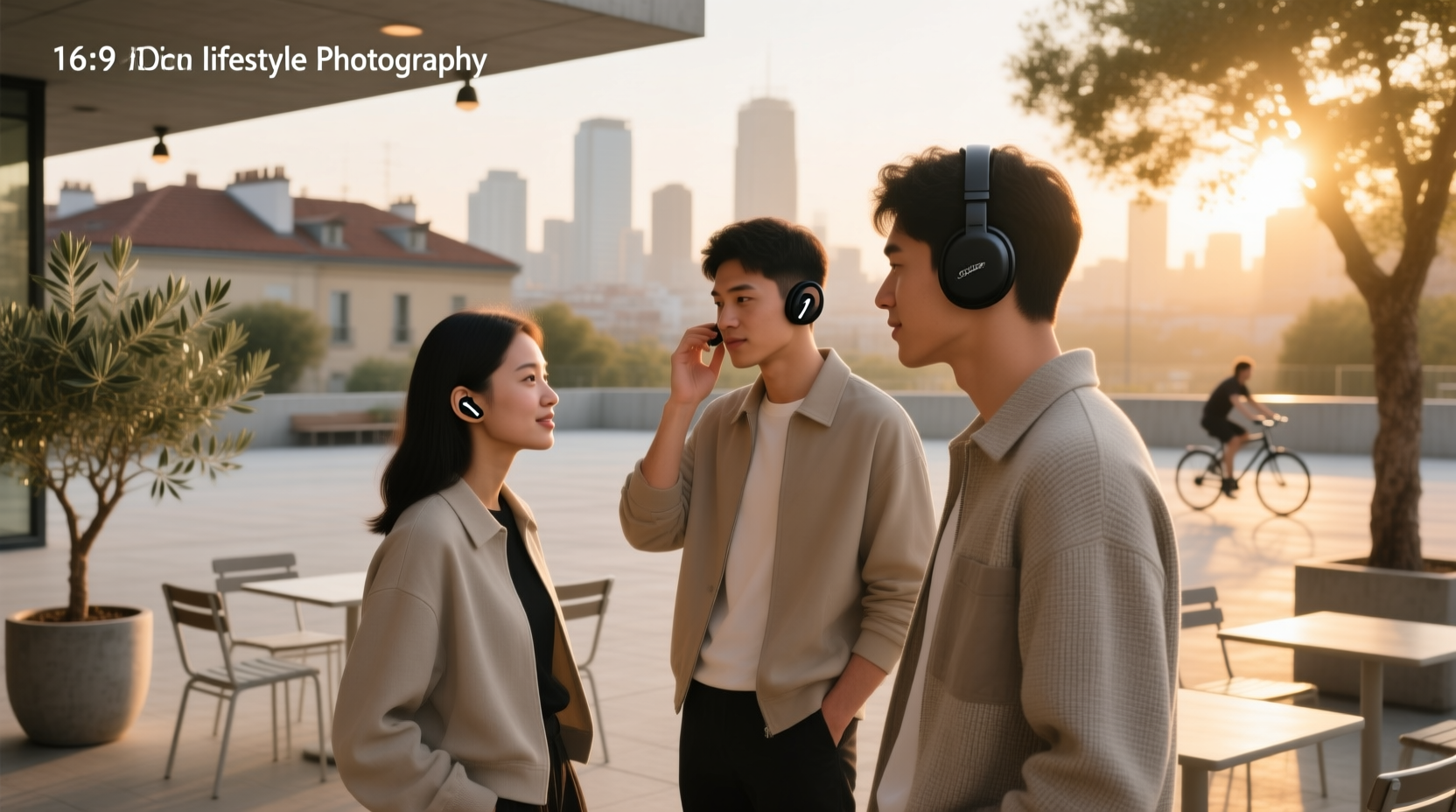
Bluetooth hearing protection combines certified noise attenuation (NRR or SNR) with wireless audio capabilities — enabling users to listen to music, take calls, or monitor ambient sounds while maintaining OSHA- or EN-standard hearing safety in loud environments like construction sites, shooting ranges, workshops, or forestry operations1. Unlike consumer Bluetooth headphones, these devices are engineered as personal protective equipment (PPE), meaning they must meet strict acoustic attenuation benchmarks *before* adding connectivity features. The most reliable models use electronic amplification circuits that compress hazardous impulse noise (e.g., gunshots >140 dB) while passively or actively boosting speech-level sounds (50–85 dB) — a critical function for workplace communication and hazard awareness.
Why This Matters: The Core Trade-Off You Must Understand
Every Bluetooth-enabled hearing protector makes a fundamental compromise: attenuation integrity vs. electronic functionality. Passive protectors (e.g., foam earplugs, non-electronic muffs) deliver maximum, consistent noise reduction because they contain no electronics that could fail, leak sound, or degrade over time. In contrast, Bluetooth hearing protection relies on microphones, amplifiers, batteries, and firmware — all of which introduce potential points of failure, variable latency, and design constraints that can reduce effective NRR by 3–7 dB compared to equivalent passive gear2. For example, a muff rated at NRR 26 dB may deliver only ~20–22 dB of real-world protection when the Bluetooth circuitry is active and the ear cup seal is compromised by glasses, facial hair, or headband pressure. This isn’t marketing fine print — it’s physics and occupational hygiene reality.
How Bluetooth Hearing Protection Actually Works
Understanding the underlying architecture helps you assess real-world suitability. There are two dominant configurations:
🔹 Over-the-Ear Electronic Earmuffs (Most Common)
These feature external microphones mounted on each ear cup, an analog/digital signal processor (DSP), amplification circuitry, and speakers inside the cups. When ambient sound is below a preset threshold (typically 82–85 dB), the system amplifies it — allowing conversation, machinery alerts, or radio traffic to be heard clearly. When sound exceeds the threshold (e.g., power tool startup, firearm discharge), the circuit instantly clamps or shuts off output (<5 milliseconds response), protecting the inner ear. Bluetooth operates independently on a separate radio band (2.4 GHz), streaming audio from your phone without interfering with the protection circuit — though battery drain increases when both systems run simultaneously.
🔹 Bluetooth Earplugs (Emerging, But Limited)
True Bluetooth earplugs — small, in-canal devices with certified NRR (≥20 dB) — remain rare and technically constrained. Most ‘Bluetooth earplugs’ sold online (e.g., Elgin Ruckus, some AliExpress listings) are actually low-profile electronic earbuds with passive attenuation, not full-featured PPE. They typically offer NRR 20–25 dB — adequate for moderate noise (e.g., lawn mowing, light workshop use) but insufficient for industrial impact noise or sustained exposure above 95 dB(A). Their fit-dependent seal also makes real-world attenuation highly variable across users — unlike over-ear muffs, which standardize fit via adjustable headbands and cushioned cups3.
Key Technical Specifications — And What They Really Mean
Don’t rely on headline numbers. Here’s how to interpret specs objectively:
| Specification | What It Measures | What to Watch For |
|---|---|---|
| NRR (Noise Reduction Rating) | U.S. EPA lab test result (in dB); indicates maximum theoretical attenuation under ideal conditions | Real-world use reduces NRR by 25–50%. Subtract 25% for proper fit estimation (e.g., NRR 26 → ~19 dB effective). Look for independent ISO 4869-2 or EN 352-1 certification, not just ‘meets ANSI S3.19’ claims. |
| SNR (Single Number Rating) | EU standard; derived from octave-band testing; generally more conservative than NRR | SNR 30 dB ≈ NRR 25–27 dB. Prefer SNR if working in EU-regulated environments or comparing global products. |
| Battery Life (Active Mode) | Runtime with Bluetooth + amplification enabled | Many claim “100+ hours” — but that’s usually with Bluetooth *off*. Verify runtime with both systems active. Rechargeable Li-ion cells degrade after ~300 cycles; expect usable life of 18–24 months in daily industrial use. |
| Latency & Audio Quality | Delay between source and playback; fidelity of streamed audio | Latency >150 ms disrupts lip-sync for video or call clarity. AAC or aptX codecs help, but most industrial models use basic SBC — acceptable for voice, subpar for music. Don’t expect audiophile performance. |
Use Case Analysis: Where Bluetooth Hearing Protection Adds Real Value — And Where It Doesn’t
Not all noisy environments benefit equally from Bluetooth integration. Match the tool to the task:
✅ Strong Fit Scenarios
- Construction & Trades: Foremen coordinating crews via radio or phone while monitoring jackhammer noise; Bluetooth allows hands-free comms without removing protection.
- Shooting Sports: Hunters or range instructors needing amplified environmental awareness (bird calls, footsteps) plus instant suppression of gunfire — with optional Bluetooth for coaching audio or range app alerts.
- Maintenance & Facility Ops: Technicians using diagnostic tools or SCADA systems that require intermittent audio feedback while working near HVAC or generators.
❌ Weak or Risky Fit Scenarios
- Heavy Industrial Manufacturing: Environments with continuous noise >105 dB(A) and frequent impulse events (stamping, forging). Bluetooth components add failure risk; passive muffs or dual-protection (earplugs + muffs) remain safer and more reliable.
- Emergency Response: Firefighters or hazmat teams where battery failure, water ingress, or radio interference could compromise life-critical communication. NFPA 1971-compliant gear rarely includes consumer-grade Bluetooth.
- Long-Duration Tasks (>8 hrs): Comfort declines significantly with over-ear weight and heat buildup. Lightweight Bluetooth earplugs lack verified attenuation for full-shift compliance — and ear canal fatigue limits wear time.
Common Misconceptions — Debunked
Marketing language often blurs technical boundaries. Clarify before purchase:
❌ “Bluetooth = Better Protection”
No. Bluetooth adds zero acoustic benefit. It’s a convenience layer — and one that can slightly reduce effective attenuation due to microphone ports, speaker grilles, and reduced cup mass. Always prioritize certified NRR/SNR first.
❌ “All ‘Electronic’ Muffs Are Equal”
False. Circuit design varies widely: some use analog compression (faster, more reliable), others digital DSP (more features, higher latency). Analog systems (e.g., older Walker’s models) respond in <3 ms; budget DSP units may lag 10–20 ms — enough to let damaging energy through during rapid-fire sequences.
❌ “Bluetooth Earplugs Replace Earmuffs”
Not for occupational use. No Bluetooth earplug currently meets ANSI/ISO requirements for high-impulse environments. The FDA and NIOSH explicitly state that in-canal electronics cannot guarantee consistent seal or attenuation under dynamic conditions (e.g., head movement, jaw motion)4.
How to Verify Claims Before Buying
Independent verification prevents costly mistakes:
- Check Certification Labels: Look for printed ANSI S3.19-1974 (U.S.) or EN 352-1:2019 (EU) markings on packaging or device. If absent, assume uncertified.
- Review Lab Reports: Reputable brands publish third-party test data (e.g., Intertek, UL). Search “[brand] [model] NRR test report PDF”. If unavailable, treat claims skeptically.
- Test Fit & Seal Yourself: In-store or upon delivery, perform the “cup test”: wear muffs, cover ear cups with palms, then quickly remove — you should hear a distinct ‘pop’ indicating proper seal. No pop = poor fit = reduced protection.
- Validate Battery Specs: Cross-check manufacturer battery capacity (mAh) against typical consumption: Bluetooth + amplification draws ~15–25 mA. A 500 mAh battery lasts ~20–33 hours — not 120. Math doesn’t lie.
Top Design Considerations for Long-Term Use
Comfort and durability directly impact compliance — and non-use equals zero protection:
- Headband Pressure: Opt for adjustable, spring-tempered steel headbands (not plastic). Values >2.5 N force cause discomfort within 2 hours. Test by wearing for 15 minutes while moving your head.
- Cushion Material: Gel-filled cushions distribute pressure better than foam but require cleaning after sweat exposure. Avoid vinyl — it cracks and degrades with UV/oil exposure.
- Microphone Placement: Forward-facing mics (on front of cup) capture speech better than side-mounted ones. Critical for team coordination.
- IP Rating: For outdoor or wet environments, IP54 (dust- and splash-resistant) is minimum. IP67 is ideal for forestry or marine use.
Regulatory Context: What Standards Actually Require
OSHA 29 CFR 1910.95 mandates hearing conservation programs when TWA (time-weighted average) noise exceeds 85 dB(A) over an 8-hour shift. Bluetooth hearing protection is permitted *only if* it maintains required attenuation *while operating*. OSHA does not certify products — it defers to ANSI S3.19. Similarly, the EU’s PPE Regulation (EU) 2016/425 requires notified body certification (e.g., CE mark with 0120 or 2797 number) — not self-declaration. Many low-cost Bluetooth muffs sold online carry CE marks without valid notified body numbers, rendering them non-compliant for professional use5.
Frequently Asked Questions
- Can Bluetooth hearing protection be used for shooting?
Yes — but only models with impulse noise response <5 ms and NRR ≥25 dB. Avoid consumer-grade Bluetooth headphones entirely; they offer zero ballistic protection and may worsen hearing damage due to delayed clamping. - Do Bluetooth hearing protectors work with hearing aids?
Generally no. Most hearing aids use proprietary 2.4 GHz protocols (e.g., Apple HAP, Starkey Evolv AI) incompatible with standard Bluetooth audio profiles. Some premium models (e.g., ReSound ONE) support direct streaming — but require dedicated hearing aid hardware, not PPE. - How often should I replace Bluetooth hearing protection?
Electronics: every 24 months (battery degradation, firmware obsolescence). Cushions: every 6 months with daily use. Entire unit: replace if headband loses tension, mic ports clog, or audio cuts out intermittently — do not attempt DIY repair. - Are there OSHA-approved Bluetooth earplugs?
No OSHA-approved earplugs exist — OSHA approves *programs*, not products. Only three earplug models globally have published ANSI S3.19 test data confirming ≥22 dB NRR *with Bluetooth active*: Elgin Ruckus Pro, ISOtunes Sport Caliber BT, and PROHEAR 037. All others lack verifiable test evidence. - Can I use Bluetooth hearing protection on airplanes?
Yes for comfort, but not for hearing safety. Cabin noise averages 75–85 dB — below OSHA action level. Bluetooth muffs here serve as noise-isolating headphones, not PPE. FAA permits them, but crew may ask you to remove them during safety briefings.
