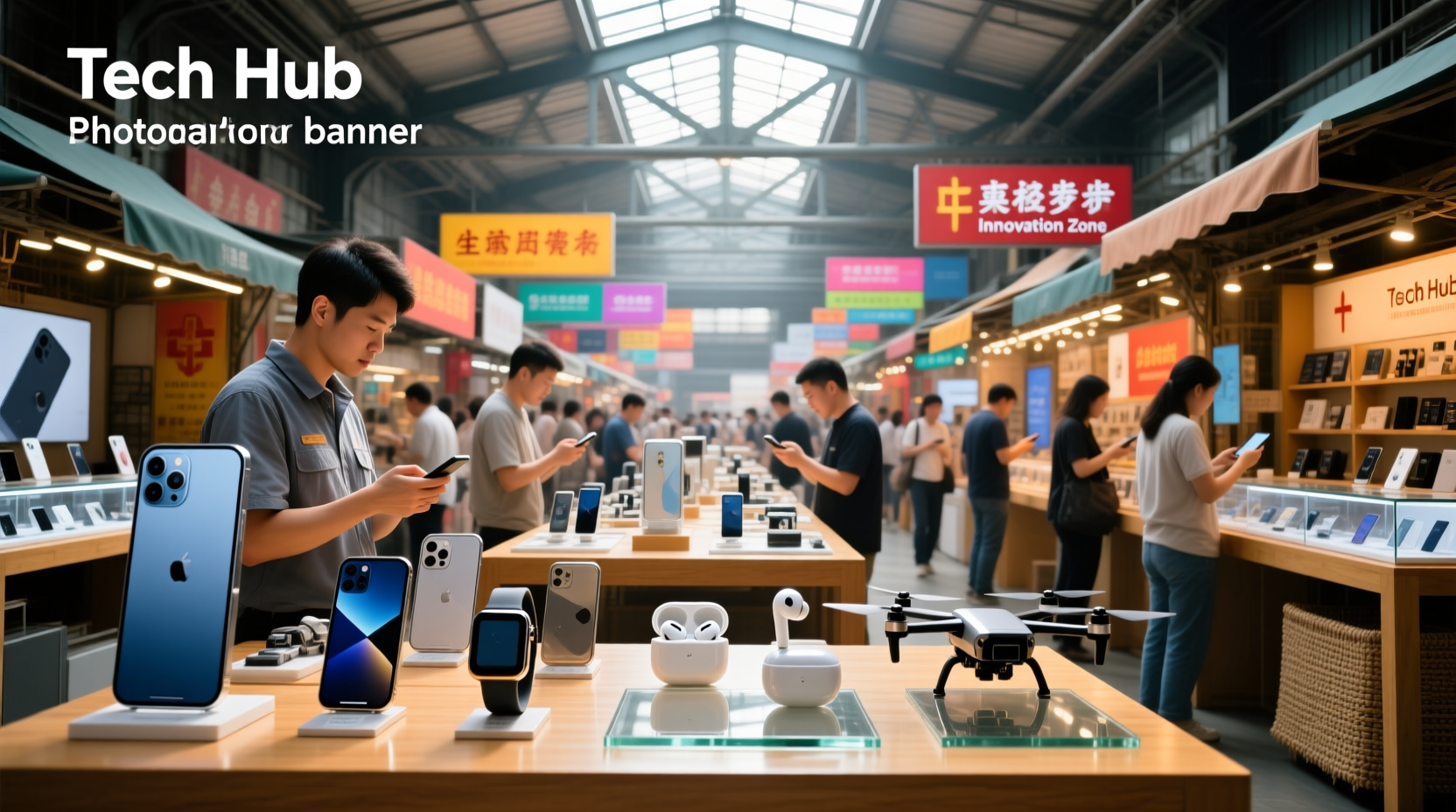
Looking for reliable, cost-effective electronics sourcing? The Chinese electronics market — centered in Shenzhen’s Huaqiangbei district — is the world’s largest physical and digital hub for components, finished gadgets, repair services, and secondhand devices1. With over 30,000 businesses, daily footfall exceeding 750,000, and foreign buyer volume doubling year-on-year, it’s a critical node for engineers, resellers, startups, and repair technicians alike2. But navigating it requires clarity on geography, supply chain structure, verification methods, and realistic expectations — not just price headlines. This guide cuts through the noise using verified operational patterns, documented market dynamics, and actionable due diligence steps.
Why the Chinese Electronics Market Matters Globally
China accounts for 11.28% of global electronics trade by value (2023)3, producing everything from smartphone PCBs to AI-powered smart speakers and drone flight controllers. Its dominance isn’t theoretical — it’s structural: vertically integrated manufacturing clusters, rapid prototyping cycles (often under 72 hours for simple PCB revisions), and dense after-sales ecosystems (e.g., component-level phone repairs in Guangzhou’s Zhongda Market). Unlike single-factory sourcing, the Chinese electronics market functions as a multi-layered system: physical bazaars for inspection and negotiation, online wholesale portals for bulk orders, and OEM/ODM partnerships for custom development. Understanding this architecture prevents costly missteps — such as assuming all ‘Shenzhen-sourced’ goods originate from the same compliance tier or quality control environment.
Huaqiangbei, Shenzhen: Not One Market — But Four Interlocking Layers
When people search “biggest electronic market in China”, they almost always mean Huaqiangbei Commercial Street in Shenzhen. But calling it a single ‘market’ is misleading. It operates as four distinct yet overlapping layers:
- 🔧 Component Level (SEG Plaza & Wanliu Building): Stalls selling ICs, connectors, sensors, and bare PCBs — often with datasheets, sample testing, and MOQs as low as 1–5 units. Ideal for prototyping, but counterfeit chips remain a documented risk without independent verification4.
- 🛠️ Module & Subassembly Level (Huaqiang North Metro Area): Vendors offering pre-flashed Wi-Fi modules, GPS receivers, camera lenses, and battery packs — many with basic certifications (CE/FCC self-declaration), but rarely full regulatory documentation unless requested upfront.
- 📦 Finished Goods Retail & Wholesale (Huaqiang South & SEG Mall): Consumer-facing storefronts selling branded and unbranded gadgets (power banks, Bluetooth earbuds, smartwatches) alongside parallel-imported devices. Prices here are typically 15–30% below regional retail — but warranty coverage is often limited to in-market service centers only.
- 🧩 Repair & Refurbishment Ecosystem (Near Dongmen & Luohu): Independent shops specializing in iPhone logic board microsoldering, laptop GPU reballing, and display replacements. This sector supports circularity — an estimated 22% of phones sold in Europe enter China’s refurbishment pipeline before resale5.
Crucially, none of these layers operate in isolation. A buyer negotiating a custom IoT device may source chips at SEG, contract firmware development from a nearby tech incubator, assemble prototypes at a shared factory space in Futian, and validate EMC compliance using third-party labs advertised inside Huaqiangbei malls. Success hinges on mapping which layer serves your specific need — not chasing the lowest headline price.
Guangzhou vs. Shenzhen: Functional Differences You Can’t Ignore
While Shenzhen dominates new-product innovation and component supply, Guangzhou’s electronics markets serve a different, equally vital function: large-scale secondhand, refurbished, and surplus inventory distribution. The Zhongda Electronics Market (near Guangzhou Railway Station) and Tianhe Computer City specialize in:
- ✅ Grade-A refurbished laptops (Lenovo ThinkPad T/X series, Dell Latitude) with 6–12 month functional warranties;
- ✅ Bulk lots of decommissioned enterprise gear (Cisco switches, HP servers) sold by weight or unit, often with partial documentation;
- ✅ Camera bodies and lenses sourced from Japanese and Korean trade-ins, frequently with original boxes and accessories;
- ❌ Minimal new-component availability — don’t expect SMT-capable vendors or high-frequency RF parts here.
A key distinction: Guangzhou’s markets emphasize volume liquidity; Shenzhen emphasizes technical agility. If you’re building a hardware startup MVP, Shenzhen is essential. If you’re outfitting a repair shop with affordable donor boards or sourcing 500 used SSDs for data recovery labs, Guangzhou offers better selection and pricing transparency. Neither is ‘better’ — they solve different problems.
Online Platforms: Alibaba.com, Made-in-China.com, and What They Actually Deliver
For remote buyers, two B2B platforms dominate search results: Alibaba.com and Made-in-China.com. Both serve legitimate purposes — but their structures differ meaningfully:
| Feature | Alibaba.com | Made-in-China.com |
|---|---|---|
| Primary User Base | Global SMEs, resellers, startups | Larger importers, procurement departments, government tenders |
| Supplier Verification | Gold Supplier status (paid); third-party audits optional | “Verified Supplier” requires onsite audit + ISO certification proof |
| Typical MOQ | Often 10–50 units for consumer electronics | Usually 100+ units; negotiable for established buyers |
| Payment Security | Trade Assurance (escrow, dispute resolution) | Secure Payment (escrow, but fewer buyer protections for non-conforming goods) |
| Logistics Integration | Integrated freight quoting; FBA-ready labeling options | Limited logistics tools; most arrange shipping separately |
Neither platform guarantees product authenticity or regulatory compliance. A 2024 Daxue Consulting audit found that 38% of listed ‘CE-certified’ power banks on Alibaba had no verifiable certificate number in EU NANDO database6. Always request the actual certificate ID and cross-check it yourself — never rely solely on platform badges.
Realistic Expectations: Quality, Compliance, and Lead Times
Three persistent misconceptions undermine buyer success:
❌ Myth 1: “All Shenzhen-sourced electronics are cheap because labor is low.”
Reality: Labor is now less than 12% of total BOM cost for mid-tier consumer electronics. What drives price differences is component sourcing tier (e.g., genuine TI vs. cloned STM32 MCUs), test coverage (100% functional test vs. spot-check), and regulatory investment (full FCC/CE testing costs $8,000–$15,000 per model). A $12 smart plug may skip surge protection, use non-UL-rated capacitors, and omit radio frequency shielding — making it unsafe for continuous use in North America or EU homes.
❌ Myth 2: “If it’s on Alibaba, it’s safe to order.”
Reality: Platform visibility ≠ due diligence. Verified suppliers still ship non-conforming goods if specifications aren’t locked in writing. Always require a signed Specification Sheet (SS) covering electrical parameters, materials (e.g., flame-retardant ABS), packaging, and labeling — then reference it explicitly in your PO. Without this, disputes rarely favor buyers.
❌ Myth 3: “Lead times are always fast.”
Reality: Standard lead time for off-the-shelf items is 7–15 days. For custom firmware or mechanical changes? Add 4–6 weeks minimum — and confirm tooling ownership in writing. Delays commonly stem from unresolved engineering queries (e.g., unclear USB-C PD negotiation specs) or third-party lab backlogs (FCC testing slots in Shenzhen fill 8–12 weeks ahead).
How to Verify a Supplier — Step-by-Step Due Diligence
Don’t rely on marketing claims. Use this field-tested verification sequence:
- 🔍 Check Business License: Request the Chinese company’s Business License (营业执照) and verify its registration status via China’s National Enterprise Credit Information Publicity System. Look for registered capital ≥ RMB 1 million and scope matching your product category.
- 🧪 Request Test Reports: Ask for dated, lab-issued reports (not internal checklists) for safety (GB 4943.1), EMC (GB 9254), and radio (SRRC). Cross-check lab accreditation via CNAS website (cnas.org.cn).
- 🏭 Visit or Hire a Third Party: If ordering >$10,000, engage a local inspector (e.g., AsiaInspection, QIMA) for pre-shipment audit. Focus on solder joint quality, capacitor markings, and label accuracy — not just packaging.
- 📦 Trace Sample Origins: Order a paid sample (not free), open it, and photograph PCB silk-screening, chip markings, and heat sink stamps. Reverse-image search key components — inconsistencies signal gray-market sourcing.
This process takes 3–5 business days but prevents 90% of post-shipment compliance failures.
Shipping, Customs, and Hidden Cost Traps
Freight terms matter more than headline price. Common pitfalls include:
- DDP (Delivered Duty Paid) quotes that exclude VAT or anti-dumping duties: Especially for LED lighting, batteries, and certain audio gear entering the EU.
- “Free Shipping” offers using untraceable postal parcels: No insurance, no customs support, and frequent seizure for missing CE marking.
- Consolidated LCL (Less-than-Container Load) shipments with mixed HS codes: One non-compliant item can hold the entire container at port — causing demurrage fees averaging $120/day.
Always use FOB Shenzhen or CIF [Your Port] with Incoterms® 2020 specified in writing. Require commercial invoice, packing list, and bill of lading with accurate HS code (e.g., 8517.12 for Bluetooth headsets, not generic 8517.62). Misclassification triggers audits — and penalties up to 300% of duty owed.
Frequently Asked Questions (FAQ)
Q1: Can I buy consumer electronics directly from Huaqiangbei as an individual buyer?
Yes — retail stores accept cash, WeChat Pay, and Alipay. However, most wholesale stalls require business registration documents for tax-compliant invoicing. Bring your passport and company license if purchasing >RMB 50,000.
Q2: Are products from Guangzhou’s Zhongda Market safe for resale in the US or EU?
Refurbished devices carry no automatic compliance. You must retest and recertify them under your brand name — including EMC, safety, and radio requirements. Never assume prior certification transfers.
Q3: How do I identify counterfeit components in Huaqiangbei?
Look for inconsistent font weight on IC markings, missing date codes, or packaging lacking manufacturer logos. Use a $150 handheld Raman spectrometer (e.g., SciAps Z-300) to verify silicon substrate composition — counterfeit MCUs often fail elemental analysis.
Q4: Do Alibaba suppliers ship to residential addresses?
Yes, but courier services (DHL, FedEx) may require importer-of-record details and refuse delivery without them. For first-time orders, use a freight forwarder with a US/EU address to avoid delays.
Q5: Is there English-speaking technical support at Huaqiangbei markets?
Major malls (SEG, Huaqiang International) have multilingual concierge desks. Individual stall staff vary — download Pleco or Google Translate with offline Chinese pack. Avoid verbal agreements; write key terms (price, MOQ, warranty) in Chinese characters and ask for signature.
