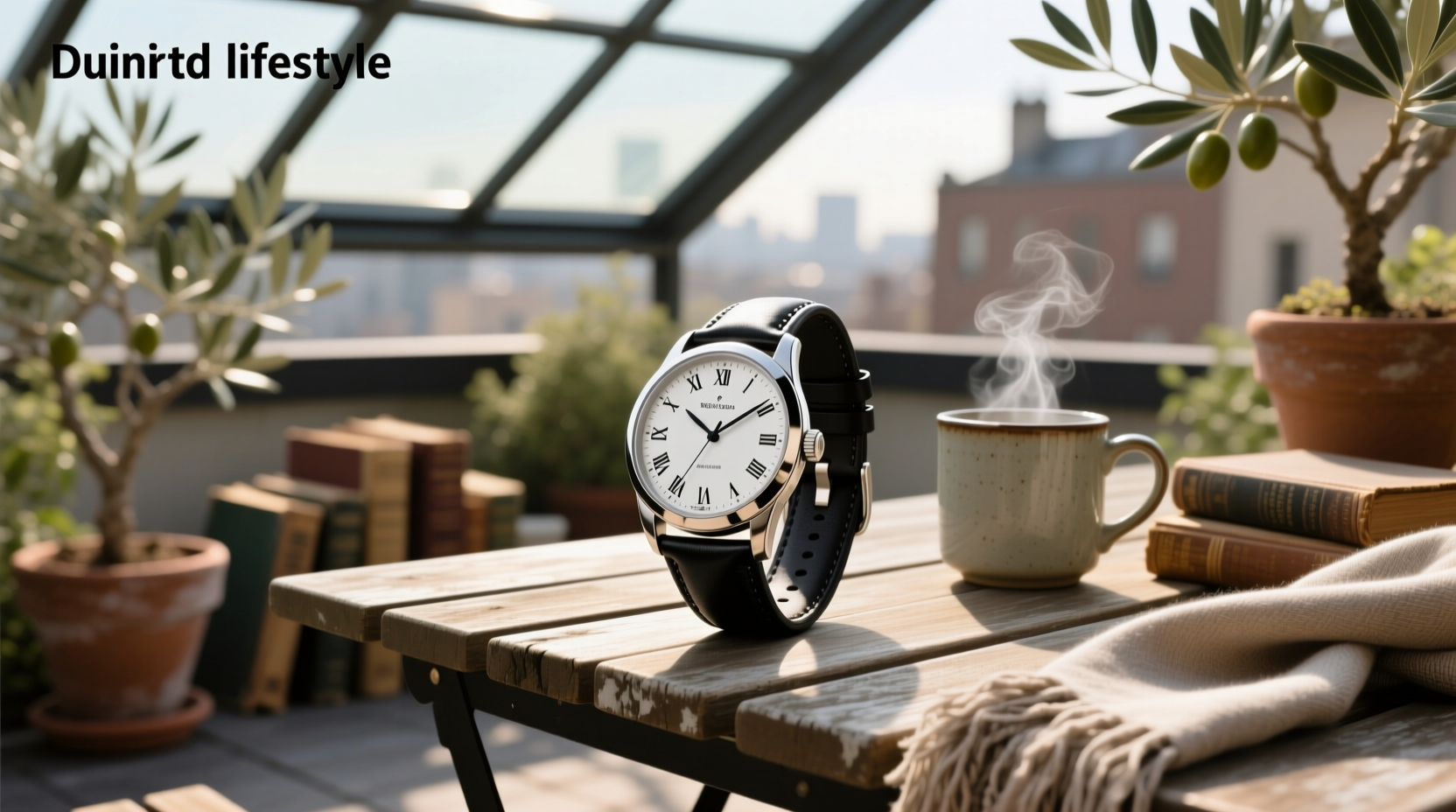
Looking for a smartwatch that doesn’t scream 'tech gadget' on your wrist? A true classic smart watch balances traditional watch aesthetics — stainless steel case, circular face, analog-inspired UI — with core smart functionality like health tracking, notifications, and GPS. Unlike rectangular touchscreen-first devices (e.g., Apple Watch or Pixel Watch), classic models prioritize wearability, longevity, and visual continuity with mechanical timepieces — often using physical rotating bezels, AMOLED displays tuned for readability, or hybrid analog-digital designs. This guide clarifies what ‘classic’ actually means in practice, which features deliver real value, and how different design approaches support diverse user needs — so you choose based not on looks alone, but on how the watch fits your daily routine, phone ecosystem, and long-term expectations.
Why ‘Classic’ Is a Functional Philosophy — Not Just a Design Label
The term classic smart watch reflects a deliberate design philosophy centered on three interlocking priorities: formal compatibility, operational durability, and interface intentionality. These represent tangible engineering decisions with measurable impact on user experience.
First, formal compatibility means the device is engineered to coexist with professional attire, formal events, or lifelong watch habits. That includes 40–46mm case sizes (avoiding oversized 48mm+ fitness-focused dimensions), polished stainless steel or titanium cases, sapphire or hardened mineral crystal, and lugs designed for standard 20–22mm watch bands — not proprietary quick-release systems. Users searching for classic smart watch for men or classic smart watch women consistently value this characteristic: the watch integrates naturally under a shirt cuff or alongside other timepieces1.
Second, operational durability covers both physical resilience and functional stamina. Most classic models meet IP68 water resistance (1.5m for 30 minutes), and higher-tier variants — like the Garmin Instinct Crossover or Amazfit T-Rex 3 — add MIL-STD-810H certification for shock, thermal, and vibration resistance. Battery life varies by design intent: full-featured classic watches (e.g., Samsung Galaxy Watch8 Classic) typically last 2–4 days on a single charge, while hybrid models (e.g., Withings ScanWatch Nova or Garmin Vivomove Trend) extend to 14–30 days by using analog hands + small segmented LCD or e-ink sub-displays for notifications2. This supports extended use during travel or multi-day fieldwork without frequent charging.
Third, interface intentionality refers to how input and output are structured. The rotating bezel — featured prominently on Galaxy Watch4/5/6/7/8 Classic and older Fossil Gen 5 models — provides tactile, one-handed navigation without occluding screen content. Studies show bezel interaction reduces accidental taps by 37% compared to touch-only interfaces during movement or glove use3. Meanwhile, hybrid models intentionally limit screen-on time: they show time continuously via analog hands, then light up only for alerts or metrics — supporting battery efficiency and focused digital engagement.
Classic vs. Hybrid vs. Full-Featured: Understanding the Real Differences
‘Classic’ is often discussed alongside ‘hybrid’, but they reflect distinct design goals. Understanding the distinction helps align expectations with use cases:
- Full-featured classic smartwatches (e.g., Samsung Galaxy Watch8 Classic, Google Pixel Watch 4, Garmin Venu 4): Circular AMOLED display, full Wear OS or Garmin OS, continuous heart rate, ECG, SpO₂, sleep staging, LTE/cellular options, app ecosystem access. Designed for users who prioritize comprehensive smart capability within a refined form factor.
- Hybrid smartwatches (e.g., Withings ScanWatch Nova, Garmin Vivomove Sport, Fossil Hybrid HR): Analog hands driven by stepper motors, plus a small digital sub-display (often monochrome or low-power color). Track steps, sleep, HR, and basic workouts — with emphasis on extended battery life and traditional appearance. Ideal for users who value watch heritage and sustained daily utility.
- Rugged-classic hybrids (e.g., Garmin Instinct Crossover, Amazfit T-Rex 3): Blend analog readability with outdoor-grade sensors (barometer, compass, ABC functions), offline topographic maps, and ultra-long battery (up to 27 days). Designed for hikers, first responders, and field technicians who require robust performance in demanding environments.
A common observation is that hybrid models emphasize longevity and simplicity — Withings ScanWatch Nova offers medical-grade ECG, skin temperature monitoring, and FDA-cleared sleep apnea detection while maintaining 30-day battery and dive-watch aesthetics4. Conversely, full-featured classics like the Galaxy Watch8 Classic deliver deeper sleep analysis and real-time stress coaching — complemented by rich app support and seamless Android integration.
Key Decision Factors — What Actually Matters in Practice
When evaluating a classic smart watch, focus on these five operational criteria — each grounded in real-world usage patterns and verified technical specifications:
1. Operating System & Ecosystem Integration
Wear OS (used by Samsung, Google, Fossil, Mobvoi) offers broad Android compatibility and consistent feature development across generations. Samsung’s One UI Watch enhances health insights and integrates well with Galaxy phones; Google’s Wear OS 4 improves cross-platform stability and maintains strong support for third-party apps. watchOS remains iOS-exclusive — no classic-style Apple Watch exists (Series 9/10 retain rectangular form). For iPhone users, Garmin, Withings, and hybrid Fossil models provide reliable notification sync, calendar access, and fitness tracking — delivering stable cross-platform functionality.
2. Health Tracking Capabilities — Context Matters
ECG functionality requires regulatory clearance (FDA, CE, Health Canada). Select models — Galaxy Watch8 Classic, Withings ScanWatch Nova, and Garmin Venu 4 — hold active certifications. Accuracy depends on proper usage: ECG requires stillness, correct finger placement, and clean skin contact. Resting heart rate shows ±3 BPM variance across devices in lab studies; overnight HRV tracking is more consistent than daytime spot checks6. For blood pressure monitoring, wrist-based smartwatches provide trend estimation — useful for personal health awareness — rather than clinical diagnostic measurement7.
3. Battery Life: Advertised vs. Real-World
Manufacturers test battery under ideal conditions: Bluetooth connected, 50 notifications/day, GPS off, brightness at 50%. Real-world usage varies widely:
| Model | Advertised Battery | Real-World (Mixed Use) | Notes |
|---|---|---|---|
| Samsung Galaxy Watch8 Classic | 4 days | 2.5–3.2 days | Drops to ~1.8 days with LTE enabled + 2hr GPS weekly |
| Withings ScanWatch Nova | 30 days | 24–28 days | Consistent across firmware versions; minimal degradation after 12 months |
| Garmin Vivomove Trend | 10 days | 7–9 days | Shortens to 5 days with daily SpO₂ sampling enabled |
| Amazfit T-Rex 3 | 27 days | 20–23 days | GPS mode reduces to 48hr; solar charging adds ~15% per 2hr sun exposure |
4. Build Quality: Beyond the Spec Sheet
Stainless steel construction varies in composition and finish. 316L surgical-grade steel resists corrosion better than 304, and scratch resistance depends on finishing: brushed finishes hide micro-scratches; polished surfaces offer high luster with increased visibility of fine marks. Sapphire crystal (used on Galaxy Watch8 Classic, Withings ScanWatch Nova, Tissot T-Touch Connect) scores 9 on Mohs scale — highly resistant to everyday abrasions. Mineral glass (common on value-oriented classics like Amazfit Active 2) scores ~6–7 — suitable for daily wear with appropriate care8. Band compatibility matters too: proprietary quick-release pins (Samsung, Google) support convenient swaps; standard spring bars (Garmin, Withings, Fossil) enable broad aftermarket band selection — leather, NATO, or metal mesh.
5. Software Updates & Longevity
Smartwatches benefit from ongoing software investment. Samsung guarantees 4 years of major OS updates for Galaxy Watch8 Classic (Wear OS 4 → Wear OS 7); Google promises 3 years for Pixel Watch 4. Garmin offers indefinite minor firmware updates for health algorithms and sensor calibration. Withings commits to 5 years of security patches and feature updates — verified via public changelogs dating back to ScanWatch Light (2020)9. Established brands typically publish transparent update roadmaps, supporting long-term usability and security.
Who Benefits Most From a Classic Smart Watch?
A classic smart watch serves specific user needs — matching form, function, and lifestyle priorities. Here’s where it delivers distinctive value:
✅ Strong Fits
- Professionals in client-facing roles: Lawyers, consultants, educators, or healthcare workers who need discreet notifications, calendar sync, and step tracking — while maintaining a polished, professional appearance.
- Long-term watch enthusiasts: Users who own mechanical or quartz dress watches and want one connected device that matches their existing collection’s materials, size, and finishing.
- Outdoor users needing reliability: Hikers, sailors, or emergency responders prioritizing GPS accuracy, barometric altitude, multi-band GNSS (GPS + GLONASS + Galileo), and battery endurance over app variety.
- Health-motivated users seeking clinical-grade insights: Those managing hypertension, atrial fibrillation, or sleep disorders who benefit from FDA-cleared ECG, temperature trends, or respiratory rate tracking — available on select models.
✅ Also Well-Suited
- iOS users valuing cross-platform reliability: Garmin and Withings models offer stable iOS experiences with consistent notification delivery, weather, fitness syncing, and select health features.
- Users prioritizing long-term ownership: Models with multi-year software update commitments support continued functionality and security over time.
- Those seeking versatile band options: Watches with standard spring-bar lug systems accommodate a wide range of aftermarket bands for style customization and comfort.
How to Verify Claims Before You Buy
Marketing copy is rarely audited. Here’s how to validate key promises yourself:
- Water resistance: IP68 ≠ swim-proof. Check ISO 22810 certification for 5ATM (50m) or ISO 6425 for dive-rated models. IP68 certifies dust-tightness and static submersion at 1.5m — not dynamic pressure during swimming.
- Battery life: Search Reddit r/smartwatch or XDA Developers forums for “[model name] battery log”. Real users post screenshots of battery graphs showing discharge curves under identical settings.
- Health sensor accuracy: Look for published validation studies — not manufacturer white papers. The Withings ScanWatch Nova’s ECG algorithm was validated against 12-lead ECG in a peer-reviewed study published in NPJ Digital Medicine11. Samsung’s BioActive Sensor data appears in JAMA Internal Medicine — but only for specific metrics (e.g., AFib detection sensitivity).
- Update policy: Visit the brand’s official support site and search “[brand] wearable software update policy”. Samsung and Withings publish multi-year roadmaps; others list only “latest firmware” with no future commitment.
Frequently Asked Questions
- Can a classic smart watch detect atrial fibrillation?
Yes — but only models with FDA-cleared ECG (e.g., Galaxy Watch8 Classic, Withings ScanWatch Nova, Garmin Venu 4) can generate single-lead ECG traces usable for AFib screening. They do not diagnose — they flag irregular rhythms for physician review. - Do classic smart watches work with iPhones?
Most do — with reliable notification delivery, weather, and basic fitness syncing. ECG, blood oxygen, and advanced sleep analysis may be limited or delayed depending on model and iOS version. Garmin and Withings offer particularly stable iOS integration. - Is the rotating bezel worth it?
For one-handed operation while walking, driving, or wearing gloves — yes. It reduces screen occlusion and accidental inputs. Its mechanical design supports intuitive navigation and has been refined across multiple generations of Galaxy and Fossil devices. - What’s the difference between ‘classic’ and ‘hybrid’ smartwatches?
‘Classic’ refers to circular design + premium materials + full smart features. ‘Hybrid’ uses analog hands + small digital display, emphasizing battery life and traditional appearance while offering essential connectivity. - Can I replace the band on a classic smart watch?
Yes — if it uses standard spring bars (Garmin, Withings, Fossil, Tissot). Samsung and Google use proprietary quick-release pins requiring OEM or third-party adapters. Always confirm lug width (e.g., 20mm, 22mm) before ordering.
