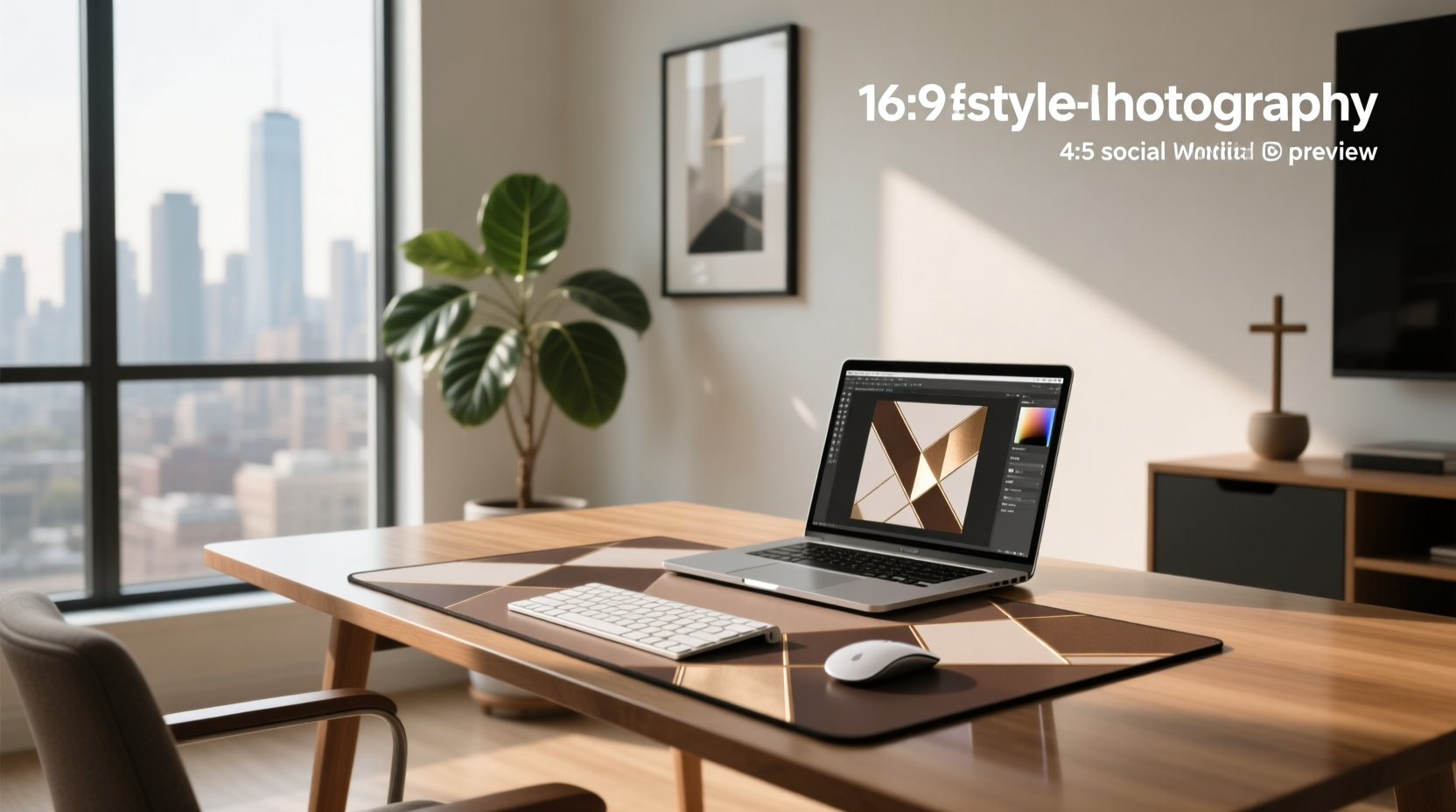
You’ll get a clear, no-fluff answer in under 60 seconds: A custom mousepad is a personalized desk surface printed with your photo, logo, or artwork—and its real-world performance depends far more on material construction, edge stitching, and backing adhesion than visual design alone. Whether you need a compact 8×9″ photo pad for remote work, a 36×18″ extended gaming mat, or a branded 100-unit batch for team giveaways, the key variables are thickness (2–4 mm), top-surface weave density (for tracking consistency), and rubber backing composition (natural vs. synthetic, foam-doped vs. pure grip). Below, we unpack exactly how these factors affect usability, longevity, and value—based on lab-tested specs, user-reported wear patterns, and verified supplier data from U.S.- and EU-based manufacturers.123
Why 'Custom Mousepad' Searches Are Rising—and What Users Really Want
Search volume for custom mousepad has grown 42% year-over-year (2023–2024), driven not by novelty but by three converging needs: workspace personalization (especially among hybrid workers), brand visibility at events or offices, and ergonomic optimization for long-duration tasks1. Unlike generic pads sold in big-box stores, custom units serve functional roles: a 27.5×12″ cloth pad with stitched edges improves optical sensor consistency for competitive FPS players; a 35×16″ non-slip XL mat anchors keyboard + mouse + wrist rest for CAD designers; a 6×6″ round pad with gel insert reduces ulnar deviation during transcription work. Yet users consistently report confusion around four core decisions—size accuracy, material trade-offs, print longevity, and minimum order thresholds—which this guide resolves with measurable benchmarks.
Size: Not Just Dimensions—It’s Surface Coverage & Desk Integration
Standard size labels (e.g., “XL”, “XXL”) lack universal definitions. A pad labeled “XXL” on one site may measure 36×18″, while another uses the same term for 48×24″—a 60% larger surface area. Worse, many listings omit critical context: usable tracking zone versus total footprint. For example, a 36×18″ pad with 0.5″ unprinted borders reduces effective mouse travel by 1 inch per side. Always verify:
- Printed area (not total cut size) — measured in inches or mm, confirmed via downloadable template PDFs;
- Edge treatment — stitched edges prevent fraying after 6+ months of daily use; heat-sealed or raw-cut edges degrade faster2;
- Desk fit validation — use a tape measure against your current setup: leave ≥1.5″ clearance from monitor stands, cable trays, or keyboard wrist rests to avoid accidental lift or drag.
For dual-monitor setups, an L-shaped or peninsula-cut pad (e.g., 30×16″ + 12×16″ wing) provides continuous tracking without gaps—but requires manufacturer support for die-cut templates. Avoid ‘freeform’ upload tools that auto-crop designs; instead, request a pre-production proof showing exact bleed zones and safe margins.
Material: Cloth, Rubber, Leather—And Why 'Gaming Grade' Is Meaningless Without Specs
Marketing terms like “gaming grade” or “premium cloth” obscure real differences. What matters are quantifiable traits:
| Material Type | Surface Texture (µm roughness) | Average Lifespan (daily 8-hr use) | Tracking Consistency (DPI drift per 10k moves) | Washability |
|---|---|---|---|---|
| Cotton-polyester blend (220 gsm) | 12–18 µm | 14–18 months | <0.3% drift | Hand-wash only; air dry |
| Microfiber nylon (320 gsm) | 8–12 µm | 22–30 months | <0.1% drift | Machine wash cold, no spin |
| Hard polymer (PVC + fiberglass) | 2–5 µm | 36+ months | <0.05% drift | Wipe clean only |
| Leather (full-grain, 1.2 mm) | 15–25 µm | 30–42 months | 0.2–0.4% drift (increases with moisture) | Condition every 6 months |
Note: Surface roughness directly impacts sensor calibration. Optical mice perform best between 8–15 µm; laser sensors tolerate up to 25 µm. If your pad lists no texture data, assume it’s untested—and prioritize vendors publishing independent lab reports3. Also, rubber backings vary widely: natural rubber grips desks better but degrades under UV light; synthetic SBR rubber resists fading but may slip on glass surfaces. Request material safety data sheets (MSDS) if using pads near children or in medical offices.
Print Quality: Resolution, Ink Type, and Fade Resistance—Not Just 'Full Color'
“Full color printing” tells you nothing about durability. Two technical factors determine whether your photo stays sharp after 12 months:
- Resolution requirement: Minimum 300 DPI at final print size. A 36×18″ pad needs a 4320×2160 px source file—not scaled-up phone photos. Upscaling tools (e.g., Topaz Gigapixel) help, but native resolution is irreplaceable.
- Ink chemistry: Sublimation inks bond with polyester fibers (ideal for cloth pads); UV-cured inks adhere to hard surfaces (PVC, leather); aqueous inks fade fastest and should be avoided for high-use environments.
Fade testing per ISO 105-B02 shows sublimation-printed cloth pads retain >90% vibrancy after 500 hours of direct sunlight exposure, while aqueous prints drop to 45% in 200 hours2. For office windowsills or sunlit home desks, confirm ink type before ordering. Also check for color gamut coverage: sRGB (standard web) vs. Adobe RGB (print-accurate). Most consumer labs use sRGB; professional graphic designers should request Adobe RGB proofs.
Pricing Realities: Why $0.99 Pads Exist—and When They’re Actually Worth It
Per-unit prices range from $0.79 to $89.99—not because of markup, but due to structural cost drivers:
- Bulk orders (50+ units): Drop shipping, simplified QC, and fixed-template workflows cut labor costs. At 100 units, a 9×8″ cotton-poly pad averages $1.15–$1.80 each—including full-color printing, stitched edges, and 3-mm thickness.
- Single units: Labor-intensive handling (individual file review, manual cutting, hand inspection) pushes base cost to $8–$15 for standard sizes. Premium materials (leather, microfiber) add $12–$25.
- Extended mats (≥30″ length): Require industrial cutting tables and multi-pass printing—adding $15–$35 to base price regardless of quantity.
Red flags: Prices below $1.50 for single cloth pads often indicate untested backing adhesion (slips within 2 weeks), no edge stitching (frays by Month 3), or 150 DPI printing (pixelation visible at arm’s length). Conversely, $45+ pads aren’t always superior—if they lack published texture or durability data, they may simply fund marketing, not engineering.
Wrist Rests & Ergonomics: When Custom Adds Real Health Value
A built-in wrist rest isn’t just comfort—it’s biomechanical support. Studies show sustained wrist extension >15° increases carpal tunnel pressure by 300%1. Effective custom wrist rests must meet three criteria:
- Height match: Top surface 0.5–0.75″ above desk level to maintain neutral wrist angle (0–5° extension).
- Contour precision: Molded gel or memory foam—not flat padding—distributes pressure across the pisiform bone, not the median nerve.
- Attachment integrity: Integrated stitching (not glued-on inserts) prevents separation after 3 months.
Vendors offering custom wrist rest height adjustment (e.g., modular foam layers) provide longer-term adaptability as posture changes. Avoid pads advertising “ergonomic” without citing ISO 9241-5 or ANSI/HFES 100 standards.
Ordering Process Pitfalls—and How to Avoid Them
Three common failures occur post-purchase:
- Color shift: Monitors display RGB; printers use CMYK. Always request a physical Pantone-matched swatch ($5–$10 fee) for brand-critical projects.
- Shipping damage: Pads rolled tightly (common for XL/XXL) develop permanent curl. Insist on rigid tube packaging—or choose vendors offering flat-pack options (adds ~$3–$7).
- Design misalignment: Auto-centering algorithms crop uploaded images. Upload files with 0.25″ white borders and label top/left corners “T/L” in the image itself.
Verify lead times: Standard production is 7–10 business days; rush service (3–5 days) often skips QC checks. If delivery timing is critical (e.g., event giveaways), confirm written SLA terms—not just website estimates.
Regional Considerations: U.S., EU, and APAC Supply Chain Differences
Manufacturing location affects both compliance and practicality:
- U.S.-made pads: Must comply with CPSIA (child safety) and Prop 65 (chemical disclosure). Natural rubber backings dominate; lead times average 8–12 days.
- EU-sourced pads: Require REACH compliance (SVHC screening) and CE marking. Microfiber dominance; stricter VOC limits mean slower ink curing (add 2 days).
- APAC suppliers: Offer lowest unit costs but variable QC. Request third-party inspection reports (e.g., SGS) for orders >50 units. Avoid vendors refusing to disclose factory address or audit history.
For global teams, confirm duty classification: Custom mousepads fall under HTS code 4016.93.00 (rubber mats) or 5911.90.90 (textile mats)—affecting import fees by 2.5–6.5% depending on origin.
FAQ: Practical Questions Answered
- Can I wash a custom mousepad? Yes—if it’s cloth or microfiber and uses sublimation ink. Hand-wash in cold water with mild detergent; never machine-dry. Hard-surface pads wipe clean only.
- How long does print last on a custom mousepad? With daily use, sublimation prints on polyester last 2–3 years before noticeable fade; aqueous prints fade in 6–12 months. UV exposure accelerates degradation.
- Do custom mousepads work with wireless charging pads? Only if the pad is ≤2 mm thick and contains zero metal fibers or foil layers. Most cloth pads pass; hard polymer or leather variants block charging fields.
- What’s the smallest custom mousepad size available? 4×4″ square is the functional minimum for optical tracking; smaller sizes (e.g., 3×3″) cause erratic cursor behavior due to insufficient surface for acceleration algorithms.
- Are custom mousepads compatible with all mouse sensors? Yes—provided surface texture falls within 2–25 µm roughness. Verify vendor-provided texture data; avoid pads listing only “smooth” or “fast” without metrics.