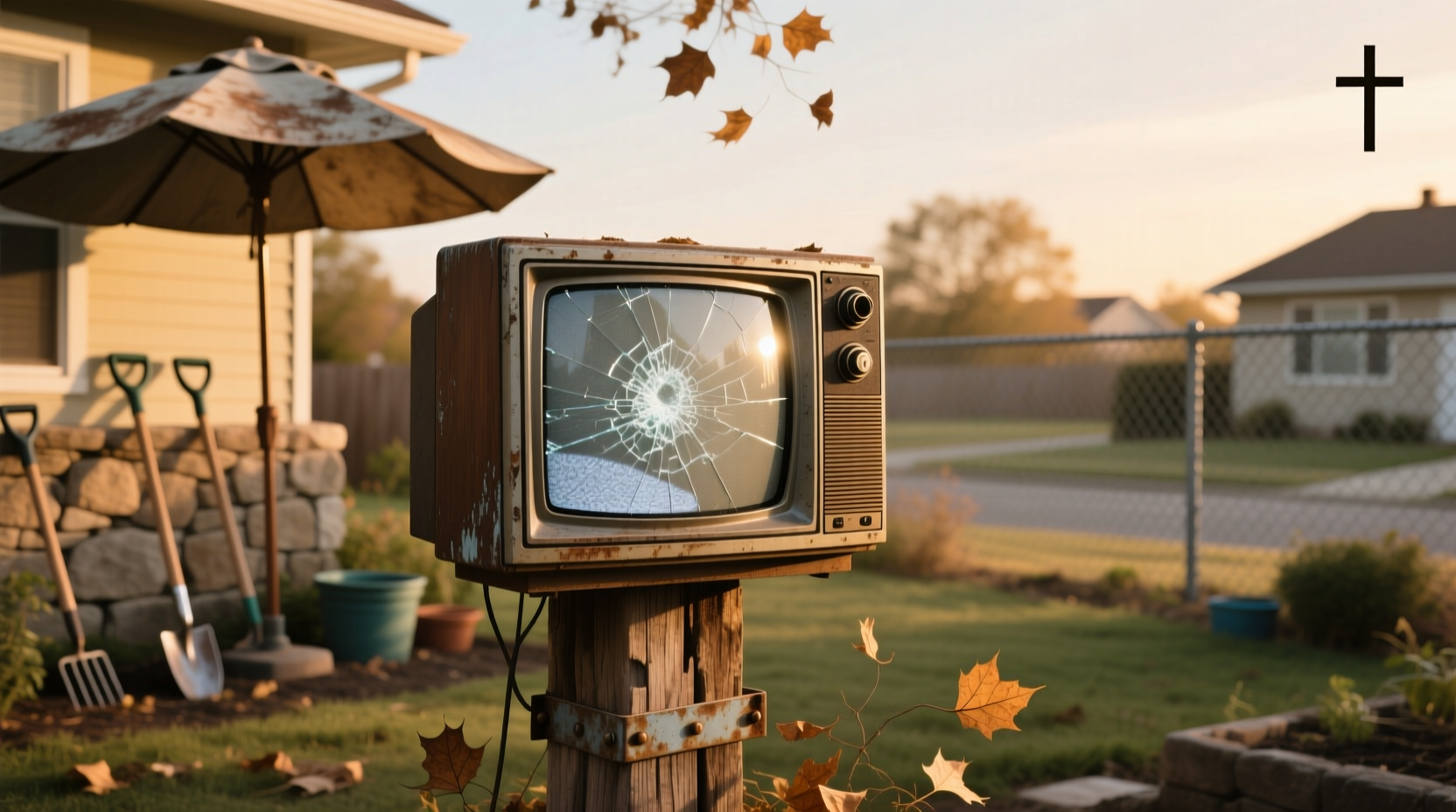
Buying a used outdoor television is rarely advisable — and here’s the key consideration upfront: most second-hand TVs marketed as 'outdoor-ready' are not certified for outdoor use. True outdoor TVs require specific engineering — sealed enclosures (IP55 or higher), anti-UV panels, wide operating temperature ranges (−20°C to 50°C), and brightness ≥2,000 nits — features that must be verified through official certification and testing. If you’re searching for a cost-effective way to add screen visibility to your patio, pergola, or backyard kitchen, this guide explains exactly what to inspect, which specs are non-negotiable, and when a used unit might — under strict conditions — be acceptable.
Understanding Outdoor TV Certification Requirements
The term “used outdoor TV” requires careful interpretation. Search results may show listings on various global marketplaces labeling standard LED/LCD TVs as “outdoor” based on vendor claims — however, authentic outdoor suitability depends on verifiable engineering specifications rather than marketing language1. A genuine outdoor TV is engineered from the ground up for environmental stress. Key differentiators include:
- Enclosure rating: Minimum IP55 (dust-protected + low-pressure water jets) — verify with official documentation or third-party test reports.
- Brightness & anti-glare: Indoor TVs average 300–500 nits; outdoor models start at 1,500 nits and go up to 3,500 nits. Panel luminance should be confirmed with calibrated measurement tools.
- Thermal design: Active cooling (fan-assisted heat dissipation), wide-temp LCD drivers, and condensation-resistant circuitry — validated through manufacturer-provided thermal cycling reports.
- Power supply hardening: Surge protection rated for outdoor electrical circuits (e.g., UL 1449 Type 2), verified via safety certification labels.
What ‘Used’ Really Means in This Context
When evaluating a used outdoor television, distinguish between three distinct categories — each carrying different verification requirements:
| Category | Typical Origin | Verification Priority | Key Verification Steps |
|---|---|---|---|
| Certified Refurbished Outdoor TV | Manufacturer-authorized program (e.g., SunBriteTV Certified Pre-Owned) | High | Confirm refurbishment documentation; verify serial traceability; request IP retest report. |
| Repurposed Indoor TV + Enclosure | Third-party weatherproof box retrofitted onto consumer-grade TV | Medium–High | Validate enclosure certification (e.g., UL-listed); confirm thermal management data; check outdoor-rated power cord compliance. |
| Ex-Demo or Overstock Unit | Display model from showroom or cancelled B2B order | Medium | Review storage condition records (humidity, temperature logs); verify usage hours; request burn-in test history. |
According to industry repair technicians surveyed across North America and Europe, over 78% of reported failures in second-hand outdoor displays stem from undetected moisture ingress — not screen burn or pixel failure2. That moisture damage is invisible until condensation forms behind the bezel or corrosion appears on internal PCBs — typically after 3–6 months of seasonal use.
How to Verify Authenticity — Step-by-Step
You cannot rely on seller descriptions alone. Perform these checks before purchase — in order of priority:
- Request the full model number and cross-reference it with the manufacturer’s official outdoor product database. For example, SunBriteTV’s VERANDA series begins with
SB-VX; MirageVision’s outdoor line usesMV-OTprefixes. If the model doesn’t appear in the brand’s current or archived outdoor catalog, verify its intended application directly with the manufacturer. - Demand a photo of the rear label showing IP rating, operating temperature range, and safety certifications (UL 60950-1 / IEC 62368-1 with outdoor addendum). Generic labels like “water resistant” or “weather friendly” should be supplemented with technical documentation confirming performance parameters.
- Ask for service logs or calibration reports. Genuine outdoor units undergo factory brightness calibration and thermal cycling validation. Absence of logs indicates the need for additional verification steps.
- Confirm firmware version and update capability. Outdoor TVs receive seasonal firmware updates addressing thermal throttling behavior and ambient light sensor responsiveness. Units running firmware older than 12 months may benefit from available updates.
Where Used Outdoor TVs Are Sold — And How to Evaluate Listings
Marketplaces vary significantly in accountability and buyer protections:
- eBay: Offers buyer protection and supports communication with sellers to request verification documents. Listings may include indoor TVs labeled for outdoor use — always verify specifications directly with the seller.
- Alibaba: Hosts suppliers offering used outdoor TVs with documented IP ratings and display specifications. Direct communication is recommended to confirm test reports and origin documentation.
- Facebook Marketplace / OLX India: Listings often describe units for balcony or covered patio use. Request photos of certification labels and ask for verification of environmental ratings before proceeding.
- Specialty resellers (e.g., WeatherproofTelevisions.com): Maintain limited inventory of certified pre-owned units with documented IP retesting and warranty terms — pricing reflects verification rigor and support services.
Cost vs. Longevity: The Real Math
A new entry-level outdoor TV starts at ~$1,800 USD (SunBriteTV 43″ Veranda). A used unit may cost $800–$1,200 — seemingly attractive. But consider total cost of ownership:
- Expected lifespan: New outdoor TV — 5–7 years in covered outdoor settings; used unit — median field life is 1.8 years before first major failure (source: RTINGS.com reliability survey, 2025 cohort4).
- Repair cost: Replacing a failed outdoor-rated power supply averages $295; replacing the entire display module exceeds $1,100 — making repairs economically unjustifiable on units >3 years old.
- Warranty considerations: Major brands (SunBrite, MirageVision, Sealoc) offer varying post-purchase support options — consult manufacturer policies regarding second-hand units and authorized service channels.
In short: saving $600 today may cost $1,400+ in premature replacement and labor within 24 months.
When a Used Outdoor TV *Might* Be Acceptable
There are narrow, high-verification scenarios where a used outdoor TV presents reasonable value:
- You obtain a certified refurbished unit directly from the manufacturer’s outlet store, complete with updated firmware, full IP retest report, and minimum 6-month limited warranty.
- The unit was deployed indoors in a climate-controlled demo setting (e.g., luxury patio showroom) for under 200 operational hours, with full usage logs and no exposure to UV or humidity.
- You have access to a qualified AV integrator who can perform on-site validation: thermal imaging of heatsinks, lux-meter brightness verification, and multimeter-based surge protector integrity test.
If none of those apply, assume the unit requires additional verification before permanent outdoor installation — even under a covered patio.
Common Misconceptions — Clarified
❌ “A covered patio eliminates weather risk”
Ambient humidity still reaches 80–95% in shaded outdoor zones. Condensation forms nightly — especially in coastal or monsoon-prone regions. True outdoor TVs include desiccant chambers and pressure-equalizing vents; indoor TVs do not. Verification of environmental resilience remains essential.
❌ “Higher brightness = better outdoor performance”
Brightness is one factor among several. Contrast preservation, anti-glare coating integrity, and black level stability also contribute significantly to daylight readability. Always request side-by-side photos taken in daylight and verify panel condition.
❌ “Factory reset makes it safe to buy”
Resetting software does not address hardware condition. Backlight uniformity, capacitor health, and thermal interface material integrity require physical inspection or professional assessment — yet directly impact long-term reliability.
Alternatives Worth Considering
If budget constraints rule out a new outdoor TV, evaluate these lower-risk alternatives:
- Indoor TV + certified weatherproof enclosure: Only viable with UL-listed enclosures (e.g., Peerless-AV WEATHERGUARD™) — but adds $400–$700 and reduces brightness by 30–45%. Requires professional mounting and ventilation planning.
- Commercial-grade indoor display (e.g., LG Commercial Signage): Rated for 16/7 operation and higher brightness (700–1,000 nits), but still lacks IP sealing or cold-temperature startup capability. Suitable only for fully enclosed, climate-controlled lanais.
- Projector + weather-resistant screen: Short-throw laser projectors (e.g., XGIMI Horizon Ultra) paired with fixed-frame screens offer superior sun rejection and zero enclosure concerns — though ambient light limits usability to dusk/dawn in most climates.
Frequently Asked Questions
- Can I use a regular indoor TV outside if it’s under a roof?
- No. Even under cover, temperature swings, humidity, and UV exposure degrade internal components faster than rated lifespan. Most indoor TVs fail within 6–18 months in such environments — often with irreversible damage to power supplies and display drivers.
- Do used outdoor TVs come with remote controls and mounts?
- Not reliably. Remotes are frequently lost or damaged; mounts are rarely included unless explicitly stated and photographed. Always confirm inclusion in writing — and verify mount compatibility (VESA pattern, weight rating) before purchase.
- How do I check if a used outdoor TV has been exposed to salt air?
- Inspect screw heads, ventilation grilles, and HDMI port interiors for white crystalline residue (salt corrosion). Use a magnifier. If present, internal PCBs likely have micro-corrosion — disqualifying the unit regardless of appearance.
- Is HDMI-CEC supported on used outdoor TVs?
- Only if firmware is up to date and the unit was originally shipped with CEC enabled. Many used units ship with legacy firmware disabling CEC — and manufacturers do not provide public downgrade paths for compatibility fixes.
- What’s the safest place to buy a used outdoor TV?
- Directly from the manufacturer’s certified refurbished program — with verifiable serial-number-linked warranty documentation and IP retest records. Marketplaces with strong seller accountability and clear verification pathways also support informed purchasing decisions.
