Over the past year, demand for standardized 4x240mm² low-voltage power cables has risen sharply—not because specs changed, but because more engineers, contractors, and industrial procurement teams are sourcing directly from global manufacturers instead of relying solely on local distributors. If you’re a typical user, you don’t need to overthink this: for fixed indoor or outdoor installations up to 1 kV, XLPE-insulated copper cables with Class 5 flexible conductors and PVC sheathing (e.g., RZ1-K or NYY type) deliver the best balance of safety, longevity, and ease of termination. Avoid aluminum-core variants unless your project explicitly requires cost-driven overhead or buried feeders—and never substitute 4x240mm² for undersized alternatives in main distribution runs. This piece isn’t for keyword collectors. It’s for people who will actually use the product.
🔍About 4x240mm² Cables: Definition & Typical Use Cases
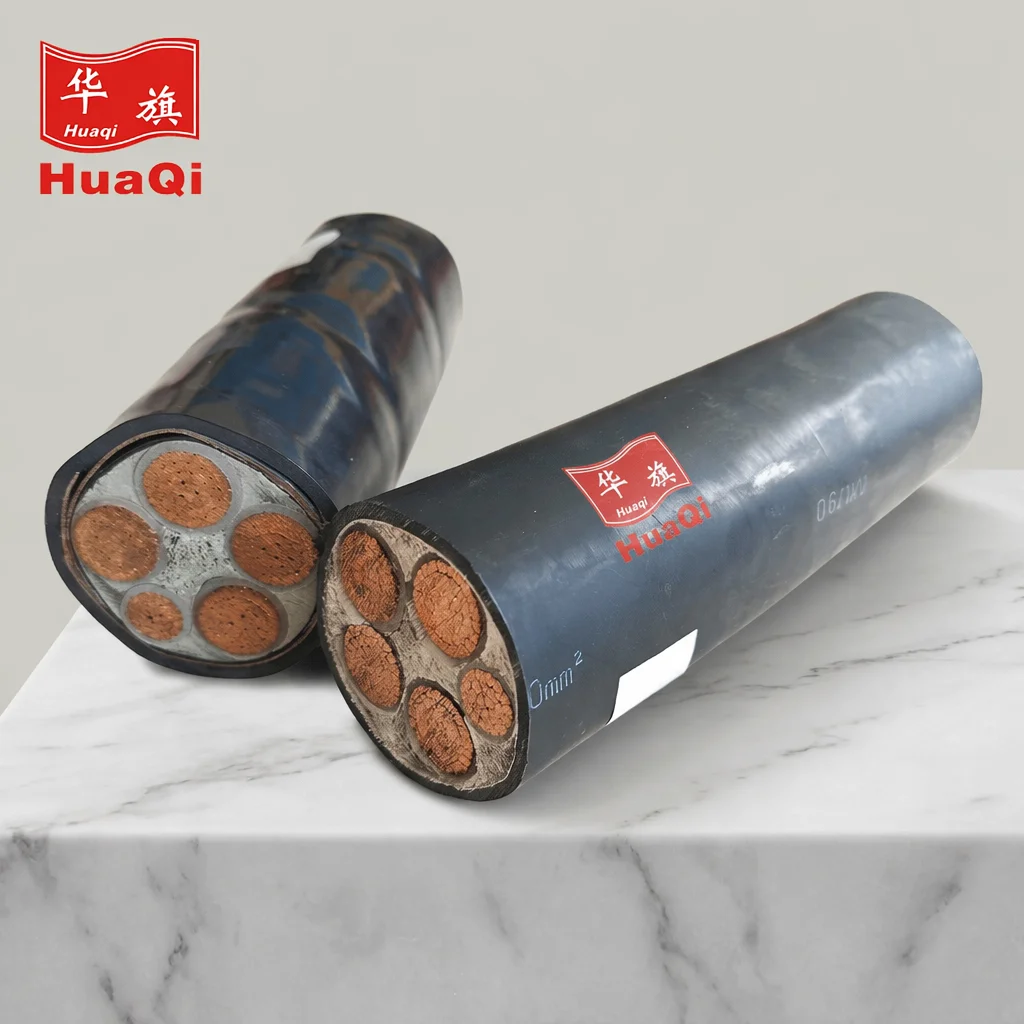
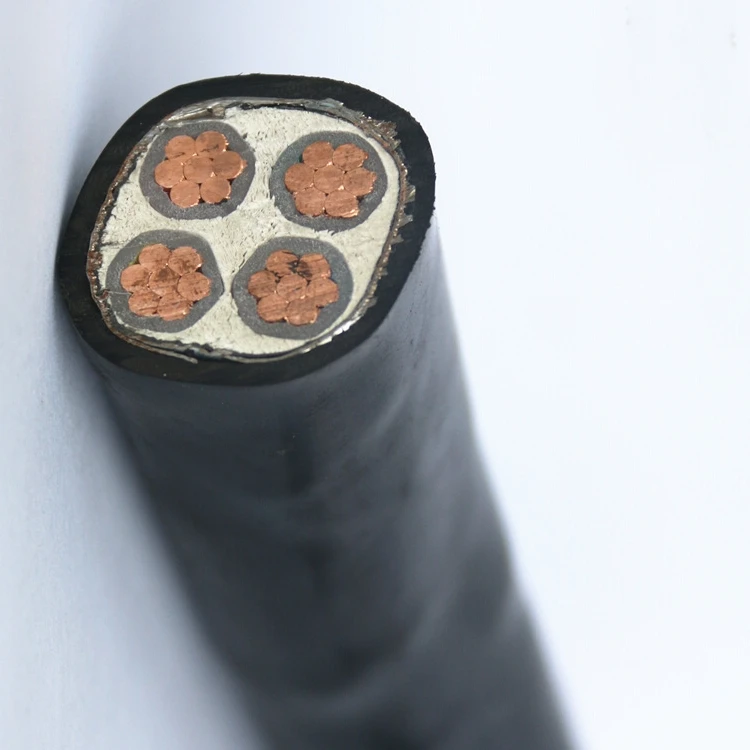
A 4x240mm² cable refers to a multi-core power cable with four insulated conductors, each having a nominal cross-sectional area of 240 square millimeters. The ‘4x’ denotes core count; ‘240mm²’ specifies conductor size—not overall diameter. These cables carry medium-to-high current loads (typically 300–500 A depending on installation method and ambient conditions) and are used almost exclusively in low-voltage (0.6/1 kV) fixed installations.
Common applications include:
- Secondary distribution from transformers to main switchboards in commercial buildings and factories;
- Underground feeders to substations or large HVAC systems;
- Cable tray or conduit runs in industrial plants where mechanical protection and thermal stability matter;
- Outdoor lighting networks and renewable energy interconnections (e.g., solar farm AC collection).
They are not intended for portable equipment, data transmission, or signal integrity tasks. Their role is purely power delivery—robust, reliable, and code-compliant.
📈Why 4x240mm² Cables Are Gaining Popularity
Lately, two converging trends have elevated the visibility of 4x240mm² cables beyond traditional electrical contracting circles:
- Decentralized infrastructure projects: Microgrids, EV charging hubs, and modular data centers increasingly require standardized, high-capacity feeder cables that integrate seamlessly with IEC-compliant panels and busbars.
- Global supply chain transparency: Platforms like Alibaba and TME now list certified 4x240mm² products with full technical sheets—including test reports per IEC 60502-1, flame-retardancy class (IEC 60332), and temperature ratings—making direct comparison feasible without local rep involvement.
That said, popularity doesn’t equal universality. If you’re installing a single 30A subcircuit in a residential garage, 4x240mm² is excessive—and costly. When it’s worth caring about: you’re sizing feeders for >250 kVA loads or running >30 meters in bundled configuration. When you don’t need to overthink it: you’re replacing a damaged segment in an existing 4x240mm² run—match the original spec exactly.
⚙️Approaches and Differences: Common Cable Types Compared
Not all 4x240mm² cables perform alike. Key structural differences drive suitability—not just price. Below are five widely available configurations:
- NYY (PVC insulated, PVC sheathed): Economical, UV-resistant, suitable for direct burial or cable trays. Lower thermal rating (70°C) than XLPE options. Best for general-purpose fixed wiring where budget constraints dominate.
- RZ1-K / Afirenas (XLPE insulated, PVC sheathed): Higher thermal endurance (90°C continuous), better short-circuit performance, superior dielectric strength. Preferred for critical infrastructure and tighter bending radius needs.
- XLPE/SWA/PVC (Steel Wire Armored): Adds mechanical protection for underground or rodent-prone areas. Heavier, harder to terminate, and requires grounding the armor. Worth specifying only if physical damage risk is confirmed—not as default.
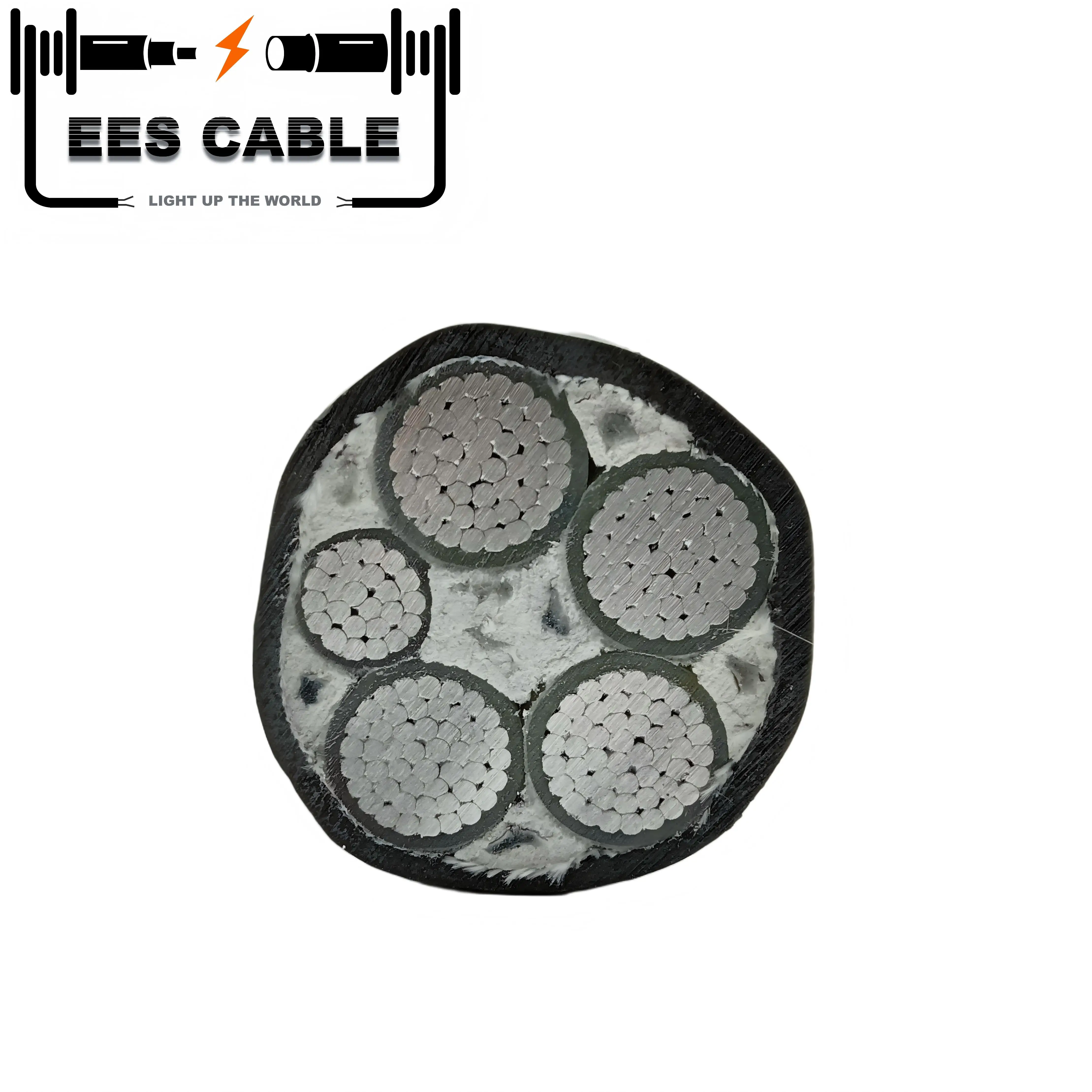
- Aluminum-conductor variants (e.g., 4x240mm² Al): ~35% lighter and ~50% cheaper than copper—but require larger lugs, stricter torque control, and derating (≈20% lower ampacity). Only justified for long overhead spans or municipal budgets with strict CAPEX caps.
- Low-smoke zero-halogen (LSZH) versions: Used in confined spaces (tunnels, hospitals, transport hubs) where toxic fumes during fire are unacceptable. Higher cost and slightly reduced flexibility—but non-negotiable where mandated by fire codes.
If you’re a typical user, you don’t need to overthink this: for most indoor industrial or commercial feeders, RZ1-K (XLPE/PVC) offers the optimal blend of performance, availability, and installer familiarity.
📋Key Features and Specifications to Evaluate
Selecting a 4x240mm² cable isn’t about ticking boxes—it’s about verifying which parameters directly impact your installation’s safety margin and service life. Prioritize these four:
- Conductor class: Class 1 = solid; Class 2 = stranded; Class 5 = fine-stranded flexible. For 240mm², Class 5 is standard—and essential for bending into tight trays or terminations. When it’s worth caring about: conduit entries with multiple 90° bends. When you don’t need to overthink it: straight horizontal tray runs.
- Insulation material & temperature rating: XLPE supports 90°C vs. PVC’s 70°C. That 20°C difference allows ≈15% higher ampacity under identical conditions. Critical for summer peak loads or poorly ventilated ducts.
- Voltage rating: Always verify ‘0.6/1 kV’—not just ‘1 kV’. The slash indicates phase-to-phase (1 kV) and phase-to-earth (0.6 kV) capability. Mismatched ratings cause insulation failure under transient surges.
- Flame propagation class: IEC 60332-1 (single cable) vs. IEC 60332-3 (bundled). Most modern projects require at least Category A (bundled test). Don’t assume ‘flame retardant’ means compliant—check the certificate.
✅❌Pros and Cons: Balanced Assessment
Pros:
- Proven ampacity for 300–450 A (depending on installation method and ambient temp);
- Wide global availability—no long lead times for standard variants;
- Compatibility with common lug kits, busbar connectors, and DIN-rail mounting hardware;
- Long service life (>25 years) when installed per IEC 60364 and manufacturer guidelines.
Cons:
- Significant weight (~12–15 kg/m): requires mechanical assistance for handling and pulling;
- Minimum bending radius ≈15× outer diameter (≈300–350 mm): limits routing in compact enclosures;
- No inherent EMI shielding: unsuitable for parallel runs with sensitive instrumentation cables without separation or conduit;
- Termination demands precision: improper crimping or torque causes hot spots and premature failure.
If you’re a typical user, you don’t need to overthink this: weight and bend radius are logistical—not technical—constraints. Plan lifting and routing early; they rarely derail projects when anticipated.
🛠️How to Choose a 4x240mm² Cable: Step-by-Step Decision Checklist
Follow this sequence—not in order of preference, but in order of consequence:
- Confirm load requirements first: Calculate actual design current (Ib) using IEC 60364-5-52 tables—not nameplate ratings. Derate for ambient >30°C or grouping >3 circuits.
- Define installation environment: Buried? In air? In tray? In conduit? Each changes ampacity and required protection (e.g., SWA for burial).
- Verify regulatory compliance: Local wiring rules (NEC Article 310, IEC 60364, BS 7671) may mandate specific insulation or armor—even if technically unnecessary.
- Select conductor material: Copper unless aluminum is explicitly approved and budget-justified. Never mix materials in one circuit.
- Pick insulation & sheath: XLPE + PVC for most cases; LSZH where fire toxicity matters; SWA only where mechanical risk is documented.
- Avoid these three common errors: (1) Assuming ‘240mm²’ means same diameter across brands—actual OD varies ±12%; (2) Using generic lugs not rated for 240mm² Class 5 copper; (3) Skipping megger testing before energization.
💰Insights & Cost Analysis
Based on aggregated supplier data (TME, Nexans Centelsa, Hongda Cable, Anyo Electric), landed unit costs for 100-meter reels range as follows:
| Type | Typical Price (USD/100m) | Key Trade-off |
|---|---|---|
| NYY (Cu, PVC/PVC) | $1,100–$1,400 | Lower ampacity; wider availability |
| RZ1-K (Cu, XLPE/PVC) | $1,350–$1,750 | Better thermal margin; dominant in EU/LATAM |
| XLPE/SWA/PVC | $1,900–$2,400 | Armor adds weight & termination complexity |
| Aluminum 4x240mm² | $750–$950 | Requires re-engineering of terminations & protection |
The $300–$400 premium for XLPE over PVC pays back in extended thermal headroom and reduced derating—especially in tropical climates or enclosed plant rooms. If you’re a typical user, you don’t need to overthink this: pay the XLPE premium unless your project timeline forces a last-minute PVC-only order.
🌐Better Solutions & Competitor Analysis
For most users, 4x240mm² remains the pragmatic sweet spot between capacity and manageability. But alternatives exist—and merit evaluation in context:
| Solution | Fit-for-Purpose Advantage | Potential Issue | Budget Relative to 4x240mm² |
|---|---|---|---|
| Busbar trunking system | Higher fault current rating; easier future expansion | Higher upfront cost; requires dedicated support structure | +40–70% |
| Two parallel 4x120mm² runs | Improved redundancy; easier handling & bending | Doubling terminations increases failure points; imbalance risk if not perfectly matched | ≈Same |
| 4x240mm² with integrated monitoring (e.g., temperature sensors) | Real-time thermal insight; predictive maintenance | Niche availability; adds 25–35% cost; limited installer familiarity | +25–35% |
📣Customer Feedback Synthesis
Across distributor reviews (TME, Grupo Yanper, Anyo Electric) and B2B forums, recurring themes emerge:
- Top praise: “Consistent lay length and smooth sheath extrusion make pulling into trays effortless.” “Markings stay legible after 6 months onsite.” “No cold flow issues during compression termination.”
- Frequent complaints: “Reel labeling mismatched actual meterage (short by 2–3 m).” “PVC sheath cracked after 4 weeks of sun exposure—despite ‘UV resistant’ claim.” “Lug compatibility charts omitted from datasheet.”
These aren’t defects—they’re specification gaps. Always validate reel length upon receipt, confirm UV rating applies to *your* exposure duration, and cross-check lug compatibility *before* ordering.
🔒Maintenance, Safety & Legal Considerations
Maintenance: 4x240mm² cables require minimal routine maintenance—but visual inspection every 24 months is recommended. Look for sheath cracking, discoloration near terminations, or corrosion on armor (if present).
Safety: Always de-energize and lockout/tagout before inspection. Megger test insulation resistance (>100 MΩ @ 1 kV DC) before commissioning and after any physical disturbance.
Legal: Compliance isn’t optional. In the EU, CE marking per EN 50525-2-21 is mandatory. In LATAM, INEN or NOM-001-SEDE apply. In the U.S., UL 83 or UL 44 listing is required for most commercial uses. No ‘equivalent’ or ‘similar’ substitutes accepted in audits.
🎯Conclusion: Conditional Recommendation Summary
If you need a robust, globally supported, code-compliant feeder for fixed 0.6/1 kV distribution—choose RZ1-K (XLPE/PVC) copper, Class 5, 4x240mm². It delivers the widest safety margin, strongest thermal resilience, and highest installer confidence.
If your project mandates cost control and permits aluminum, specify 4x240mm² Al *only* with verified lug kits, torque procedures, and 20% ampacity derating—and involve your protection engineer early.
If physical damage risk is proven (e.g., direct burial in agricultural land with digging activity), add SWA—but budget for heavier labor and grounding verification.
This piece isn’t for keyword collectors. It’s for people who will actually use the product.