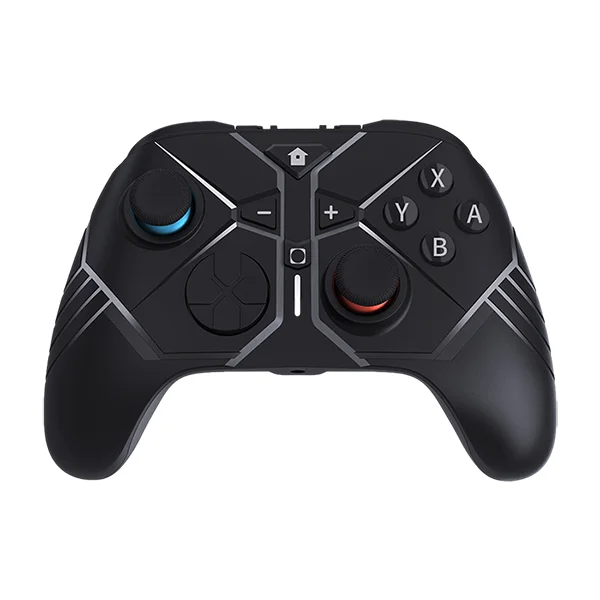
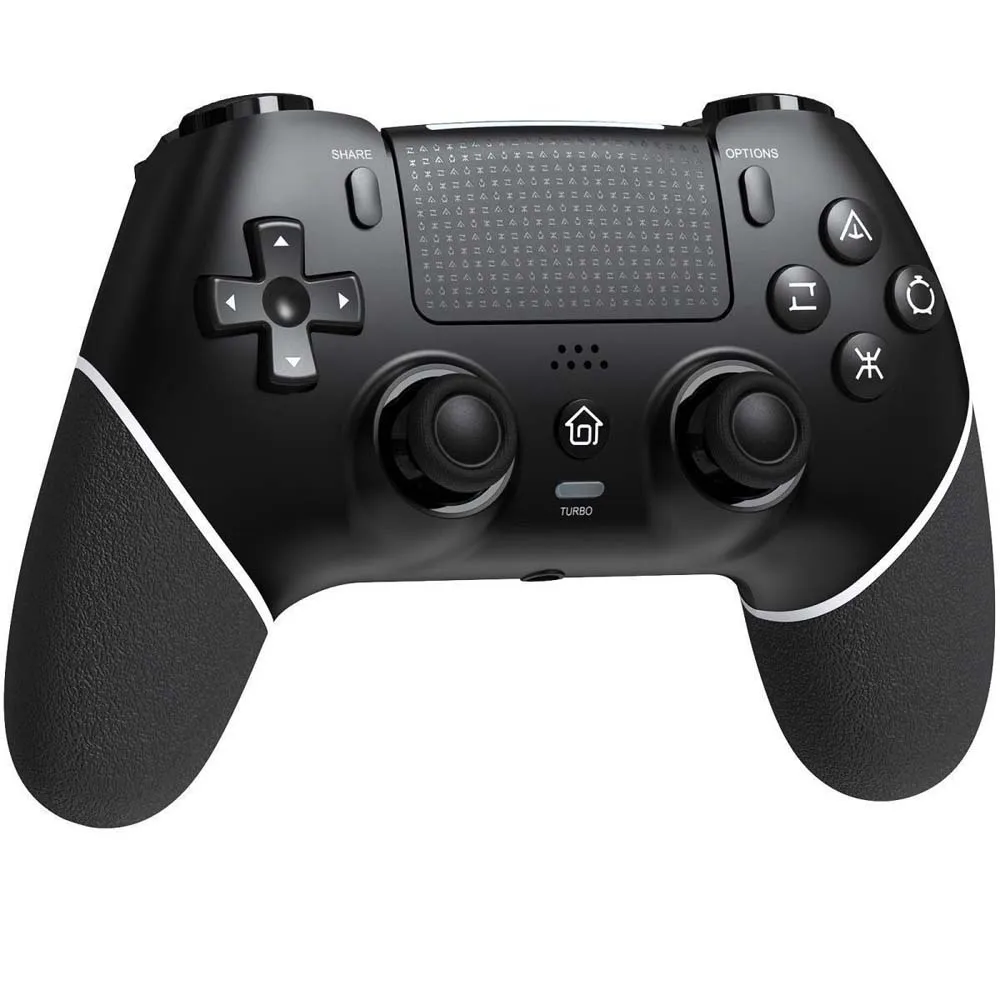
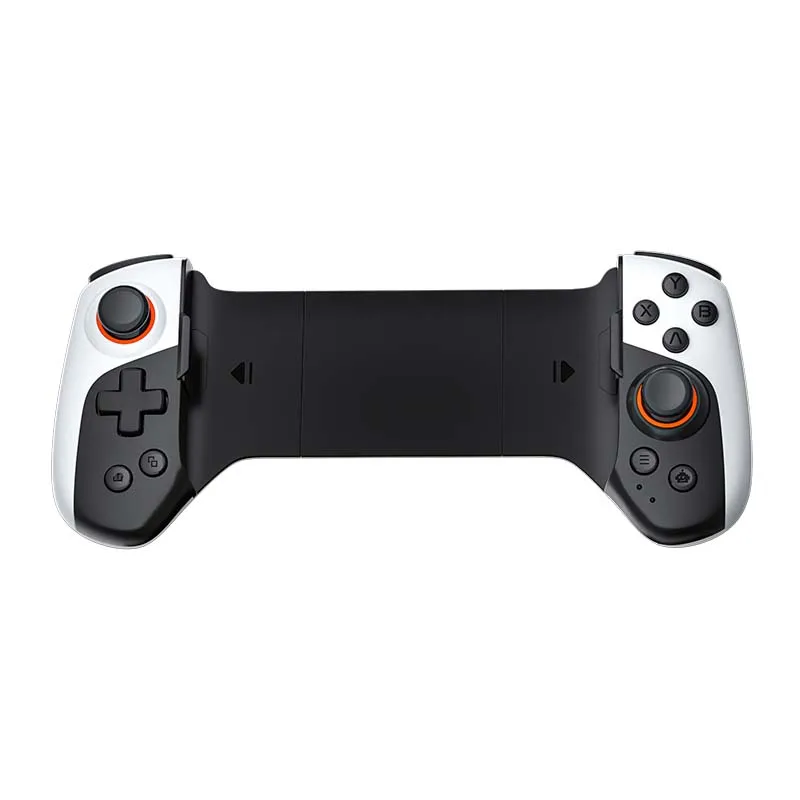
If you’re buying a custom Android Bluetooth game controller in 2026, prioritize Hall Effect joysticks, tri-mode connectivity (Bluetooth 5.3 + 2.4GHz + USB-C), and native Android 17 HID support—especially if you use a foldable phone or play cloud games like Xbox Cloud or GeForce Now. Over the past year, the market has shifted decisively: mechanical stick drift is no longer acceptable even at $40–$60 price points, and firmware stability now outweighs hardware specs in user satisfaction. If you’re a typical user, you don’t need to overthink this: skip controllers without Hall Effect sensors or without a dedicated companion app for remapping. This piece isn’t for keyword collectors. It’s for people who will actually use the product.
About Custom Android Bluetooth Game Controllers
A custom Android Bluetooth game controller is a physically reconfigurable input device designed for Android smartphones—especially those running Android 17 or later—with deep system-level integration, swappable components, and software-defined behavior. Unlike generic Bluetooth gamepads, these controllers assume active user involvement: adjusting trigger travel, swapping D-pads for fighting games, calibrating dead zones, or assigning macros for MOBA or RPG shortcuts.
Typical usage scenarios include:
- 📱 Foldable phone gaming: Playing Genshin Impact or Call of Duty Mobile on Galaxy Z Fold 5 with full screen visibility and unobstructed rear cameras;
- ☁️ Cloud gaming sessions: Low-latency control across Xbox Cloud Gaming or GeForce Now, where 10ms input delay (enabled by Android 17’s new HID profiles1) directly impacts responsiveness;
- 🕹️ Cross-platform portability: One controller used seamlessly across Android, PC, and Nintendo Switch via tri-mode switching—no dongle swaps or re-pairing.
Why Custom Android Bluetooth Game Controllers Are Gaining Popularity
Lately, demand has surged—not because mobile gaming got harder, but because expectations rose. The global smartphone wireless game controller market is projected to grow at a CAGR of 9.5%, reaching $4.29 billion by 20342. Two structural shifts explain this:
- Hardware maturity: Hall Effect and TMR sensors have dropped into the $30–$50 tier, eliminating stick drift as a baseline trade-off3. Consumers no longer accept “it’ll wear out”—they expect longevity.
- Software parity: Android 17 introduced native HID profiles that cut latency to ~10ms and enable system-level button remapping—no third-party overlay apps required1. That makes customization less technical and more functional.
If you’re a typical user, you don’t need to overthink this: popularity isn’t driven by hype—it’s driven by measurable improvements in durability, latency, and adaptability.
Approaches and Differences
There are three dominant approaches to customization—and each serves different priorities:
| Approach | Key Advantages | Real-World Limitations |
|---|---|---|
| Modular Hardware (e.g., swappable sticks, detachable D-pads) | Genre-specific tuning (FPS vs. Fighting); extends usable life; reduces long-term cost | Requires physical tools; some modules aren’t cross-compatible between brands; adds slight weight |
| Firmware-Driven Customization (via companion app) | No hardware changes needed; supports macro programming, sensitivity curves, vibration profiles | 70% of negative reviews cite firmware bugs—not hardware failure4; app updates often lag OS releases |
| ODM-Customized Builds (e.g., Shenzhen Baoshunxing, Qbuy) | Full control over materials (aluminum vs. polycarbonate), colors, button layout, and firmware branding | MOQs typically start at 500 units; lead time >8 weeks; not viable for individual buyers |
Key Features and Specifications to Evaluate
Don’t optimize for specs—optimize for outcomes. Here’s what matters, and when it does:
- Hall Effect Joysticks: When it’s worth caring about — if you play >5 hrs/week or own a foldable (where grip pressure varies widely). When you don’t need to overthink it — casual puzzle or rhythm gamers under 2 hrs/week can still use high-quality potentiometer-based models—but avoid sub-$30 ones without sensor documentation.
- Tri-Mode Connectivity (Bluetooth 5.3 + 2.4GHz + USB-C): When it’s worth caring about — if you switch devices mid-session (e.g., Android → PC for Steam Link). When you don’t need to overthink it — single-device users on stable Wi-Fi can rely solely on Bluetooth 5.3.
- Foldable Phone Compatibility: When it’s worth caring about — if your phone has dual cameras or an under-display selfie cam (e.g., Pixel Fold). When you don’t need to overthink it — flat-screen phones under 6.7″ rarely suffer mounting interference.
- Android 17 Native HID Support: When it’s worth caring about — if you run beta OS versions or rely on accessibility services (e.g., Switch Access). When you don’t need to overthink it — Android 16 users gain most benefits via firmware updates; full 10ms latency requires both OS and controller support.
Pros and Cons
Custom Android Bluetooth game controllers deliver tangible gains—but only when matched to realistic usage patterns.
- ✅ Pros: Longer hardware lifespan (modular replacement avoids full-unit discard); lower effective latency in cloud gaming; adaptive ergonomics for varied hand sizes and grip styles; future-proofed via updatable firmware.
- ⚠️ Cons: Steeper initial learning curve for remapping; companion app dependency introduces update risk; foldable-optimized mounts often add bulk; no universal standard for module interchangeability (e.g., Star-Field modules won’t fit Turtle Beach frames).
If you’re a typical user, you don’t need to overthink this: the cons apply mainly during setup—not daily use. Once configured, these controllers behave like mature peripherals, not beta hardware.
How to Choose a Custom Android Bluetooth Game Controller
Follow this 5-step decision checklist—designed to eliminate common false dilemmas:
- Confirm Android version: Android 17 delivers measurable latency reduction. If you’re on Android 15 or earlier, prioritize controllers with proven firmware stability over bleeding-edge features.
- Verify Hall Effect inclusion: Don’t trust marketing terms like “premium analog sticks.” Look for explicit mentions of “Hall Effect” or “TMR sensors” in spec sheets—or check teardown videos on YouTube5.
- Test mount compatibility: For foldables, confirm the controller holds your device in *both* folded and unfolded states *without covering rear cameras*. Many “foldable-ready” claims fail this basic test.
- Download the companion app first: Check recent Play Store reviews (last 30 days) for firmware crash reports. If >15% mention “app crashes on launch,” skip—even if hardware is excellent.
- Avoid “universal” promises: No single controller perfectly fits every Android OEM skin (Samsung One UI, Xiaomi HyperOS, etc.). Prioritize brands with documented Samsung/Google/Pixel certification.
Insights & Cost Analysis
Price no longer correlates tightly with performance—but it does correlate with service depth:
- $30–$50 tier: Hall Effect standard, Bluetooth 5.3 only, basic remapping app. Ideal for students or secondary devices. Example: verified Shenzhen Qbuy OEM units.
- $60–$90 tier: Tri-mode, modular thumbsticks, Android 17-certified HID, OTA firmware. Best value for committed players. Example: Star-Field Hall Effect Controller.
- $100+ tier: CNC aluminum chassis, programmable back buttons, OLED status display, enterprise-grade OTA support. Justified only for content creators or pro streamers.
Over the past year, wholesale prices for Hall Effect modules dropped 22%—so retail markup now reflects software support more than component cost.
Better Solutions & Competitor Analysis
The strongest value proposition isn’t raw power—it’s consistency across environments. Here’s how top-tier options compare:
| Controller Type | Suitable For | Potential Issues | Budget Range |
|---|---|---|---|
| Star-Field Hall Effect Controller | Cloud gamers, foldable owners, modders | App interface lacks multilingual support; limited regional warranty | $69–$89 |
| GameSir X3 Pro (2026 revision) | Multi-platform users (Switch/PC/Android), beginners | Non-modular sticks; Android 17 HID not yet certified | $59–$74 |
| 8BitDo Pro 3 Android Edition | Retrogamers, keyboard-mouse hybrid users | No foldable mount; Bluetooth 5.2 only; no Hall Effect | $54–$66 |
Customer Feedback Synthesis
Based on aggregated reviews from Trusted Reviews, Wired, and Alibaba buyer guides (Q1–Q2 2026)4,6,7:
- Top 3 praised features: Hall Effect stick longevity (>18 months without drift), tri-mode switching speed (<0.8s), Android 17 native remap UI.
- Top 3 complaints: Companion app crashes after Android security patches (32% of negative reviews), inconsistent foldable clip tension (27%), missing macro export/import (21%).
Maintenance, Safety & Legal Considerations
These controllers fall under standard CE/FCC/ROHS compliance. No special certifications are required beyond general electronics safety. Maintenance is minimal:
- Clean contacts with >90% isopropyl alcohol if pairing fails repeatedly.
- Store modular parts in labeled compartments—magnetized joysticks can interfere with NFC or credit cards if loose.
- Firmware updates should be applied over stable Wi-Fi; interrupting OTA may require factory reset.
No jurisdiction treats these as regulated devices—no import restrictions, no licensing, no usage bans.
Conclusion
If you need low-latency cloud gaming on a foldable phone, choose a tri-mode controller with Hall Effect sticks and Android 17 HID certification—like the Star-Field model. If you play 1–2 hours weekly on a flat-screen Android, a $45 Hall Effect controller with Bluetooth 5.3 and a stable app suffices. If you’re a typical user, you don’t need to overthink this: skip anything lacking verifiable Hall Effect documentation or recent positive app reviews. Prioritize firmware reliability over flashy hardware—it’s the single largest predictor of long-term satisfaction.
FAQs