Cell Chinese Tv

Overview
Product sourcing insights & recommendations
The phrase "cell chinese tv" primarily refers to "Open Cell" technology—the core LCD/MiniLED panel without its backlight—which accounts for 45% to 60% of a TV's production cost Iconnect007.
The Chinese TV market in 2026 is characterized by a major shift toward ultra-large screens (>75 inches) and MiniLED technology, driven by vertical supply chain integration from brands like TCL and Hisense CkgsbCounterpointresearch. Domestic government subsidies of up to 20% have further accelerated this trend, encouraging consumers to trade in older models for energy-efficient, high-performance sets Informa. Currently, Chinese manufacturers control 42% of the global TV market, aggressively challenging traditional leaders like Samsung Alibaba.
Detailed market data, brand strategies, and pricing for high-performance MiniLED TVs are provided in the report below.
I have analyzed the market trends for 'cell chinese tv'. You can now:
Lcd Tv Open Cell Panels Wholesale
Products · 2 lists
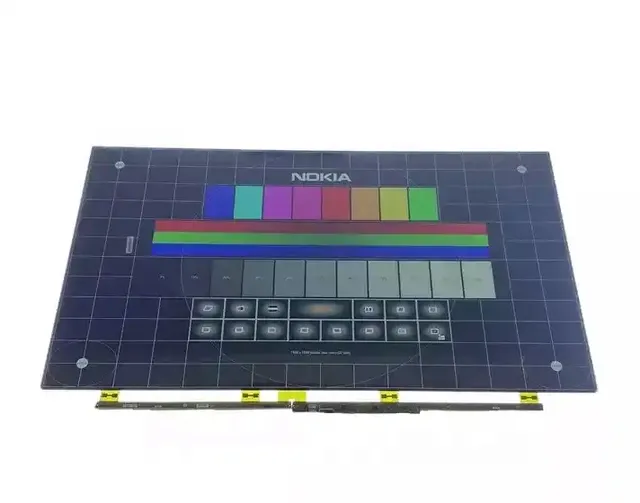
43 Inches New Original Screen Panel LCD TV Display Panel LCD TV for TV Monitor
 Guangdong Rixian Technology Co., Ltd.verified🇨🇳CN3 yrs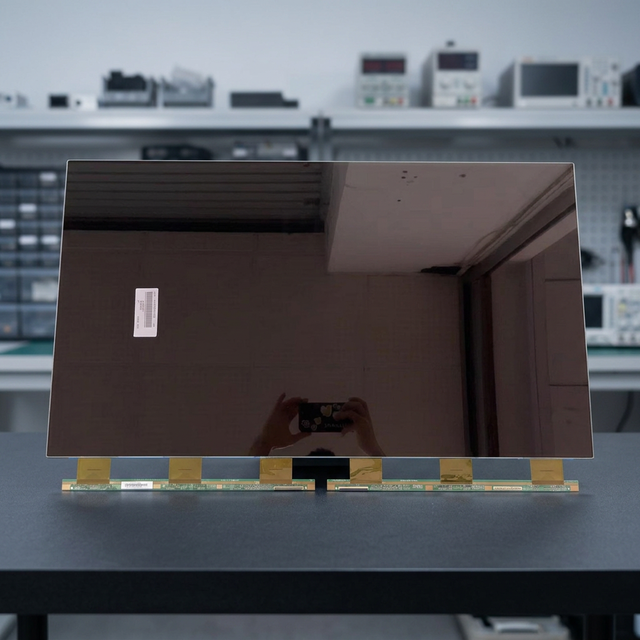
TV Open Cell with 32 Inch FHD 75Hz ADSDS TFT Panel BOE HV320FHB-N02 LVDS Interface for Television Replacement
 ABELOE (HK) TECHNOLOGY CO., LIMITEDverified🇭🇰HK3 yrs
Wandisplay 1920*1080 LED TV Panel 32 Inch LCD Display Open Cell Panel 32 Inch LCD TV Screen with 51Pin LVDS Interface
 Wandisplay Technology Company Limitedverified🇨🇳CN3 yrs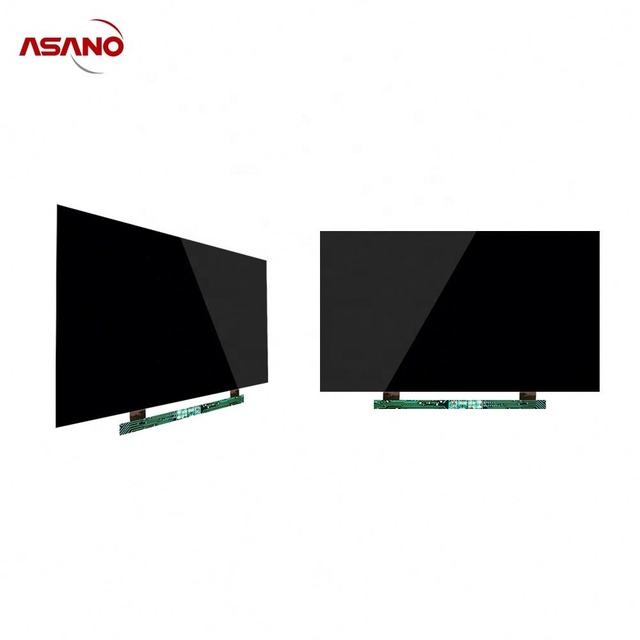
18'' Hot Sale 18 24 32 Inch Led Lcd Tv Screen Panel Chinese Videos hd Led Display Open Cell
 Guangdong Chaoye Import& Export Co., Ltd.verified🇨🇳CN5 yrs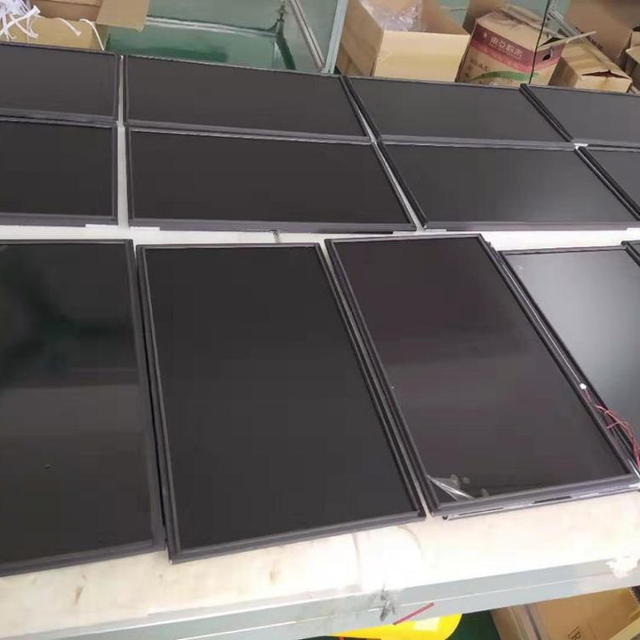
Frame Open 43 Inch High Brightness LCD Module Screen
 Shenzhen Chuangweida (cwd) Electronic Technology Co., Ltd.verified🇨🇳CN9 yrs
Deep Dive · Full Report
Full Market Report
1 document · Live-fetched from source
Related Searches
Explore more sourcing topics & related categories
Sources & References
26 sources cited · Verified industry data & reports
How China’s TV Subsidy Program is Stabilizing LCD Open Cell Prices
omdia.tech.informa.com
The Chinese government's new subsidy on TV and consumer electronics purchases has boosted TV demand and stabilized falling LCD TV open cell prices in Q3 2024, as discussed by David Hsieh in his latest blog. If you’re interested in becoming an Omdia client and gaining access to world-class technology research, or just want more information on our products, share your details below and our team will be in touch. ... Get ahead in your business and receive industry insider news, findings and trends from Omdia analysts. The Chinese government has announced the start of a new subsidy on purchases of TV and consumer electronics goods. The subsidy program has successfully stimulated TV demand in China and stabilized the prices of LCD TV open cells, which have dropped drastically in 3Q24. The program has successfully stimulated TV demand in the Chinese domestic market with consumers rushing to shopping arcades to purchase new TVs with their subsidized benefits. As a result, TV makers like Hisense, TCL, Skyworth, Konka, and Changhong are raising their LCD TV open cell purchase forecasts and production plans for 4Q24. From TV makers’ side: - TV makers who are targeting the Chinese domestic market, such as Hisense, TCL, Skyworth, Changhong, Konka, and Xiaomi, are all increasing their LCD TV open cell purchases and TV set production plans in 4Q24.
Major Chinese TV Brands Expand Market Share with Strategic Supply ...
www.trendforce.com
Global TV demand continues to be adversely impacted by inflation in 2023. Even price reductions and promotions on high-priced products have struggled to boost sales as consumers contend with limited disposable income. This has resulted in a decline in shipments for international brands that primarily focus on mid-to-high-end models, according to TrendForce's research. TrendForce's survey for 2024 predicts Samsung Electronics will significantly reduce its dependency on Chinese panel makers, dropping its procurement share from 55% to 38%, while other brands will continue to source over half of their panels from China. TV panels (open cell) represent about 45–60% of the total production cost of a TV set. In the context of sustained weak market demand, panel makers may adopt strategies of production control and price maintenance to ensure operational stability. Even price reductions and promotions on high-priced products have struggled to boost sales as consumers contend with limited disposable income. This has resulted in a decline in shipments for international brands that primarily focus on mid-to-high-end models, according to TrendForce's research. TrendForce points out that only Hisense and TCL—leveraging their cost advantages—have managed to defy this trend, achieving over 10% growth in shipments. Their market shares have also increased to 13.8% and 12.9%, respectively. TrendForce indicates that the current surplus in TV panel production capacity, coupled with sluggish demand, necessitates effective management of supply chain resources from upstream to downstream. This is essential not only for enhancing production efficiency and reducing costs but also for the key expansion of market share for panels, brands, and OEMs at present.
China Television Market, Size, Future, Growth, Trends Outlook 2032
www.marketsandata.com
Samsung Electronics will directly compare its own QLED TV with that of China's Shenzhen TCL New Technology Co., Ltd. These advances in technology, coupled with QLED's natural strengths such as longer lifespan and no burn-in risk, have made it extremely attractive for mainstream and premium markets, particularly for larger screen sizes over 55 inches. Support from the Chinese government for domestic display production by companies has also consolidated QLED's market standing by providing stable panel supply and competitive pricing. The report includes market size, segmental shares, growth trends, opportunities, and forecasts between 2025 and 2032. Additionally, the report profiles the leading players in the industry, mentioning their respective market share, business models, competitive intelligence, etc. In the report, the China television market has been segmented into the following categories: ... The market outlook is positive, with the Chinese television market expected to grow, driven primarily by the smart TV segment. Local brands are leveraging this trend with high-performance TVs at affordable prices, while overseas players dominate the ultra-premium category. As smart home systems become more common, TVs become central entertainment and control points, further fueling demand for advanced, networked devices. For instance, in January 2024, Chinese display and television manufacturers Shenzhen TCL New Technology Co., Ltd. The TV is a 75-inch mini-LED-backlit TV that boasts a thickness of under 14 millimeters, along with an ultra-thin laser TV showcased on the side. Technological Advancements Propel the Television Market in China · The Chinese TV market is going through a swift change propelled by the latest technological advancements that are altering consumer demand and industry norms.
China Smart TV Market Size, Share & Growth Report 2035 | MRFR
www.marketresearchfuture.com
China Smart TV Market is projected to reach 128118.69 USD Million, at a 14.31% CAGR by driving industry size, share, top company analysis, segments research, trends and forecast report 2025 to 2035 The expansion of online shopping platforms is facilitating easier access to smart tvs. This trend, combined with appealing financing options, encourages more households to purchase these devices, contributing to market growth. The increase in disposable income among Chinese consumers plays a pivotal role in the growth of the smart tv market. Reports indicate that the average disposable income in urban areas has risen by approximately 8% annually, leading to a surge in consumer spending on electronics. This trend suggests that the smart tv market is likely to benefit from a broader consumer base seeking high-quality entertainment options. Manufacturers are thus focusing on creating a diverse range of products to cater to varying income levels. This trend is evident as approximately 40% of smart TV buyers express interest in features that allow for home automation and control through their televisions. The smart tv market is responding by developing products that enhance connectivity with smart home ecosystems, thereby creating a more cohesive and user-friendly experience for consumers.
TVs Made in China 2026: Trends & Top Brands
www.accio.com
Risks / Unknowns: Market saturation in the large-screen segment; viewing distance requirements may limit adoption in smaller urban apartments. Verdict: Go - This is the primary growth engine for Chinese manufacturers. Reference Products for High-Performance Large Screen: ... Min. order: 10 pieces ... Foshan Tianxing Technology Co., Ltd. ... 85 Inch White LED Smart TV Frameless Design with Android System 4K 120Hz Compatible with Hotel TV Use Affordable This report provides a comprehensive analysis of the television manufacturing market in China, focusing on market trends for 2026, leading brands, and specific product segments showing high growth and consumer demand. This research focuses on the television market as of 2025-2026, specifically examining products manufactured in China for both domestic consumption and international export. The scope includes major Chinese brands (Hisense, TCL, Xiaomi) and OEM/ODM manufacturing trends. The Chinese TV market is currently defined by a "substitution" trend: while overall unit volume in the domestic market has seen a decline of approximately 11.4% in early 2026, consumers are shifting toward significantly larger and more technologically advanced sets. Trend Status: Mature. This is the standard "workhorse" of the Chinese TV export industry. Evidence: Massive sales volume on platforms like Shopee; Chinese brands like Xiaomi and TCL have captured nearly 32% of the global market in this segment.
How Innovative Is China in the Display Industry? | Reports & ...
itif.org
To be sure, MicroLED technology is expensive: a 110-inch Micro LED TV currently costs about $190,000, but as with these other technologies, costs will come down over time as manufacturing processes are refined and the products are produced at scale. [3]. “Display Market Size | Share and Trends 2024 to 2034,” Precedence Research, August 2024, https://www.precedenceresearch.com/displays-market. The manufacturing process align the two sheets so the colored dots sit right on top of the cells; they can’t be off by more than a few microns in any direction anywhere on the sheet. The sandwich is next covered with special sheets of polarizing film, and the sheets are cut into individual “panels”—a term that is used to describe the subassembly that actually goes into a TV. Flat-screen television being manufactured along a Chinese assembly line[39] In terms of product innovation, Chinese display products have made great strides in recent years, despite, on net, continuing to lag behind leading South Korean products by some degree—although that gap temporally is likely at most 18 months behind. Analysts estimate that the global display market will generate $182 billion in sales in 2024 and more than double in size over the next decade to become a $372 billion market by 2034.[3] (Analysts expect the interactive display market to grow from an $11.3 billion market in 2023 to $18.5 billion by 2031.)[4] And while Chinese enterprises used to be bit players in an industry once dominated largely by South Korean firms, China’s share of the combined glass display market—LCDs and OLEDs—now exceeds 70 percent.[5] Breaking that down, China’s share of global LCD production has now reached 72 percent, while its share of OLED production has exceeded 50 percent. For the first time, in Q1 2024, Chinese players surpassed South Korean ones as the leading producers of OLED panels.[6] Moreover, China’s prowess in displays is increasingly driving the competitiveness of its TV manufacturers. Chinese companies including BOE, China Star (i.e., TCL-CSOT), and HKC Display account for 70 to 85 percent of the 65-/75-/85-inch LCD panel market and nearly 100 percent of ultra-large-sized LCD TVs (90–115 inches).[26] As market research firm Omdia wrote, Chinese TV makers TCL’s and Hisense’s “early adoption and sourcing of ultra-large-sized panels (98-inch and 100-inch) from Chinese panel makers have been particularly notable. This strategy not only helps panel makers efficiently utilize their display production capacity but also supports Chinese TV brands in their quest to become global leaders in the ultra-large-sized LCD TV market.”[27] As of year-end 2023, China’s Hisense had claimed a 14 percent share of the global television industry and TCL 13 percent, though Samsung still led with a 19 percent market share.