Gecb Computing Core

Overview
Product sourcing insights & recommendations
The GECB (Global Electronic Control Board) Computing Core is the central processing brain for modern Otis Gen2, SkyRise, and HydroLift elevator systems. It functions as the master controller within the Global Control System (GCS), managing real-time data processing, safety protocols, and subsystem communication via CAN bus.
Core Technology & Architecture
* 32-Bit Processing: Recent versions have transitioned to a 32-bit architecture powered by a Motorola Coldfire processor PdfcoffeePdfcoffee.
* Version Evolution:
* Computing Core V1: Typically utilizes hardware model AEA26800AML2 (or AxA26800AMLx) PdfcoffeeFelevator.
* Computing Core V2: Associated with newer hardware like AxA26800AVP6, required for advanced software baselines (e.g., SCN GAA30782GAB) Pdfcoffee.
* Memory Architecture:
* OMU (Optical Memory Unit): A 4MB Flash medium (e.g., M25P32) used for field updates and software storage Pdfcoffee.
* EEPROM: Stores contract-specific parameters with an 8-bit architecture (e.g., Atmel AT25256) Pdfcoffee.
Market & Availability Trends
The market for these boards is heavily driven by modernization projects and the high demand for reliable replacement parts in the Gen2 series.
* Primary Suppliers: Most high-quality GECB boards are sourced from hubs in Xi'an and Hefei, China, which host major elevator parts manufacturers AlibabaAlibaba.
* Price Range: Standard boards like the AEA26800AML2 generally retail between $108 and $230 for wholesale quantities, while premium "GECB-EN" variants (GAA26800LC series) can exceed $450 .
* Sustainability: Trends show a shift toward energy-efficient computing architectures and the use of AI accelerators for predictive maintenance in newer GECB iterations Marketresearchfuture.
Technical Maintenance Insights
* Diagnostic Tools: Technicians use the Otis Service Tool to access the "ALL Menu," allowing for real-time monitoring of Drive and Door subsystems PdfcoffeeScribd.
* Common Faults: Frequent troubleshooting involves S/W Resets (software restarts triggered by monitoring circuits) and Stack Errors (indicated by fault code 0006) HselevatorpartsElevatorvip.
* Event Logging: The board maintains a ring buffer of 32 entries for time-ordered system event tracing Pdfcoffee.
Here are the detailed insights for the GECB computing core. You can continue with:
Gecb Computing Core Aea26800aml2 Elevator Board
Products · 2 lists
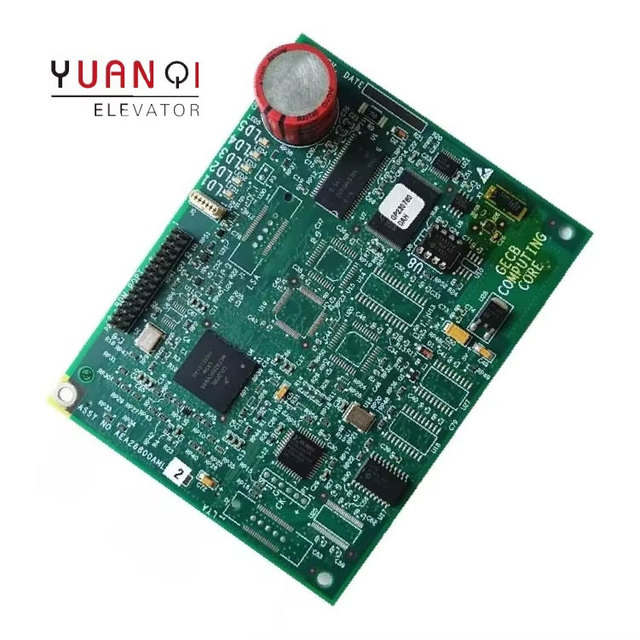
Elevator GECB Motherboard AEA26800AML2 Elevator Program Board
 Xi'an Yuanqi Elevator Parts Co., Ltd.verified🇨🇳CN15 yrs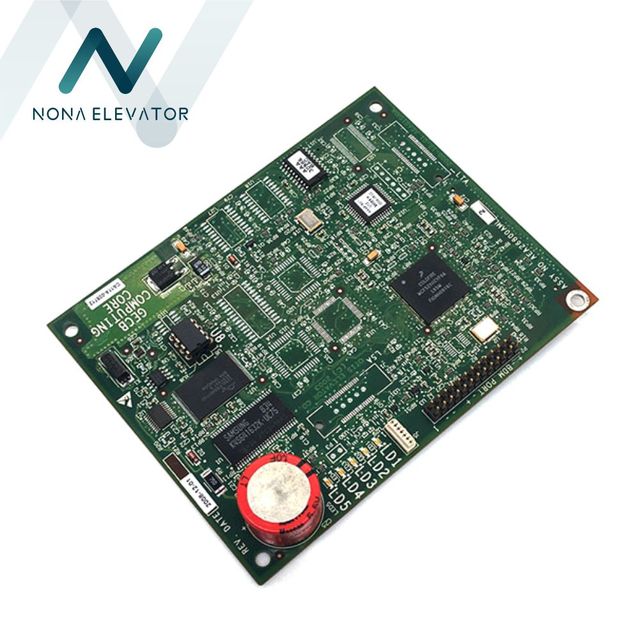
Elevator Control Board AEA26800AML2 Elevator GECB Main Board Elevator Parts
 Shaanxi Nona Elevator Parts Co., Ltd.🇨🇳CN4 yrs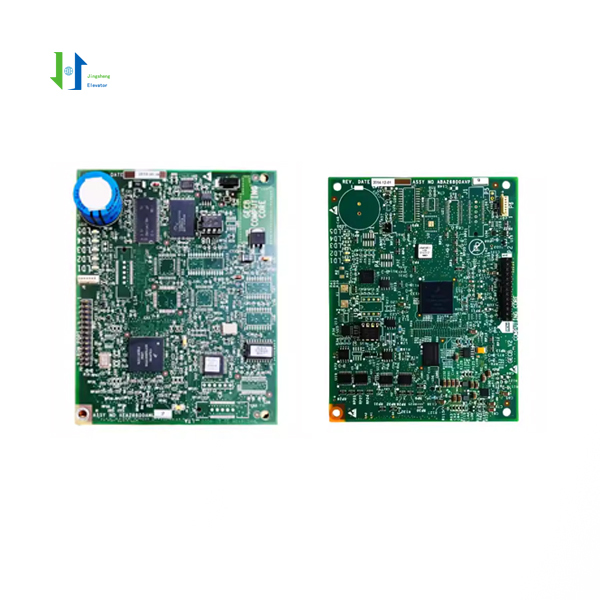
ABA26800AVP6 ABA26800AVP9 AEA26800AML1 AEA26800AML2 Elevator GECB PCB Board
 Suzhou Jing Sheng Elevator Parts Co., Ltd.🇨🇳CN12 yrs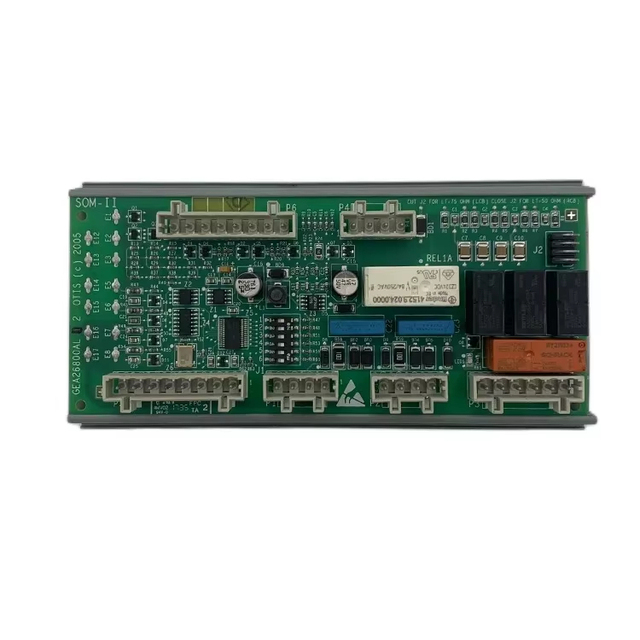
Elevator Lifts Pcb Original SOM-II GEA26800AL 1/2 Elevator LOP Display Panel Board
 Nantong Trans Industrial Products Co., Ltd.🇨🇳CN8 yrs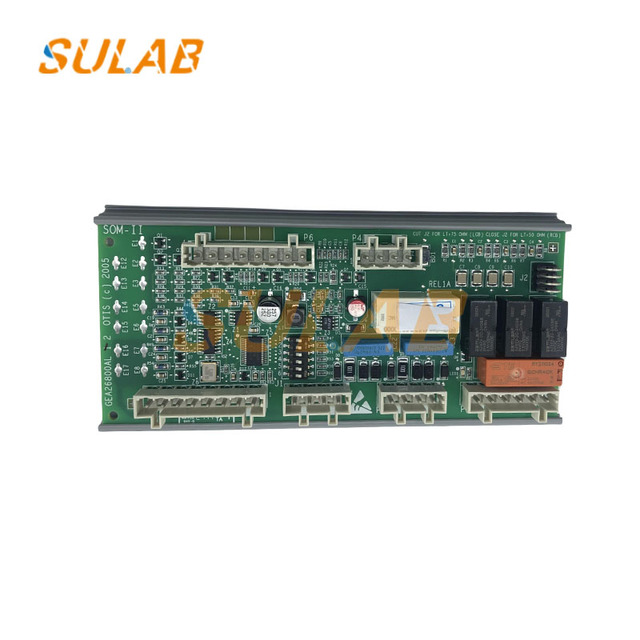
OTS Elevator SOM-II Parallel Board Electronic Duplex Main PCB GEA26800AL1 GEA26800AL2
 Xi'an Sulab Machinery Co., Ltd.🇨🇳CN7 yrs
OTS Elevator SOM-II Parallel Board Electronic Duplex Main PCB GEA26800AL1 GEA26800AL2
Related Searches
Explore more sourcing topics & related categories
Sources & References
42 sources cited · Verified industry data & reports
Next Generation Computing Market Size, Share | Forecast [2034]
www.fortunebusinessinsights.com
By industry, the IT & telecom segment held the major market share in 2026. Seeking Comprehensive Intelligence on Different Markets?Get in Touch with Our Experts Speak to an Expert ... Expand Regional and Country Coverage, Segments Analysis, Company Profiles, Competitive Benchmarking, and End-user Insights. ... What you looking for? Use our deep market intelligence to beat the curve! ... Access 74+ Detailed Reports Featuring Market Insights, Trends, Forecasts, & Competitive Analysis Across Sectors: The global next generation computing market size was valued at USD 194.70 billion in 2025. The market is projected to grow from USD 236.66 billion in 2026 to USD 1,081.96 billion by 2034, exhibiting a CAGR of 20.90% during the forecast period. In 2026, the hardware segment is projected to lead the market with a 57.60% share. Commonly used computing hardware includes GPUs, CPUs, advanced processors, quantum processors, and AI accelerators, among others. As businesses continue to digitize their operations, the need for powerful computing hardware is increasing rapidly. Cloud computing dominated the global next-generation computing market share of 46.31% in 2026. This is due to its many advantages, such as agility, cost efficiency, disaster recovery, and scalability. The pay-as-you-go model of cloud computing, is particularly useful in helping organizations to decrease infrastructure costs.
Edge Computing Market Size & Share, Growth Trends 2026-2035
www.gminsights.com
The edge computing market size was estimated at USD 21.4 billion in 2025 and is expected to grow at a CAGR of 28% between 2026 and 2035, driven by the rising adoption of real time data processing, Germany dominates Europe edge computing market growing with a CAGR of 26.1% from 2026 to 2035. As the manufacturing automotive logistics public sector are working toward modernizing their productivity platforms and lessening reliance on centralized cloud computing solutions, Germany is deploying use cases for edge computing to undergo these changes. Brazil leads the Latin American edge computing market, exhibiting remarkable growth of 28.7% during the forecast period of 2026 to 2035. Brazil is expanding edge computing applications in various industries including industrial automation, specifically within the manufacturing and energy sectors, thanks to the localized compute nodes that provide lower latency as well as improved monitoring capabilities, while also allowing manufacturers to implement predictive maintenance practices in their production facilities. On premise segment dominates with 41.8% market share in 2025 and is growing at a CAGR of 24.3% from 2026 to 2035. The industrial Internet of Things (IIoT) enables new business practices across different industries, and on-premises deployment continues to be popular, expected to reach US$ 200 Billion in the worldwide spending of IIoT by 2030. This is positively impacting the adoption of Localized Infrastructure due to the need for production line logistics operations, and real-time asset monitoring.
High Performance Computing Market Size Report, 2026-2033
www.grandviewresearch.com
Size, Share, & Trends Analysis Report By Component (Servers, Storage, Software, Services, Cloud), By Deployment (On-premise, Cloud), By End Use, By Region, And Segment Forecasts ... The global high performance computing market size was valued at USD 56.7 billion in 2025 and is projected to grow from USD 61.0 billion in 2026 to USD 104.7 billion by 2033, at a CAGR of 8.0% from 2026 to 2033. This report forecasts revenue growth at global, regional, and country levels and provides an analysis of the latest industry trends in each of the sub-segments from 2021 to 2033. For this study, Grand View Research has segmented the global high performance computing market report based on component, deployment, end use, and region. Component Outlook (Revenue, USD Billion, 2021 - 2033) ... The global high-performance computing market was estimated at USD 56.7 billion in 2025 and is expected to reach USD 61.0 billion in 2026. This is driven by advancements in robotics, automotive, and electronics manufacturing, which rely on HPC for product design, simulations, and AI integration. The country also places a strong focus on disaster prediction and management, using HPC to run complex climate and seismic models. The high performance computing market in Europe is growing at a significant CAGR from 2026 to 2033, supported by close collaboration among European countries. The high performance computing market in the U.S. dominated in 2025, and it is expected to grow significantly from 2026 to 2033. The market growth is driven by government funding in scientific research, energy, and healthcare sectors.
Next-generation Computing Market Size, Forecast, Share & Global ...
www.mordorintelligence.com
The next-generation computing market is expected to grow from USD 228.76 billion in 2025 to USD 272.28 billion in 2026 and is forecast to reach USD 650.48 billion by 2031 at 19.02% CAGR over 2026-2031. Note: Market size and forecast figures in this report are generated using Mordor Intelligence’s proprietary estimation framework, updated with the latest available data and insights as of January 2026. The next-generation computing market size is expected to reach USD 650.48 billion by 2031, up from USD 272.28 billion in 2026. After collating national data-center outlays, parsing cloud disclosures, and charting GPU invoice trends, we arrive at the base-year spend. A top-down model links those pools with HPC node shipments, then selective bottom-up supplier roll-ups test and refine totals. Key drivers include tensor-core pricing swings, qubit counts per rack, edge cabinet installations, energy tariffs, and sovereign-cloud rules.
Next Generation Computing Market Report 2026
www.thebusinessresearchcompany.com
Retail And Wholesale Services Social Services Transport Transport Services Utilities Veterinary Healthcare Filter Reports by Trends
Computing - Worldwide | Statista Market Forecast
www.statista.com
Worldwide: The revenue generated in the Computing market worldwide is projected to reach US$******bn in ****. Definition: The Computing segment comprises consumer electronic devices designed to perform a wide range of personal and household computing functions, including data processing, communication, content creation, and data storage. With regards to further market growth in the computing segment, we expect certain trends to further increase the demand of products in the market such as the growing remote and hybrid work trend, the increasing popularity of gaming hardware, and the growth of the middle class in emerging markets such as India and China. The selection of forecasting techniques is based on the behavior of the relevant market. For example, the S-curve function and exponential trend smoothing are well suited for forecasting electronic products due to the non-linear growth of technology adoption and regular product upgrade. With these trends revolutionizing a world which is becoming more and more digital and connected, the computing segment will remain one of the most dynamic and rapidly evolving industries.