Programmable Barcode Scanner Module

Overview
Product sourcing insights & recommendations
The market for programmable barcode scanner modules is undergoing a significant shift towards high-performance hardware decoding and AI integration, with the global barcode scanner market projected to reach approximately $17.63 billion by 2035 (CAGR of ~6.7%) Researchnester.
Key Market & Product Trends
* Hardware Decoding Revolution: A major transition from software to hardware-based decoding using programmable logic circuits is underway. This provides over 10x faster speeds and significantly lower power consumption Rakinda.
* Miniaturization & Ruggedization: Modules are becoming ultra-slim (under 200g) for mobile integration while maintaining high durability (MIL-STD-810G certification) to withstand 2-meter drops GiiresearchRakinda.
* AI & Advanced Optics: Integration of AI patterns and High Dynamic Range (HDR+) technology allows scanners to read severely damaged, reflective, or low-contrast barcodes on mobile screens YhdaaCognex.
* Customizable Programmability: Modern modules allow extensive programming for triggering modes (Auto-scan vs. Command), multi-code reading, and feedback analysis to identify system failures like poor lighting or printer issues Cognex.
Top Industry Applications
* Retail Automation: Self-checkout kiosks and POS systems, which account for about 32.86% of the 2D reader market share Fortunebusinessinsights.
* Logistics & IoT: High-throughput conveyor lines and smart lockers where omnidirectional scanning and real-time cloud synchronization are critical GiiresearchRakinda.
* Healthcare: Medication tracking and patient ID verification using precision 2D imaging.
Recommended Product Examples
I have identified several programmable modules matching current technological standards, ranging from compact OEM engines to high-performance industrial readers.
Programmable Barcode Scanner Module
Products · 3 lists
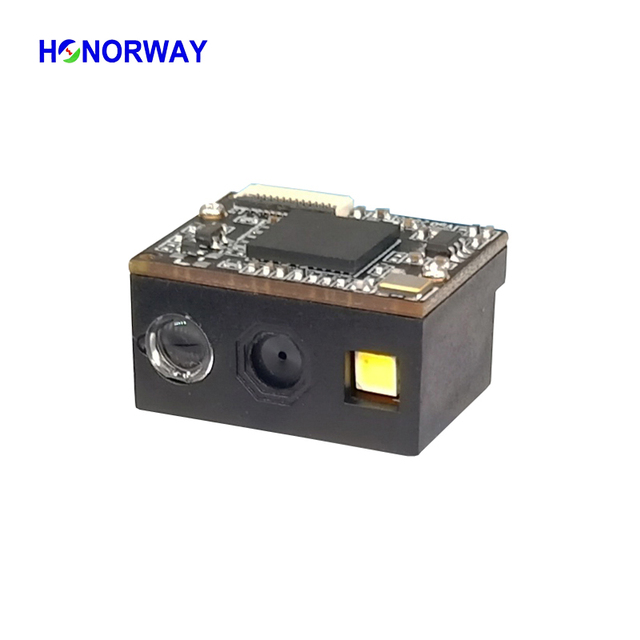
China Factory Programmable Automatic Decoding Bar Code Reader Engine Working Under Sunshine Barcode Scanner Module
 Shenzhen Honor Way Electronic Co., Ltd.verified🇨🇳CN8 yrs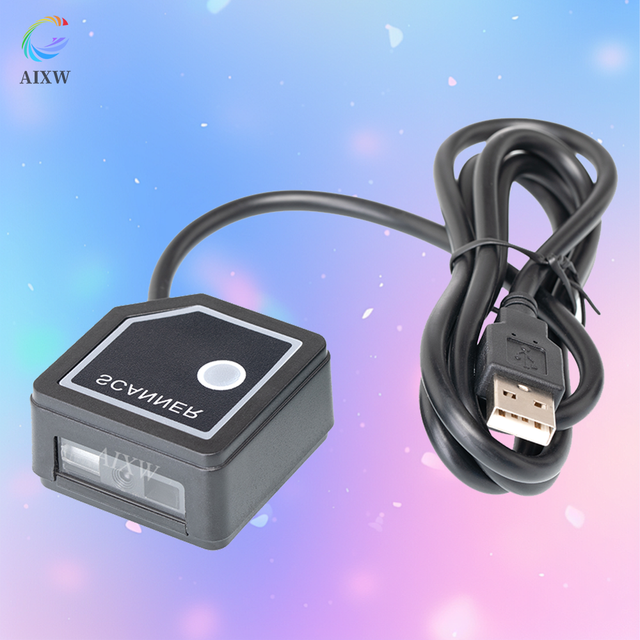
AIXW Programmable Small Barcode Scanner Module PDF417 QR 2D Bar Code Scanner for AD Machine for Arduino Kiosk RPI USB COM A4
 Shenzhen Lanchuangwei Technology Co., Ltd.🇨🇳CN4 yrs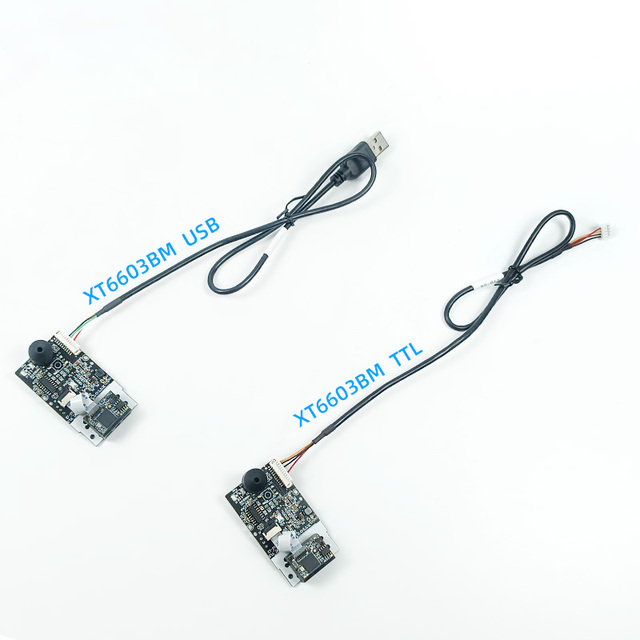
XT6603BM OEM Fixed Mount Automatic Programmable QR Code 2D Rugged Auto Scan Barcode Scanner Reader Module for IOT Machine
 Shenzhen Xingtong IOT Technology Co., Ltd.🇨🇳CN9 yrs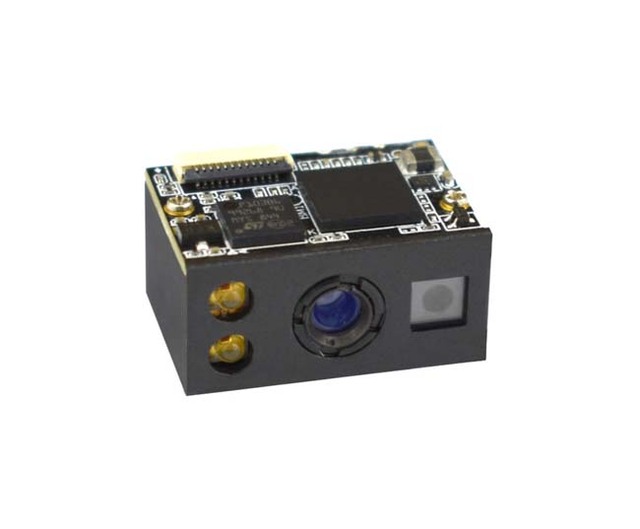
High-density Cmos Sensor Module Programmable Ultra Slim Undecoded Scan Engine Miniature Integrated Barcode Scanner Scan Haed
 Shenzhen Rakinda Technologies Co., Ltd.verified🇨🇳CN9 yrs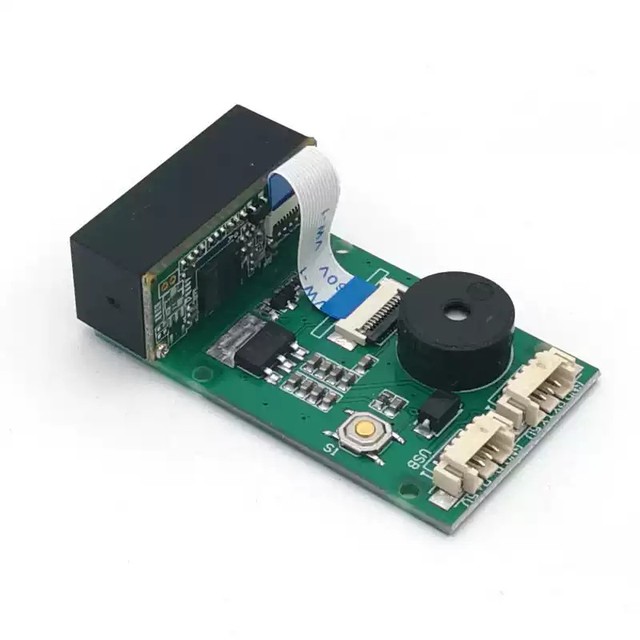
GM67 Development Board and Kit with QR Code and Barcode Scanning Module
 Shenzhen Bluetech Technology Co., Ltd.verified🇨🇳CN8 yrs
GM67 Development Board and Kit with QR Code and Barcode Scanning Module
Related Searches
Explore more sourcing topics & related categories
Sources & References
27 sources cited · Verified industry data & reports
Market Deep Dive: Exploring Barcode Scanner Module Trends 2026-2034
www.datainsightsmarket.com
The barcode scanner module market is booming, projected to reach [estimated 2033 value] by 2033, growing at a CAGR of 6.4%. Driven by automation and e-commerce, key players like Honeywell and Zebra Technologies are shaping this dynamic sector. Discover market trends and insights in this comprehensive analysis. North America and Europe: These regions represent a significant portion of the market due to high adoption in established industries. Asia-Pacific: This region shows strong growth potential, driven by increasing industrial automation and e-commerce activities. ... Miniaturization: Ongoing efforts to reduce the size and power consumption of barcode scanner modules are a key trend. Nevertheless, the overall market outlook remains positive, indicating a sustained period of expansion and innovation within the barcode scanner module industry. The study period from 2019 to 2033 reveals a clear upward trend, with the base year of 2025 offering a valuable benchmark for understanding the current market dynamics and future potential. The market offers a range of barcode scanner modules, categorized by technology (laser, imager, etc.), form factor (handheld, fixed-mount), and connectivity (wired, wireless). The choice depends on application requirements, balancing factors like reading range, speed, durability, and cost. Recent trends include smaller form factors for mobile applications and increased integration capabilities with various systems.
Barcode Scanner Market | Global Market Analysis Report - 2036
www.futuremarketinsights.com
The barcode scanner market is segmented by Product Type (Portable/Handheld Scanners and Fixed Position Scanners), End User (Retail & Commercial, General Manufacturing, Healthcare, Logistics & Warehouse, Commercial Aviation, Defence, Others), Technology (Laser Scanners, CCD Readers, Camera-Based Readers, Omnidirectional Scanners, Smartphone-Based Scanners, RFID Technology), and Region. Forecast for 2026 to 2036. United States leads country-level growth with 7.0% CAGR from 2026 to 2036. China follows with 6.8% CAGR, supported by e-commerce expansion. Honeywell, Zebra Technologies, and Datalogic remain key market players. Historical Data Covered: 2015 - 2024 | Base Year: 2024 | Estimated Year: 2025 | Forecast Period: 2025 - 2035 ... The barcode scanner market is expected to expand from USD 9.0 billion in 2026 to USD 16.9 billion by 2036. Retail and commercial businesses are the largest users, holding around 35% share in 2026. They rely on barcode scanners to speed up checkout processes, improve inventory tracking, and maintain real-time stock accuracy. Logistics and warehouse operators also make heavy use of scanners to streamline sorting, shipment verification, and warehouse management. The global barcode scanner market is set for strong growth from 2026 to 2036, driven by rapid adoption of retail automation, warehouse digitization, and industrial efficiency programs. Businesses across retail, logistics, healthcare, and manufacturing are investing in advanced scanning solutions to improve inventory accuracy, operational efficiency, and customer service.
Handheld Barcode Scanner Market Trends | Forecast & Strategic Outlook
www.globalgrowthinsights.com
Global Handheld Barcode Scanner Market size was USD 1.64 billion in 2025 and is projected to touch USD 1.72 billion in 2026, USD 1.81 billion in 2027 to USD 1.81 billion by 2035, exhibiting a CAGR of 5.04% during the forecast period 2026-2035. Different scanner technologies offer unique benefits, from simple product identification to advanced data capture. The global Handheld Barcode Scanner market size was valued at USD 1.64 Billion in 2025 and is projected to reach USD 1.72 Billion in 2026, further expanding to USD 1.81 Billion by 2035 at a CAGR of 5.04% during the forecast period. The global Handheld Barcode Scanner market was valued at USD 1.64 Billion in 2025 and is estimated to reach USD 1.72 Billion in 2026 before expanding to USD 1.81 Billion by 2035 at a CAGR of 5.04%. Regional growth is supported by increasing digital business operations, warehouse expansion, retail modernization, and healthcare automation. More than 75% of organized retail businesses use barcode scanning for inventory control and billing. Around 68% of logistics facilities depend on handheld scanners for shipment tracking. Manufacturing and healthcare sectors continue to increase investments in digital identification systems. The region benefits from strong technology adoption and demand for advanced 2D scanning devices. North America accounted for USD 0.60 Billion in 2026, representing 35% of the global market.
Barcode Scanner Market - Forecast from 2026 to 2031
www.giiresearch.com
Historical data from 2021 to 2025 & forecast data from 2026 to 2031 · Growth Opportunities, Challenges, Supply Chain Outlook, Regulatory Framework, and Trend Analysis · Competitive Positioning, Strategies, and Market Share Analysis · Revenue Growth and Forecast Assessment of segments and regions including countries · Company Profiling (Strategies, Products, Financial Information), and Key Developments among others. ... Barcode Scanner Market Report by Product, Type, Scanner Type, Technology, Component, End-Use Sector, and Region 2026-2034 Barcode Scanner Market Size, Share, and Growth Analysis, By Product (Handheld Barcode Scanner, Stationary Barcode Scanner), By Type, By Scanner Type, By Technology, By End Use, By Region - Industry Forecast 2026-2033. Miniaturization trends-slimmer profiles under 200g with 5,000 mAh batteries-align with smartphone-like usability, while ruggedized variants (MIL-STD-810G certified) withstand 2-meter drops and chemical exposure. Fixed-mount and presentation scanners, at 30% share, excel in high-throughput conveyor lines and self-checkout kiosks, with omnidirectional laser arrays achieving 99% first-pass reads on linear codes. Hybrid models blending fixed reliability with modular AI upgrades are gaining in food/beverage packaging, where traceability regulations demand sub-millisecond decoding. Ring Barcode Scanners Market by Scanner Type, Scanning Technology, Wired, Bluetooth, Wi-Fi, Large Enterprises, SMEs, Application - Global Forecast 2026-2032
Barcode Scanner Market Outlook 2025–2030: Key Trends and Emerging ...
tera-digital.com
In the United States, barcode scanners represent about one-third of the global market value—one of the highest adoption rates worldwide. Demand comes from retail, logistics, and healthcare, where speed and accuracy are critical to service quality. The global barcode scanner market keeps growing year by year—and will continue to rise through 2030. Growth is steady rather than explosive, driven by regular hardware upgrades and the global shift from manual to digital workflows. New use cases keep adding momentum. Healthcare tracking, curbside pickup, and line-side scanning in factories all push adoption forward, ensuring steady, long-term growth for the global barcode scanning industry. Asia-Pacific is the fastest-growing region in the global barcode scanning market. Its manufacturing strength, expanding retail sector, and widespread Android adoption fuel rapid adoption. China, Japan, and Southeast Asia are now key battlegrounds for both global and local brands.
Barcode Scanner Market Size, Share & Growth Report 2034
www.imarcgroup.com
IMARC Group provides an analysis of the key trends in each segment of the global barcode scanner market, along with forecast at the global, regional, and country levels from 2026-2034. The global barcode scanner market size was valued at USD 7.8 Billion in 2025. Looking forward, IMARC Group estimates the market to reach USD 13.3 Billion by 2034, exhibiting a CAGR of 5.89% from 2026-2034. Asia Pacific currently dominates the market, holding a market share of 38% in 2025. The barcode scanner market is projected to exhibit a CAGR of 5.89% during 2026-2034, reaching a value of USD 13.3 Billion by 2034. As per sources, Square launched the Square Handheld, a phone-like wireless payment device featuring barcode scanning and order management capabilities aimed at both small and large retailers, priced at $399. Additionally, the convergence of wireless scanning with cloud-based inventory management platforms and IoT ecosystems is enabling businesses to achieve barcode scanner market trends toward enhanced supply chain transparency and data-driven decision-making.