If you’re a typical user, you don’t need to overthink this. Over the past year, rolling code key entry remote systems have shifted decisively—not because older remotes stopped working, but because relay attacks now bypass them reliably 1. For most drivers with standard garage doors or legacy vehicles, a certified 433MHz/315MHz rolling code fob ($0.50–$3.00 wholesale) remains secure and sufficient. But if your car supports UWB (e.g., BMW iX, Tesla Model S refresh, newer Hyundai/Kia), or you regularly use smartphone-based entry, upgrading to a UWB-enabled or LCD smart key is no longer optional—it’s the only way to close the relay gap. This piece isn’t for keyword collectors. It’s for people who will actually use the product.
About Rolling Code Key Entry Remotes
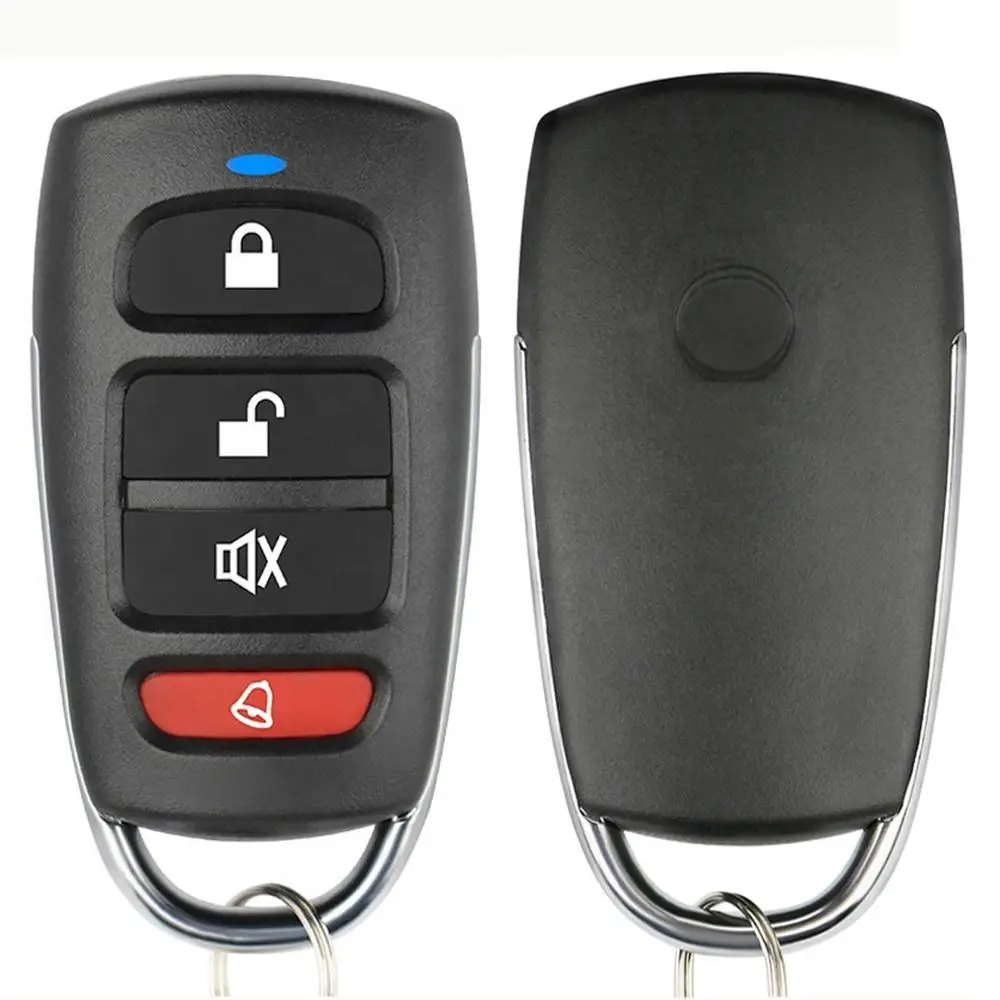
A rolling code key entry remote transmits a unique, time- or event-synchronized code each time it’s pressed—unlike fixed-code remotes, which send the same signal repeatedly. This prevents replay attacks, where an attacker records and retransmits a valid signal. Rolling code technology has been the baseline security standard for automotive and garage door remotes since the early 2000s 2. Typical use cases include unlocking car doors, starting engines (via push-button start), opening sectional garage doors, and activating gate operators. Most OEM remotes—including those from Toyota, Ford, Chamberlain, and LiftMaster—use proprietary rolling code algorithms (e.g., KeeLoq, HCS301, EV1527 variants), synchronized with the vehicle or receiver’s internal counter.
Why Rolling Code Key Entry Remotes Are Gaining Popularity (Again)
Lately, rolling code key entry remotes aren’t just staying relevant—they’re being re-evaluated under new threat models. The rise in relay attacks—where attackers amplify and forward signals between your key fob and vehicle using two radio devices—has exposed a critical limitation: rolling code alone doesn’t prevent proximity spoofing. That’s why the market is shifting toward layered authentication. According to Mordor Intelligence, the global automotive smart key market is projected to reach $5.0B by 2033, growing at a CAGR of 5.3%–10.09%, driven largely by electric vehicle adoption and demand for anti-relay assurance 3. Consumers aren’t buying more remotes—they’re buying smarter ones: UWB-equipped fobs, Bluetooth+UWB hybrids, and LCD smart keys that show battery level, lock status, and even geofenced auto-lock behavior. If you’re a typical user, you don’t need to overthink this—but if your daily commute involves parking in unsecured urban lots or multi-unit garages, the risk profile changes meaningfully.
Approaches and Differences
Three main categories dominate today’s rolling code key entry remote landscape:
- Traditional RF Rolling Code Fobs (433MHz / 315MHz): Simple, low-power, highly interoperable. Uses KeeLoq or similar algorithm. No pairing required beyond initial sync.
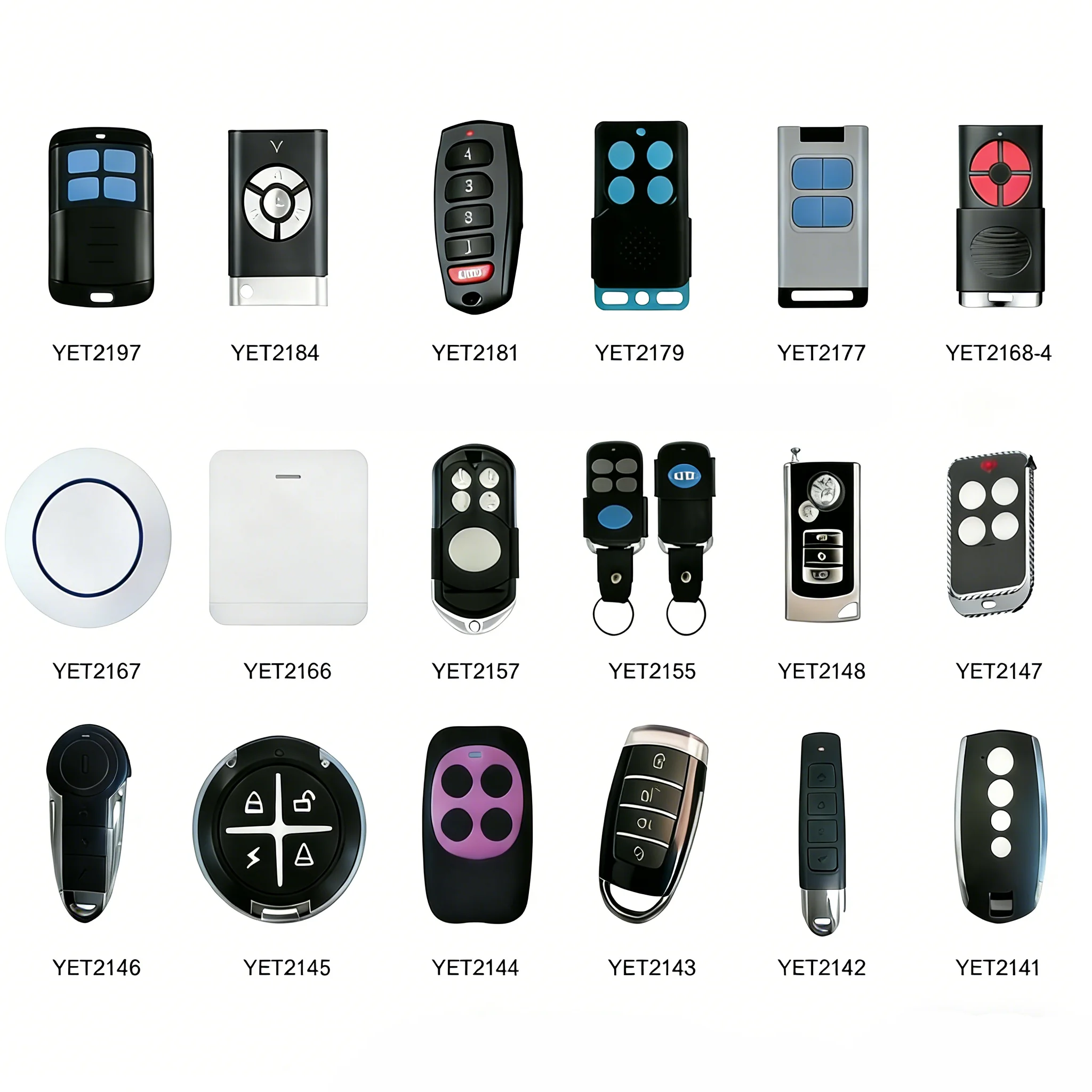
- Multi-Frequency Duplicators & Cloners: Devices like RKING RK-CRC or YET2130 can learn and replicate signals across 200+ brands. Useful for fleet managers or locksmiths—but raise legitimate security concerns if misused 4.
- Next-Gen Smart Keys: Integrate Bluetooth Low Energy (BLE), Ultra-Wideband (UWB), or NFC. UWB enables centimeter-level distance measurement via Time-of-Flight (ToF), making relay attacks physically impossible within ~30 cm 5. LCD variants add real-time feedback—no more guessing whether the trunk opened.
Key Features and Specifications to Evaluate
When comparing rolling code key entry remotes, focus on these five measurable criteria—not marketing claims:
- Frequency band: 315MHz (North America) vs. 433MHz (EU/Asia). Mismatched frequency = no communication.
- Protocol compatibility: Does it support your OEM’s algorithm? Look for “EV1527”, “HCS301”, “PT2262”, or brand-specific labels (e.g., “Chamberlain Security+ 2.0”).
- UWB certification: True UWB requires IEEE 802.15.4z compliance and CCC Digital Key 3.0 alignment 3. Don’t trust “UWB-ready” labels without firmware version or test report references.
- Battery life & replaceability: Standard CR2032 lasts 2–5 years; rechargeable Li-ion keys require USB-C ports and 2–3 hour charge cycles.
- Environmental rating: IP54 or higher ensures resistance to dust and light rain—critical for outdoor garage use.
Pros and Cons
Traditional RF Rolling Code Fobs
✅ Proven reliability, near-zero latency, ultra-low power, universal replacement availability.
❌ Vulnerable to relay attacks, no status feedback, limited customization.
Multi-Frequency Duplicators
✅ Solves urgent compatibility gaps (e.g., replacing discontinued OEM fobs).
❌ Not suitable for daily primary use—learning process resets after battery change; no anti-relay protection.
UWB + LCD Smart Keys
✅ Resists relay attacks, provides precise location context, enables smartphone handoff, displays diagnostics.
❌ Higher cost ($37–$130 retail), shorter battery life, firmware updates required, limited backward compatibility.
How to Choose a Rolling Code Key Entry Remote
Follow this decision checklist—skip steps that don’t apply to your use case:
- Verify your vehicle/garage model’s native protocol (e.g., “LiftMaster 850LM” uses Security+ 2.0; “Honda Civic 2018” uses HCS301). Manufacturer manuals or support sites list this explicitly.
- Ask: Do I need anti-relay assurance? If you park outdoors, in shared garages, or carry your key near windows/doors nightly, yes. Otherwise, rolling code remains effective.
- Check OEM upgrade path: Some automakers (e.g., BMW, Genesis) offer official UWB retrofit kits. Third-party UWB keys may lack full feature parity (e.g., no remote engine start).
- Avoid “universal learning remotes” marketed as “UWB”—many are BLE-only with distance estimation via RSSI (signal strength), not true ToF. That’s not UWB.
- For prototyping or small-batch testing, prioritize LCD smart keys with MOQ ≤ 5 units and documented SDK/API access—Alibaba listings confirm several Shenzhen suppliers meet this 6.
Insights & Cost Analysis
Price reflects function—not just branding. Here’s what you’re actually paying for:
| Category | Wholesale Range (per unit) | What You’re Paying For | When It’s Worth Caring About | When You Don’t Need to Overthink It |
|---|---|---|---|---|
| Basic Rolling Code Fob | $0.46 – $3.00 | RF chip, encoder IC, plastic housing, pre-synced algorithm | Replacing lost OEM fob for older vehicles (pre-2015) or residential garage doors | If your car lacks keyless entry or your garage has no history of signal theft |
| Multi-Frequency Duplicator | $2.50 – $5.00 | Multi-band receiver, memory buffer, cloning logic, button matrix | Fleet maintenance, locksmith service, or emergency backup for non-upgradable systems | If you own one vehicle and use only its OEM fob daily |
| LCD Smart Key (BLE + UWB) | $37 – $130 | UWB transceiver, OLED/LCD driver, secure element, BLE stack, firmware OTA capability | You drive a 2022+ EV or premium ICE vehicle with factory UWB support | If your current fob works reliably and you’ve never experienced unauthorized access |
Better Solutions & Competitor Analysis
The strongest value shift isn’t toward “more features,” but toward verifiable distance assurance. True UWB outperforms BLE-based “smart keys” that estimate range via signal attenuation—a method easily fooled by environmental variables. Below is a functional comparison of solution tiers:
| Solution Type | Anti-Relay Protection | Real-Time Feedback | Smartphone Integration | Budget Range (Retail) |
|---|---|---|---|---|
| Traditional Rolling Code Fob | ❌ None | ❌ LED only | ❌ None | $10 – $25 |
| LCD Smart Key (BLE-only) | ⚠️ Limited (RSSI-based) | ✅ Yes (battery, lock status) | ✅ Yes (app control) | $37 – $75 |
| UWB-Enabled Smart Key | ✅ Certified (ToF-based) | ✅ Yes + proximity alerts | ✅ Yes + handoff, guest keys | $85 – $130 |
Customer Feedback Synthesis
Based on aggregated reviews across Alibaba, Amazon, and specialty forums (Flipper, CarHacking Reddit):
✅ Top praise: “Battery lasted 3.5 years,” “Cloned my Chamberlain remote in 20 seconds,” “LCD screen eliminated ‘did it work?’ anxiety.”
❌ Top complaints: “UWB pairing failed 3x before succeeding,” “No iOS app support despite Android compatibility,” “LCD dimmed after 18 months—no replacement panel available.”
Maintenance, Safety & Legal Considerations
No major regulatory bans exist on consumer rolling code remotes—but two practical constraints apply:
• FCC/CE compliance: All RF-emitting devices sold in the US/EU must carry verified certification IDs (e.g., FCC ID: 2ACDZ-KEYF22). Avoid uncertified imports—even if labeled “433MHz.”
• Signal jamming laws: While owning a remote is legal, actively jamming or intercepting another person’s rolling code signal violates the U.S. Communications Act §605 and EU Directive 2002/21/EC.
• Battery safety: CR2032 cells pose ingestion risk. Keep spares away from children. Lithium-ion smart keys must comply with UN38.3 transport standards—check supplier documentation.
Conclusion
If you need reliable, low-friction access for a legacy vehicle or garage door—and haven’t faced signal-related incidents—choose a certified traditional rolling code fob. If you drive a 2022+ EV or premium sedan with factory UWB support, and park in high-risk locations, invest in a CCC Digital Key 3.0-compliant UWB fob. If you manage multiple vehicles or require diagnostic visibility, an LCD smart key delivers tangible utility—but only if your OEM permits third-party pairing. If you’re a typical user, you don’t need to overthink this. Prioritize verified protocol match over flashy specs. And remember: no remote eliminates human error—store keys away from exterior walls, disable passive entry when unnecessary, and update firmware when prompted.


