If you’re replacing a garage door remote or upgrading home automation access, choose an FSK modulation rolling code remote — not ASK fixed-code — unless you’re on a strict sub-$1 budget and accept replay vulnerability. Over the past year, FSK rolling code remotes have become the de facto standard for new installations in North America and EU due to tighter anti-hacking regulations and rising incidents of code cloning. If you’re a typical user, you don’t need to overthink this: 433MHz models work reliably for most residential garages; 868MHz offers better noise immunity where industrial RF interference is common.
🔒 About FSK Modulation Rolling Code Remote Controls
An FSK (Frequency Shift Keying) modulation rolling code remote control is a wireless transmitter that sends unique, time-synchronized commands by shifting between two distinct carrier frequencies — typically 433MHz or 868MHz — while generating a new encrypted code with every press. Unlike legacy ASK (Amplitude Shift Keying) remotes that broadcast the same static ID repeatedly, FSK rolling code systems use cryptographic algorithms (e.g., KeeLoq or AES-based variants) to ensure each transmission is unpredictable and non-replayable1. This architecture directly addresses the core vulnerability of fixed-code systems: interception and replay by attackers using basic SDR (Software Defined Radio) tools2.
Typical use cases include:
- Garage door openers (Chamberlain, LiftMaster, Sommer, Hörmann)
- Residential gate operators and driveway barriers
- Commercial access panels and motorized window/ventilation controls
- Industrial equipment start/stop interfaces requiring secure local RF command
These remotes are not general-purpose IR remotes or Bluetooth controllers. They operate in the Sub-GHz ISM bands — unlicensed but regulated — and require physical pairing (often via ‘learn’ button or dip-switch configuration) with a compatible receiver module3. If you’re a typical user, you don’t need to overthink this: your existing garage opener’s model number (usually printed inside the motor unit or on its label) determines whether it accepts FSK rolling code input — not just frequency, but protocol compatibility matters.
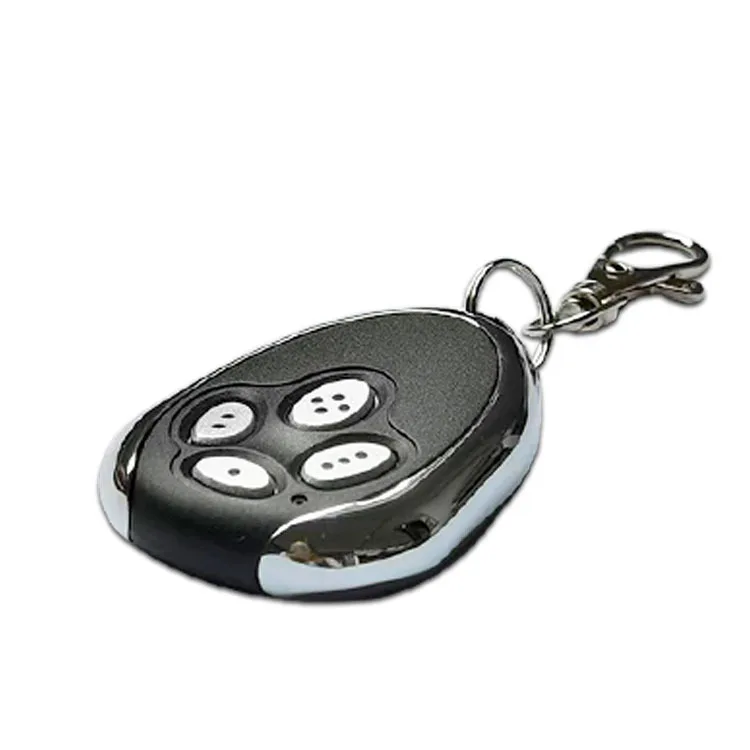
Approaches and Differences: FSK vs ASK vs PSK
Three digital modulation schemes dominate Sub-GHz remote control design. Here’s how they compare — not academically, but in real-world deployment terms:
| Feature | FSK Rolling Code | ASK Fixed Code | PSK (Less Common) |
|---|---|---|---|
| Security | High — dynamic encryption per transmission | Low — identical code sent every time | Moderate — better noise resistance than ASK, but rarely used in consumer rolling code systems |
| Noise Resistance | Excellent — immune to amplitude fluctuations (e.g., fluorescent lights, motors) | Poor — easily disrupted by voltage spikes or EMI | Good — robust in high-interference environments, but adds complexity |
| Data Rate & Range | Medium (up to ~20 kbps); reliable up to 50–100m line-of-sight | Low (<10 kbps); range drops sharply near noise sources | Higher spectral efficiency, but minimal real-world advantage for simple on/off commands |
| When it’s worth caring about | Any installation where security or reliability is non-negotiable (e.g., detached garage, rental property, commercial site) | Temporary setups, low-risk interior applications (e.g., pool pump control in isolated area) | Niche industrial telemetry — irrelevant for standard remote purchase decisions |
| When you don’t need to overthink it | If your receiver only accepts ASK — no choice. Or if budget is <$1.20/unit at scale. | If you’re replacing a single lost remote for a 20-year-old opener with no security concerns. | Unless your supplier explicitly specifies PSK and provides verified receiver compatibility — ignore it. |
Pros of FSK Rolling Code Remotes:
- ✅ Strong resistance to replay attacks — prevents unauthorized door/gate activation
- ✅ Superior noise immunity in electrically noisy environments (workshops, basements, near HVAC)
- ✅ Future-proofing — aligns with UL/EN certification paths for new installations
Cons to Acknowledge:
- ⚠️ Slightly higher latency (~50–100ms vs ASK’s ~20ms) — imperceptible for doors, irrelevant for gates
- ⚠️ Pairing requires precise timing or physical proximity — no ‘plug-and-play’ like Bluetooth
- ⚠️ No backward compatibility: an FSK remote won’t work with an ASK-only receiver, even at same frequency
So — who benefits most? Homeowners with detached garages, property managers overseeing multiple access points, and installers specifying for new builds. Who doesn’t need it yet? Tenants in controlled-access apartments with centralized systems, or users maintaining legacy openers where replacement cost outweighs risk.
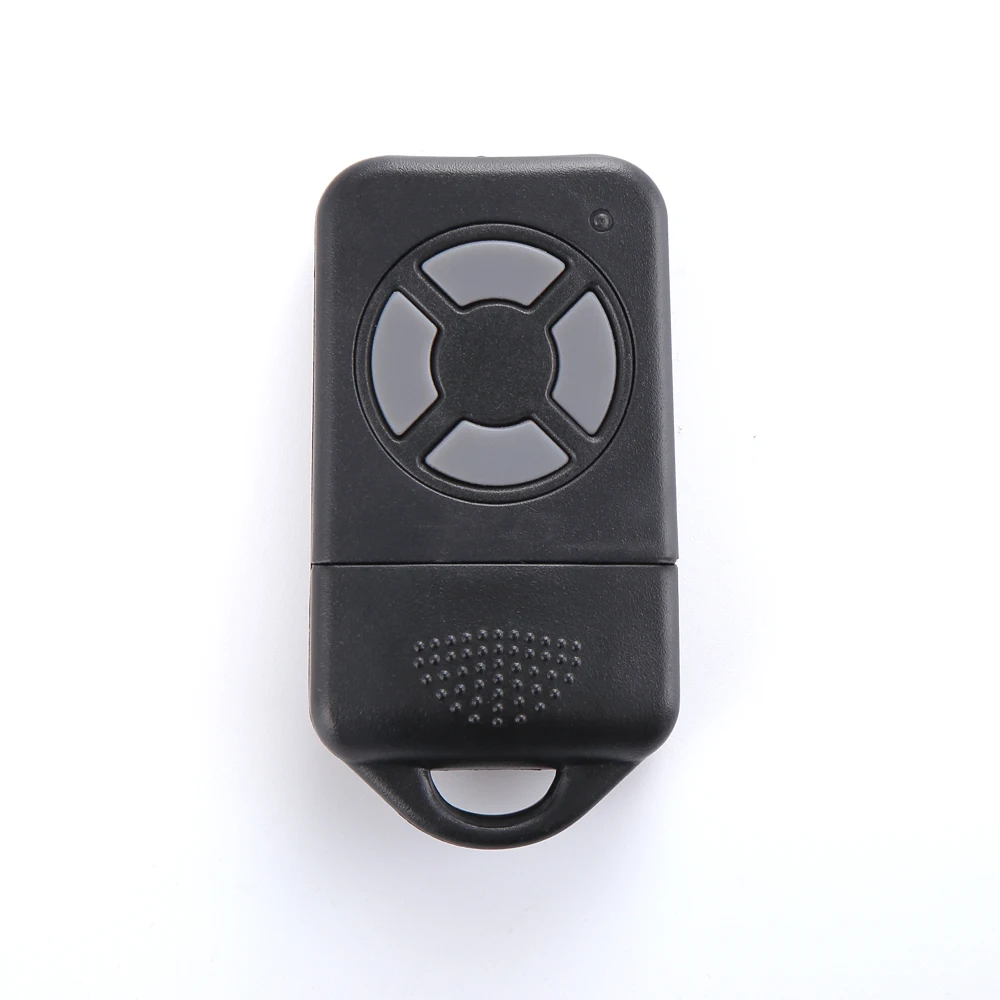
Based on current B2B wholesale data (Q2 2024), here’s what realistic pricing looks like:
| Remote Type | Unit Price (MOQ 100) | Key Trade-offs | Best For |
|---|---|---|---|
| Generic 433MHz FSK (2-button, IP54) | $2.50–$3.10 | Minimal branding, basic KeeLoq variant, no app support | Retrofit projects, bulk replacements |
| OEM-compatible (e.g., Chamberlain 953EV clone) | $3.60–$4.50 | Exact form factor, tested pairing, full protocol fidelity | Homeowners prioritizing reliability over cost |
| Multi-frequency (433/868MHz switchable) | $5.20–$6.80 | Added complexity, rare real-world need, marginal utility | Installers serving mixed regional clients |
| ASK Fixed Code (baseline) | $0.60–$1.50 | No security, high failure rate near interference sources | Short-term testing, non-critical internal devices |
At $3.00/unit, FSK remotes deliver 3–5× the security ROI of ASK — especially considering the average cost of garage break-in response ($1,200–$3,500 in insurance deductibles and labor)6. If you’re a typical user, you don’t need to overthink this: spend the extra $2.00. It pays back in avoided risk, not features.
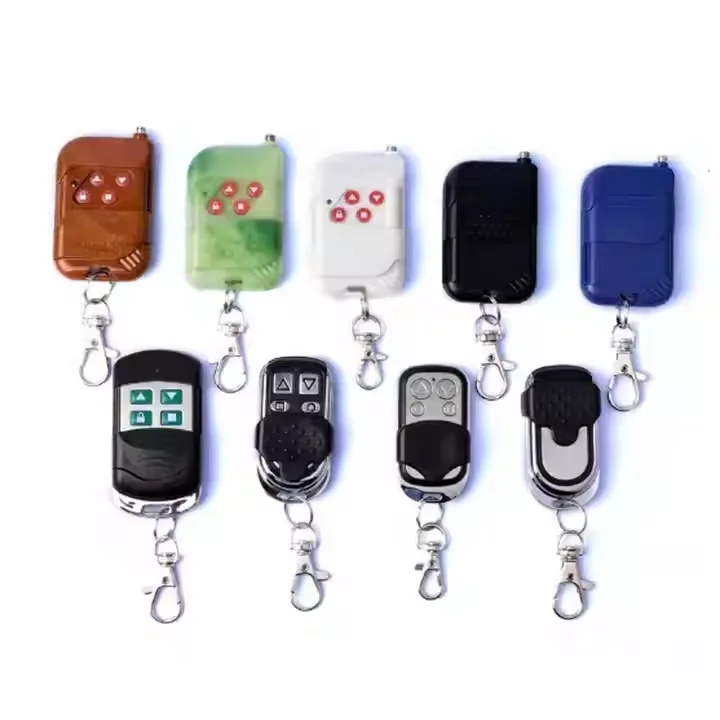
HCS301 chip — a widely deployed KeeLoq-compatible encoder used in certified FSK rolling code remotes.
If you need security against replay attacks and reliable operation in electrically noisy environments, choose a 433MHz FSK rolling code remote with OEM protocol matching and IP54 rating — priced between $2.80–$4.20/unit. If you’re managing mixed legacy systems and require field flexibility, prioritize suppliers offering documented cross-reference lists over ‘universal’ claims. If you’re a typical user, you don’t need to overthink this: skip ASK. Skip PSK. Start with verified FSK.
Look for terms like “Security+”, “Intellicode”, “Rolling Code”, or “KeeLoq” in the owner’s manual or on the opener’s label. If manufactured after 1997 (US) or 2007 (EU), it likely supports it — but verify via model number lookup.
Yes — most require pressing a ‘Learn’ button on the receiver, then pressing the remote button within 30 seconds. Timing precision matters; consult your opener’s manual for exact sequence. No special tools needed.
Frequency is necessary but insufficient. You also need matching protocol (e.g., KeeLoq HCS301), correct encryption seed, and compatible firmware version. Mismatched protocols yield no response — not delayed or intermittent.
Yes — Sub-GHz signals penetrate drywall, wood, and thin metal far better than 2.4GHz (Wi-Fi/Bluetooth). Thick reinforced concrete or full steel enclosures will attenuate signal; repositioning the receiver antenna usually resolves this.


