If you’re a typical user, you don’t need to overthink this. Over the past year, the term "2 Pixel" has crystallized into two concrete, actionable categories: Pixel Sharp — a precision-first design language for logos, apps, and digital interfaces — and 2x2 Pixel Block sensors, a hardware architecture that improves low-light imaging in compact devices. For buyers of interactive LED displays, Y2K-inspired accessories, or entry-level industrial cameras, prioritize pixel pitch under 3.0mm for sharpness and area-parallel ADC specs (not just megapixels) when evaluating sensors. Skip gimmicks like ‘retro’ branding without grid-based scalability — it won’t hold up at favicon size or in dark-room use. This piece isn’t for keyword collectors. It’s for people who will actually use the product.
About "2 Pixel": Definition & Typical Use Cases
The phrase "2 Pixel" no longer refers to resolution or screen size. In 2026, it denotes two parallel developments converging in consumer electronics and digital design:
- 🎨 Pixel Sharp: A design movement rooted in ultra-crisp geometry — not nostalgia. It uses strict 2×2, 4×4, or 8×8 grids to ensure clarity at tiny scales (e.g., app icons, SaaS dashboards, or smartwatch widgets). Unlike earlier pixel art, it avoids dithering and anti-aliasing, favoring monochrome contrast and exact alignment 1.
- 📷 2x2 Pixel Block sensors: An image sensor architecture where one Analog-to-Digital Converter (ADC) serves a fixed 2×2 pixel cluster. This replaces older column-parallel or single-ADC designs, reducing noise and power draw while enabling smaller, higher-sensitivity modules in phones, action cams, and embedded vision systems 2.
Typical use cases include:
- Branding teams selecting logos for developer tools or analytics platforms;
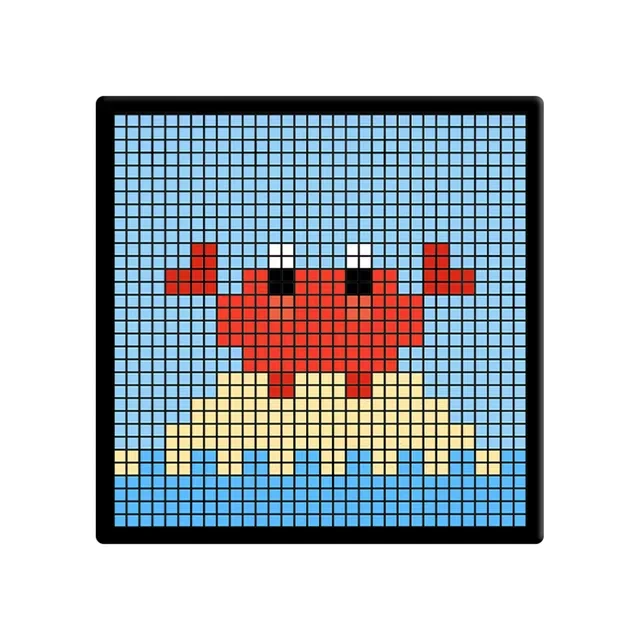
- Home office users buying Bluetooth-controlled LED matrices for status tracking or ambient decor;
- Small-scale manufacturers sourcing compact machine-vision sensors for quality inspection;
- Hobbyists assembling modular pixel-art kits or customizing wearable mosaic accessories.
Why "2 Pixel" Is Gaining Popularity
Lately, demand has surged—not because of novelty, but because both branches solve real constraints. Pixel Sharp answers the need for functional legibility in increasingly fragmented digital environments: a logo must scale cleanly from a 16×16 favicon to a 4K dashboard header. Meanwhile, 2x2 sensor tech responds to physical limits — as pixel sizes shrink below 0.8μm, traditional ADC layouts hit thermal and crosstalk ceilings 2. The convergence is visible in products like APP-controlled pixel displays that double as real-time data panels, or “Y2K mosaic” glasses with embedded micro-LEDs calibrated to match Pixel Sharp palette constraints.
Approaches and Differences
There are two dominant approaches to “2 Pixel” implementation — aesthetic and technical — and they rarely overlap in product specs. Confusing them leads to poor purchases.
| Approach | Core Goal | Key Strength | Common Pitfall |
|---|---|---|---|
| Pixel Sharp Design | Maximize readability & scalability at small sizes | Works flawlessly across dark/light modes; requires zero runtime processing | Treated as “vintage styling” — leads to fuzzy scaling or inconsistent spacing in responsive UIs |
| 2x2 Block Sensors | Increase signal-to-noise ratio in constrained form factors | Delivers measurable low-light gain (up to 40% less noise at ISO 3200 vs. legacy column-parallel) | Marketed using only “MP count” — hides dynamic range trade-offs and readout latency |
If you’re a typical user, you don’t need to overthink this. Choose Pixel Sharp when designing static assets or interface elements. Choose 2x2 sensor hardware when image fidelity in dim light or tight spaces matters more than raw resolution.
Key Features and Specifications to Evaluate
When comparing products, focus on metrics tied directly to outcome — not marketing terms.
- For Pixel Art Displays:
- Pixel pitch (mm): Under 2.5mm for desktop viewing; under 1.8mm if used within 30cm (e.g., smart mirror integration).
- Control protocol: Bluetooth 5.2+ or Wi-Fi 6 — avoid IR-only or proprietary dongles.
- Refresh rate: ≥ 60Hz for smooth animation; ≤ 30Hz is acceptable only for static clocks or notifications.
- For 2x2 Sensor Cameras:
- ADC architecture: Explicitly stated “2×2 block”, “area-parallel”, or “quad-pixel shared ADC” — not just “BSI” or “stacked”.
- Full-well capacity (e−): ≥ 8,000 e− per 2×2 block indicates strong highlight headroom.
- Read noise (e− RMS): ≤ 1.8 e− at base ISO signals clean analog-domain conversion.
When it’s worth caring about: You’re integrating into a low-power edge device or need consistent output under variable lighting. When you don’t need to overthink it: You’re buying a $30 USB webcam for Zoom calls — standard CMOS sensors perform fine.
Pros and Cons
Pixel Sharp Design
- ✅ Pros: Zero performance overhead; future-proof for any display density; supports high-contrast accessibility modes.
- ❌ Cons: Requires disciplined grid discipline — misaligned strokes or inconsistent stroke weights break the effect.
2x2 Block Sensors
- ✅ Pros: Lower thermal noise; faster readout per frame; enables smaller optical modules without sacrificing SNR.
- ❌ Cons: May limit maximum frame rate in full-resolution video; some implementations apply aggressive binning that reduces true spatial resolution.
If you need crisp, scalable branding assets — choose Pixel Sharp. If you need reliable imaging in warehouse aisles or nighttime outdoor monitoring — choose verified 2x2 block hardware.
How to Choose a 2 Pixel Product: Step-by-Step Decision Guide
Follow this checklist before purchase — skip steps only if your use case is clearly covered:
- Define primary function: Is this for visual communication (logo, icon, display) or light capture (camera, sensor)? Don’t mix criteria.
- Check spec sheet for unambiguous terms: “2x2 block”, “area-parallel ADC”, or “grid-aligned vector paths” — avoid vague terms like “crisp”, “retro-modern”, or “enhanced pixel tech”.
- Verify real-world output: Look for sample images taken at ISO 1600+ (for sensors) or exported at 16×16 / 32×32 (for logos). Does detail hold? Does aliasing appear?
- Avoid these three red flags:
- No published pixel pitch or ADC architecture documentation;
- “Pixel art” products sold without APP customization or firmware update support;
- Logos marketed as “Pixel Sharp” but built in raster editors (e.g., Photoshop) instead of vector/grid tools (e.g., Figma with grid plugins).

Insights & Cost Analysis
Pricing reflects functional differentiation — not trend hype. Based on current Alibaba and B2B supplier data (Q2 2026):
- Entry-tier pixel displays ($15–$35): Typically 32×32 or 64×32 matrices with Bluetooth control and basic APP. Suitable for hobbyists or social media trackers. If you’re a typical user, you don’t need to overthink this — unless you require API access or multi-display sync.
- Mid-tier (2x2 sensor modules) ($85–$220): Include documented area-parallel ADC, 1/2.8″ format, and SDK support. Used in industrial gateways and compact drones.
- Professional-grade Pixel Sharp toolkits ($120–$450): Vector libraries, grid templates, and brand-guideline generators — aimed at design teams shipping SaaS products.
Budget isn’t the main constraint. Compatibility is: verify whether your display APP supports .pxl (pixel-art export format) or your camera SDK exposes raw 2x2 block metadata.
Better Solutions & Competitor Analysis
| Category | Best-for | Potential Issue | Budget Range (USD) |
|---|---|---|---|
| APP-Controlled 64×32 LED Matrix | Home office status boards, classroom visual aids | Limited brightness outdoors; no IP rating | $24–$39 |
| 2x2 Block USB Camera Module (12MP) | Smart agriculture sensors, embedded vision prototyping | Requires external power; no autofocus | $149–$199 |
| Pixel Sharp Brand Kit (Figma + SVG) | SaaS startups launching MVPs with developer-first UI | No raster fallbacks — requires modern browser support | $179 (one-time) |
Customer Feedback Synthesis
Based on aggregated reviews (Alibaba, Reddit r/pixelart, and design forums), top recurring themes:
- Highly praised:
- “Grid-lock” feature in design kits — prevents accidental misalignment.
- APP-based scheduling for LED displays (e.g., auto-dimming at night).
- Consistent white balance across 2x2 sensor batches — critical for multi-camera setups.
- Frequent complaints:
- Missing firmware updates after 6 months — especially for budget displays.
- 2x2 sensor datasheets omit read noise curves — forces buyers to test empirically.
- Mosaic accessories with non-replaceable batteries — no serviceability path.
Maintenance, Safety & Legal Considerations
No special certifications apply to Pixel Sharp design assets — they’re software-agnostic. For hardware:
- LED displays: CE/FCC compliance required for EU/US sale — verify markings on unit or packaging.
- 2x2 sensor modules: No additional safety regulation beyond standard RoHS and REACH — but check local rules if integrating into medical-adjacent equipment (e.g., lab monitors).
- None require FCC ID for Bluetooth LE operation under Part 15 Subpart B — but Wi-Fi variants do.
Conclusion
The “2 Pixel” landscape isn’t about retro charm or spec inflation — it’s about solving two distinct problems with precision: clarity at scale and signal integrity in space-constrained optics. If you need a logo that stays razor-sharp on a smart ring display, go Pixel Sharp — and use vector tools with enforced grid snapping. If you’re embedding vision into a handheld scanner or security cam, prioritize verified 2x2 block architecture over megapixel count or AI buzzwords. And if you’re sourcing decor or accessories: confirm the geometry matches true Pixel Sharp constraints (no interpolated edges, no gradient fills) — not just marketing labels. This piece isn’t for keyword collectors. It’s for people who will actually use the product.


